


Over the weekend I went to see a screening of Camp Victory, Afghanistan. In short, if you get a chance – go see it.
What makes the film different from many others about Afghanistan post-2001 was illustrated by a comment from the director in a post-screening Q+A session. Carol Dysinger explained that, unlike many others making films of the conflicts in Afghanistan, she had first approach the Afghan government for permission to film rather than the US (or other) military forces.
It is the Afghan army that is at the centre of the film. The footage comes from five visits, each of two months, that the director made to the country. The length of these visits means she earned enough trust from many of those filmed to reveal more than superficial first impressions. Yet at the same time the film is deftly edited together with an economy of style that packs in numerous illuminating pointers to wider issues. It only takes 30 seconds of an American special forces officer pointing out in a meeting that he has a completely separate line of command from all the others in the room to throw a stark light on the tangled command structures: US special forces, US non-special forces, Italian, NATO and Afghani.
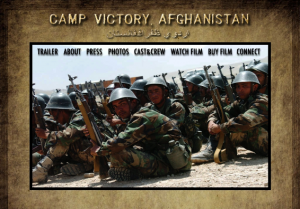 The film’s focus on Camp Victory and its key personalities means that direct fighting features only rarely in the film. That is not to sanitise the military conflict, but it means the film covers the wider and longer-term issues than the usual reports which are drawn like a magnet to cover the ‘kinetic stuff’, giving drama at the expense of understanding (a point I talked about back in September).
Through the personalities we see the successes and failures of attempts to build up the Afghan army and the tangled web of political, social and economic problems which influence those efforts. As the director recounted in the Q+A, one Afghani said to her when she was asking about how bribery and corruption could be tackled, “You call it corruption. We call it an economy”.
The film is low-key in its presentation, with little in the way of editing or music to force a message on a viewer. However, the regular cycle of US advisers leaving Camp Victory and burning their papers before departure leaves a symbolic message about the difference between those who can tidy up and move on and those who are left behind.
 Follow @libdemvoice.org on Bluesky
 Like us on Facebook
 Subscribe to our feed
 Sign-up for our daily email digest

 Dean Friedman: Ariel
 State of Play: the classic BBC drama, part 2
 Can Davey survive as leader?
 A Week in Politics #9
 Chloe
Chloe Alex Macfie
 expats
 Jana
Jana