


Glasgow was not a disaster after all. Neither was it a ringing success. Hopes had been building that the Conference of Parties would have reached an agreement that would get us near to capping global warming at 1.5°C. That target has been missed. The promises needed will be delivered in Egypt next year at COP27 at the earliest, if at all. But the ambition to limit the temperature rise 1.5°C is still alive and that is an achievement.
There have been strides forward and the next COP has been brought forward to next year not the usual five year interval.
We need to act quickly. Climate change is happening not just in developing countries, but here in Europe and in North America.
Like all international meetings, COP26 began trying to negotiate ideals and ended in compromise. That’s always going to be the case when a diversity of nations at different stages of development try to achieve a common goal.
Throughout this afternoon, we have heard delegates from around the world say, “in the spirit of compromise we are able to support the document”. Switzerland summed the view of many countries:
“It is not abnormal that we have a COP text that leaves everyone a little unhappy, but we are afraid people are more than a little unhappy.”
But despite what Guatemala described as a glass half full, delegates agreed the final text today.
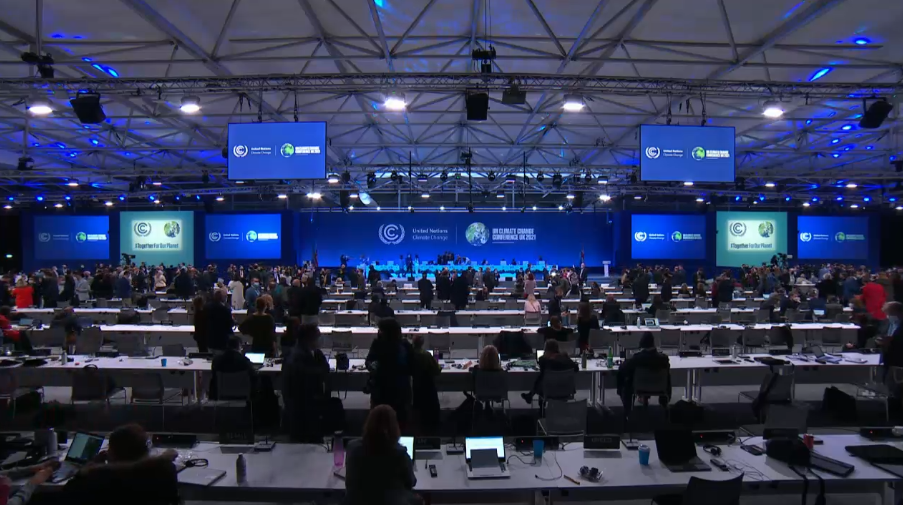
Overnight and throughout the two weeks of COP26, significant concerns have been raised about finance. Developing countries want more grants and fewer loans embedded in the $100bn finance promise. Carbon offsets were another issue. Withdrawal from fossil fuels is now mentioned in the agreement, but watered down after protests from India. Reparations for loss and damage didn’t really get resolved. There was not enough money for adaptation to the growing threats from warming, more extreme weather and rising sea levels. An agreement was reached to end deforestation by the end of the decade but that is going to be one of the more difficult promises to meet.
There is much more to this agreement and it will be picked over by pundits and activists in the coming days. We will also see the usual greenwash from politicians hinting, even claiming, that they have saved the world. They have not.
We are a made step forward towards saving the world tonight but we have a long way to go.
* Andy Boddington is a Lib Dem councillor in Shropshire. He blogs at andybodders.co.uk.
 Follow @libdemvoice.org on Bluesky
 Like us on Facebook
 Subscribe to our feed
 Sign-up for our daily email digest

 Confessions of a London River Hunter by John Rogers
 It's going to take Islington 33 years to remove defunct parking ticket machines
 Reform UK and the rather damp free speech debate
 Paul Holmes
 David Allen
 Mick Taylor
 Steve Trevethan

4 Comments
The elephant in the room is that China, India and other rapidly developing countries are not going to adopt environmentally friendly solutions as they believe it will stall the industralisation that they have embarked upon unless the West helps them to pay for it which they are not going to do. In this context how does “every little help?”
…………………Glasgow was not a disaster after all. Neither was it a ringing success…………
I’m afraid we’ll find post COP26, to use Bob Dylan’s words, “Everyone commenced to do what they were doing before……..”
Find it impossible to be pleased about this. Johnson (who thought it better to be in old Bexley and Sidcup than Glasgow) will hail it as his triumph. Sharma knows full well it won’t cut it (but will probably get some sort of honour for having presided over it – a risk Johnson wouldn’t take in case it backfired). The people most immediately threatened by change know that it has failed. And the text doesn’t really bind anyone to anything. Cue the start of weaselly wriggling all over the developed world as those in authority over us look for ways to avoid their so-called commitments and foist the blame (and the responsibility) on someone else.
Not a good day.
When I read reports and editorials from various sources about the climate crisis I find myself frustrated by what to me seems an obvious lie when government tells us that the UK has cut CO2 levels by 44%. This maybe correct regarding actual CO2 produced in the UK but what it omits is that we have exported so much of our manufacturing base to countries like China and that what we have actually done is outsource our CO2 to another country. Surely a true CO2 level “Caused” by the UK has to include goods we consume but produced in other countries and this would paint a very different picture of the UK’s true performance on CO2 reduction. If we as a country consume goods that cause climate change then surely we own the CO2!