


Welcome to the latest in our occasional series highlighting interesting findings from academic research. Today it is a study into how good, or not, the betting markets are at predicting the results of elections.
A few years ago, when spread betting on election results first became popular, there was a brief period when the state of betting markets was touted as a good guide to election results. The theory was that when people decide whether or not to stake their money on a bet they are revealing what they really think, in the way that public comments often do not. Moreover, private information can be used to inform betting choices, which makes movements in betting markets one way to reveal what campaigns are really learning from their private polling, canvassing and so on.
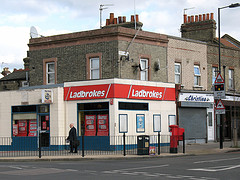
Despite some initial very promising results in the US, the ability of betting markets to predict individual election outcomes has had a rather more mixed record since.
A trio of academics have therefore just analysed the constituency-level betting markets for the 2010 British general election (What are the Odds? Using Constituency-level Betting Markets to Forecast Seat Shares in the 2010 UK General Election by Matthew Wall, Maria Laura Sudulich and Kevin Cunningham, Journal of Elections, Public Opinion and Parties, Vol. 22 No.1, 2012).
They found that:
The performance of the seat forecasts that we have produced on the basis of the betting markets did not prove to be very accurate. In fact, the estimates performed less well than those derivable from national-level voting trends using constituency swing projections. We saw that a particular flaw of these data is their proclivity to overestimate the likelihood of long shots winning, and underestimate the chances of favourites … [But] they were rarely dramatically wrong – where favourites did not win their seats they typically came close to winning.
You can read the other posts in our What do the academics say? series here.
* Mark Pack is Party President and is the editor of Liberal Democrat Newswire.
 Follow @libdemvoice.org on Bluesky
 Like us on Facebook
 Subscribe to our feed
 Sign-up for our daily email digest

 United Nations Day, 24th October
 The church and the lifeboat memorial
 Bob Trubshaw revisits the Ironstone quarries of Leicestershire
 Ex-Conservative campaign director sentenced over election bets
 The hopes of the world rest on the shoulders of libtards in the midterm elections in the USA
 Ynys Mon Man
 Tim
Tim Simon Robinson
 Peter Davies
 cim
cim
One Comment
Not a big surprise. Punters are attracted by long odds when they think the person might have a chance – and that doesn’t necessarily predict their votes, unless they risk a lot of money, in which case it probably determines the vote! Moreover, many people do not bet and they will not be evenly distributed in terms of age, gender, social class, religion and other things that often reflect different distributions of voting behaviour. Finally, the betting market will be influenced by the amount bet, which itself will be infleunced by the amount the person possesses.