


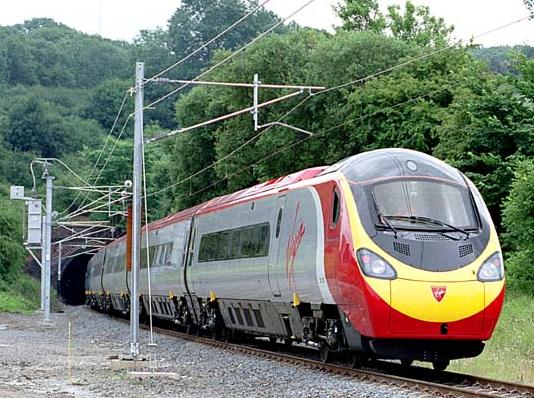
 The fiasco over the West Coast Mainline contract has exposed a long-running sore at the heart of government: the problem of public/private contracting.
Rail and Information Technology are merely prime examples of the troubled and costly contractual relationships that often exist between the public and private sector.
The Liberal Democrats have a policy review of public services under way – but will it tackle the real issues? For if contracting at national government level is hard, the challenges in a Liberal Democrat world of devolved, localised government are even bigger.
For instance we’d been hoping to get some regional devolution of rail franchising. This now must be in danger.
In spite of Liberal Democrat objections, the reformed NHS is likely to enter multiple local contracts for a range of services with private providers. The providers look increasingly likely to be just a few companies. The names of Serco and Virgin keep cropping up.
There’s a theoretical problem with this – and perhaps we need to confront it before seeking to make multiple recommendations about public sector good contracting practice.
This problem arises when a small number of large companies provide services to a large number of customers. It’s known as oligopoly. There’s an imbalance of power. I’ve seen this as a councillor on a large local authority and as a senior councillor on one of the country’s major transport authorities. The client is a mere minnow in the world of the provider.
In truth, some private companies give terrific service and work hard with public sector clients and for the public they serve. Others stick to the letter of the contract – and there are likely to be millions of letters. Long-term contracts prove impossible to modernise, especially when they involve the fast-moving world of IT – and these days everything does.
There’s a further risk. You see it in bus services in some parts of the countries. It’s known as cartelisation, when companies can afford to carve up a market between themselves. The Competition Commission has found evidence of this in the bus industry. Outside London, of course, bus companies rarely have direct contractual relationships with the public sector; but the best companies know they depend on public finance, infrastructure and goodwill. They work hard to help local authorities that are seeking improvements in quality and service.
Monopoly busting is relatively easy in political terms. Oligopoly busting is much harder. As a party of devolution and localisation, it is critical that we confront this issue. There is a mismatch in size between private companies and local public sector commissioners.
We cannot assume the major issues about public services are settled. The reformed NHS is likely to bring problems and embarrassments as commissioners deal with large companies. Britain has moved from public provision of services to internal markets and then onto using external markets. Corporate raiders hover and marketisation zealots ignore the risks posed by oligopoly.
Any ideas?
* Cllr Jon Hunt is Lib Dem group leader on Birmingham City Council and the Lib Dem candidate for Police and Crime Commissioner for the West Midlands.
 Follow @libdemvoice.org on Bluesky
 Like us on Facebook
 Subscribe to our feed
 Sign-up for our daily email digest

 Whickham North Focus delivery
 There's no good news on the restoration of Ludlow's town walls
 Latest voting intention and leadership ratings opinion polls
 United Nations Day, 24th October
 The church and the lifeboat memorial
 Tim
Tim Peter Davies
 PM
PM Mick Taylor
19 Comments
We already have some important oligopolies. Wikipedia (http://en.wikipedia.org/wiki/Oligopoly) observes that oligopolies are not always bad for customers, and lists these in the UK …
> Four companies (Tesco, Sainsbury’s, Asda and Morrisons) share 74.4% of the grocery market
> The detergent market is dominated by two players, Unilever and Procter & Gamble
> Six utilities (EDF Energy, Centrica, RWE npower, E.on, Scottish Power and Scottish and Southern Energy) share 99% of the retail electricity market
Perhaps our experience in these markets can be helpful in finding solutions?
Richard, I think the solution is relatively easy, to conceptualise, anyway, if not to put into place. The hint that I feel Jon is giving us here is that we have to move away from seeing “the market” as the solution to all our problems – partly because we know that markets don’t work in the way that the first weeks of an economics course might tell us. “Perfect markets” etc. All markets have a tendency to move towards monopoly, or as Jon says, oligopoly. This means that, far from our default position in the Lib Dems, that we should use markets except in (supposedly) unusual cases of “market failure”. Markets fail all the time. It is only by having democratically controlled bodies with real power to influence markets for the benefit of people, that we will be able to bring some semblance of order into this chaos. Some sort of mixed economy seems to be the right way to go. The way that economic and political thinking went “after the fall of the Berlin Wall” seems to me to have done a disservice to people in many ways. I remember being criticised on another thread some while ago “You are not seriously wanting to bring back the economics of the 1970s, are you?” My view would be there are many things from that era which we could usefully dust off, look at in detail at the upsides, and the downsides, and probably bring back in modern form.
Addressing Jon’s article, we need root and branch rethinking, and we, as Lib Dems, as representatives of the “new politics” should be looking for the good of the broad sweep of people, not continuing with the current obsession with competition, markets, and so on. Whatever happened to local strategy? At present, things arising from the Localism Act are spinning off down a route where strategic power is moving out of the hands of elected people, and as Jon makes clear, we are increasingly in the hands of the likes of Atos, G4S , Serco, and Capita. Is this really what we want as a party. I hope the Public Services working group has at least some people on it, who take a public service view, not a franchising, market view?
One ley difference is that customers don’t sign long term contracts with these companies. Theyvote with their feet if they are not happy. Not evrryone’s happy with the energy market in spite of intense regulation
Jon,
I remember the first time I was hired by railway people. They were ex-British Rail, loved railways and wanted to run great railways, but they were the smartest of business people and great to work for. They knew what they were doing, drove a hard bargain (with me) and then kept to it; no messing. They understood expertise and valued it – went in search of it when they didn’t have it and hired it.
Their expertise on the commissioning side was lost to the public good at privatization.
Later, working for Liverpool City Council, along with a first rate social entrepreneur, I wrote a policy paper in 1999 on how to create and sustain social businesses and how council services could be ‘broken up’ into neighbourhood services run as social businesses, their services commissioned and scrutinized by area committees.
A new chief executive arrived and shelved the ideas, saying that first the council had to fix its commissioning side. At the time I thought it was a lame excuse. But I now see he was right.
You rightly link the present West Coast tendering saga with our efforts to drive forward very local decision taking, delivery and supervision..
But that must not prevent us doing it. We just have to be aware of the importance of commissioning, evaluation and oversight skills, hire it while we train up the in-house teams.
“Corporate raiders hover and marketisation zealots ignore the risks posed by oligopoly”.
Nothing, now, can be done to stop the steam roller flattening the concept of democracy and open-ness. The NHS in England is lost – a public service with absolutely no accountability in the future to the citizens because of commercialisation and its protected status. Liberal Democrats voted for this.
Surely we’ve learnt that long term commissioning of services doesn’t work.
The private sector is better when there is a free market, lower barriers to entry and low barriers to exit.
Nobody would suggest a nationalised supermarket.
Public Services do not lend themselves to being run by the private sector, as soon as you give a 10 year contract to a supplier their sole aim is to maximise profit. That is what they exist for.
Tescos and energy: these are both markets with relatively low barriers to entry and relatively simple businesses to manage. In retail the big boys have the Aldis and Lidls snapping at their heels.
So far as answers go, I wonder about beefing up and changing direction for the Competition Commission. Its brief is both to examine failures of competition and suggest ways of improving competitiveness. Its recent bus inquiry for instance was dismissive of alternative approaches – franchising London-style – and yet some of us know it’s the threat of franchising which has got bus companies to the table.
Secondly we could revert to the concept of contestability. Similar approach to the buses but from the other direction. Use public providers but be relentless about quality improvement – with private tendering as a back-stop only. For instance in education, conversion to an academy would be an exception not an expectation. Bot h these approaches give public commissioners tools with which to negotiate without getting bogged down in tendering processes and having to manage powerful private providers.
As has been pointed out by others commissioning is very important capability as is supplier management and cultivation.
Railways and other areas where a few large long service contracts are the norm also have few potential suppliers. To ensure a pool of potential competitive suppliers is maintained require s strategic management. Failure to ensure the timely distribution and award of contracts will only result in a supplier withdrawing from the market. The question with respect to rail is how many suppliers do we need to both operate the network and to ensure a degree of competition, so that either when the West Coast Mainline franchise comes back up for review in 10~15 years time there is a credible alternative to the incumbent operator or if there is a need to relieve the incumbent of the contract.
I suspect it is because of the failure to manage strategically that many large ticket items are no longer manufactured in the UK.
Pre-privatisation we subsidised the railways by £2bn now it’s up to £4bn so whether it’s the theory or the practice what we have isn’t a great solution. As for private v public I wonder if the main issue is the extent to which (from a user perspective) the service won’t function if it’s in discreet bits. So if I get my energy from the solar panels on my roof or by taping into the national grid as long as I can turn the lights on that’s fine. However the rail network does need to be interconnected. Similar with health care – if I have a minor ailment needing a single prescription I might be happy for various medical professionals to vie for my “custom” by being as flexible with their appointment times and great interpersonal skills so that I get as convenient and pleasant a solution to my ailment as possible. There may be a problem when it turns out my trivial ailment isn’t trivial and there’s no one stop shop cure and that the multi / inter disciplinary care I need operates in “functional silos” (horror of horrors to a management guru) whose internal processes are optimised at the expense of the network / organisation as a whole. Maybe go private but publicly owned like Deutsche Bahn
This comes to the heart of people’s knee-jerk opposition to “privatisation”. In the UK, we’re just not very good at getting the private sector to work for the benefit of the state. It’s not actually hard to do, and they manage it in many other countries. With rail, we turned a state monopoly into a corporate oligarchy, and didn’t really introduce any markets or competition. An obvious example applies to the mainline routes – with three trains an hour between Manchester and London, why are they all run by the same operator? If there were three providers, customers could vote with their feet and risk only a wait of up to an hour for their train.
Part of the problem, I feel, is the “legacy” concern. What we need is small, agile systems which interoperate, where underperforming contractors can be replaced easily. What we get is big monoliths which look impressive on the rare occasions that they work, but which are impossible to fix or improve when they go wrong, and which tie the contractee in to the contractor indefinitely. Smaller contracts also allow smaller, more local businesses to compete in the marketplace.
This shouldn’t be about nationalisation vs privatisation, it should be about looking for the best examples of using market forces to deliver services, and following them rather than ignoring them.
Agree with Dave and Liz that market-making is another possible approach in some circumstances. You could even insist the large corporations break themselves up if they want public contracts. Reduce the threshold for monopolistic control or for evidence of cartelisation. Behave like a supermarket or motor manufacturer and manage a chain of small suppliers. Wherever the border is between public and private you can never own the whole supply chain. To be fair the coalition has tried to encourage mutuals – but they’re going to suffer the fate of many small businesses pitched against large corporations in competitive tendering processes, Forced out by aggressive pricing and marketing.
In the opening paragraphs of his article Jon Hunt correctly identifies a problem at the interface between public and private sector but some other posts then move on to addressing largely non-existant problems within private sector markets. The service and reliability of the West Coast main line has never been better, the private Virgin Rail service offers the best Manchester / Preston to London service in living memory. The problem is in the design and administration of the re- tendering process not with the idea that the private sector can successfully run public services.
The heart of the problem seems to me to be that the public sector usually privatises to reduce costs, or raise income, and this leads to the private sector being criticised for producing a low cost service. The private sector simply responds to the conditions set by buyers from within the public sector. Change the incentives, and we will reach outcomes that are more satisfactory.
I agree with Tim13 above. In the post 2nd world war era ( up until 2010 anyway!) we always believed in a “mixed economy”. In opposition, we opposed the privatisation of British Rail and supported bringing Network Rail back into public ownership. Now I think we should gradually bring back the rail “franchises” into a form of joint public ownership (e.g. consisting of a government golden share of one-third, worker ownership of one-third and public share ownership of one-third). I know that this wouldn’t be easy but it is surely a better system of ownership, would ensure that employees have a stake/interest in success and promote a distinctive Liberal Democrat commitment to industrial democracy and a mixed economy…….
Jon notes that, “…we’d been hoping to get some regional devolution of rail franchising.” Really? How many regions would be involved in, for instance, the West Coast franchise? I support localism – but rail is, par excellence, something that should be handled nationally, even assuming that it should be franchised to private operators in the first place – which I don’t support.
A question we should ask is how many of the failings of the railways etc. when in the public sector were down to poor operational management and how many were really down to poor management by the ‘owner’ – in this case the government.
If the former – poor operational managment – then there is a simple solution, namely to hire better managers.
However, if it was largely down to poor managment by the ‘owner’ then privatisation or contracting out is likely to make little difference. The West Coast fiasco implies that the primary problem lies in Whitehall, especially since, although this particular circumstance is obviously unique, there has been a string of rail-related fiascos – for instance paying Branson a £400 million subsdy over several years to operate a West Coast mainline that was already profitable under BR, the serial East Coast franchise collapses, selling the ROSCOs for a fraction of their real value, the collapse of the domestic rolling stock manufacturing industry and above all choosing a structure that negates the network benefits that should accrue from integrated operation of the railways.
Directly Operated Railways (DOR), the government company that took over the East Coast franchise after the former franchisee National Express withdrew, shows that public sector operational management recently reported outstanding results – profit up, passenger numbers up, passenger satisfaction up etc AND made a hefty financial contribution to the DfT. I suspect that, because their reign is seen as only temporary, they haven’t experienced too much back seat driving from Whitehall.
Jon (comment at 12:21 pm)
“Tescos and energy: these are both markets with relatively low barriers to entry…”
I can’t let you get away with that. In supermarkets the barriers to entry are immense. When Wal Mart wanted to enter the UK market they concluded that, the only practical way to do it was to buy ASDA. Meanwhile Tesco has spend mega$ on trying to enter the US market and has come badly unstuck and may have to withdraw with its tail between its legs.
Part of the problem is acquiring suitable sites (this is the bit the Competition Commission has noticed). For smaller competitors a more serious problem is the lack economies of scale in buying. Tesco has a documented track record of using this advantage to blow independent competition out of the water by setting prices in nearby stores at close to cost until they fail. All is compounded by the fact that key officals (for instance some in the OFT) are neoliberal ideologues.
Aldi and Lidl are more interesting. Both are, of course, German and were big players in their home market before they came here. That matters because they already economies of scale but, possibly more importantly, they had evolved a business model in a country which still has a regulatory framework that, to a considerable extent, preserves a fair playing field by preventing the emergence of overly dominant retailers. In contrast we have a business culture focussed on rent extraction.
Thanks for the input Liberal Eye. There are a number of regional franchises , which provide local rail services, and until recently some of the larger transport authorities, eg West Midlands were co-signatories on the franchise. Under the present government Merseyside has taken over a rail franchise and a workable proposition has been put together by local authorities in the West Midlands region. The urban transport authorities provide significant facilities for rail including passes, some stations and parking, and get a little frustrated when they cannot affect decisions such as the recent closure of ticket offices or the closure of some urban lines. Particularly pressing at the moment is the need to get integrated ticketing and smart cards working across the country.
@ Jon Hunt – Fair point for purely regional franchises. I must admit I was thinking of the more national ones like West Coast.
Dave Page
This comes to the heart of people’s knee-jerk opposition to “privatisation”. In the UK, we’re just not very good at getting the private sector to work for the benefit of the state. It’s not actually hard to do, and they manage it in many other countries. With rail, we turned a state monopoly into a corporate oligarchy, and didn’t really introduce any markets or competition.
I feel it is the other way round. The point was reached where it was believed there was some magic “private sector know-how” fairy dust that could be sprinkled on any service and it would all become so much better. Now we find it doesn’t work like that, and all this privatisation stuff seems to be a job creation scheme for the lawyers, the accountants, and people who devise logos etc.
An obvious example applies to the mainline routes – with three trains an hour between Manchester and London, why are they all run by the same operator? If there were three providers, customers could vote with their feet and risk only a wait of up to an hour for their train.
Sorry, but no. if I want to go to Manchester I want to be able just to buy a flipping ticket and get there. I don’t want to be some wheeler-dealer in some market whipping around investigating various options and so on. I don’t want to be pestered by salespeople for the various options, each giving me their cheesy nonsense and telling theirs is the best. I don’t want the money I am paying for my ticket to go on payment to these salespeople and all the lawyers and accounts and PR people and so on involved in this silly market game. I don’t want to play that game, I have better things to do with my time. All I want is a guarantee that when I get on whatever train comes next it will deliver me there comfortably and on time.
I agree with Matthew on train tickets. And to his comments I should add that “competition” between train providers of the kind envisaged by Dave Page would mess up ticket integration, which is far more useful than competition for passenger rail services. It’s not just a question of being able to buy a ticket from London to Manchester and being able to hop on the next available train. What about from (say) Norbiton to Salford Crescent? Should the passenger have to queue again at Manchester Piccadilly station for the hop to Salford Crescent because the operator he has chosen to travel with from London to Manchester has no through-ticketing arrangement for local train services in Greater Manchester? What if of the choice of long-distance operators A, B and C, only operator A had through tickets involving Greater London and only C had them with Greater Manchester?
To show the sort of thing that happens if you have “competing” train operators the way Dave Page envisages, look at one EU cross-border rail route, Brussels to Cologne. You can travel using Thalys or DB ICE, or even on the classic route using conventional trains (the latter takes a long time and involves at least one change). But these options all have separate non-interchangeable tickets. Perhaps not so bad if you are starting from Brussels. But about LONDON to Cologne? If you book with Eurostar, only options involving Thalys are avaiable. If you book with DB, only the DB options are available (and limited). You can get both if you book with Rail Europe, but not the cheapest fares. What if you want to travel with different operators in either direction? No wonder people choose to fly. This nonsense would ceratinly put people off travelling by train if imported to domestic UK passenger trains. An integrated system, where the passengers need neither know nor care who runs the train they are using, is much more useful than a load of separate competing services, especially when making a journey that necessarily involves changing trains.