


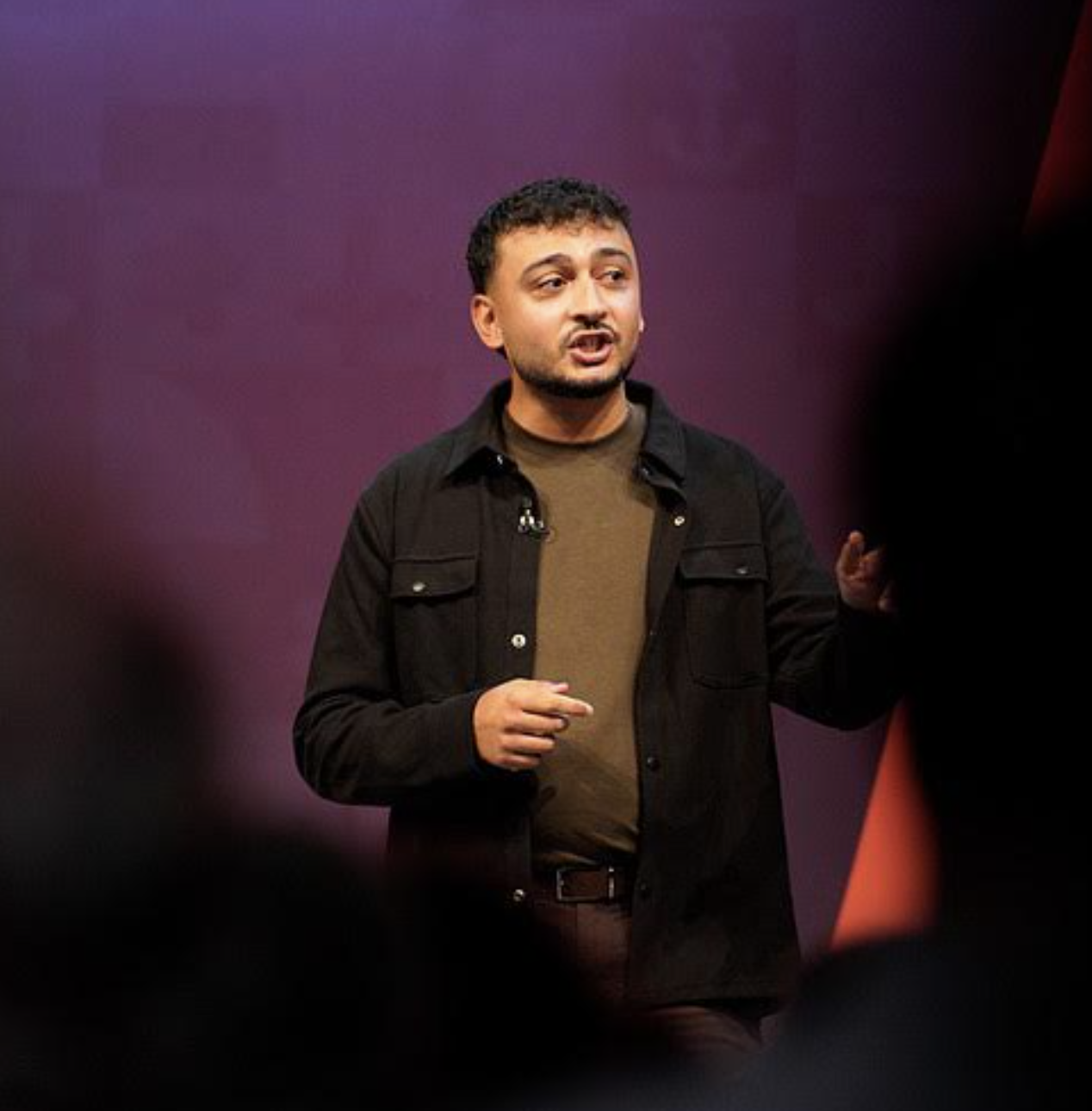
Photo credit: John Russell
More than 50 years ago, my grandparents, mother and aunts came to Britain as refugees from Cyprus. They arrived in London with just £20.
My grandfather took whatever job he could find. My grandmother spent long days in front of a sewing machine. They worked, saved, bought a home and raised their daughters.
Britain gave my family something they could not take for granted: the chance to be safe and build a future.
That history is personal to me. It also shapes how I think about the debate around refugees and asylum today.
The asylum system needs to be faster and more effective. Claims should be processed more quickly. Decisions cannot be allowed to drift for years. Public money should not be wasted through delay. Criminal gangs exploiting vulnerable people must face the full force of the law. Where someone has no right to remain, the state must be capable of enforcing its decisions.
A functioning asylum system should be able to do these things. Saying so isn’t hostility towards refugees.
The latest Home Office figures show that 85,891 people claimed asylum in the year to June 2026. At the end of June, more than 40,000 people were still waiting for an initial decision on their application. Those figures show the scale of the challenge. But they tell us very little about the people behind them.
It’s easy, in political debate, for a family to become a “case” and a person arriving here to become a statistic. We should resist a politics that turns administrative failure into an excuse to blame people who had little control over the circumstances that forced them to flee their homeland.
There are legitimate questions about immigration that liberals should be willing to answer.
The state has a responsibility to control its borders, and not every asylum claim can succeed. A liberal society should be able to enforce its rules without abandoning the principle that the people subject to them still deserve dignity.
For me, that is what liberalism should mean in practice.
Individual freedom and human rights are easy to defend when everyone agrees with you. The harder test is what you do when the politics becomes divisive and uncomfortable.
This is why Liberal Democrats should be willing to lead this debate. We shouldn’t leave questions of borders, asylum and migration to the far right. If people are worried that the state has lost control, liberals should be willing to address that concern. We shouldn’t retreat from the conversation, but neither should we abandon our values.
Communities are understandably frustrated when basic systems aren’t working. But directing that frustration at refugees does not fix these failures.
A refugee did not cause Britain’s housing crisis. An asylum seeker did not create NHS waiting lists. People fleeing persecution did not make the cost-of-living pressures facing families worse. These problems are all because of successive government failure. If we want to solve them, we need serious answers on housing supply, public services, economic growth and government capacity. Blaming refugees solves nothing.
My family’s experience also reminds me that migration is not simply about the moment someone crosses a border. My grandparents’ decision to come to Britain shaped the lives of their children and grandchildren. Their story became part of our country’s story.
People who arrive here as refugees go on to become our neighbours, colleagues and friends. They start businesses, work as doctors and teachers, raise families and grow old here.
I don’t believe the answer is to pretend the asylum system is working as it should. It isn’t. Nor is it to retreat from the state’s responsibility to control borders, process claims and enforce decisions.
The answer is to demand both competence and humanity.
We should also challenge a politics that turns legitimate concerns about borders, asylum and migration into hostility towards people who had little control over the circumstances that brought them here.
I delivered this message from the conference stage in Brighton. But speeches at conference are the easy part. The harder task is taking the same message into communities across the country, including places where it may not be so warmly received.
If we only make the argument where we know people already agree with us, we aren’t changing the debate. Changing the debate is our job.
My family once needed Britain to say that they were safe here. They were given the opportunity to build a life, and they made the most of it.
I cannot know which families arriving today will have a similar story.
I do know what I want the country they arrive in to be: secure enough to enforce its rules, competent enough to make its systems work, and liberal enough to remember the human beings those systems exist to serve.
* Anton Georgiou is the Lib Dem Group Leader in Brent
 Follow @libdemvoice.org on Bluesky
 Like us on Facebook
 Subscribe to our feed
 Sign-up for our daily email digest

 Plaid Cymru bottle council tax reform
 Le Beaujolais Nouveau est disparu
 Reform fined for illegal publicity
 SAVE THE DATE! Announcing The 2027 Lloyd George Society Weekend!
 Margot Wilson
 Rose Runswick
 Roland
 Suzanne Fletcher
11 Comments
I agree with this but would add something I believe important: we need to address the idea that those seeking ‘a place of safety’ should be allowed to pass through countless ‘places of safety’ on route to their preferred location. There is a fine line between showing compassion to those who are genuinely seeking ‘a safe place’ and being taking advantage of.
@Jana – so your argument is that the UK shouldn’t take *any* refugees, and the burden should fall entirely on countries that happen to neighbour those suffering civil war, natural disaster, authoritarian regimes etc?
Excellent article – thank
Nick; I think Jana is saying what many believe is that those in a tented city in Calais are economic migrants. A hotel room with three meals a day with all your medical needs met – is far more preferable than a tent in a field in a french coastal town. That hotel is more than a British adult male would be afforded if they ever became homeless. Fleeing a warzone in danger of your life doesn’t mean passing through numerous safe countries en route to more advantageous surroundings.
@Nick Baird
If I were at sea and my ship was sinking, I would be grateful to be rescued by whatever ship was closest…I wouldn’t then expect to be able to transfer to a luxury cruise ship because I preferred to be rescued by the most comfortable ship available.
Jana that is a reductive and shameful argument that discounts situational complexity, operates from the stance that refugees should accept the absolute minimum rather than seek the best possible environment for their children, and any of us would, and the fact that we are culturally and linguistically a world centre of almost everything and that means people want to come here, including when things in their own homelands have gone to hell. I’m appalled.
I quit the party last week, partly because I think we…..you, cos I’m not part of ‘we’ anymore….have become conservative. Attitudes like this are part of why.
@Jana 30th Sep ’26 – 7:18am
Using your ship analogy.. So the nearest ship on the scene should take EVERYONE, permanently, whilst others should take none?I don’t think passengers and crew of the first ship would be too keen on bearing ALL the disruption and cost..
BTW.. In the real world, how many ‘safe’ countries should the refugees be allowed to transit? After all, the French, Germans, Dutch, etc. might well take your attitude and then, where would the refugees stay?
@Jana @Chloe – Per the UN, 65% of all refugees do stay in a country neighbouring the one they escaped from. The UK, one of the world’s richest countries, hosts only 0.6% of them, with the largest number having escaped Ukraine. We are way down the list of countries for hosting refugees.
If you really believe that this is nothing to do with us, that 100% should stay in neighbouring countries while we take zero because of our advantageous geography, then I’m not quite sure what else to say to you other than question if you are in the right political party.
Regarding Calais, of course there are both economic migrants and genuine asylum seekers there. The solution is simple – let them submit their asylum claims in Calais (or better still even closer to home) without having to pay people-smugglers to bring them here. Then those with approved claims can travel here safely, and any crossing in small boats after having their claim rejected can be promptly returned.
@expats
Using the ship analogy, your position would seem to be that the luxury cruise liner should have to take everyone since those seeking a place of safety are entitled to the most luxurious place of safety available.
@ Jana, Hardly.. both France and Germany already take significantly more refugees and asylum seekers than the United Kingdom
Thankyou for this excellent article, Anton. It is worth adding that delays in the asylum system cost a great deal of money because, apart from other things, asylum seekers are not allowed to work.