


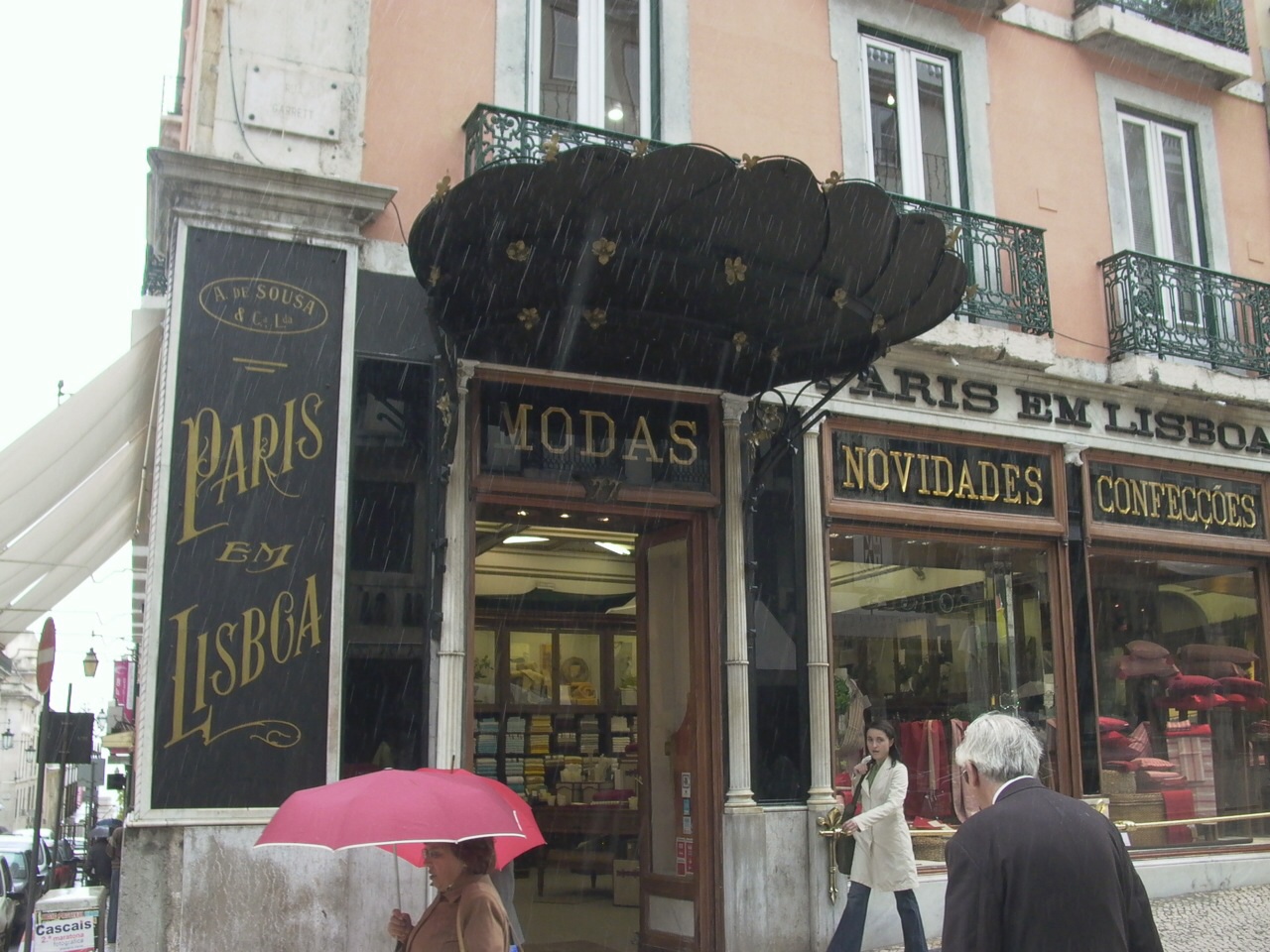
 It had been raining in Portugal’s capital, Lisbon. Indeed, it had been raining for so long and so hard that local taxi drivers couldn’t remember it being worse. Not, perhaps, an auspicious opening for a meeting of European liberals, although for the Germans and ourselves, the notion of poor political weather might well have been vaguely familiar.But, gather we did, and amongst our midst were strangers, hoping to be friends, and some of the new MEPs and European Commissioners, showing their faces and networking. There were emerging issues to discuss – what to do about Russia, how to grow the economy, what to do about the digital economy, privacy and data protection – and a desire to reclaim liberalism from those who use it as a term of abuse.
The first order of business was the ALDE Party Council meeting, but I’ll cover that separately.
The resolutions were split into two groups, one revolving around defence and security issues, the other picking up the remaining issues. In the session on defence and security, chaired by FDP MEP and ALDE Bureau Vice-President Alexander Graf Lambsdorff, the primary concern was about the re-emergence of Russia as a threat to the stability of Europe, and how the European Union should react. Was greater defence co-operation necessary, or even possible, could Federica Mogherini, the new EU High Representative for Foreign Affairs and Security Policy be given greater powers to act, or was new security architecture (an exquisitely European phrase) required?
Meanwhile, Lousewies van der Laan, who has in the past been almost everything but is now also an ALDE Party Vice President, was chairing the other working group in her usual brisk, efficient style. What to do about the green economy, condemnation of the government in Baku, rights to paternal leave, all were debated, amended and agreed with remarkable levels of agreement.
However, the most intriguing resolution was one on the future of the ALDE Party itself. Currently, the ALDE Group in the European Parliament is an amalgam of two pan-European political parties, the Alliance of Liberals and Democrats in Europe, and the European Democratic Party. The Combined Group has worked effectively in the Parliament for a decade or so, and now, it was felt, it is time to consider whether or not the two political parties can be brought together more closely. It is, clearly, controversial, as it means forming a group which might not wholly see itself as liberal, but it does create, potentially, a more powerful centrist force in European Union politics.
There were those who were sceptical, and others, including the British, who wanted a resolution which gave greater flexibility in terms of what a closer working relationship might mean and, in the end, those seeking greater flexibility won the day. We shall see if the timetable – wrapping negotiations up by this time next year is a bit hasty to my mind – and the levels of transparency – there appear to be no provisions for an interim report back on progress – prove to be sufficient.
The fringe saw well-attended and lively meetings on, amongst other things, the Transatlantic Trade and Investment Partnership (TTIP), an issue causing much ill-informed confusion at home, the ramifications of the Snowden affair for freedom, and on gender and political candidacy. In addition, there was what might call a relaunch of ALDE4Equality, which was formed in London last year to campaign for LGBT+ rights at the European Parliamentary level.
There were elections for two Bureau Vice-Presidents, a Treasurer and the President of the Gender Equality Network. Unlike last year, when the newly-introduced electronic voting system crashed spectacularly, the joint Returning Officers (yours truly being one of them) were able to relax rather more, as everything ran smoothly, with Angelika Mlinar (NEOS, Austria) and Hans van Baalen (VVD, Netherlands) elected as Vice-Presidents, Roman Jakič (Alliance of Alanka Bratusek) re-elected for a third term as Treasurer and our very own Flo Clucas re-elected to a second term as President of the Gender Equality Network.
And then, it was time to go. Sadly, it was still raining, but it was fair to say that our spirits weren’t dampened…
Photo by vidixit
 Follow @libdemvoice.org on Bluesky
 Like us on Facebook
 Subscribe to our feed
 Sign-up for our daily email digest

 The Joy of Six 1593
 Do shouty politicians gain long term votes?
 Farage let off Reform staffer accused of racist slur
 Latest voting intention and leadership ratings opinion polls
 Katharine Pindar
 tom arms
 paul barker
 David Allen
 Mick Taylor
One Comment
I have been writing on the subject of abuse of Jews within the EU. I thought the EU was going to be a union to prevent conflict and war?