


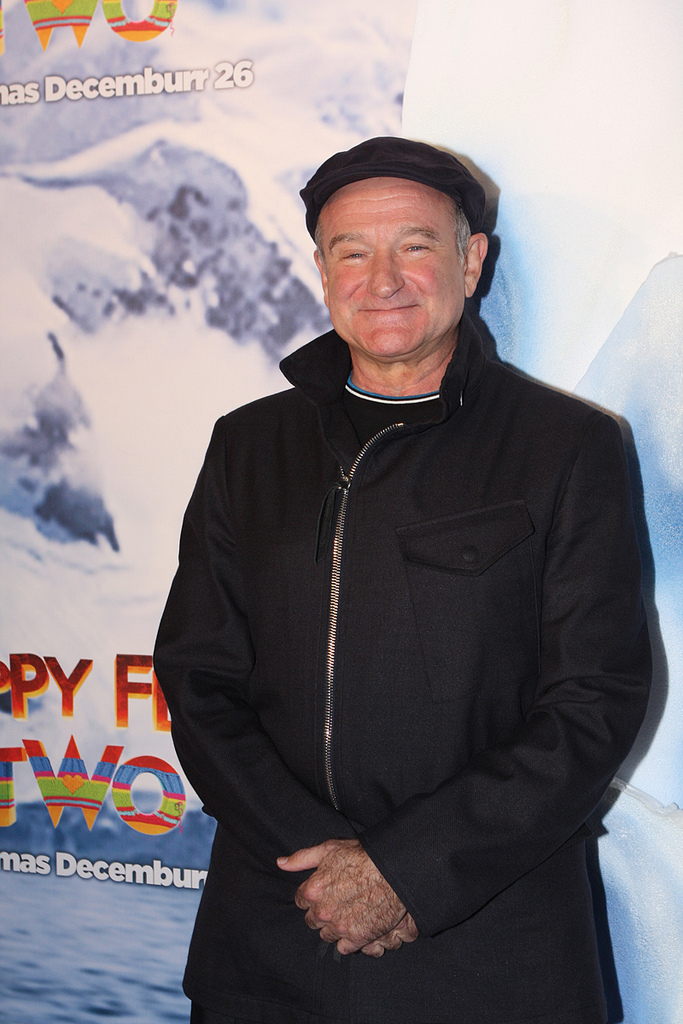
 The death of Robin Williams is another tragic loss that at first assumptions has its roots in depression. He joins other illustrious public figures who took their own lives due in no small part to the Black Dog: Tony Hancock; Kurt Cobain; Stuart Adamson; Lord Sutch and Alexander McQueen. If it were not for a last minute change of mind, Stephen Fry in 1995: though it was again a narrow escape in 2012, when he downed pills and vodka, to be saved by the producer of the production he was filming. The Black Dog has little or no regard of fame, status, gender, or race: it is an equal opportunities illness that can strike anyone down, at anytime.
The statistics on suicide and mental health are worrying. Some key facts from Mental Health Foundation state that suicide is the most common cause of death in men under 35. The Samaritans Suicide Statistics for 2014 state that there were 5981 (UK) suicides in 2012 an increase of 291 on 2010 figures. Suicide is also more prevalent in men than women. Whilst it is difficult to attribute all these to mental health conditions, the fact is there are suicides linked to mental illness. The depression may not be the reason for the act: situational factors of society and physical health problems in addition to the illness, compound it. For Robin Williams it appears to be money worries (a case that many face) for others it maybe housing, stigma, and a lack of employment opportunities, loneliness, and bullying. There is a notion that a person’s legacy is ‘what they leave behind’, many who commit suicide do not take their life as a selfish act; they take it when the inner torment overcomes all reason.
Recently the Lib Dems have announced various initiatives on mental health, all of which are welcomed. Paul Burstow’s report from CentreForum, Norman Lamb’s commitment to making treatment effective and accessible and Tim Farron who on the need confront the ‘silence’ that s cloaks mental health for far too long. Much still needs addressing: research and public attitudes. Some media responses to Robin Williams’ death have been tawdry to say the least; it does little to reduce the stigma mental illness. Yet momentum in positively addressing mental health can only be for the good.
My hope is that Williams’ death can stimulate the debate further. As a nation, we cannot ‘sweep this under the carpet’: it must not remain the silent killer. Last September, I found myself in a similar position to Stephen Fry, a handful of paracetamol and a bottle of bourbon. Fortunately, I suffer from a hiatus hernia, the whole white mess of pills caught in my throat and I choked them all up. Then I thought of ‘what will I leave behind.’ It is not always going to be case and one day it may not be enough. For now, I am in a safe place mentally, though the black Dog lives with me daily.
References
http://www.mentalhealth.org.uk/help-information/mental-health-statistics/suicide/?view=Standard
http://www.centreforum.org/assets/pubs/the-pursuit-of-happiness.pdf
http://www.markpack.org.uk/51572/tim-farron-ending-the-silence-on-mental-health/
Links for help
https://www.thecalmzone.net/ – Calm Zone aim to provide support for men of all ages with mental health issues
http://www.samaritans.org/how-we-can-help-you/contact-us
http://www.sane.org.uk/what_we_do/support/
Photo of Robin Williams by Eva Rinaldi
* Reg Yeates is a teacher by profession and a sufferer of depression. He comments frequently on mental health issues and volunteers for a local mental health advocacy charity in Portsmouth.
 Follow @libdemvoice.org on Bluesky
 Like us on Facebook
 Subscribe to our feed
 Sign-up for our daily email digest

 Paul Simon: That's Why God Made the Movies
 MI5 chief confirms Russian interference in Brexit referendum
 How many councillors has Reform UK lost since the May 2026 elections?
 Tim Rogers
 paul barker
 Rose Runswick
 Patricia Organ
 Alex Macfie
5 Comments
Excellent article. Depression is much misunderstood and yet it is the cause of many suicides.
So strange and rather confusing then that Norman Lamb, the Minister who has worked on improving mental health in Government, is a vocal advocate of assisted suicide. I wonder whether it has at all occurred to him that the terminally ill people he wants to ‘help’ to take their own lives, might be doing so because of their depression? I think he and others need to the join the dots…
@ Helen
Thank you for your feedback. With reference to Norman Lamb’s support on assisted dying, I don’t have a particular problem with it: with the correct checks and balances, I am satisfied that it would be in the best interests of anyone who is suffering beyond reasonable pain they should be allowed to choose the timing and the manner of their own demise.
It is an issue I think of a great deal and perhaps that my views on this contentious subject are clouded due to my depression. I did however, see my mother die in such an undignified manner, overdosed on diamorphine, unrecognisable outwardly in such distress, yet so out of it on the drugs, so unknowing of her incapacity.
I know this was so much out of her wishes, she was a devout Christian yet she maintained a view she should be able to go in her own manner. That does play on ones mind. It still haunts me. I know anecdotal experiences can shroud these arguments to the personal level; yet this is an issue that will not go away.
Reg Yeates
Thanks for your reply and I do sympathise with all that you went through regarding the last days of your mother’s life.
I too have had a number of close relatives who died and indeed dying was a long process. In each case, they were cared for wonderfully and they each accepted death with dignity ie: they were ready to die in their minds, because they were reconciled to it. My Grandmother was given diamorphine in the last few days, as was my Auntie and they slipped away peacefully – great palliative care was offered to them and it should be across the country.
Therefore, I struggle to understand why so many appear to believe that suicide is a more dignified death then allowing a person to pass away peacefully without pain with diamorphine.
I’m afraid that assisted suicide is indeed linked to depression, because so many people in Oregon for example, choose existential reasons for committing doctor-assisted suicide, out of fear of being a burden or for being tired of life. Depression and anxiety is related to this and as there are no mental health checks, it seems that people do indeed kill themselves out of depression and fear.
In the light of the recent publicity over Robin Williams – himself diagnosed with an illness that would kill him – I wonder whether his suicide was really just a choice he exercised. According to the logic of assisted suicide, it was. However, this is never admitted. We know he died because depression drove him to it. Would his death be okay or ‘acceptable’ if a doctor had given him drugs to do it instead?
What a great article Reg. I admire your openness and honesty. This is an issue we’ve worked really hard on as Liberal Democrats and as you well know – I do support our efforts. Well done.
Thank you for the kind comments.
@ Helen, on the issue of assisted dying: it is a matter of ethics, and I fully accept and expect diverse opinions on the subject. On this, we probably have to agree to disagree. It is however a debate that needs much more investigation and perhaps on another forum we could continue on it.
It would appear on top of Robin William’s money worries, he had been diagnosed with early Parkinson’s; this just clarifies really that other influences outside of depression can act as the ‘tipping point’.