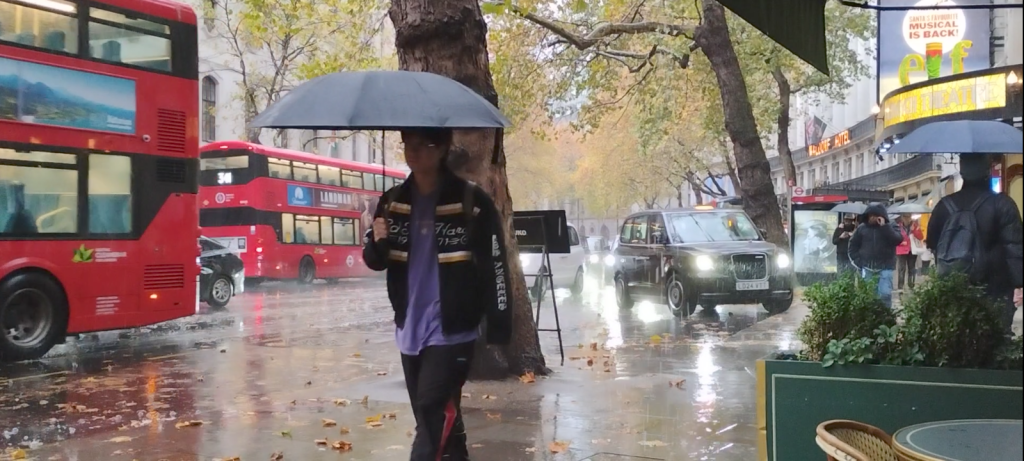
Since September 3, Uber and Wayve have been operating a small number of self-driving cars in London. Passengers can travel in electric Ford Mustang Mach-Es equipped with Wayve’s AI driving system. For now, these are supervised autonomous journeys: a trained, TfL-licensed private-hire driver remains in the vehicle to monitor the system and intervene if necessary — which, incidentally, seems to defeat the point of a driverless vehicle. The initial service operates across the capital, excluding airports, and is being expanded gradually.
The UK government forecasts a self-driving market worth up to £42 billion, creating up to 38,000 jobs by 2035. These are UK-wide projections, not a guarantee that London will gain equivalent employment. The more immediate risk is that the distinctive, human-driven black-cab trade will be squeezed, accelerating a decline that has already seen the number of licensed taxi drivers fall from more than 25,000 in the mid-2010s to around 16,000 in 2025/26.
All of this rests on a professional qualification that is unusually demanding by international standards. To become a licensed London taxi driver, candidates must pass the Knowledge of London: an in-depth study of around 320 set routes, roughly 25,000 streets and thousands of examinable points of interest within a six-mile radius of Charing Cross. Although the current examinable list is seemingly closer to 6,000 points than the traditional figure of 20,000 often quoted, the process nevertheless takes around three years on average and involves notoriously rigorous oral examinations.
In addition, drivers must meet strict character, medical and driving standards, undergo enhanced DBS checks, complete safeguarding training and pass the Safety, Equality and Regulatory Understanding (SERU) assessment. They must also take a taxi-specific driving test. This is not a job one can enter after a short course; it is a profession built on mastery of the city.
That mastery matters. In many countries, taking a taxi can be not only unpleasant but genuinely risky. I have personal memories of this, most recently in Kazakhstan in the middle of the night: an aggressive driver and the distinct feeling that my safety hung by a thread. London’s black cabs are different. They are licensed, insured and wheelchair-accessible, and driven by people who have demonstrated over years that they know the city and are accountable for the service they provide.


 Follow @libdemvoice.org on Bluesky
 Like us on Facebook
 Subscribe to our feed
 Sign-up for our daily email digest

 Ex-Conservative campaign director sentenced over election bets
 The Burnham government: the shine dims.
 A.E. Housman on books and their authors
 The hopes of the world rest on the shoulders of libtards in the midterm elections in the USA
 Plaid Cymru bottle council tax reform
 Peter Davies
  cim
cim  Hywel
Hywel  Roland