


Since September 3, Uber and Wayve have been operating a small number of self-driving cars in London. Passengers can travel in electric Ford Mustang Mach-Es equipped with Wayve’s AI driving system. For now, these are supervised autonomous journeys: a trained, TfL-licensed private-hire driver remains in the vehicle to monitor the system and intervene if necessary — which, incidentally, seems to defeat the point of a driverless vehicle. The initial service operates across the capital, excluding airports, and is being expanded gradually.
The UK government forecasts a self-driving market worth up to £42 billion, creating up to 38,000 jobs by 2035. These are UK-wide projections, not a guarantee that London will gain equivalent employment. The more immediate risk is that the distinctive, human-driven black-cab trade will be squeezed, accelerating a decline that has already seen the number of licensed taxi drivers fall from more than 25,000 in the mid-2010s to around 16,000 in 2025/26.
All of this rests on a professional qualification that is unusually demanding by international standards. To become a licensed London taxi driver, candidates must pass the Knowledge of London: an in-depth study of around 320 set routes, roughly 25,000 streets and thousands of examinable points of interest within a six-mile radius of Charing Cross. Although the current examinable list is seemingly closer to 6,000 points than the traditional figure of 20,000 often quoted, the process nevertheless takes around three years on average and involves notoriously rigorous oral examinations.
In addition, drivers must meet strict character, medical and driving standards, undergo enhanced DBS checks, complete safeguarding training and pass the Safety, Equality and Regulatory Understanding (SERU) assessment. They must also take a taxi-specific driving test. This is not a job one can enter after a short course; it is a profession built on mastery of the city.
That mastery matters. In many countries, taking a taxi can be not only unpleasant but genuinely risky. I have personal memories of this, most recently in Kazakhstan in the middle of the night: an aggressive driver and the distinct feeling that my safety hung by a thread. London’s black cabs are different. They are licensed, insured and wheelchair-accessible, and driven by people who have demonstrated over years that they know the city and are accountable for the service they provide.
This, however, is not only a jobs issue. It also touches London’s tourism economy. In 2024, international visitors made about 20.9 million visits to London and spent an estimated £17.3 billion there. The black cabs’ contribution is not separately quantified, but their role in providing comfort, accessibility, late-night travel and support for luggage-heavy journeys contributes to visitor mobility.
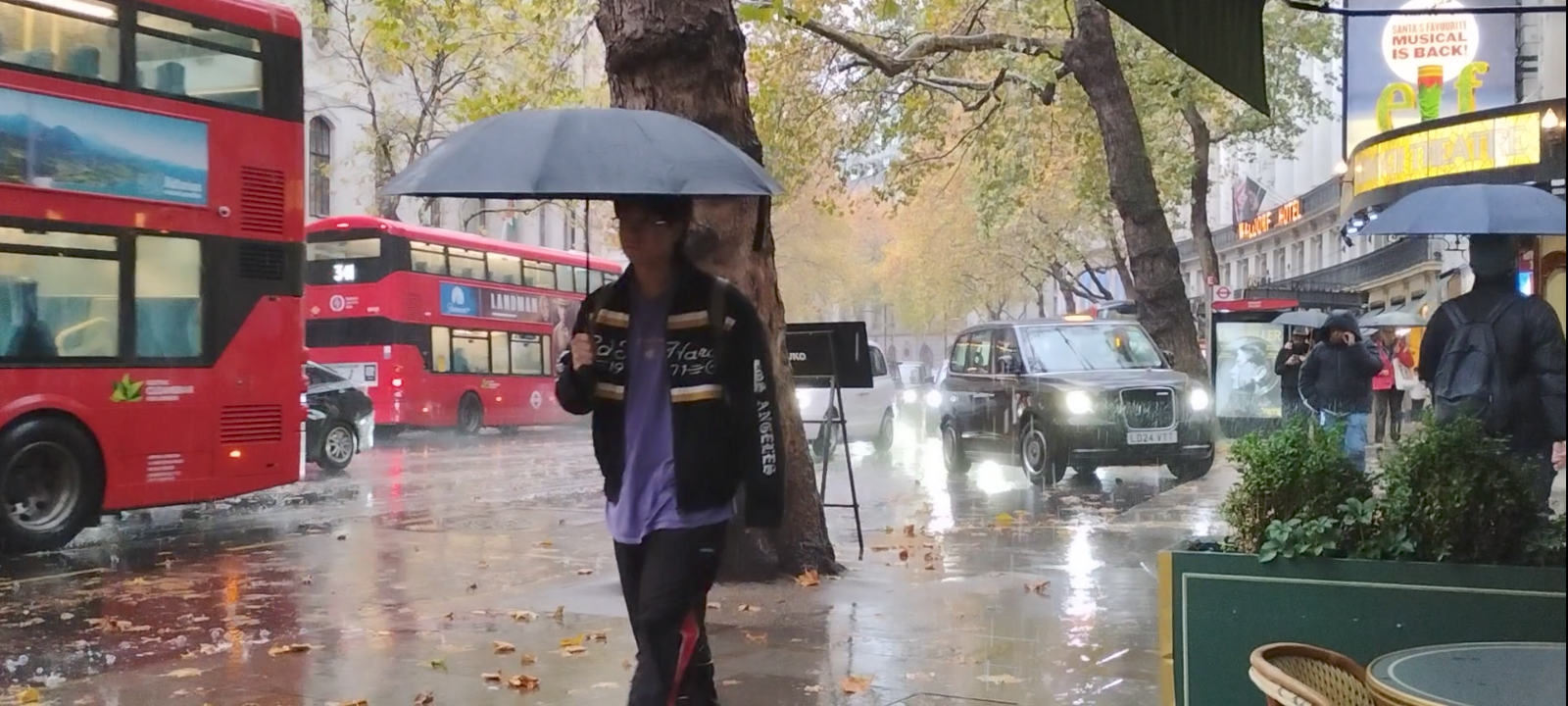
London without its black cabs, many of us would argue, would be as incomplete as London without its red buses, decommissioned red telephone boxes, Big Ben — or even the rain. These are not merely clichés; they are part of the visual and experiential grammar of the city. Black cabs are part of that grammar. They appear in films, photographs, paintings and tourists’ memories as unmistakably “London”.
Artists have long used London’s transport system as visual shorthand for the city. Modern artists, including Edward McKnight Kauffer, Man Ray, Graham Sutherland, Richard McNeil and Paul Nash among others, similarly helped establish London’s buses and transport network as powerful cultural symbols. Today, contemporary painters continue to use red buses and black cabs as shorthand for “London”.
Climate change is already changing London’s image, with less rain and, consequently, fewer umbrellas. If we also allow the black cab to fade, we are effectively editing another line from London’s story. Some might then suggest replacing Big Ben with a generic digital clock, repainting the buses in neutral colours and removing the top deck, or getting rid of red telephone boxes because they are inefficient — the latter now, fortunately, protected, and rightly so.
Efficiency, I would argue, has its place. But so does identity.
The question is not simply whether technology can get someone from A to B. It is whether we are willing to preserve a system that makes not only our journeys safer, but London itself the iconic city that millions of people around the world admire.
So, personally, no: I will not take driverless taxis. Because a London without black cabs would no longer be quite the London I love.
* Christian de Vartavan is an eminent scholar and now CEO of a London blockchain consulting company and Associate, APPG AI, House of Lords.
 Follow @libdemvoice.org on Bluesky
 Like us on Facebook
 Subscribe to our feed
 Sign-up for our daily email digest

 Ex-Conservative campaign director sentenced over election bets
 The Burnham government: the shine dims.
 A.E. Housman on books and their authors
 The hopes of the world rest on the shoulders of libtards in the midterm elections in the USA
 Plaid Cymru bottle council tax reform
 Roland
 Alex Macfie
25 Comments
Perhaps insist that an approved ‘black cab style self-driving car’ be mandated for those who wish to enjoy the advantages of modern technological developments in a way that keeps the link with London’s history.
Just as horse and cart have fallen out of use, traditional black cabs will undoubtedly go the same way when fully driverless cabs become available at less cost to the paying customers.
@Jana, thank you for your comment and yes this is a valid comment although J would personally favour AI assisting black cab drivers as I was telling one this morning. Moreover the idea of a machine locking the doors and deciding when one can exit is something I personally do not accept. This beyond the safety issues at stake.
The Government report that said the self-driving market would be worth up to £42 billion and create up to 38,000 jobs is from a 2022 report by Grant Schapps and Kwasi Kwarteng that also said they would be rolled out by 2025, so take those numbers with a large pitch of salt.
@Jana
“Just as horse and cart have fallen out of use, traditional black cabs will undoubtedly go the same way when fully driverless cabs become available at less cost to the paying customers.”
Personally I’m doubtful about the ability of driverless vehicles to negotiate many British roads – in built-up areas or in the countryside. I’d much rather have a human driving the taxi – and helping me with luggage etc.
While a free-market economy still exists in the Country, modernity and tradition can still co-exist all in the name of choice, competition and free enterprise. I don’t suspect we would stand in the way of mechanisation to the maritime sector now…everyone and everything is fallible…even London cab drivers.
Sadly, the same comments were made when motorised cabs appeared on the streets. Initially people refused to use them but the unstoppable tide of progress eventually overwhelmed the Hansom cab. Personally, I do not think that black cabs will disappear. I just think that they will become driverless. In the thirties, Joseph Schumpeter put forward the idea of ‘waves of creative destruction’ where disruptive technology came in waves. Each wave is followed by another with the distance between the waves getting shorter and shorter. You can argue that the last wave was digital and we are now in the wave of AI. I predict that the next wave will be robotics of which driverless cars are just one example. Today, driverless cars are purpose built but in the future we can expect to see robots at the wheel of a ‘normal’ car. Given how fast robotic technology has advanced in recent years, It’s just a matter of time. IMHO.
Perhaps we should take a few steps back before getting hooked on the tech bros’ kool-aid. It’s a serious error to assume that whatever technology is currently in vogue will automatically catch on because “unstoppable tide of progress”. Not every technology or use of same is a good thing or even a possibility. It’s been over 2 decades since electronic voting was first touted as “inevitable”, yet here we are today, still voting with pencil and paper and usually counting by hand. There’s a good reason for this, which is really logical rather than *techno*logical: there is no way of ensuring the integrity of the election while also maintaining the secret ballot.
There are serious problems with any computerised live system that has no human backstop. Take an example how human cab or delivery drivers are treated by new-fangled tech/driving firms. Drivers are often sacked or demoted by a mysterious algorithm that determines they’re too slow without consideration of the circumstances and the company refuses to override because it believes the computer is always right.
Driverless cars are the ultimate example of this. What if the system breaks down and the passenger is stranded? Or the algorithm is unaware of current road conditions and ploughs through roadworks? Some things need human judgement and driving on public roads is definitely one of those.
The big barrier to mass adoption of driverless cars isn’t technological (not that the technology is easy) but legal.
With a driver-controlled vehicle, liability in the event of an accident is straightforward: it’s the driver.
With a driverless vehicle:
– the passengers can’t be liable as they had no way to prevent it
– the owner of the vehicle didn’t either
– in current law “you programmed a computer to do stuff and then it ran over a pedestrian” would put the liability squarely with the company providing the car. But no mass rollout can happen on that basis!
So what we need to make self-driving cars viable is a change of law so that road accidents – if caused by computers – are considered natural disasters, acts of god, etc. for which no-one is liable and especially not tech multi-billionaires. See also the recent “we programmed a computer to hack another computer, and it did, and this is totally amazing and definitely not illegal” press releases from “AI” companies as attempts in this direction.
(Or we could invest in better public transport – £42 billion would pay for a lot of buses, trains, etc. and likely generate even more than 38,000 jobs)
Alex Macfie, electronic voting is a bad example. Over the past decade, 34-36 countries have used it to count around 4 billion ballots. We have the infrastructure for handwritten in-person ballots; many countries do not, so it may suit them better.
The point about breakdowns leaving passengers stranded applies equally to any motor vehicle. Driverless cars are in constant contact with a control centre, so a replacement would be sent automatically.
You have also conflated driver and delivery management systems, which I agree seem unfair, with driverless vehicle technology. They are different things with different purposes.
As for having no human backstop, the Docklands Light Railway has run driverless trains since 1987 with a passenger service agent but the Paris Metro line 14 and Compenhagen metro run autonomously. Admittedly these are more constrained environments than British roads, but Waymo has operated in San Francisco for four years with an excellent safety record, despite the city’s complex roads. A 2025 study in Traffic Injury Prevention found Waymo’s San Francisco any-injury crash rate was 0.88 per million miles against a human benchmark of 8.02, an 89% reduction.
This is coming; in many countries it is already here. The only question is whether it becomes ubiquitous. I suspect it will in dense urban areas, though perhaps not in rural ones. Within 50 years our grandchildren may never ‘drive’ a car. We already see the germ of this in lane keeping, adaptive cruise control, automatic parking and collision avoidance. Each year brings a new autonomous feature. It doesn’t take a genius to work out where that is leading.
“A 2025 study in Traffic Injury Prevention found Waymo’s San Francisco any-injury crash rate was 0.88 per million miles against a human benchmark of 8.02, an 89% reduction.” Note that if they simply didn’t cause any accidents, you would expect a maximum reduction of 50%. The 89% includes avoiding a large number of accidents that would have been deemed the fault of the other driver.
Driverless cars are not just a replacement for Black Cabs which make up a small proportion of the hire market. They will replace minicabs first but expect them to replace hire cars rapidly (Tourists, especially from right hand drive countries, have an awful safety record). There will be privately owned ones for those who want to work in their cars or who have visual or motor imparement but as they reduce the cost of ad-hoc hire (no driver, lower insurance, more energy efficient driving style band charging strategy), the economics tilt towards not owning a car. Before giving up vehicle ownership, I checked that I would save money even if I took a black cab everywhere. Far more people would be in that position with self-driving cars.
Selfish comment: I’m 76, healthy for now, live in a small village, couldn’t easily cope without a car. One day, I might become unable to drive. Then, despite online groceries and a bookable daytime short-range bus, I might feel forced to move somewhere more urban – Unless I could own a driverless car. That might be a godsend.
I commend you Christian for noting what you personally plan to do rather than calling for government regulation to enforce the maintenance of your preferences. Very liberal!
For my part, I enjoyed the novelty of the odd black cab back when I lived in London, but admit I was astounded when I got in one when first arriving from Australia back in 2015 to find it (like many back then?) didn’t take card payments. Cash only cabs in Australia hadn’t been a thing for at least a decade by that point. After that experience I wasn’t exactly keen to get another, sans with a tourist for ‘the experience’.
Let’s get away from the myth of DLR driverless trains..There’s a qualified driver in the cab at all times who takes control when the computer makes a demand. They are not & never have been driverless ..
Indeed David (Allen), a driverless car might be a godsend.
Its systems might fail and it might indeed send you to god.
On Chloes point
DLR Trains don’t have a cab
there is a conductor on board who can drive the train if called to but that hardly ever happens
The best new cars have a button to turn all that driver “assistance” off. After you have fought the steering because of “lane keeping “, suffered near emergency stops from adaptive cruise control when the car in front turns off or there’s a metal post too near the road it seems like an essential.
Oh yes, and been told to “consider taking a break ” for no apparent reason.
Human says “no”.
Quoting from Alex Macfie 3rd Oct ’26 – 9:50am
“Driverless cars are the ultimate example of this. What if the system breaks down and the passenger is stranded? Or the algorithm is unaware of current road conditions and ploughs through roadworks? Some things need human judgement and driving on public roads is definitely one of those.”
Or what if the passenger is taken ill? Is the robot system going to notice and do something useful about that?
And on a point a mentioned in my earlier post – is the robot going to help me with my luggage?
Quoting from Anthony Harris 3rd Oct ’26 – 11:23am
“Waymo has operated in San Francisco for four years with an excellent safety record, despite the city’s complex roads.”
Complex? San Francisco city roads are mostly laid out in a neat grid pattern. Street juctions there are generally much less complex than some in London where you might encounter 5 or 6 roads converging on a junction.
Or the passenger in the taxi becomes unwell – is a robot system going to ‘realise’ and do something about it?
@Chloe – “Let’s get away from the myth of DLR driverless trains..”
Too many years ago I designed computer systems for mass transport systems, the DLR being one of those…
The conductor was introduced because back in the mid-1980s (when DLR first became operational) people had a distrust of driverless trains.
It’s not a conductor – it’s a fully qualified driver on every DLR train. Driverless it most definitely isn’t.
Regardless of the exact degree of human involvement driving a DLR train, there is a fundamental difference between rail tracks and public roads. Trains run to schedules taking slots that are agreed with the track operator. It’s not like just anybody can own a train set and unilaterally run it on the track. So the operation is much more straightforward than public roads, which are a free-for-all (in the sense of ‘libre’ and usually ‘gratis’ (at the point of use) as well). Also there is a difference between being stranded in a booked driverless cab and in a human-driven one, in which the driver knows whom to contact to fix the problem.
The examples is my earlier post were about tech for tech’s sake. Surely pencil-and-paper voting will be cheaper than e-voting. This is often the case with technological solutions for which human operation already works well enough. The point is that e-voting (in elections for public office) hasn’t achieved the dominance that it was supposed to in the past 25 years, and in some jurisdictions is illegal for reasons I mentioned.
Maybe AI will become advanced enough to run random driverless cars on busy unpredictable public roads. But will it be worth the cost or the carbon footprint?
Alex Macfie. I completely agree with the constrained nature of rail versus road which is why I made the point in my note that ‘Admittedly these are more constrained environments than British roads …’
San Francisco does have a grid like structure downtown but there are many areas of the city that do not. I know this because I lived in the bay area for several years. For example, West of Twin Peaks, St Francis Wood, Forest Hill, Sea Cliff, Westwood Park and Ingleside Terraces, were deliberately curvilinear as is Urbano Drive. Twin Peaks, Mount Davidson, Diamond Heights, Glen Park. Parts of Telegraph Hill and Bernal Heights, have contoured streets. Diamond Heights was designed explicitly as a rejection of the grid. Parkmerced, uses a pie-slice plan. The Presidio and Golden Gate Park have their own organic road systems. Waymo navigates these very well.
London is more complex but the technology gets better and better by the day. “AI is always better today than it was yesterday.” (Harris) This is coming, whether we like it or not. Of course, we will always have the opportunity to vote with our feet but, like the cashless society, the opportunities to use cash are getting rarer every day. When the day comes where you need a taxi urgently and the only option is driverless you will be forced to make a choice to walk or accede. That decision will be governed by how heavily it is raining at the time!
cim 3rd Oct ’26 – 10:56am:
So what we need to make self-driving cars viable is a change of law…
Already done. The UK’s world-leading Automated Vehicles Act 2024 introduces the innovative concept of a User in Charge (UiC) who’s only responsible for traffic law violations when actually driving and responsibility dynamically transfers to the system provider when the car is self-driving.
‘Self-driving vehicles set to be on roads by 2026 as Automated Vehicles Act becomes law’ [May 2024]:
https://archive.is/3i4D7
‘Are Self-Driving Cars Legal in the UK? The 2026 Law Explained Simply’ [May 2026]:
https://archive.is/te4Wp
Nonconformistradical 4th Oct ’26 – 9:09pm:
Or what if the passenger is taken ill? Is the robot system going to notice and do something useful about that?
Self-driving taxis have assistance buttons and two-way communication with a control centre. Non-contact health monitoring is rapidly developing; word of the day: photoplethysmography.
San Francisco city roads […] are generally much less complex than some in London where you might encounter 5 or 6 roads converging on a junction.
There are many such complex junctions in San Francisco. The more complex the environment the safer an autonomous vehicle (AV) is likely to be relative to a human driver. Us humans have a limited ability to take in sensory information and can only cope with three or four tasks at once and then only by cycling through them with much diminished attention to each. By contrast, an AV system can take in vast amounts of information from dozens of sensors and process it all simultaneously. If a pedestrian steps into its path, a self-driving car can take evasive action around 10 times faster.
How many concurrent data streams does a driverless car process and how does decision latency compare to a human driver?:
https://gemini.google.com
In my experience of San Francisco, driverless cabs are smooth and courteous. I wish all drivers, there and here, were as good. I am sure in due course they will become the norm here. As David Allen said, they will be a particular boon for the elderly, but also to people who cannot drive for other reasons.