Author Archives: Christian de Vartavan

Macron combines industrial ambition with strategic state action

Embed from Getty Images

President Macron delivered a landmark speech at France’s Atomic Energy Centre, CEA, in Bruyères-le-Châtel last Friday, building on the technological and commercial objectives France is seeking to achieve, as discussed in my article published last Wednesday, “Time for the UK to Engage with Europe on AI Sovereignty.” In his speech, Mr Macron set out France’s determination to secure sovereignty in computing power, quantum technologies and semiconductors, while also building the capacity to lead the market in these strategic sectors.

Posted in Op-eds | 8 Comments

Time for the UK to engage with Europe on AI sovereignty

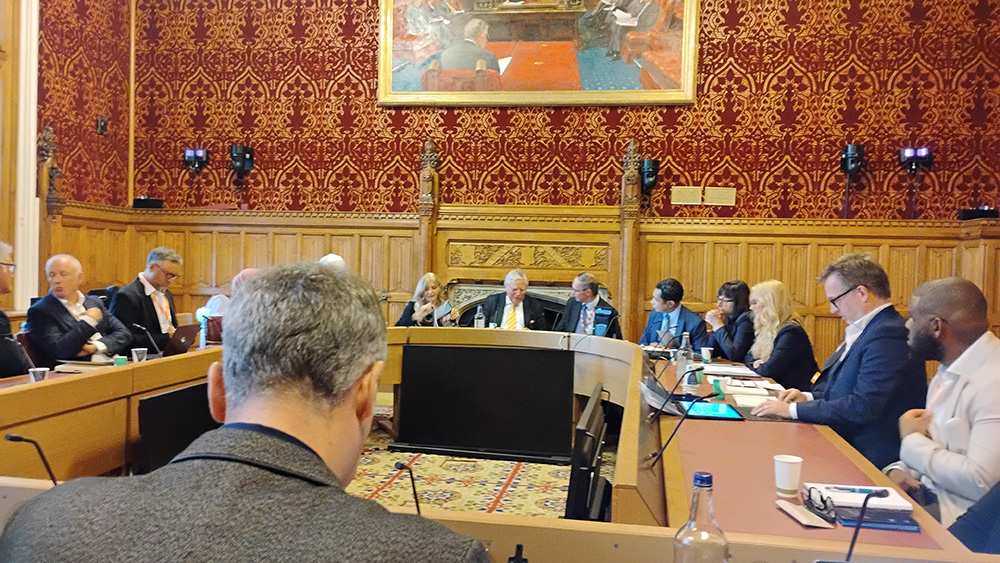
On Monday evening, a major evidence session of the House of Lords APPG on Artificial Intelligence — of which I am an associate — took place, where it became clear that the question of British and European AI sovereignty is no longer an abstract policy debate but is rapidly becoming a central political priority.

The session, organised by the Big Innovation Centre under Professor Birgitte Andersen and chaired by Lord Tim Clement-Jones, brought together policymakers, academics and industry leaders to confront a stark reality: the UK is too dependent on foreign — particularly American — AI infrastructure, platforms and large language models. This dependence carries significant implications for economic resilience, strategic autonomy and long-term technological capability.

A significant contribution came from Josephine Kant of the newly established UK Government AI Sovereign Fund, an initiative designed to strengthen Britain’s strategic autonomy in AI. Its creation signals a broader shift in thinking — away from the assumption that global markets alone will deliver resilient technological ecosystems, and towards a recognition that public policy must play a more active role in shaping critical infrastructure.

Posted in News | Tagged , , and | 2 Comments

The UK Digital ID: a lawful project with serious political risks

There is no constitutional or legal barrier preventing the creation of an identity card in the United Kingdom, whether digital or otherwise.

If such a system were to be introduced, it would logically fall under the UK Data Act 2025, adopted on 19 June 2025, which establishes the legal framework for digital identity services in the country. This Act, known as the DUAA, is overseen by a newly formed body called the Information Commission — a name confusingly similar to the existing Information Commissioner’s Office (ICO). The new Commission has regulatory powers comparable to those of Ofcom or the Competition and …

Posted in Op-eds | Tagged | 12 Comments

To foster AI and technology innovation, words alone are not enough

Dr. Karsten Wildberger, Germany’s new Federal Minister for Digital Transformation and Government Modernisation, has raised important concerns about the EU AI Act. He argues that its regulatory framework is being introduced prematurely—before a strong European AI market has emerged—and stiffles innovation. “Sometimes it’s wiser to pause and reassess when circumstances evolve,” he told the Financial Times (link below), underscoring how the Act creates barriers that deter companies from experimenting and scaling AI within Europe.

His remarks highlight a broader tension: Europe aspires to lead in AI, yet risks undermining its own ambitions by prioritizing control over cultivation. Regulations must ensure safety and ethics, but they must also be proportionate, flexible, and designed to nurture domestic innovation rather than handicap it before it can properly grow.

Posted in Op-eds | Tagged | 2 Comments

The UK Government must rethink its AI R&D

The recent shift forcing the Alan Turing Institute toward defence-focused AI research has sparked major questions about the UK’s innovation strategy.

Many argue that the government should have created or funded a dedicated defence AI institution with a clear mission, avoiding dilution of the Institute’s vital civil AI research and social innovation. The sudden pivot caused staff unrest, leadership upheaval, and risked ongoing societal research programmes.

Public trust and accountability are also crucial. National security projects need specialist oversight, ethical governance, and transparency—elements compromised when defence priorities are fused into a broadly purposed public research institute.

The UK already has specialist institutions developing defence AI. The Alan Turing Institute runs the Defence Artificial Intelligence Research (DARe) Centre in collaboration with the Ministry of Defence and intelligence agencies. The Defence Artificial Intelligence Centre (DAIC) integrates AI across military operations, while the AI Security Institute addresses AI safety and security risks. The Defence Innovation Organisation supports industrial partnerships with a significant ring-fenced budget. These dedicated bodies are designed to drive rapid advancements in national security AI.

Defence AI demands specialist infrastructure, security clearance, and operational protocols that a repurposed civil institute is ill-equipped to provide.

Posted in News | Tagged , and | 4 Comments

The title of Mr Putin’s article is a misnomer

Ukraine matters to Russia, and Russia – or Putin if you will as both are currently inseparable – means it.

This is in substance the message carried by the deployment of about 100.000 soldiers along the Ukrainian border. To make his message clearer Mr. Putin not only deployed some of its best trained units or nuclear, biological, and chemical reconnaissance vehicles but also its latest and very dangerous Iskander ballistic missile launchers – as Janes reports.

The alleged ‘historico-philosophical’ basis for this deployment is to be found in the long article entitled ‘On the Historical Unity of Russians and Ukrainians’ signed by President Putin himself. It is freely available in English on the Kremlin’s website and, having read it from top to bottom, I found it fascinating at multiple levels.

For a start because Mr. Putin, to justify Russian-Ukrainian ties, goes back to the princes of the Rurik dynasty. The latters named after the legendary Rurik, chief of the Rus, who reigned in 862 and whose current titled heirs includes one of my very good friends who was until a few months ago the Ambassador of Switzerland to the Republic of Latvia, Republic of Estonia and Republic of Lithuania. I wonder what, now back to Switzerland, he would make of this paragraph of the article:

Posted in Europe / International and Op-eds | Tagged and | 6 Comments

Should the mass proliferation of AI-driven war drones and robots be left uncontrolled?

Embed from Getty Images

The Chinese government, as I hope our MoD, will have noticed the important article of Nicholas Chaillan ‘To catch up with China, the Pentagon needs a new #AI strategy“, published in the Tuesday 23rd of November issue of the Financial Times.

As indicated, Mr Chaillan was formerly the first chief software officer at the US Air Force and Space Force. He is now the chief technology officer at cybersecurity firm Prevent Beach. The article points out the shocking “kindergarten-level” of US military/Pentagon cybersecurity in the US’ critical national infrastructure and that the next war will be software-defined: “It won’t be won with a $1.7tn programme of fifth generation F35 fighter jets or $12bn aircraft carriers. China can take down our power grid without firing a single shot”.

Posted in Op-eds | Tagged , and | 4 Comments

Forecasts for the end of the COVID-19 epidemics similar to Singapore lab’s

Between March 17th and 20th, using my former scientist’s PhD knowledge, I started making forecasts, with graphs, of when the COVID-19 would end for the main European countries and the UK. The shot was a long one, and the forecasts sent in a private email to colleagues. At the time the government announced a minimum ’12 weeks’ epidemic. Hence until at least June 17, with statements that it may last over six months to 2021.

With data consolidating from March 30, I took the risk to make my previsions public on LINKEDIN (https://www.linkedin.com/pulse/update-previous-coronavirus-covid19-reports-analysis-de-vartavan/) forecasting the end of the UK epidemic between April 30 and May 6 +/-. In another April 21 report, I also calculated, among others, the end of the Italian epidemic around May 6 +/-.: (https://www.linkedin.com/pulse/now-witnessing-end-coronavirus-epidemic-central-christian-de-vartavan/). The aim is to provide intelligence to UK companies of when to prepare to exit the costly lockdown and hence reduce at soon as possible its economic damages. I suggested May 1 to start preparing and still do. 

Posted in Op-eds | Tagged and | 15 Comments

Brexit in British and World evolution

This article was due to appear in September when I asked for a second referendum, but I delayed it as I thought at the time that it would appear as purely academic. Political reflection has evolved since then.

The Prime Minister repeats endlessly her political mantra that Brexit will bring a brighter future and happy tomorrows. The student of history knows how costly any secession or independence can be, with usually an array of sweat, tears and too often blood, even with the best plans. This was precisely the sense of my question to FM Nicola Sturgeon at the RSA recently: ‘If Scotland would be independent, have you made any plans to project the country in the future?’ To alert her of the dangers of such program more than know about them. Matthew Taylor, who moderated, said ‘Very big question’ then turning to her ‘I suspect the answer is ‘yes’’!. She of course replied ‘Yes, is the answer to that question….’. Mrs May, to whom I pointed out I could ask the same question for Brexit, would have equally said ‘yes’. As a member of a family who has helped reformed two states, Egypt (1920’s) and Brazil (1958), and created one republic from scratch – the First Republic of Armenia (1918-20) – I will humbly point out that any such project is a costly adventure no matter how well prepared you are and even if you are on the ‘right side of history’ to quote Mr Obama during his inaugural speech

It is on the latter point I wish to dwell. World history, including the European one, has a flow and some like Lord Heseltine, see it very well. President Roosevelt once formulated it with the vocabulary of his time: ‘You can delay the development of civilisation, but you cannot stop it’. The world, whether one likes or not, tends towards unity even if this is in the future. The European idea is a step towards this unity; Brexit a delay triggered by those who consciously or unconsciously react to this global change: Open border and this free movement which Mrs May wants ended, mingling of nations at an increased pace, decentralisation of the financial world and education, etc… Even the French Prime Minister recently stated that English is the ‘Langua Franca’ of the world – a true revolution considering the onerous ‘Francophonie” program which aims to restore the influence of French in international circles.

Posted in Op-eds | 5 Comments

Parliament must restore national unity

700,000+ marched Saturday in London to ask for a second vote concerning Brexit. They marched for many more who could not come. How many is a guess but probably several million. The nation is hence divided and it is the duty of the government, if not most likely Her Majesty’s wish, for the UK to recover national unity. Every learned politician knows of its importance and what history shows to happen sooner or later when there is a lack of it.

Independently of its prospects, positive or negative, a consensus for Brexit is required before proceeding, as the project now shows itself offering dangers greater than the economic arguments at its origin. A programme not only putting civic peace at risk but now even threatening the very unity of the Kingdom.

The problem is that Mrs May’s cabinet is more interested in implementing a divisive Brexit than preserving national unity. It hence falls logically to Parliament to walk in and seek it.

Parliament is sovereign and could declare that it is in the supreme interest of national sovereignty and unity that Brexit be abandoned. With the position of First Minister Nicola Sturgeon to consider Scottish independence if the UK would leave the European Union or the statement of some Irish politicians that Ireland would unite under the same circumstances, I have asked myself if Brexit could now be anticonstitutional as threatening territorial integrity and hence national security.

Posted in Op-eds | Tagged , and | 21 Comments

Some Brexiteers do not play the democratic game

Democracy, in a civilised society, has its rules. One of them is, if not the respect, at least the polite tolerance of others. Humility and caution are two additional requisites, I would suggest, for whoever wishes to express political opinions.

A number of Brexiters, learning of a growing desire among many to see another people’s vote take place are, like bad sports players, now sliding into disrespectful and even injurious behaviours. The Spectator for example, published a few days ago an article entitled ‘The People vs Brexit‘. Its author, Mr Rod Liddle, writing:

The People’s Vote monkeys now buttress their demands for

Posted in Op-eds | Tagged and | 32 Comments

Why a second referendum is now not only right but necessary

These last months’ debate on Brexit have established one fact: a portion of the people who have voted leave have done it for the wrong reasons. This is a fact, not an interpretation or an opinion, and it is on facts that decisions must be taken.

Many people of that portion realise that they did not understand Brexit or were simply misled. Many of these, we now know, would vote remain. In fact polls, such as YouGov’s across a significant 10.000 people, show that currently Britain would vote remain 53 to 47, as expressed directly in these terms : …

Posted in Op-eds | Tagged and | 59 Comments

Young men, IS wants you!

I was on Sunday watching BBC News when I heard Mr Ed Husain, adjunct senior fellow for Middle Eastern studies at the Council on Foreign Relations in New York and senior advisor at the Tony Blair Faith Foundation, says exactly but in different words (and reversed similar statistics) what I have wrote in my last article : You do not kill an idea with bombs, i.e. that the Islamic State (IS) should not only be challenged at body but more at mind level if we wish to see it vanish. I do not know if Mr Husain reads the Liberal Democrat Voice, no doubt he had developed his ideas long before me, but it is interesting that similar views and solutions are independently expressed on such grave matter.

Posted in Op-eds | 12 Comments

You do not kill an idea with bombs

It is, in my opinion, a three tiers cocktail which may defeat the Islamic State (IS). Since a few days we hear a lot about the first tiers, i.e. the military option which by bringing war into the enemy’s camp attempts to neutralize its exponential expansion as well as increase our security – if not because attacking, as we all know, is best defence. We also talk a lot of the third one, i.e. the “after IS” or “after Daesh”, which is rightly concerned with the vacuum which the elimination of IS may leave in Syria and Iraq; no less the difficult political actions which need be taken to paliate this vacuum.

Posted in Op-eds | 16 Comments
Advert

Recent Comments

  • paul barker
    A note on Reform, we have just seen the 2nd Poll showing Reform losing their lead. You might think that would attract some notice by Journalists or The Commenta...
  • Peter Chambers
    > Clearly the aircraft carriers were a pork barrel for Gordon Brown’s constituency. Doubtful. More to do with the US "pivot to Asia". The UK does not have...
  • Mark ValladaresMark Valladares
    @ Matt (Bristol), You use the word “vanguardism” as though politicians don’t have an obligation to lead, rather than merely following the loudest voice...
  • Mark Smulian
    I first worked with Michael on his three pamphlets published in the mid-1980s by Liberator and mentioned above by Geoffrey Payne. He was, obviously, an effectv...
  • Geoff Reid
    As well as being at the heart of the best Assembly/Conference coffee room conversations, Michael was for me the best compass we had over half a century. His lea...