Dominic Rider is right about the moment we are in. The transatlantic guarantee is wobbling; Europe is being reminded, again, that dependence is not a strategy. When Washington treats alliances as transactional, Europeans either grow up fast or get pushed around slowly. The Liberal Democrats should say what comes next.
Where I part company with Dominic is on the destination. He argues for “confederation, not a superstate”. That contrast misses the real problem. Europe already exercises power: the single market sets rules, sanctions shape foreign policy, and standards shape economies. The question is not whether Europe will have power; it is whether that power is democratically governed and has clear lines of responsibility.
A confederation keeps the fog. It offers reassurance, but it leaves the constitutional flaw untouched: paralysis. Dominic is right that unanimity lets one government block action. Qualified majority voting helps, but procedure alone will not fix a system designed to avoid clarity. A Europe that wants to act like a strategic player needs institutions built for action, not for reassuring capitals.
Federalism is the democratic solution. A federal United States of Europe is not the abolition of nations; it is the constitutional ordering of shared power. It means voters can see who governs, what they control, and how to change course. That is not a “superstate”. It is power placed under law, limited by a written settlement, and answerable to citizens.
The principle is simple: do together what must be done together; keep the rest close to home. Defence, trade, external borders, major infrastructure, and climate commitments belong at the federal level because they are cross-border by nature. Taxation, welfare, health, education, culture, and constitutional arrangements should remain national, devolved, or local because diversity is a strength. Subsidiarity should not be a slogan; it should be enforceable.
Defence is the acid test. Pooled procurement is valuable, but deterrence cannot rest on voluntary top-ups and ad hoc deals that unravel whenever politics shift. If Europeans want strategic autonomy, they need a single security actor: capability planning that matches threats, industrial scale to reduce duplication, and a chain of command that is democratically accountable. Committees do not deter revisionist powers; credible forces and clear commitments do.
The “superstate” fear is real, but it is misaimed. What people resent is unaccountable decision-making. The EU already has a far-reaching influence, just in a hybrid form where citizens struggle to “throw the rascals out”. Federalism does not add power for fun; it puts existing power under democratic control, clarifies competencies, and makes responsibility legible.
That is also the British opportunity. Public opinion has shifted; more voters now believe Brexit was a mistake. Yet that sentiment will remain politically inert unless someone offers a serious answer to the next question: rejoin to do what? Labour treats Europe as a problem to be managed, not an opportunity to be seized. Conservatives are trapped by their own coalition. The Liberal Democrats have the freedom, and the duty, to lead.
But leading means more than tiptoeing back into yesterday’s Europe. People can smell timidity. They will not rally to “rejoin, but change nothing”. A federal programme is clearer: Britain should return to help build a Europe that can defend itself, compete economically, and uphold liberal values, not just with speeches.
So what should Liberal Democrats argue for? Treaty reform towards a constitutional settlement: an elected European executive accountable to an elected parliament; a senate of states to protect national voice through transparent votes; majority decision-making where collective action is required; and hard subsidiarity so everything not explicitly federal stays closer to the citizen. That is how you make European power democratic.


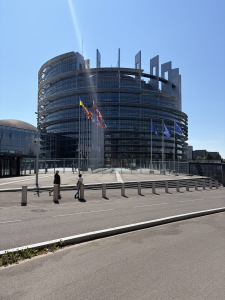 So, I ought to declare an interest as a former member of the Party’s Federal International Relations Committee, and a member of the Liberal Democrat European Group on and off over the years. You might therefore imagine that I’d be pleased that Ed Davey is finally talking about our future as a member of the European Union. I’d put it more as relieved, though, as it’s been an open door that we’ve rather shied away from in recent years.


 In case the message hasn’t quite got through to our European Leaders, you can’t voice it more starkly than in the new


 The basic theory is that Europe has shortages of labour and natural resources alongside an inward migration challenge, largely across the Mediterranean, but is relatively rich and well placed with investment resources. Africa conversely has an excess of available labour and copious natural resources, but a severe shortage of capital for investment. The African perspective is that Europe is a far better fit for economic partnership than China, as China also has excess labour and is more interested in importing African raw materials than the possibility of adding value in Africa. Europe is also much closer geographically and culturally. The Africans all stress that they do not want to replace Chinese investment, but to more than match it with investment from Europe.


 Follow @libdemvoice.org on Bluesky
 Like us on Facebook
 Subscribe to our feed
 Sign-up for our daily email digest

 Roman Leicester wasn't built in a day 2
 Spread it around
 Shambolic, careless Reform and their disappearing councillors
 Sandy Walkington
  cim
cim  Nigel Ashton
  Andrew Tampion
  Anthony Harris