Author Archives: Mathew Hulbert

Mathew on Monday: Starmer’s resignation and an increasingly ungovernable country

Keir Starmer’s resignation comes as little surprise. In truth, he always appeared ill-suited to the role of Prime Minister. He entered Downing Street with no clear governing project, no driving ideology and an over reliance on advisers and political management. He often seemed more comfortable responding to events than shaping them. Yet focusing solely on Starmer risks missing the bigger picture.

When (as now seems all but inevitable) Andy Burnham walks through the door of Number 10, Britain will have had seven Prime Ministers in just ten years: Cameron, May, Johnson, Truss, Sunak, Starmer and now, likely, Burnham. This is an …

Posted in Op-eds | Tagged , and | 4 Comments

Mathew on Monday: Banning Under-16s from Social Media is the Wrong Answer

The newly announced ban on social media for under-16s may be politically popular, but popularity alone does not make good policy. As liberals, we should be deeply sceptical of blanket bans that restrict freedom while failing to tackle the root causes of a problem.

There is no doubt that social media can be harmful. Young people are exposed to bullying, misinformation, unhealthy content and algorithms designed to maximise engagement rather than well-being. These are serious concerns and they demand action. But the question is whether an outright ban is the right response.

I do not believe it is.

First, the proposal is likely to prove largely unworkable. Teenagers are often more technologically adept than the adults seeking to regulate them. VPNs, alternative platforms and borrowed accounts will inevitably undermine enforcement. Even child-safety campaigners have warned that a rushed ban could quickly unravel in practice.

Second, it risks creating a false sense of security. The real problem is not simply that young people are online. It is what some tech companies allow and actively promote online. Harmful content, addictive design features, endless scrolling and opaque algorithms are business choices. A ban focuses attention on children rather than on the corporations profiting from their attention. Critics have rightly argued that stronger action should be directed at platform design and algorithmic harms.

Third, social media is not universally negative. For many young people, particularly those who may suffer from social isolation and so on, it can provide friendship, community snd support that may not exist elsewhere. An outright prohibition risks cutting them off from those connections.

Posted in Op-eds | Tagged , and | 31 Comments

Mathew on Monday: “We need to be bold”

EXCLUSIVE: “We need to be bold, we need to be relevant, and we need to show people that we’re serious” – party figures react to news of strategy review

This weekend news broke, via PoliticsHome, that the Lib Dems are conducting an internal review of policy after concerns that had previously been kept mostly behind closed doors became public, with figures including former leadership candidate and current Chair of the Commons Health Select Committee Layla Moran speaking to the outlet about a “frustration” that the party’s been talking about the same things and that we “weren’t really moving forward.”

Despite achieving the party’s best result in a century in 2024, 72 seats in the House of Commons, it’s widely felt that since then we’ve been lost in the shuffle and all too easy to ignore.

Since the news of the review became public I’ve been speaking to people throughout the party, from parliamentarians to grassroots members for this column, about their reaction and what they want to see from the review.

Lib Dem MP for Harrogate and Knaresborough Tom Gordon, who was also quoted in the PoliticsHome piece, told me:

The political landscape is shifting fast, and voters who are frustrated with the status quo are actively looking for somewhere to go. The Lib Dems have a real opportunity here, but we have to be willing to step up with a distinctive, ambitious offer that speaks to the whole country.

He added,

We need to be bold, we need to be relevant, and we need to show people that we’re serious. Our members will not forgive us if we miss the boat.

Posted in Op-eds | Tagged , and | 8 Comments

Mathew on Monday: Pluralism Means More Than a Slogan

On Saturday I travelled down to London to attend the Compass and Progressive Economy Forum’s Change: NOW! Conference, which brought together around 700 people from across the progressive spectrum for what felt like a serious and timely conversation about the future of politics in Britain.

In an age of deep political fragmentation, rising populism and the growing threat posed by Nigel Farage and Reform UK there was something very refreshing about spending a day at an event where people were prepared to engage with those beyond their own political tribe.

Speakers included Caroline Lucas, Vince Cable, Zack Polanski, Clive Lewis MP, Stella Creasy MP, the economist Gary Stevenson, Author and Observer columnist Will Hutton, and many more, representing a broad range of traditions, perspectives, and experiences.

One contribution in particular stayed with me.

Lib Dem MP for the South Cotswolds Roz Savage argued powerfully that “no one political party has a monopoly on good ideas.” It is an observation that sounds obvious when stated aloud, yet too much of modern politics is conducted ax though the opposite were true. Too often parties, including our own, retreat into their own comfort zones, convinced that wisdom begins and ends with those wearing the same colour rosette.

Savage went further. It is not enough, she suggested, to simply describe themselves as pluralists. We have to demonstrate pluralism in practice. We have to show voters that we are capable of working with those with whom we do not agree on everything in pursuit of outcomes that improve people’s lives.

Posted in Op-eds | Tagged , , and | 13 Comments

Mathew on Monday: Swirling unease among urban Lib Dems

The celebratory yellow smoke from the 2024 general election may have cleared, but inside the local party branches of some of our major cities a very different kind of atmosphere is settling in. It is a thick, unmistakable sense of urban unease.

Whilst the national narrative remains focused on the “Blue Wall” breakthroughs, a growing contingent of activists and councillors in our urban heartlands are beginning to ask a difficult but very necessary question: at what cost?

As others have intimated on this website over the past week, in the wake of recent local election results the mood among urban Lib Dems has shifted from quiet concern to open frustration and potential dissent.

I got a sense of this when, on Thursday evening, whilst on the train travelling down to London to appear on Talk, I got a message from a very prominent city-based Lib Dem asking if I had a few minutes for a chat. In our subsequent phone call this person, usually very affable, was noticeably reaching the end of their tether at what they perceive as the party leadership all but abandoning us being competitive in urban areas. I gave this a brief mention on Talk later that evening and clipped it up for social media the next day. The reaction from others in the party was interesting and, in some cases, very telling. Whilst most folks agreed that something is going very badly wrong others tried to suggest that everything is hunky dory in the party and there are no problems.

As I suggested on my Political Frenemies podcast on Friday evening, sticking your head in the sand and ignoring the reality of a situation is not a very sensible or useful way to behave for a political party.

For years the party’s strategy has pivoted heavily toward suburban and rural gains – a strategy that undeniably delivered seats in Parliament. However, on the ground in our cities, many feel the federal party is leaving them to rot.

Several well-known figures within the party have now broken ranks. Tom Gordon MP, Cllr Victor Chamberlain and former London Mayoral candidate Rob Blackie have all waded in. In private forums and increasingly public social media posts, activists are criticising recent local election results as a sign of an ever-narrowing political identity for the party. It is clear that tailoring our message so specifically to disenchanted Conservatives in the shires, we are becoming background noise in the diverse, high-density wards of the English North and Midlands.

Posted in Op-eds | Tagged , , and | 12 Comments

Mathew on Monday: Starmer’s time is up – Labour needs a new Leader and a new direction

There are moments in politics when you can see the tide has irreversibly turned. Keir Starmer’s much-hyped speech this morning was one of those moments – not because it miraculously reset his premiership, but because it confirmed just how exhausted and politically diminished it has become even after less than two years. Some Labour MPs are today saying it is “too little, too late” and the number calling for him to set out a timetable for his departure grows by the hour.

The problem for the Prime Minister is not merely that Labour has suffered very bruising electoral setbacks (to say …

Posted in Op-eds | Tagged , and | 10 Comments

Mathew on Monday – Ed Davey, Trump, and why legitimate criticism being blamed for violence is nonsense

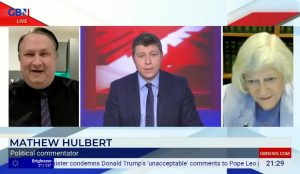
Early this morning on GB News I debated a former Tory MP (and the presenter) on why there’s no connection between our leader’s criticism of the present occupant of the White House and the alleged political violence that took place this past weekend -the argument simply doesn’t stand up to even the most basic scrutiny.

Let’s start with first principles. All political violence is wrong. Full stop. Whether it’s an alleged incident at the White House Correspondents’ Dinner this weekend, or the well documented events of January 6th, 2021 – when a mob of angry supporters of Donald Trump (arguably at his direct instigation) stormed the U.S. Capitol in an attempt to overturn a democratic election result – it is always indefensible. But what is both intellectually lazy and politically dangerous is the attempt to draw a straight line between robust democratic criticism and acts of violence. That’s not analysis – it’s deflection.

Because let’s be absolutely clear: Ed Davey criticising Donald Trump is not the problem here. It is, in fact, part of the solution.

We live in democracies. That means leaders – whether in Washington or Westminster – must be open to scrutiny, challenge, and yes, criticism. If a British political leader cannot express concerns about the rhetoric, behaviour, and record of this U.S. President without being accused by some of somehow “inciting” events thousands of miles away, then we are in very troubling territory indeed. Especially as, at the same time, I was being told that no one in the States has heard of the Lib Dem leader and that he has ‘no impact’ across the Atlantic.

Even as presented, the argument collapses under its own weight. Because it implicitly suggests that the real issue is not an act of alleged violence itself, but the existence of criticism that may have proceeded it. That is a profound inversion of responsibility.
And it also ignores the wider context. The United States has, in recent years, experienced a worrying increase in political tension and high-profile violent incidents, with experts pointing to the corrosive impact of genuinely inflammatory rhetoric and polarisation. To pretend that a British leader from the mainstream political centre is somehow the catalyst for that, or, indeed, plays any part in it whatsoever, is frankly absurd.

Posted in Op-eds | Tagged , , and | 7 Comments

Mathew on Monday: is Keir Starmer the most incurious Prime Minister in British history?

There is something increasingly puzzling – and politically dangerous – about the way that Keir Starmer governs. It is not simply that things go wrong on his watch; every Prime Minister faces crisis, missteps, and the odd unforced error. It is that, time and again, Starmer appears oddly detached from the very events shaping his premiership. As if politics and government are things that happen to him, rather than things he actively directs.

That sense of detachment is beginning to harden into something more troubling: a complete lack of curiosity.

Effective leadership demands an almost relentless inquisitiveness – a desire to know what is happening, why it is happening, and what might be coming next. It requires a Prime Minister to probe, to challenge, to test assumptions, and, crucially, to anticipate problems before they spiral. Starmer, by contrast, too often looks like a man content to sail above the fray – until, inevitably, he is dragged under by a storm he neither saw coming nor seems prepared to confront.

We have seen this pattern repeat itself. Controversies emerge, decisions. Unravel, narratives take hold – and Downing Street appears on the back foot. The sense is not of a government firmly in control, but of one constantly scrambling to catch up with events. That is not simply a communications failure; it speaks to something deeper about how power is being exercised.

Of course, there will be those who argue that this is a deliberate style, that Starmer is seeking to rise above the noise, to avoid the hyperactive, personality-driven politics of recent years. That he is, in effect, trying to de-dramatise the office of Prime Minister. If so, it isn’t working.

Because the vacuum created by that approach does not remain empty for long. It is filled by speculation, by confusion, and by opponents who are only too happy to define the narrative in his absence. Leadership is not about constant noise-but it is about presence. And increasingly, that presence feels lacking. More fundamentally, there is a difference between calm authority and passive drift. The former reassures; the latter unnerves. At present, Starmer is very much in the second category.

Posted in Op-eds | Tagged , , and | 14 Comments

Mathew on Monday: Hungary shows us that the populist Right can be defeated!

For years, Victor Orban’s Hungary has been held up – by admirers and critics alike – as proof that the populist Right, once entrenched, is almost impossible to dislodge. A self-described “illiberal state,” tight media control, constitutional engineering, and a politics built on division and grievance all seemed to point in one direction: permanence. And yet – politics has a habit of reminding us that nothing is permanent.

Yesterday’s election result in Hungary has sent a jolt through that assumption. After more than a decade and a half dominating Hungarian politics, Orban’s grip has been broke by a broad, pro-European opposition. It wasn’t inevitable. It wasn’t easy. But it was possible.

For liberals and democrats here in the UK that matters. Because too often we hear a weary fatalism: that once populists take hold, the game is up; that institutions bend and never recover; that voters, once captured by grievance politics, don’t return. Hungary suggests otherwise.

Here are five takeaways we should take seriously.

  1. Unity beats purity. Hungary’s opposition didn’t win by fragmenting into ideological silos. It came together-liberals, social democrats, greens, conservatives who believe in democracy-around a shared goal: restoring democratic norms. In the UK we too often default to internal squabbles. Hungary shows that when the stakes are high, cooperation across traditions isn’t a betrayal of values-it’s how you defend them.
  2. Democracy still matters to voters. Orban’s project relied on the assumption that voters either wouldn’t notice or wouldn’t care about the erosion of democratic checks and balances. But, over time, many did. People care about fairness. They care about whether the system works for them. They may not always use the language of ‘liberal democracy,’ but they recognise when something isn’t right.
  3. High turnout changes everything. One of the most striking features of the Hungarian result was turnout. When more voters engage, the electorate becomes broader, less polarised, and less easily captured by a narrow base. If liberals and democrats want to win, we shouldn’t just persuade-we should mobilise. Apathy is the populist Right’s quiet ally.
  4. The populist Right is not invincible. Orban cultivated an image of inevitability. That’s a core part of populist strategy: to appear unstoppable, to sap the opposition’s confidence before a vote is even cast. Hungary punctures that myth. However dominant a movement may seem, it is still subject to the same basic truth: if enough people vote against it, it can be removed.
  5. Offer hope, not just opposition. Crucially, Hungary’s opposition, led by the new PM-elect Peter Magyar, didn’t just say “not Orban.” It offered a different direction-pro European, outward-looking, and rooted in democratic renewal. Here in the UK, liberals must do the same. Critiquing the populist Right is necessary, but not sufficient. People need something to vote for.
Posted in Op-eds | Tagged , , and | 5 Comments

Mathew on Monday: hatred against Jewish People and Muslims must be confronted – together

The shocking attack overnight on a Jewish volunteer ambulance service in London should horrify anyone who believes in a decent, civilised society. Four vehicles belonging to Hatzola, an organisation providing lifesaving emergency care, were deliberately set on fire in what police are treating as an antisemitic hate crime.

Let us be absolutely clear about what this represents. This was not just vandalism. It was not just criminal damage. This was an attack on a community, on people trying to save lives, on the very idea that we can live together in mutual respect. It must be condemned without hesitation or qualification.

But if we are serious about confronting hatred, we must also be consistent. Just as antisemitism must be called out wherever it appears, so too must the growing problem of anti-Muslim hatred in our country. Britain has also seen attacks on mosques and violence directed against Muslims in recent times, including incidents linked to rising Islamophobic rhetoric.

There is a dangerous temptation in politics and on social media to treat racism and religious hatred as if they are competing problems. As if acknowledging one somehow diminishes the other. As if we must choose which prejudice we take seriously. This is not just morally wrong. It is intellectually bankrupt.

Hatred is hatred. Whether it targets a synagogue or a mosque. Whether it is directed at a Jewish paramedic or a Muslim family. Whether it comes from the far Right, the hard Left, religious extremism, or conspiracy-fuelled online toxicity.

Posted in Op-eds | Tagged , and | Leave a comment

Mathew on Monday: Serious Times Demand Serious Leadership – Ed Davey needs to stop with the clowning around

These are not normal political times. These are not easy times. And they are certainly not times when large swathes of the electorate is crying out for gimmicks, distractions, or anything that looks remotely unserious. They are times of international instability, economic uncertainty, pressure on public services, and a deep distrust in politics. In moments like these, what voters are looking for above all else is seriousness, serious ideas. Serious tone, serious leadership.

Which is why, for many of us watching Ed Davey’s speech at Spring Conference in York yesterday, there was such deep frustration. Because there were good things in what he said. There were important themes about Britain’s place in the world, about security, and about the values we champion as Liberal Democrats.

But all of that was immediately overshadowed by what came next. The dancing.

At best it looked tone-deaf. At worst it looked profoundly inappropriate given the gravity of the times we are living through. To say it was inappropriate is an understatement.

Politics is about judgement. And leadership is about understanding the mood of the country. Voters who are worried about paying their bills, worried about the NHS, worried about global instability, are not asking whether politicians can dance (in Portcullis House or, indeed, the floor of Conference). They are asking whether they can lead.

Posted in Op-eds | Tagged , , and | 48 Comments

Mathew on Monday – ‘Patriotism’ should build communities- not police them

The government has today announced plans for a “patriotic renewal” of Britain’s communities. Ministers say the policy is about strengthening social cohesion and promoting the “shared values” that unite us as a nation.

Fine words, for sure. But what exactly does it mean in practice? Because when politicians start talking about patriotism in this context, it can sometimes feel worryingly close to the language of the populist Right. Too often “patriotic renewal” becomes shorthand for cultural suspicion – a politics that encourages people to look sideways at their neighbours and ask whether they quite belong.

That isn’t renewal. It’s division.

If the government truly wants to renew our communities, the starting point should be far more practical-and far less rhetorical. For over a decade before the last election, Britain experienced the hollowing-out of local life. Libraries closed. Youth clubs disappeared (something I have consistently rallied against, in speeches at Lib Dem Conferences, meetings at Parliament, and so on). SureStart centres were stripped away. Community centres were sold off. High streets declined. The public spaces where people naturally come together were slowly dismantled.

That is where the real damage to community happened. Because communities are not built by speeches about national identity. They are built in the everyday spaces where people meet one another as neighbours and citizens. The library where children discover books and older residents escape loneliness. The youth club where teenagers find friendship, guidance, and opportunity. The SureStart centre where struggling parents receive the support that helps families to thrive.

Posted in Op-eds | Tagged , and | 6 Comments

Mathew on Monday: What a Liberal Response to the Middle East crisis actually looks like

This morning I appeared on BBC Radio Leicester about the escalating situation in the Middle East. As ever with the region the headlines move fast, the rhetoric moves faster, and the human cost is felt fastest of all.

For me, this is not abstract. I have family members who live in Dubai. When tensions rise across the region, when missiles are launched, when airspace closes, and you read of security warnings flashing up on phones, it stops being a matter of general interest and becomes something deeply personal. You find yourself not as a commentator, but as a relative. You look at maps differently. You listen for tone as much as the facts. You check in with family to find out the latest and to ensure they’re safe and well.

That personal dimension only reinforces what I believe politically. A liberal response to crises like this begins with one simple principle: every human life has equal worth.
It sounds obvious, yet it is remarkable how quickly that principle is abandoned. People are reduced to labels, civilian casualties become statistics. Entire populations are spoken about as though they are monolithic, interchangeable, or even expendable. That is not liberalism. It is dehumanisation.
A liberal response rejects that instinct outright.

Posted in Op-eds | Tagged , , and | 3 Comments

Mathew on Monday

Hope from The Hague: What Rob Jetten’s victory means for liberals everywhere

Today, in the Netherlands, something quietly historic has happened.

Rob Jetten, leader of Democrats 66, has become Prime Minister. The youngest ever (at 38) and the first openly gay person to hold the office.

Pause on that.

In a European political landscape where we are so often told that the future belongs to the angry, the polarising and the populist, the Dutch electorate has chosen something else. They have chosen the broad, confident Centre.

They have chosen liberalism.

For we Liberal Democrats, there is real encouraging here. Yes it’s a different country with …

Posted in Op-eds | Tagged , , , and | 1 Comment

Mathew on Monday

On NATO, the extremes are a risk Britain cannot afford

For once, Keir Starmer is right.

When he says that Reform UK on the Hard Right and the Greens on the Hard Left pose risks to NATO and, by extension, Britain’s national security, he is identifying something serious.

From opposite ideological poles, both parties advance instincts that would weaken the alliance that has underpinned European security for over seventy years.

That should concern all of us.

Reform’s worldview is, from what I can tell, rooted in a kind of muscular unilateralism. Alliances are treated with suspicion. Multilateral commitments are portrayed as constraints on sovereignty. There is an underlying assumption that Britain would be stronger if it stood more alone.

History suggests otherwise.

Britain’s security has never rested on ‘splendid’ isolation. It has rested on partnership-on shared defence, intelligence cooperation and collective defence. NATO is not a bureaucratic luxury. It is the backbone of that system.

On the other side of the spectrum, elements within the Green movement have long been uncomfortable with NATO’s very premise. There remains a strain of thought that sees military alliances as inherently proactive and imagines that scaling back defence commitments would somehow make the world safer.

It would not.

In an increasingly dangerous world, with Russia waging war in Europe, authoritarian regimes flexing their muscles and global instability rising, weakening NATO would not reduce tensions. It would invite miscalculation.

Deterrence only works if it is still credible.

Now, let’s be clear. Supporting NATO does not mean pretending it is perfect. It must adapt to new threats. It must modernise. It must ensure democratic accountability and maintain public consent. Liberal internationalists should always press for reform and renewal.

But reform (small R) is not the same as retreat.

There is a profound difference between improving an alliance and hollowing it out.

The superficial attraction of the Hard Right and Hard Left to some may, arguably, be understandable. They offer clarity. They offer bold rhetoric. They promise decisive breaks with the status quo. In unsettled times, that can feel appealing.

But national security is not the place for ideological experiments.

Britain’s safety rests on stable alliances, credible commitments and steady leadership. NATO has preserved peace in Europe for decades precisely because it binds democracies together in collective defence.

Undermining that framework, whether in the name of nationalist sovereignty or moral idealism, would make us weaker, not stronger.

This is where the Liberal Democrats must be absolutely clear.

We are the party of responsible internationalism. We believe in NATO because we believe in cooperation between democracies. We believe in reform because we believe institutions must evolve. And we reject the isolationism of the Hard Right and the naïveté of the Hard Left.

The political centre is not a halfway house between extremes. It is the place where serious governing happens. In a world that is becoming more volatile, not less, Britain needs steadiness, credibility and alliances that work.

On NATO, that means strength and reform, not retreat.

We must back Vince Cable on a full and fair investigation into Andrew

Posted in Op-eds | Tagged , , , , , , and | 9 Comments

Mathew on Monday: Labour has lost its way – and the country is paying the price

Watching the unfolding political drama in Westminster over recent days, you could be forgiven for wondering if the British public have been dropped into an episode of ‘Yes, Prime Minister’ rather than living real lives under a Labour government. Instead of focusing on the pressing challenges facing everyday Britons – from the cost of living to the NHS crisis – the spotlight has been firmly fixed on internal Labour turmoil, bitter factional rows and the fate of its own leadership.

The resignation on Sunday of Sir Keir Starmer’s Chief of Staff Morgan McSweeney, amid the controversy over Peter Mandelson’s appointment as UK Ambassador to the United States, was always going to make headlines. But the speed with which that story has dominated the political coverage tells you everything you need to know about where Labour’s priorities lie. McSweeney stepped down taking “full responsibility” for advising on the appointment – a move that critics argue has damaged trust in politics itself.

And, as if one senior departure wasn’t enough, the Prime Minister’s director of communications, Tim Allan, has today also quit fewer than twenty-four hours later. In a terse statement, Allan said he was making way for a “new No.10 team.”.

But what the public see is not reinvigoration – it’s retreat, upheaval and instability at the heart of government.

All this comes at a time when families across the country are still struggling with inflationary pressures on essentials and long delays in accessing NHS care. Hard-pressed workers, young people, and pensioners do not wake up each morning thinking about Downing Street personnel changes – they worry about whether their energy bills are manageable, whether their children’s surgeries are being scheduled, or whether their parents will be left waiting hours in A&E.

Posted in Op-eds | Tagged , , , and | 14 Comments

Mathew on Monday: why compromise is not a dirty word – lessons from Rob Jetten, D66, and Dutch politics

British politics has developed a curious allergy to compromise. To concede ground is framed as weakness. To negotiate is to betray. To meet an opponent halfway is, we are told, to have no convictions at all. And yet, across the North Sea, one of Europe’s most successful democracies quietly carries on proving the opposite.

In the Netherlands, compromise is not a failure of politics. It is politics.

At the heart of that tradition sits Democrats 66 (D66), the liberal, pro-European party founded on the belief that democracy works best when it is open, plural, and willing to adapt. Under the leadership of Rob Jetten, D66 has remained unapologetically progressive while also engaging seriously with the hard, sometimes uncomfortable business of coalition-building.

The Netherlands’ latest government formation, which ended days ago with a minority government of D66, the the centre-right Christian Democratic Appeal (CDA), and the liberal People’s Party for Freedom and Democracy (VVD) – complex, drawn-out, and occasionally messy – has once again prompted familiar complaints from British commentators. Too many parties. Too much negotiation. Too much horse-trading. Surely, they say, this proves proportional representation leads to paralysis.

In reality, it proves something else entirely. Proportional representation reflects society as it is, not as a voting system wishes it to be. The Netherlands is plural, diverse, and ideologically varied – and its Parliament mirrors that reality. No single party gets to impose its will unchecked. Power must be shared, priorities must be argued through, and outcomes must command a broader consent than the wafer-thin mandates so often produced by Britain’s first-past-the-post system.

That is not democratic weakness. It is democratic maturity.

Posted in Op-eds | Tagged , , , and | 7 Comments

Mathew on Monday: Illiberal Labour and the War on Local Choice

One of the most important questions in politics is a simple one: do those in power trust people to make decisions for themselves? Not to always decide wisely, not to always choose outcomes that ministers like, but to choose at all.

Increasingly, this Labour government appears to answer that question with a quiet but unmistakable no. Across justice, democracy, local government, policing, and even its own internal party processes, a consistent pattern is emerging: when local choice becomes inconvenient or risky, it is removed. That should worry anyone who cares about liberal democracy.

Let’s start with the justice system. Proposals to curtail the right to a trial by jury in significant categories of cases are often presented as pragmatic reforms, designed to ease backlogs or improve efficiency. But jury trial is not a procedural luxury – it is one of the most profound expressions of public participation in the administration of justice. It embeds the principle that the state does not sit in judgement alone; it must persuade ordinary citizens beyond reasonable doubt.

When that right is narrowed for the sake of administrative convenience, the public is not being protected – it is being excluded.

Posted in Op-eds | Tagged , , , and | 17 Comments

Mathew on Monday: when Britain needed Love Actually, It Got Mr Bean

There are moments in politics when symbolism matters as much as substance, when tone, posture and moral clarity speak louder than any communique or briefing note.

This morning should have been one of those moments. Following Donald Trump’s latest intervention over Greenland – part territorial fantasy, part geopolitical bullying – Britain was presented with a rare opportunity. A chance for a UK Prime Minister to look a reckless American President in the eye and say: no. Calmly. Firmly. Clearly. In defence of international law, allied sovereignty, and basic democratic norms.

What many of us hoped do was a Love Actually moment: Hugh Grant’s fictional Prime Minister, politely but unmistakably calling out American overreach and reminding the world that friendship does not require submission. What we got instead was Mr Bean.

Keir Starmer’s emergency press conference this morning was not incompetent. It was not chaotic. It was not aggressive. It was, in fact, something far worse: timid, earnest, managerial, lawyerly – and utterly devoid of the moral authority the moment demanded.

Yes, the Prime Minister stressed the importance of diplomacy. Yes, he reaffirmed that Greenland’s future lies with its people and Denmark. Yes, he warned that trade wars harm working people. All of that is true. All of it is safe. All of it could have been said in a written statement.

What was missing was leadership.

Posted in Op-eds | Tagged , and | 11 Comments

Mathew on Monday: why X must be held to account over Grok

I was on GB News early this morning, setting out why I agree with Ed Davey that X should be suspended, pending an investigation into Grok.

Some readers may not relish the idea of me appearing on GB News. It is a channel many liberals feel uncomfortable with, and not without reason, but liberal voices simply cannot afford to be absent from platforms we find awkward, or from debates where the loudest contributions too often go unchallenged. If we genuinely believe in open argument, democratic accountability, and the contest of ideas, which I hope we do, then we have to be prepared to show up-not just where it is easy to do so, but where it is difficult.

That is why I’m grateful to have appeared on The Late Show Live with Ben Leo a little after midnight, debating with the IEA’s Reem Ibrahim to make the calm, liberal case for why X should indeed be temporarily suspended until it gets its house in order over Grok.

Predictably, the response from some was to cry “censorship” and invoke “free speech” as though it were an absolute trump card.

But liberalism is not libertarianism and has never meant free speech without responsibility. Free expression does not exist in a vacuum. It sits alongside other liberal values: consent, dignity, accountability, and the rule of law. When powerful actors ignore these values, it is not illiberal to respond – it is necessary.

At the heart of the current controversy is Grok, X’s AI system, and the way it has been rolled out without adequate safeguards, transparency, or ethical restraint. This is not about being hostile to technology. Liberalism does not fear innovation. But it does insist that power – whether political, corporate, or technological – is exercised responsibly and is subject to scrutiny.

What makes the Grok issue particularly disturbing is what it allows in practice. Users are able to generate/change/distort images of real people (of all ages) without any meaningful form of consent from those being depicted. These images can be misleading, degrading, or sexualised. This is not a hypothetical concern or a fringe misuse. It is exploitation, plain and simple-the digital appropriation of people’s likenesses without their permission, control, or recourse.

Posted in Op-eds | Tagged , and | 3 Comments

Mathew on Monday: the rules matter – especially when our allies break them

The arrest and removal of Nicolas Maduro by the United States is a moment that should chill anyone who believes in international law, the rules-based order, and liberal democracy.

Let’s be absolutely clear from the outset: no one is defending Maduro. He presided over a brutal, corrupt, authoritarian regime that crushed dissent, hollowed out democratic institutions, and inflicted immense suffering on the Venezuelan people. His removal from power will prompt relief in many quarters – understandably so.

But relief cannot become amnesia. What matters here is how power is exercised, not simply who wields it. The unilateral seizure of a foreign head of state, without international legal authority or multilateral backing, is a profound breach of the very system of rules that liberal democracies claim to uphold. The rules-based international order does not exist to protect dictators, it exists to prevent chaos, lawlessness, and the return of “might makes right” geopolitics. Once we decide that international law applies only when it is convenient – or only when the violator is an adversary – we surrender the very moral authority on which liberal democracy depends.

That is why Ed Davey is right to have spoken out clearly and unambiguously. His stance – condemning this action while reaffirming commitment to international law -is precisely what principled leadership looks like. It is possible, and indeed necessary, to oppose authoritarianism without endorsing lawlessness. The same clarity and moral purpose has been evident in his decision to stand shoulder-to-shoulder with Denmark in the face of reckless rhetoric over Greenland. Sovereignty matters. Borders matter. International norms matter. We cannot credibly defend democracy abroad if we equivocate when those principles are tested by our friends.

Which brings us to the deeply disappointing response from the British government. Keir Starmer has, in effect, chosen to have no stance at all. Carefully worded evasions, an instinctive reluctance to upset Washington, and a studied vagueness masquerading as responsibility. This is not diplomacy; it is abdication.

Posted in Op-eds | Tagged and | 18 Comments

Mathew on Monday: a year that revealed the limits of old politics

As this political year draws to a close, it has revealed something fundamental about the state of our country: Britain is crying out for change, but all too often is being offered more of the same.

After years of Conservative failure, voters rightly demanded competence and decency.
Yet while the Conservatives have continued to implode-trapped between ideological exhaustion and an inability to reckon honestly with the damage they have done-the change on offer from Labour has too often felt cautious, managerial and constrained by self-imposed limits.

Stability matters, of course. But stability without ambition risks becoming stagnation.
This has been most obvious in the economy.
Inflation has eased, but living standards remain under severe pressure, particularly for younger people locked out of secure housing and good work.

Labour’s insistence on tight fiscal rules may reassure markets, but it has yet to reassure families wondering when life will actually get easier. The Conservatives, meanwhile, continue to talk as if they were not in charge for fourteen years – a political amnesia that convinces no one.

Nowhere is the failure of old politics clearer than in our public services. The NHS has endured yet another year of crisis, with strikes reflecting not militancy but desperation. Conservative neglect created this mess; Labour’s reluctance to be bold risks managing rather than fixing it.

Posted in Op-eds | Tagged and | 12 Comments

Mathew on Monday: the UK and Europe must show moral leadership in today’s London talks on Ukraine

As leaders gather in London today for urgent talks on Ukraine, one truth should sit at the heart of every discussion: this is not simply a diplomatic meeting, it is a moral test – for the UK, for Europe, and for every democratic nation that claims to stand for freedom.

Nearly three years into Russia’s brutal and illegal invasion, Ukraine continues to pay the highest price imaginable. Cities still scarred by missile strikes, families scattered across continents, children growing up under the shadow of war -these are not abstract foreign-policy concerns, they are the lived reality of a people fighting, …

Posted in Op-eds | Tagged , , and | 9 Comments

Mathew on Monday: Why the Lib Dems must be the credible alternative in a chaotic political landscape

The launch of “Your Party” over the weekend – the Jeremy Corbyn/Zarah Sultana-backed left-wing challenger to Labour – was hyped as being a show of unity, clarity, and a bold new politics. Instead, it descended into exactly the sort of chaotic spectacle that leaves most voters even more weary: factional infighting, activists and organisers being banned within hours, claim and counterclaim splashed across social media, and a level of internal turmoil that normally takes years, not mere minutes, to ferment.

For a party that’s mere days old, and that hasn’t contested a single election yet, it was an extraordinary, almost surreal mess.
And that matters – not because “Your Party” is posed to storm the political landscape (it isn’t), but because it reveals something deeper about the current state of British politics. Across the spectrum, there is a hunger for an alternative to a Labour government that – not even eighteen months into office – feels increasingly managerial, defensive, and exhausted far earlier than anyone expected.

There is a desire for something more hopeful, more principled, more genuinely radical than what Sir Keir Starmer’s team have delivered but equally, people want a party that is serious, credible, competent – not another protest movement that collapses into its own contradictions before it has even begun.

Posted in Op-eds | Tagged , , and | 7 Comments

Mathew on Monday: time to end the triple lock and finally give younger generations a fair deal

On Wednesday the Chancellor Rachel Reeves will deliver her long awaited (long feared?) Budget at a critical time for Britain’s economy and society.

As liberals committed to inter-generational fairness, we must seize this moment to call for a major reform: scrapping the state pension “triple lock.” The triple lock – the guarantee that the state pension increases each year by whichever is highest of inflation, average earnings growth, or 2.5% – was introduced with good intentions. Yet today it is deeply unfair to the many younger people facing stagnant wages, rising housing costs and insecure careers.

The Institute for Fiscal Studies warns …

Posted in Op-eds | Tagged , , , and | 14 Comments

Mathew on Monday: Labour’s Reform-lite immigration crackdown isn’t leadership – it’s politics by fear

Today the Labour government is unveiling what it grandly calls the “largest asylum overhaul in modern times”. In reality, it’s a Reform-lite crackdown designed to appease the tabloids and outflank the Right, rather than deliver a workable, humane, or genuinely thought-through immigration system.

Temporary refugee status, a 20-year wait for permanent settlement, harsher limits on family reunion, and tightened appeal rights-these aren’t the hallmarks of a compassionate, confident government – they’re the trademark of a party terrified of looking ‘soft,’ a government more interested in signalling toughness than addressing the real drivers of a broken system. Ministers coaching their MPs to fall into line or risk looking weak only reinforces that is pure politics, not sensible policy.

Liberals should say this clearly: You don’t fix the asylum system by making life harder for refugees. You fix it by creating safe, managed, humane routes to the UK; by processing claims efficiently; and by helping people (not forcing them) to integrate and contribute once they’re here, as the overwhelming majority of people do.

A genuinely fair system would do three things.

First, expand safe and legal routes so people fleeing war and persecution don’t have to gamble their lives on dangerous journeys.
We know this works – it’s the safest, most cost-effective, and most orderly way to protect people and maintain public confidence.

Posted in Op-eds | Tagged , and | 16 Comments

Mathew on Monday: In defence of the BBC even in its hour of turbulence

The BBC is far from perfect.

At times we in the Liberal Democrats have been among its sharpest critics, rightly pointing to its uneven decision-making, occasional failure to challenge populist narratives, and its choice to give disproportionate airtimes to parties such as Reform UK whose parliamentary representation remains limited.

Yet, as the Corporation faces one of the most serious crisis in its recent history, we should step back and recognise that, despite its flaws, it still stands as one of the last bulwarks against the malign forces corroding our politics and media ecosystem.

Yesterday the BBC’s Director General, Tim Davie, and the News Chief, Deborah Turness, tendered their resignations.

The immediate trigger was a whistleblower memo that accused the BBC of “serious and systematic” bias in its coverage of issues including Donald Trump, Gaza, and trans rights.

The specific spark was the editing of speech by the US President which, critics argue, omitted key phrases that softened his rhetoric and thus altered its meeting.

It is a messy episode, one that the BBC must address with humility and urgency.

But it is precisely because the BBC is meant to be a strong, independent, public institution that this moment matters so much.

We must defend its purpose even as we demand reform.

It is fashionable to bash the BBC.

To the populist Right, it is a bastion of “metropolitan liberalism”-to sections of the Left, it is a tool of the establishment.

Neither caricature holds up.

What the BBC truly represents is an institution trying-often imperfectly-to balance truth, fairness, and impartiality in an age when those qualities are very much under siege.

The rise of hyper-partisan online media, the decay of local journalism, and the growing influence of billionaire-backed broadcasters have created a toxic environment for democracy.

In that context, a publicly-funded broadcaster with a clear duty to inform, educate, and entertain remains essential.

The BBC is not only a trusted source of news at home, it is one of Britain’s most effective instruments of soft power abroad.

From the World Service to natural history documentaries it projects values of curiosity, decency and global awareness that are infinitely more powerful than any ministerial press release.

Defending the BBC, then, is not about pretending it gets everything right.

Clearly it doesn’t.

The resignations of its most senior, and until now apparently secure leaders are testimony to how seriously a failure of trust can hit a public institution.

The corporation has at times been timid when courage was required; it has been slow to adapt in a more plural media age; it must do better in reflecting the full diversity of the United Kingdom.

But these reforms must aim to strengthen, not hollow out, its independence.

We Liberal Democrats understand that pluralism and free expression require institutions capable of standing firm in the face of pressure.

We cannot rely solely on algorithms, clickbait, and billionaire-owned platforms to sustain a healthy public sphere.

The market, left to itself, rewards outrage and division; public broadcasting, at its best, rewards accuracy and perspective.

That is why successive generations of Liberals have supported the BBC’s public service mission.

The debate about the BBC’s future funding will intensify in the months ahead.

Some will argue for scrapping the licence fee entirely, replacing it with subscription models or purely commercial funding.

But that path risks eroding the very principles that make the BBC so valuable.

Once editorial decisions start depending on advertising revenue or subscriber metrics, the incentive shifts away from difficult, public-interest journalism towards chasing clicks and commercial returns.

At the same time, the resignations at the top send a signal-not of collapse, but of accountability.

It is an invitation for the BBC to renew itself, to rebuild trust, and to reaffirm its foundational mission.

In this deeply volatile political moment, where democracies are vulnerable to disinformation, foreign influence, and inner-division, we must not let the BBC be consumed by culture-war turf fights that seek to either destroy or capture it.

The BBC’s critics often claim to speak for “ordinary people.”

Yet polling consistently shows that the public, while yes frustrated with some of its decisions, still values and trusts the BBC more than almost any other media outlet.

In an era of deep cynicism about politics and institutions, that trust is a national asset we would be very foolish to squander.

Defending the BBC, therefore, is a liberal cause.

It is about standing up for a space in which facts can be checked, arguments heard and culture shared across divides.

It is about ensuring that news is not the plaything of power.

It is about recognising that democracy depends not only on votes at the ballot box but also on the quality of information citizens receive before casting them.

The BBC must (small r) reform.

And yes, it must face up to its errors, including the very real crisis of confidence that produced the resignations of Davie and Turness.

But it must also survive.

For all of its frustrations, its bureaucratic oddities and its failings, it remains one of the few places where the nation still talks to itself rather than at itself.

In the noisy, polarised, post-truth world that we inhabit, that is worth defending with passion and pride.

Not because it’s perfect, but because without it things could be much worse.

In praise of…David Bill

Posted in Op-eds | Tagged , , and | 8 Comments

Mathew on Monday: Human rights protect us all and we must defend them

There are moments in politics when you can feel not just the temperature of the debate shift, but the very foundations of our democracy tremble.

Last week, in the House of Commons, Ed Davey delivered one of those rare speeches that cut through the noise.

Calm, principled, and grounded in the best traditions of British Liberalism, Ed reminded Parliament and the country why the European convention on Human Rights – which Britain helped create, championed by none other than Winston Churchill – remains essential to who we are as a nation.

It shouldn’t need saying, but in 2025 it still tragically does: human rights are not a luxury, nor an inconvenience to be discarded when considered by some to be out of fashion.

They are the bedrock of our freedom, dignity and fairness.

They protect each and every one of us, not just in moments of high politics, but in the quiet moments when we suddenly find ourselves reliant on the protections we too often take for granted.

You don’t always know when you’ll need rights like the right to a fair trial, to family life, or freedom from discrimination.

But when you do need them, you really need them.

And yet the drumbeat against these fundamental protections grows ever louder.

Nigel Farage’s Reform UK – a party that proudly positions itself as anti-rights and, it would seem, anti the rule of law – now threatens to drag our country down a dangerous path.

They talk breezily about leaving the ECHR as if it were a minor administrative tweak, not the ripping up of a promise we made to the world and to our own citizens after the horrors of war – a promise that every human being, whatever their background, status, or present circumstances, deserves dignity, equality, and justice.

For all of the bluster, this isn’t about sovereignty or “taking back control.”

It’s about weakening protections for ordinary people while handing more power to the already powerful.

This isn’t patriotism.

It’s authoritarianism dressed up as populism.

Liberal Democrats know better, and we must say so proudly.

We stand in the great British tradition of liberty under the rule of law, of fairness for all, and of defending the vulnerable – not scapegoating them for political gain.
The ECHR isn’t some foreign imposition.

It’s a British achievement.

A legacy of Churchill.

A beacon of hope to countries emerging from tyranny across Europe.

Leaving it would not make us stronger – it would leave us smaller.

Human rights protect us all.

They are not for one group or another – they are for every citizen, every family, every person who may one day find themselves needing justice, protection, or support.

Those rights were hard-won.

They must be fearlessly defended.

As Liberals we have always believed that the measure of a society is how it treats its people – all of its people, and especially its most persecuted and vulnerable.

Now, more than ever, we must say loud and clear: Britain must remain in the European Convention on Human Rights.

Our freedoms depend on it.

In praise of David Edwards

Posted in Op-eds | Tagged , , and | 6 Comments

Mathew on Monday: time to set Britain Free – and the Windsors too!

For a country that prides itself on being a modern democracy, it’s remarkable (and very much not in a good way) that we still allow one family, by pure accident of birth, to sit at the apex of our constitutional system.

The United Kingdom (yes, we may need to think about what we call our country too) should be a place where every child grows up knowing that they could aspire one day to becoming our Head of State – not whew that role is reserved for one bloodline.

This isn’t about personal animosity towards the Windsors (though, it has to be said, no one surely any longer can really look up to them as in any way our moral superiors as has previously been inferred). In truth, they deserve to be freed from the absurd cage and set of expectations that is the modern monarchy just as the rest of us deserve to live in a fully democratic state. A life of ceremonial servitude (again albeit an extremely privileged and enriched one) isn’t freedom – it’s gilded captivity.

The late Queen, to be fair to her, was at least somewhat of a stabilising figure in turbulent times but such stability shouldn’t depend on the longevity or temperament of a single individual. It should come from strong democratic institutions, accountability, and respect for the will of the people. We don’t like unelected power in the Lords and rightly call for change – so why we should we accept it for the very highest role in the land?

Supporters of the status quo often argue that the monarchy is ‘harmless’ or ‘good for tourism’ (neither of which is actually true, by the way). But democracy isn’t a theme park attraction. The constitutional principle matters. Power – even largely symbolic power – should flow from the people, not be bestowed upon them by inheritance. We could, and should, have a Head of State chosen by us – one who represents the whole country, not a family line, just as the Republic of Ireland this past weekend elected left-wing candidate Catherine Connolly to be its President on a wave of popular approval (though, yes, many also spoiled their ballot paper… but even that sort of protest is an important part of a functioning democracy).

Posted in Op-eds | Tagged , and | 16 Comments

Mathew on Monday: True patriotism means standing up for people, not waving flags!

It seems that, these days, there’s somewhat of an arms race – some might even call it a race to the bottom – over who can appear the most ‘patriotic.’

Politicians of every stripe (including, yes, some of our own… think Tim Farron at the recent Conference rally) are falling over themselves to wrap their speeches – and sometimes even themselves – in the Union Jack. There’s talk of “our great nation,” of “British pride,” and endless declarations and protestations of love for “this country of ours.”, of “British value,” which according to some MPs seems to amount to little more …

Posted in Op-eds | Tagged , and | 8 Comments
Advert

Recent Comments

  • Dennis
    The government has achieved a lot of what it promised to do, and had been on track to achieve more policies stated in their manifesto. https://fullfact.org/gove...
  • Chloe
    I've little sympathy for Starmer. But what he did deserve was to deliver that deeply personal resignation speech uninterrupted by that usual borish oaf S.Bray...
  • Slamdac
    The appears to be some British exceptionalism in these comments. I accept that the EU can't force us to have a referendum, but we can't force them to accep...
  • Nonconformistradical
    "My fear is that Labour are just changing their captain and not their policy programme. What Burnham has said so far is very confusing and disappointing." Se...
  • Mick Taylor
    Kier Starmer is a decent man, who was wholly out of his depth as PM. Everyone should read Ian Dunt's assessment on his substack https://iandunt.substack.com/ ...