Tag Archives: 2026 local elections

What really happened?

Soon after the Second World War ended, a German Jewish survivor, a brilliant philosophy student, sat down to explain to herself and the world how Hitler and Stalin had turned organised madness into an engine of government and destruction. Hannah Arendt’s The Origins of Totalitarianism came out in 1951.

Much of her analysis is dated or specific to the German or Russian peoples. But some is chillingly relevant.

How relevant is this to Trump’s MAGA movement, to Farage and Reform?

  • “Denial of the very possibility of a common mankind…total denial of the whole concept of human rights – stigmatised as weak, feeble-minded and hypocritical.”
  • Particular appeal to people who had not taken part in political life – non-voters etc – and such people could be kept loyal without much argument or influence of reason. “Politically indifferent masses could easily be a majority in a democratically ruled country…a democracy could function according to rules which are actively recognised by only a minority.”

Reform’s success has been to combine the intolerant hard right, which always existed, with voters who previously had not voted in local elections, and maybe not in any elections – people who neither understood not trusted the system.

Why is such a large pool of such voters available? The internet, the right-wing media and immigration are obvious and real reasons – but there are others.

There were always many people beyond social or work organisation, beyond strong and stable communities. In 18th century Europe they were numerous in cities, fuelling the Porteous Riots in Edinburgh and the Gordon Riots in London. In the 19th century, they declined despite urbanisation, because of the rise of an urbanised working class – possessing regular jobs, working en masse and unionised. Moreover, Methodists, Baptists and Catholics recruited and organised among urban workers. The Nonconformist churches and the unions had a participative ethos, promoting active mutual support. Both unions and chapels were strongly linked to the Liberals while the Conservative Party relied on traditional ties: rural land-based hierarchy, Church of England, military.

Posted in Op-eds | Also tagged | 4 Comments

What has happened?

In an Essex district, three excellent candidates stood for election to the county council. Two were experienced councillors, one Labour, one Conservative, well-known, well-liked, well-dug-in to their communities and having done plenty for those communities. One was a Liberal Democrat challenger in a division where the sitting Conservative was standing down. This candidate too was highly popular, a district councillor who had accomplished much.

All three lost to Reform. The Reform candidates were unknowns. Their party did not think fit to tell the voters anything about them. They did little locally. Whereas those three losing candidates all ran campaigns highlighting genuine local issues, Reform’s nationally-posted literature had nothing local to say except that the county council’s finances were in a mess; and I would bet that with the slightest of adjustments, they could have deleted “Essex”, inserted “West Sussex” – and probably did.

All three non-Reform candidates were satisfied to highly encouraged by their canvassing and by informal reactions. To experienced campaigners, it looked good.

It wasn’t. Why the mismatch?

At the same time, in a Labour-dominated London Borough, where the then Liberal Party (including myself) broke through in 1982, but Labour later re-established their dominance, the Greens make a spectacular breakthrough. Both the wards where we broke through in 1982 went Green.

What is happening?

Undoubtedly, the two-party system is breaking – no, broken. The causes of decline in the Conservatives and Labour are several and not all inevitable – for example, the Conservatives’ lemming-rush since 2015 to populist intolerance to the point of idiocy; and Labour’s choice of a leader peculiarly incapable of passion or vision. What of the Liberal Democrats?

Posted in Op-eds | 32 Comments

Liberal Democrats should be the first choice for women

The recent local elections should have been a moment for honest reflection within the Liberal Democrats. Instead, much of the response has felt overwhelmingly positive, almost detached from the frustrations expressed by many hardworking candidates and activists, particularly in urban areas where our results were deeply disappointing.

Optimism has its place in politics, but if we continue to avoid difficult conversations, we risk ignoring the deeper issues steadily weakening our party from within.

As Chair of Lib Dem Women, Vice Chair Campaign for Gender Balance, and former Council Group Leader and Leader of the Opposition in Lambeth, I believe one issue can no longer be ignored: the Liberal Democrats’ continued failure to properly represent, attract and retain women.

For as long as I have been a Liberal Democrat activist, one question has consistently followed us, both internally and on the doorstep: what do the Liberal Democrats actually stand for?

Many of us have defended the party passionately over the years, pointing to our liberal values, commitment to equality and strong policy platform. Yet despite all of this, the question never truly goes away.

For too long, we have relied on a narrow understanding of campaigning success: leaflets, door knocking and data. Of course these things matter, but they are not enough on their own. Recent elections have exposed that reality clearly.

Posted in Op-eds | Also tagged , , and | 11 Comments

What did the Greens have that we didn’t?

In the elections on May 7th, Salford Lib Dems suffered an unexpected setback. We lost one of our two councillors (I’m the one who remains), and we came third and fourth out of five in our two target wards. In all three cases, we lost to the Greens. The story was similar elsewhere in Greater Manchester.

In only one of the three wards did we face an active Green Party campaign – the other two wards (including mine, where we lost my co-councillor) were won by pretty much paper candidates. 

The councillor we lost was a fantastically hard working and capable councillor, who was outstanding at proactively dealing with casework and had a great reputation in the ward. There is no sense of him having ‘lost’ the ward – others won it.

I spent most of the campaign in one of our target wards with a truly outstanding candidate. Over a few months we knocked on 3500 doors and had many conversations. We ran a fantastic textbook campaign, supporting a great community activist with a big personality.

We lost to a Green Party that has no real local presence, did little to no door knocking, and put out a small number of generic leaflets, all inferior to our own.

So, what did they have that we didn’t? 

Posted in News | Also tagged | 24 Comments

Popularity without clarity: communicating our values through policy

52% of Britons don’t know what the Liberal Democrats consider the most important issue facing the country. Compared against Labour, Conservative, Green and Reform, the electorate have the poorest recall on what the Liberal Democrats are focused on. I argue that this is a result of political parties moving away from values and visions and emphasising radical policy that draws attention to their cause. Where the Liberal Democrats communicate values and not policy, we risk getting lost in the noise of our evolving media landscape.

Radical policy from both Reform and the Greens hint at their underlying values, drawing attention …

Posted in Op-eds | 5 Comments

Stagnating here – West Sussex at the 2026 local elections

Since the results of the 2026 Local Elections, there has rightly been some deep analysis of where we are as a party. Colleagues have argued that we are abandoning the North of England, only focusing on leafy rural areas and are ignoring our cities. While I wholly agree with this criticism, I think it misses an even more crucial point. Even in areas which are becoming our ‘new heartlands’, we are stagnating or even slipping back.

This brings us to West Sussex. As a local member, I do have more to celebrate than some around the country. For the first time since 1997, the Conservatives have lost control of the council, with us being the leading party, albeit tied with Reform. It also looks like we will be able to come to an agreement with other parties and lead the council. However, this top-down analysis misses a tale of two halves.

While in our held constituencies, Chichester, Horsham and Mid Sussex, the party made excellent gains, outside of these constituencies, a different story unfolded. Take Arun District as an example. Of the ten divisions we held before the elections, two of them came from this part of Sussex, namely Bognor Regis East and Littlehampton East. After the 2026 Election, of our 23 seats, none are in Arun District.

Both of the aforementioned seats were lost to Reform, with longstanding councillors losing their opportunity to represent their communities in the new administration. This reflects a national pattern. In areas deemed ‘unfavourable’ or as not having the ‘right demographics’, the party is surrendering ground to new radical alternatives.

Arun District should not be a place where we are losing ground. But even in the 2023 Local Elections, where we excelled across the country, we slipped back here. Too often when speaking to voters on the doorsteps during this year’s campaign, we heard the same message, ‘we like you locally, but we want to punish the government, so we will vote for Reform’. Without us having a clear national message, one with liberal ideas and values at its heart, we will continue to lose in areas like this that we need for future success. Currently,  as we are not seen as important enough on the national scene to even be worth a protest vote for many

Posted in Op-eds | 2 Comments

We are not going anywhere

I was seven years old when I first delivered leaflets for this party on the streets of Yorkshire. Seven years old. Running door to door in communities I loved, for a party that told me, told us, that we belonged here – that this was our country too.

Last Thursday’s local election results were a gut punch to anyone who believes in a fair, open, and tolerant Britain. Reform UK gained more than 1,400 seats while Labour lost over 1,100 it previously held. But for me, the results that hit hardest weren’t the national headlines. They were the towns I know personally. The towns I grew up nearby. Towns whose names are stitched into the fabric of my identity.

In Dewsbury East, Reform UK swept all three seats. Across Kirklees as a whole, Reform took 29 seats, and Labour, which had held 23 going into the election returned zero councillors. Not one.

In Oldham, Reform gained 13 seats, leaving the council in no overall control.

In Rochdale, Reform seized 12 of the 14 seats up for election. In Burnley, Reform became the largest party on the council after winning 11 seats. In Bolton, the Labour leader lost his own seat.

In the days since, my phone hasn’t stopped. Messages from British Muslim friends. From British Asian neighbours. From people whose families have lived in these very towns for three generations, quietly, desperately asking: “Is it time to go? Should we just leave?”

My answer is absolute. No, we are not going anywhere.

And I’ll tell you exactly why, not as a soundbite, but as a statement of defiance rooted in something much deeper than politics.

Posted in Op-eds | 7 Comments

What just happened?

I’ve been reflecting on the events of 7th May, the election cycle that dominated the entire country, especially Scotland.

UK-wide, the political landscape is widely acknowledged to have changed forever, transforming from a traditional two-party system to one of perhaps four or five parties. Over time, this may become even more divergent. Westminster, as a political ecosystem, struggles to accommodate this increase in influential parties. In fact, this struggle may have been the root cause of the sea change itself.

In all the constituent nations of the Union, the rise of Reform UK is, in my opinion, the result of a protest vote, brought about by growing frustration with the lack of delivery by successive administrations. The last few parliaments in Westminster have been dogged by sleaze, controversy, and self-interest. This has led to a complete lack of focus on voters – those people who cast their vote in expectation of change and their needs being met.

In England, Reform UK is a voice of division, directed against people who are ‘different’. This includes immigrants, individuals of diverse sexual identities, and those suffering from long-term physical or mental illnesses. Essentially, it targets anyone not conforming to its core demographic: people of wealth or those who aspire to or revere wealthy individuals. It’s somewhat akin to America and the Trump faithful, who believe that wealthy people inherently possess superior knowledge.

In Wales, it appears to be a huge protest against a century of Labour dominance that has failed to deliver anything beyond policies that interfere with people’s lives: an increasingly impactful nanny state. Labour will never again achieve the dominance they once held. With Plaid Cymru now being the largest single party in the Senedd, voters have clearly said, ‘Hey, what about us?

Here in Scotland, the situation is different, yet still familiar. Nineteen years of SNP governance have failed to truly deliver a better Scotland. The rhetoric has been that of the left and pseudo centre-left, set against a backdrop of independence. Reform UK arrives talking about waste in national and local government – something we all knew about. In terms of immigration, their poisonous message doesn’t quite resonate. After all, we proudly say we’re all ‘Jock Tamson’s bairns’, but we all know people who talk about those who are ‘not like us’. Issues of transphobia will undoubtedly be prominent on Reform UK’s Holyrood agenda; their spokesperson on the BBC Scotland Sunday morning political show could barely conceal this.

What Reform UK offered voters in Scotland was an option to protest the status quo of established political parties.

Posted in Op-eds | Also tagged | 3 Comments

What last Thursday tells us about beating Reform (and where we still need to do the work)

The headlines from last Thursday have largely been written around Reform’s gains. Understandably so. 1,453 seats, 14 councils, a projected 284 Westminster seats if those numbers were applied to a general election. The narrative writes itself.

But buried inside those same results is a different story, one that matters rather a lot for Liberal Democrats. It is not a story of comfortable reassurance. It is, if anything, a more useful thing: a reasonably clear picture of what works against Reform, where it works, and where we are still exposed.

The short version is that incumbency beats protest. Almost every time. The places where we held or advanced against the Reform tide were places where we had built something durable: years of casework, local campaigns, a face people recognised on the doorstep. The places where Reform made inroads into what should be our territory were, almost without exception, places where that groundwork was thinner.

It is also worth noting that Reform’s position is softer than the seat count suggests. Their vote share actually slid between 2025 and 2026, and when voters were asked to choose someone to actually govern in Thursday’s mayoral contests, Reform’s support fell to single digits in several races. Their 1,453 gains tell you as much about Labour’s implosion as about Reform’s own growth. That means there is something to work with.

Where the model worked

Portsmouth is the cleanest example. The Liberal Democrats won outright control of the city council, 22 of 42 seats, with Reform coming second on 12. The local party’s response was telling: they said Reform had “thrown everything they had” at Portsmouth and lost. That is what a well-organised, deeply rooted local party looks like under sustained pressure. It holds.

Stockport is arguably more significant, because it punctures the lazy assumption that the Lib Dem model only works in southern, Remain-voting, leafy England. Stockport is Greater Manchester. It voted for Brexit. It is the kind of place people tend to write off when they talk about “the north.” The Liberal Democrats won a majority there on Thursday, 33 of 63 seats, the first majority any party has held on that council since 2011. Reform picked up two seats in wards with paper-thin margins and went no further. The difference was fifteen years of patient rebuilding since the coalition years knocked us back, and a local team that had genuinely reconnected with the community.

Posted in Op-eds | 20 Comments

Local elections 2026 – A view from North East England

Enough has been written by more experienced observers than me to make it worthwhile to rehash the arguments already made about this year’s local election results.

It is clear that the overall headline is positive, and we should be proud to have made our eighth successive year of local election gains. It is equally clear that in many parts of the country, the hard work of our candidates and campaigners did not pay off. We are right to have a frank internal debate about that.

We are up against powerful populist machines, in Reform UK and the Green Party. The tectonic plates of politics are shifting beneath our feet. Liberalism is under threat now more than ever, and it is incumbent on us to fight for our beliefs. Nowhere is this truer than in the North of England.

In Newcastle, where I am the Group Leader, the result was declared so late on Friday that most people missed it. Despite surges from Reform and the Greens, we made gains to become the largest group, on 25 (out of 78). We topped the poll in the Newcastle upon Tyne North constituency, setting us up as real challengers for the next general election.

This was the hardest campaign I can recall fighting. We lost some good people who did not deserve to lose. In Newcastle, I believe we had the best ground game of anyone: we put out more literature- citywide, local and targeted- than anyone else; we knocked more doors than others; we were ruthlessly pragmatic in targeting. But that is what was required to deliver what we did, in the face of the seemingly organic popularity of other parties.

Being proud, local, community champions is the bedrock of our campaigning success, and a necessary part of winning as a Lib Dem. But in this era of multi-party politics, we must also offer a vision for change: that is what the electorate are crying out for, after years of stagnation. So many people’s concerns were national. We have to capture people’s imaginations for what a proudly liberal future could be.

Posted in Op-eds | Also tagged | 2 Comments

Mathew on Monday: Starmer’s time is up – Labour needs a new Leader and a new direction

There are moments in politics when you can see the tide has irreversibly turned. Keir Starmer’s much-hyped speech this morning was one of those moments – not because it miraculously reset his premiership, but because it confirmed just how exhausted and politically diminished it has become even after less than two years. Some Labour MPs are today saying it is “too little, too late” and the number calling for him to set out a timetable for his departure grows by the hour.

The problem for the Prime Minister is not merely that Labour has suffered very bruising electoral setbacks (to say …

Posted in Op-eds | Also tagged and | 10 Comments

Another stream of consciousness on the election results – England this time

So we’re up 155 councillors in England. We can give ourselves a big pat on the back, right?

Well, maybe not.

Let’s look at London. A tale of two cities in one if ever there was one.

In the leafy southern areas, our heartlands, our results were, to be honest, unhealthily good. While it is a testament to how well our councils in Richmond, Sutton and Kingston are doing and are regarded by local people, holding virtually all the seats just isn’t conducive to good, inclusive government.  Even though it would disadvantage us, perhaps we should really be pushing for PR for local government as much as national.

But it wasn’t all plain sailing in that neck of the woods. In Merton, we had hoped to do much better against a dreadful Labour Council, but our gains were modest and Labour easily held control, gaining a seat from the Conservatives in the process.

It was a completely different story in inner London where the Green vote rocketed up.

Voters looked to them, not our well established Council groups, to defeat Labour and several councils, including Southwark, Haringey and Lambeth went to no overall control as the Greens surged. In Islington, where we once ran the Council, we didn’t make the breakthrough we had hoped and I was very sad that talented people like Rebecca Jones didn’t get elected despite spirited campaigns. In Haringey, voters again looked to the Greens and another disappointment was that Shamim Muhammad missed out. She spoke in the global women’s rights debate we had at Federal Conference and would have been a powerful voice for women’s rights on the Council.

We ran full, locally relevant campaigns in those areas and worked our socks off. The Greens did next to nothing on the ground but yet hoovered up hundreds of Council seats.

Why?

Everyone knows what the Greens stand for. They are speaking to people’s concerns about the divisive rhetoric we see from Reform and other socially conservative sources, about inequality, about poverty, about housing, about the international situation. And our lack of a cohesive national message is holding us back.  People do not feel that we get it, that we are on their side.

The challenge for us is that the Greens is that they are going full throttle with an emotionally resonant message that connects with people and we are not.  We sound technocratic. We lack passion. We don’t respond with suitable levels of outrage when the Prime Minister comes out with Reform lite garbage on immigration. In fact we come out with nonsense that sounds like we’re pandering to it only to put out a slightly better thing a few days later. It’s mixed messaging that makes us look untrustworthy.

We don’t have to promise everyone a free puppy, as the Greens frequently come close to doing, but we do need to wear our liberal values on our sleeve. It is simply not good enough to slightly shamefacedly and timidly put out something saying we are against division without actually taking on the arguments advanced by those who are stoking the division.

Our job as a liberal party is to bring people together and protect marginalised communities from attack and we need to be much better and clearer about it.

We look very much at the moment that we are here to serve the home counties and “blue wall” seats when we should be a voice for the north and our cities too.

So much of what we say seems to be moderated by timidity. We fear upsetting those in those seats more than we fear failing those in the rest of the country. Our liberal values are universal and we need to apply them and be relevant in every setting.

I understand that some key councillors across the country were warning that we needed to up our game against the Greens a long time ago and were ignored. The results this week show that we will lose out in the future if we fail to do that. In places like Oxfordshire we need to keep all progressive voters onside if we are going to continue to win. If we don’t, and at some point in the future the Tories and Reform merge and unite the right block vote, we will be in peril.

Posted in Op-eds | Also tagged , , and | 44 Comments

Slow and steady growth

Many of us are imagining what it might be like to experience a major surge in support like that being enjoyed by Reform UK at the moment, and to a lesser extent by the Greens. However I have always argued that slow steady growth is much more sustainable, especially for a centrist party based on strong values rather than populism, and there are some good examples from this week.

I am looking at East Surrey and West Surrey, where the councillors have been elected to set up the new unitaries in 2027 to replace Surrey County Council.

The last full elections to Surrey County Council were in 2021; 81 seats were up for grabs with these results: 47 Con (58%), 14 Lib Dem (17%), 2 Lab (2.5%), 2 Green (2.5%) and 16 other (20%). The others are mainly Residents Associations.

And yet on Thursday we won both of the new authorities.

On Thursday, there were 162 new seats in total in East and West Surrey. The combined results were: 96 Lib Dem (59%), 30 Con (19%), 14 Ref (8.5%), 8 Green (5%) and 14 other (8.5%).  How did that happen?

To understand the apparent leap in our seats from 17% to 59% we have to track all the smaller gains made in the intervening years. This wasn’t a sudden and unexpected victory but a steady build-up over time.

For a start we were beavering away at the County Council by-elections as they occurred. By the time of this election the Conservatives were already down to 38 (from 47) and we were up to 18 (from 14).

But a more revealing picture emerges when we look at the gains in the eleven District Councils within Surrey. All of them elect by thirds so the effects were cumulative over time. By this year we had taken control of Woking, Mole Valley and Surrey Heath and we had become the largest party in Elmbridge, Guildford, and Waverley, so we were effectively running more than half the districts.

On top of that we made some important gains in Westminster in 2024. Prior to that we had no Lib Dem MPs in the county. Of the 13 constituencies we won six, and welcomed Chris Coghlan in Dorking and Horley, Will Forster in Woking, Zoe Franklin in Guildford, Monica Harding in Esher and Walton, Helen Maguire in Epsom and Ewell and Al Pinkerton in Surrey Heath.

Posted in Op-eds | 15 Comments

Scotland update: 5 more MSPs and a narrow miss

There’s just the Highlands and Islands list left to count now but the Liberal Democrats will not win anything on that because we won 3 constituency seats.

So we end the day with 9 MSPs, more than double hte 4 elected in 2021.

Since 5:30, we have seen David Green take Caithness, Sutherland and Ross with a staggering 48% of the vote.

Then Andrew Baxter won Skye, Lochaber and Badenoch by just around 1000 votes.

There was heartbreak when Neil Alexander missed out on Inverness and Nairn by just over 400 votes. He had run a brilliant campaign to come from fourth to a very close second.

Yi-Pei Chou Turvey regained a list spot in the North East and Duncan Dunlop won on the South of Scotland list.

We missed out on a list seat in Mid Scotland and Fife despite a vibrant and energetic campaign that covered the whole region.

So we have our 9. At this point, we know that the SNP is the largest party but they  fall short of a t majority, which is kind of how it is meant to be.

Posted in News | Also tagged | Leave a comment

Friday late afternoon update:

Well, I’m back from my count where I saved my deposit and came within a couple of hundred votes of beating the Conservatives.

I am beyond exhausted, but I will try and pull together what we know so far.

Scotland

The bad news is that we have lost Shetland.  It will seem like a big shock to everyone to lose a seat that we have represented in Westminster for 75 years and in Holyrood since devolution. I feel for Emma Macdonald, who ran a busy and beautiful campaign.  I think there was some worry about Shetland at the start of the campaign but that we had become more confident. It’s a huge loss, let’s make no bones about it.

In the other group of Northern Isles, Liam McArthur was returned with what I think is the highest percentage vote share of any MSP ever – 70.9%.

He is one of 5 MSPs we have at 5:30 pm. This is one more than we had in 2021 and means that we will be an officially recognised group from the start of the new Parliament.

The others are Sanne Dijkstra-Downie who gained the new seat of Edinburgh Northern which was notionally SNP, Alex Cole-Hamilton, who now enjoys a 13,000 majority in Edinburgh North Western, Willie Rennie who won Fife North East with 63.7% of the vote and an increased majority and Adam Harley, who has just won the constituency of Strathkelvin and Bearsden for the first time in the history of the Scottish Parliament from the SNP.

It’s looking that we might also soon win in Caithness, according to the BBC. Skye, Lochaber and Badenoch and Inverness and Nairn are two horse races between us and the SNP.

Alan Reid missed out on winning Argyll and Bute by 2.500 votes, a seat he held at Westminster between 2001 and 2015.

And they haven’t started on the lists yet, where we hope to pick up another few seats.

Wales

I’m beyond gutted that we didn’t win our two biggest prospects for gains, Sam Bennett in Swansea and Rodney Berman in Cardiff. However, thankfully, Jane Dodds has got back in in the last seat in her constituency so we will still have representation. It’s such a shame that this will be the third term that we have had a sole representative in the Senedd. She will no doubt have an important role, though given the overall numbers between Plaid and Reform.

England

Overall, we are 92 Councillors up, but London seems to be a tale of two halves. In the south, we’ve already had almost North Korean results in Richmond and Sutton – a testament to the brilliant work of our councillors. Kingston added to that with 44 out of 48.

Posted in News | Also tagged and | 18 Comments

And that’s a wrap – thanks everyone!

Millions of steps taken, thousands of doors knocked on and phone calls made. There will be a lot of very tired Lib Dems this evening.

Many of us will have to wait till tomorrow to know the results. Only a few areas are counting tonight and we’ll round up those results in the morning.

Alex Cole-Hamilton has said a big thank you to the teams who have been out across Scotland today:

As polls close I would like to thank all of the Scottish Liberal Democrat candidates and activists who have worked so hard to deliver a positive and energetic campaign from

Posted in News | Also tagged and | Leave a comment

Good luck!

So what are you doing reading this? Shouldn’t you be out telling or knocking up on the doorsteps?

OK, so I do know that not everyone has the opportunity, or the capacity, to do either of those tasks, and, of course, if that applies to you then your support is also precious.

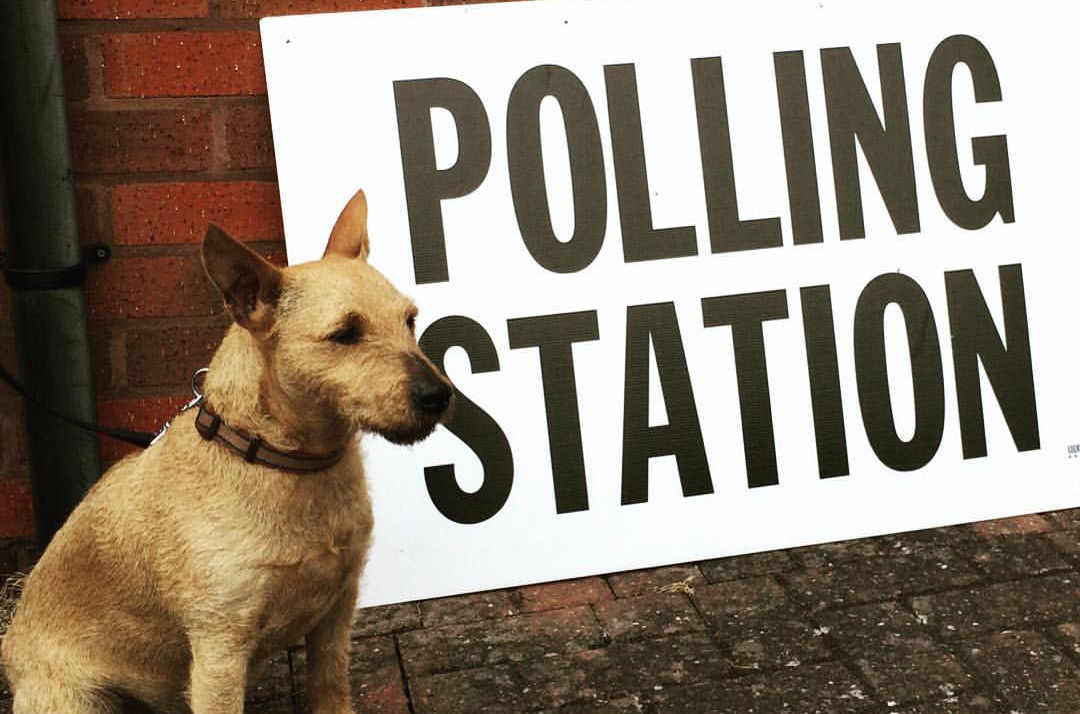
During the day the BBC follows some pretty strict guidelines about what they can report – which is why there is always a story about dogs in polling stations. Things only really swing into action at 10pm.

So what should we be looking for after polls close?

In Wales the counts for the Senedd elections will begin on Friday morning, although returning officers are allowed to verify the votes the night before, which may speed things up a bit. Once the count begins Wales has adopted the D’Hondt system for the first time.  Six members are elected for each of the 16 constituencies, but voters can only select the party list they wish to support rather than individual members.

In Scotland the counts for the Scottish Parliament won’t begin until Friday morning either. Scottish elections are always logistically challenging because of the many very remote locations, so expect some delays. Voters will be selecting their MSPs using the Additional Member System. The country is divided into 73 constituencies, each of which elects a member under FPTP.  The constituencies are clustered into eight regions and they each elect 7 further members, with voters selecting a single party list.  A modified D’Hondt system allocates these additional members to reflect the overall balance of the votes. (Londoners will recognise this as the method for electing the London Assembly)

In England, there is a patchwork of local council elections in 136 local authorities. These include district councils, unitaries (some newly formed), metropolitan boroughs, county councils and all the London boroughs. Most of these are all-in all-out every four years, but some are electing by thirds. It is important to note that the seats being contested today only cover about a third of all the principal council seats in England. In addition six directly elected mayors are up for election. Some councils will be counting overnight, some on Friday.

Only Northern Ireland has a quiet day, with no elections taking place.

Mark Pack – election guru and past Party President – has an interesting analysis here: 6 ways to judge the Liberal Democrat election results.

We would love to hear from you in the comments about counts that are worth watching out for. I will kick off by saying that my money (metaphorically) is on the London Borough of Merton; it is one of those rare instances where we have won a Westminster seat – Paul Kohler in Wimbledon – before gaining control of the council. And it is counting overnight so we should get the result by breakfast on Friday.

Posted in Op-eds | Also tagged and | 1 Comment

Ed Davey: Lib Dems are here to empower people

Ed Davey has been giving interviews ahead of tomorrow’s local elections:

He spoke to Cathy Newman tonight. She asked him whether he got exhausted as a carer and if it all got too much. He said that he and his wife Emily wanted to use their privileged position to fight for carers. He said that Liberal Democrats were all about empowering people.

Watch here:

Liberal Democrats believe in empowering people: whether it’s carers who feel exhausted and unheard, families struggling to get support, or communities failed by water companies.

It’s why we’ll continue to stand up to Nigel Farage as he tries to import Trump-style politics here.

— Ed Davey (@eddavey.libdems.org.uk) May 6, 2026 at 5:03 PM

\

In an interview with the Guardian, he said tht the Lib Dems were the best placed to stop Reform:

Davey said the Lib Dems were a better bet than the Greens, adding: “We are finding that when people realise the choice is us or Reform, lots of people who were even thinking of voting Conservative were coming to us, certainly Labour and Green are coming to us. Tactical voting will be key, Reform is working really hard, spending lots of their money, meaning results will be on a knife edge.”

He said that in parts of the north of England polling showed a straight fight between the Lib Dems and Reform, including Stockport and Hull, and that areas such as Portsmouth in the south should consider voting Lib Dem to stop Reform. “I am determined we stop them now,” he said.

A lack of opposition to Donald Trump and weakness over the war in Iran had hurt the chances of Reform and the Conservatives, he said, adding that it was a mistake for the Tory leader, Kemi Badenoch, to have tacked so hard to the right.

“When you talk to that traditional one-nation, pro-Europe liberal Tory, they are pretty upset with Kemi Badenoch; they feel the Conservative party has left them,” he said. “They look at us and see us standing up for Britain against Trump’s bullying, they like what we are saying on the economy and defence, and they feel more comfortable with us.”

Here’s a reminder of this year’s local elections Party Election Broadcast:

Posted in News | 3 Comments

Help turn Birmingham gold!

We are now a day away from the Birmingham City elections, which promises to be a momentous appraisal of the last four years of Labour rule in the second city. The party are set to lose not just their majority, but huge swathes of seats as residents have their say on the catastrophic failures presided over by the ruling group.

Labour knows this, their disingenuous ploy to pretend to settle the bin strike – which has left areas of the city piled high with bags of rotting rubbish, fly tipping, and rubbish strewn streets for over a year – has spectacularly backfired amongst voters who are asking “why should we vote for them to fix a problem they created themselves?”

The anger is palpable.

We offer an alternative. For the last few months we have fought the biggest campaign we have ever run. Our hard working campaigners have knocked on thousands of doors, delivered pallets upon pallets of literature, and have been improving their communities by reporting potholes, fly-tipping, and (in the case of one candidate) shovelling piles of used nappies from in front of a residential block.

Reform thinks that they are going to win control of the council, so we have worked hard to spread our message of hope and ambition to ensure that residents know that they have a voice in the chamber working hard for them already. Our manifesto – promising investment in our roads and communities as well as our plan to end the bin strike – has been received positively by residents and the media and is translating into support on the ground. 

Posted in Op-eds | Also tagged | 4 Comments

Welcome to my day: 20 April 2026 – the wrong sort of vetting?

It’s coming to that time when nobody wants to leave anything to chance, when the pressure is on. Yes, I’m talking about the end of the football season, with titles, promotion and relegation still to be decided.

I spent part of yesterday at Portman Road, as Ipswich Town fought out a rather nervy 2-2 draw with promotion rivals Middlesbrough, in front of nearly 30,000 spectators, and was struck by the similarities with a political campaign. You bring together the best team you can muster, prepare as best you can, determine the appropriate strategy to defeat your opponent and hope that the ball runs kindly for you on the big day.

At least, that’s how it often used to be. Nowadays, with five political parties all vying for supremacy, the variables can be bewildering and the outcomes potentially even more so. As that veteran of Birmingham politics, Paul Tilsley, said to the Guardian,

I think the result is going to be somewhat of a bugger’s muddle. I cannot see you getting to a result on 7 May where you could put two parties together to govern Birmingham. No single party is going to win.

I suspect that, where I am, in Ipswich, the picture is similar. The town has traditionally been a Labour/Conservative marginal, but with both parties unpopular and vulnerable, the Greens and Reform will hope to lure voters away from the left and right, whilst Liberal Democrats will hope to benefit from politically homeless centre-right voters. I frankly wouldn’t like to call either the Borough or County Council outcomes, and I suspect that there’ll be an outbreak of genuinely “no overall control” authorities post-7 May. Mind you, Ipswich still elects in thirds, so the worst case scenario will still leave Labour in control here.

It’s a busy week ahead too, with Sir Kier Starmer supposedly under increasing pressure over the continued fallout from the Mandelson Affair. Whilst I find myself wondering where any replacement might come from, we will at least get greater insight into how the vetting system works. And that leads me to, perhaps, one obvious question – why would you announce a highly sensitive appointment before the vetting is completed? It’s almost as though the vetting is irrelevant, that a box must be ticked. It is an odd way to run a railway.

Posted in Site news | Also tagged and | 1 Comment

Why Birmingham is ready for a Liberal Democrat administration 

Ed Davey with Lib Dem campaigners in BirminghamBirmingham is at a turning point. After years of Labour failure, a sense of frustration is palpable across the city. A year-long bin strike, which has left streets filthy and strewn with litter, combined with bankruptcy and council tax increases of 24% over 3 years have left residents fed up and looking for an alternative to the failed Labour administration. This widespread discontent has created a unique opportunity for the Lib Dems to provide the leadership that residents are crying out for. With all 101 Birmingham City Council seats up for election on May the 7th, we have the opportunity to make this a reality. 

As a member of Sutton Coldfield local party in Birmingham, I’ve witnessed first-hand voters turning away from Labour and the Conservatives. When Steve Darling MP visited us recently, he found scores of residents looking for an alternative and expressing their support for the Liberal Democrats. They are tired of being let down by failures in local and national government, and they see in us a party that champions local communities. 

Our candidates across the city are finding that the tide is changing towards us and this isn’t just anecdotal. In October we gained a seat from Labour in the Moseley by-election. This win sends a message to the electorate – that the Liberal Democrats are capable of taking on Labour and winning. 

Our leader, Sir Ed Davey, emphasized this last week when he visited Birmingham for the launch of our manifesto stating:

Posted in Op-eds | Also tagged , and | Leave a comment

Watch our party political broadcast for the local elections

And here it is:

Posted in YouTube | Also tagged | 6 Comments

Welcome to my day: 30 March 2026 – the most random elections ever?

Good morning, everyone, and welcome to another Monday morning. No, really, it’s not that bad…

Polling day is getting ever closer and predictions on how the various parties will get on are beginning to emerge, as Mark Pack has noted. I’m of the view that it’s harder and harder to make predictions based on national data, and that, as we saw in the 2024 General Election, voters will make decisions based on who they think the best alternative is where they are. Where Liberal Democrats are active, they’re likely to be seen as the best bet to keep Reform out, but even the Conservatives are claiming that voters are turning to them to keep Reform out. As the Guardian reports in an article about Conservative prospects on 7 May;

One MP suggests that tactical voting could boost the party’s results. “On the doorsteps I’ve had quite a lot of people say things like: ‘I’m normally a Lib Dem, but it’s you versus Reform here, and I want to keep Reform out at all costs, so I’ll vote for you.’

And, of course, in urban areas, there is a definite turn against Labour, outflanked to the left by the Greens and, perhaps, the Liberal Democrats, losing support to the Conservatives in places like North West London, and to Reform in predominantly white, working class areas. For some voters, the decision of who do vote for to give Labour a kicking and keep Reform out is going to be a challenging one. And, with rather lower turnouts than for national elections, what enthuses voters to come out om polling day will be key.

Posted in News | Also tagged , and | 2 Comments

New pilot schemes aim to make voting easier but…

I don’t know about you, but the news that the Government had announced four pilot schemes to make voting “easier and more convenient” during this year’s local elections had rather passed me by.

To quote the release from the Ministry for Housing, Communities and Local Government;

In Milton Keynes, voters can have their say in the city’s main shopping centre – Midsummer Place – rather than being restricted to a single designated polling station. This could eventually be rolled out across the country in future elections along high streets and in town centres.

People in Cambridge, Tunbridge Wells and North Hertfordshire

Posted in News | Also tagged and | 1 Comment

Elections kick off – six exhilarating weeks ahead

It’s that time of year again. My social media feeds are all full of pictures of groups of people out canvassing or leafletting, of people handing in their nomination papers.

It must be the start of the “official” campaign for the huge array of national and local elections coming up on May 7th.

The Scottish Parliament, the Senedd in Wales and every Council seat in London is up for grabs along with local elections around the country from Liverpool to some places where they didn’t know until a few weeks ago that the elections were back on again.

I have to show you …

Posted in News and Op-eds | Also tagged , , , and | 3 Comments

The cancellation, not postponement, of local elections in Welwyn Hatfield

I simply can’t and I won’t accept it. In my view, cancelling elections is undemocratic, unrepresentative and illiberal.

As I was preparing for the Special Council meeting, which was organised in Welwyn Hatfield on Thursday, 15 January, to discuss and vote on a possible cancellation of the local elections in Welwyn Hatfield in May 2026, I received a text message from a friend of mine, who lives in London. It said:

“I feel moved to share my recent experience with you, Yesterday, the news from Iran left my wife totally devastated. Among 12,000 shot was one of her distant relatives, a 36 year women”. I responded immediately to say that my thoughts and prayers are with my friend, his wife and her family in Iran.

Also this week, I called my mum and I asked a rather unusual question. I wanted to know whether my mum remembers how she and others were able (or not) to vote in Poland during the years of communism. “Interestingly”, she was able to vote, however voting was almost always going one way. Non participation in an election could mean imprisonment, but also other consequences e.g. like in my father’s case threats and possible removal from University.

When I was 11 or 12, I remember the excitement of the first, free and open democratic elections in Poland, when the Berlin Wall collapsed. I don’t remember it vaguely, I remember it so well, almost like they happened yesterday.

I strongly believe that an ability for residents to cast their vote at the ballot box can’t be taken for granted, as it is one of the fundamental principles of any democracy. Moreover, democracy is a huge privilege and a massive responsibility.

Posted in Op-eds | 10 Comments
Advert

Recent Comments

  • Dennis
    The government has achieved a lot of what it promised to do, and had been on track to achieve more policies stated in their manifesto. https://fullfact.org/gove...
  • Chloe
    I've little sympathy for Starmer. But what he did deserve was to deliver that deeply personal resignation speech uninterrupted by that usual borish oaf S.Bray...
  • Slamdac
    The appears to be some British exceptionalism in these comments. I accept that the EU can't force us to have a referendum, but we can't force them to accep...
  • Nonconformistradical
    "My fear is that Labour are just changing their captain and not their policy programme. What Burnham has said so far is very confusing and disappointing." Se...
  • Mick Taylor
    Kier Starmer is a decent man, who was wholly out of his depth as PM. Everyone should read Ian Dunt's assessment on his substack https://iandunt.substack.com/ ...