Tag Archives: greens

The 2026 Locals were a bad result for the party, let’s not pretend otherwise

Like many Lib Dems who stood in the 2026 locals, I’ve spent most of the last year walking around my ward knocking on doors, delivering leaflets and following the strategy that we were told gave us a really good shot. Our data looked great, we were making lots of contacts and many voters told us they were voting for us tactically against Labour. The race seemed like a clear two horse race, the Greens previously had less than half our vote and didn’t campaign in the ward. It sounded like we had the perfect chance, right?

Well, I thought so too and felt optimistic on polling day and on my way to the count the day after. Then, we came third. Against an insurgent Green party that didn’t even campaign in many wards. Looking back, I don’t believe there is anything different we could have done locally. We ran a great campaign.

It’s the same story in many wards across London, and in other areas where we do not hold the parliamentary seat, where good hardworking teams lost out in wards to parties who did little to no campaigning.

I am genuinely exhausted with seeing people claim this election was a great result for the party. Entrenching ourselves so hard into the blue wall that we can never expand as a party is not a success, and it tells activists like me who live in Labour/Green facing areas that we don’t matter and aren’t cared about by the party.

Posted in Op-eds | Also tagged | 33 Comments

One of these things is not like the other

We Lib Dems have some reflecting to do after this week’s local and devolved elections. Yes, we made gains for a record eight years running – so yes, we now have more devolved parliamentarians and councillors, and run more English councils than we did before. But for the first time in a few years, our gains were not spectacular: we flirted with Labour, but ultimately they pulled ahead of us on numbers. We once again toyed with oblivion in Wales. And both the Green Party and Reform UK outperformed us on gains. Why?

The two “insurgent” parties are poles apart – Reform UK are far-right and have pledged to introduce actual concentration camps, while the Green Party are progressive and to the left, and have not. In fact, on many issues, our core vote and the Green Party’s overlap considerably, and on many more, we disagree only by matters of degree. Of late, the Green Party leadership has been decidedly more bullish on issues that only a few years ago, our own leadership would have been equally full-throated on and which many of us wish it were again. Reform UK, meanwhile, have gutted entire departments and programmes in councils they run, saving little money or less than none overall, but with huge impacts disproportionately affecting the women and minorities their party’s policies are crafted to undermine. They have promised to introduce Trump-style politics to the UK, specifically attacking the fundamental societal pillars of trust, inclusivity, state support, and public health which our party exists to defend. And again: concentration camps. I really shouldn’t need to say more.

Posted in Op-eds | 21 Comments

Welcome to my day: 11 May 2026 – and now that I’m back, what did I miss?

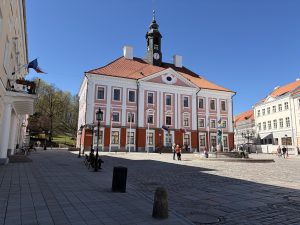
I’ve been away for the past fortnight, mostly riding on trains, occasionally walking around small, but interesting, towns, many a bit off of the beaten path. This rather lovely piece of local government architecture is Tartu Town Hall, which has a carillon in its bell tower. if you’re in the area, I recommend dropping by.

What that meant is that I missed our reinstated local elections here in Suffolk, unlike so many of you out there across the country. Were the results good ones for the Liberal Democrats? Well, after my esteemed colleague, Caron Lindsay, offered us her streams of consciousness over the weekend – and well done, Caron, on preserving our deposit in Almond Valley! – we’ve been inundated with views from a wide range of members and activists across the country. How to deal with Reform, how to deal with the Greens, why we need to be more radical, more pro-European, more… well, you get the picture, I suspect.

David Vigar will kick us off with some thoughts on how to deal with the threat from Reform, and there’s no doubt that we did lose seats to Reform in some places, and that they denied us wards we thought we would win or hold. Shaun Ennis, from Trafford, has some thoughts of the impact of party strategy on campaigners in the North of England (and I define the word “north” more liberally than Shaun might do).

We have another first time contributor, the Chair of London Young Liberals, Johan Prinsloo, who has some ideas about national messaging and how it did, or didn’t help local campaigners, whilst Gareth McAleer, looking at the impact of the success of nationalists in both Scotland and Wales, wonders aloud about the threat to a United Kingdom. And, of course, we’ll have Mathew Hulbert back, and I’m sure that he’ll have some views about the campaign, particularly with a Midlands focus, I suspect.

The Lords are back, sort of, on Wednesday for the Kings Speech, and we’ll be looking forward to that during the afternoon. Yet again, I don’t get to wear a frock, and the tiara stays in its box, but I’m sure that I’ll cope somehow.

Posted in Site news | Also tagged | 1 Comment

Another stream of consciousness on the election results – England this time

So we’re up 155 councillors in England. We can give ourselves a big pat on the back, right?

Well, maybe not.

Let’s look at London. A tale of two cities in one if ever there was one.

In the leafy southern areas, our heartlands, our results were, to be honest, unhealthily good. While it is a testament to how well our councils in Richmond, Sutton and Kingston are doing and are regarded by local people, holding virtually all the seats just isn’t conducive to good, inclusive government.  Even though it would disadvantage us, perhaps we should really be pushing for PR for local government as much as national.

But it wasn’t all plain sailing in that neck of the woods. In Merton, we had hoped to do much better against a dreadful Labour Council, but our gains were modest and Labour easily held control, gaining a seat from the Conservatives in the process.

It was a completely different story in inner London where the Green vote rocketed up.

Voters looked to them, not our well established Council groups, to defeat Labour and several councils, including Southwark, Haringey and Lambeth went to no overall control as the Greens surged. In Islington, where we once ran the Council, we didn’t make the breakthrough we had hoped and I was very sad that talented people like Rebecca Jones didn’t get elected despite spirited campaigns. In Haringey, voters again looked to the Greens and another disappointment was that Shamim Muhammad missed out. She spoke in the global women’s rights debate we had at Federal Conference and would have been a powerful voice for women’s rights on the Council.

We ran full, locally relevant campaigns in those areas and worked our socks off. The Greens did next to nothing on the ground but yet hoovered up hundreds of Council seats.

Why?

Everyone knows what the Greens stand for. They are speaking to people’s concerns about the divisive rhetoric we see from Reform and other socially conservative sources, about inequality, about poverty, about housing, about the international situation. And our lack of a cohesive national message is holding us back.  People do not feel that we get it, that we are on their side.

The challenge for us is that the Greens is that they are going full throttle with an emotionally resonant message that connects with people and we are not.  We sound technocratic. We lack passion. We don’t respond with suitable levels of outrage when the Prime Minister comes out with Reform lite garbage on immigration. In fact we come out with nonsense that sounds like we’re pandering to it only to put out a slightly better thing a few days later. It’s mixed messaging that makes us look untrustworthy.

We don’t have to promise everyone a free puppy, as the Greens frequently come close to doing, but we do need to wear our liberal values on our sleeve. It is simply not good enough to slightly shamefacedly and timidly put out something saying we are against division without actually taking on the arguments advanced by those who are stoking the division.

Our job as a liberal party is to bring people together and protect marginalised communities from attack and we need to be much better and clearer about it.

We look very much at the moment that we are here to serve the home counties and “blue wall” seats when we should be a voice for the north and our cities too.

So much of what we say seems to be moderated by timidity. We fear upsetting those in those seats more than we fear failing those in the rest of the country. Our liberal values are universal and we need to apply them and be relevant in every setting.

I understand that some key councillors across the country were warning that we needed to up our game against the Greens a long time ago and were ignored. The results this week show that we will lose out in the future if we fail to do that. In places like Oxfordshire we need to keep all progressive voters onside if we are going to continue to win. If we don’t, and at some point in the future the Tories and Reform merge and unite the right block vote, we will be in peril.

Posted in Op-eds | Also tagged , , and | 44 Comments

The Green Threat

A post on X from Luke Tryl, the UK Director of More in Common, the other day changed how I viewed the rise of the Green Party. The post was in response to the latest polling from Ipsos, which had us sitting on just 9%, the lowest we’ve polled since the 2024 General Election. 

In the post he said, ‘If the Lib Dems go into May with the Greens eating at their progressive flank it could well limit their gains in e.g. the new East and West Surrey councils, Sussex and other south east districts’. As a longstanding member in Sussex this obviously concerned me, so I set about trying to disprove his notion.

Unfortunately, I now believe he may be correct. Firstly, while we often think of the rise of the Greens eating away at the Labour vote, which it most certainly is, our polling is not untouched. According to YouGov, those who voted Lib Dem at the 2024 election, and say they will again, stood at 80% in May 2025 but now sit at only 68%. While this is better than most other parties, only 44% of 2024 Labour voters say they’ll vote for the party again; it is a notable shift in our polling. Almost all of this change has been caused by the Greens, with only 3% of 2024 Lib Dems saying they’d vote for the Greens in May 2025 to now, when the figure stands at 17%.

The steady march of the Greens amongst 2024 Lib Dems is likely to pose real problems in the local elections. While it isn’t likely the Greens will take seats from us, it is possible they will prevent us from making gains by splitting our vote and allowing Reform or a wounded Conservative Party to slip through the middle. In Sussex, signs of this happening were occurring even before Zack Polanski took over the Greens. At Horsham District Council’s Denne by-election in November 2024, a strong showing from the Greens meant that a safe Lib Dem ward was gained by the Tories. A similar story occurred at Arun District Council’s Marine by-election, where Reform gained the seat, with us placing a close second due to the Greens standing a candidate for the first time. 

With the Greens now having a stronger base of voters, they are more likely to cause us damage in places like Sussex, where we need to be making gains to consolidate our General Election wins. 

Other polling also paints a difficult picture. While Ed Davey has remained one of the most popular party leaders, he has now been overtaken by Zack Polanski in an important metric, those who say they ‘don’t know’. According to Ipsos, 36% of voters don’t know their opinion on Ed Davey, while 33% don’t know about Zack Polanski. While this isn’t a major difference, Ed Davey has been party leader for 6 years and still has over a third of people not holding an opinion on him. In comparison, Zack Polanski has only been the Green leader for just over 6 months and has already overtaken Sir Ed. 

Posted in Op-eds | Also tagged | 42 Comments

Mathew on Monday: Labour has lost its way – and the country is paying the price

Watching the unfolding political drama in Westminster over recent days, you could be forgiven for wondering if the British public have been dropped into an episode of ‘Yes, Prime Minister’ rather than living real lives under a Labour government. Instead of focusing on the pressing challenges facing everyday Britons – from the cost of living to the NHS crisis – the spotlight has been firmly fixed on internal Labour turmoil, bitter factional rows and the fate of its own leadership.

The resignation on Sunday of Sir Keir Starmer’s Chief of Staff Morgan McSweeney, amid the controversy over Peter Mandelson’s appointment as UK Ambassador to the United States, was always going to make headlines. But the speed with which that story has dominated the political coverage tells you everything you need to know about where Labour’s priorities lie. McSweeney stepped down taking “full responsibility” for advising on the appointment – a move that critics argue has damaged trust in politics itself.

And, as if one senior departure wasn’t enough, the Prime Minister’s director of communications, Tim Allan, has today also quit fewer than twenty-four hours later. In a terse statement, Allan said he was making way for a “new No.10 team.”.

But what the public see is not reinvigoration – it’s retreat, upheaval and instability at the heart of government.

All this comes at a time when families across the country are still struggling with inflationary pressures on essentials and long delays in accessing NHS care. Hard-pressed workers, young people, and pensioners do not wake up each morning thinking about Downing Street personnel changes – they worry about whether their energy bills are manageable, whether their children’s surgeries are being scheduled, or whether their parents will be left waiting hours in A&E.

Posted in Op-eds | Also tagged , , and | 14 Comments

Mathew on Monday: why compromise is not a dirty word – lessons from Rob Jetten, D66, and Dutch politics

British politics has developed a curious allergy to compromise. To concede ground is framed as weakness. To negotiate is to betray. To meet an opponent halfway is, we are told, to have no convictions at all. And yet, across the North Sea, one of Europe’s most successful democracies quietly carries on proving the opposite.

In the Netherlands, compromise is not a failure of politics. It is politics.

At the heart of that tradition sits Democrats 66 (D66), the liberal, pro-European party founded on the belief that democracy works best when it is open, plural, and willing to adapt. Under the leadership of Rob Jetten, D66 has remained unapologetically progressive while also engaging seriously with the hard, sometimes uncomfortable business of coalition-building.

The Netherlands’ latest government formation, which ended days ago with a minority government of D66, the the centre-right Christian Democratic Appeal (CDA), and the liberal People’s Party for Freedom and Democracy (VVD) – complex, drawn-out, and occasionally messy – has once again prompted familiar complaints from British commentators. Too many parties. Too much negotiation. Too much horse-trading. Surely, they say, this proves proportional representation leads to paralysis.

In reality, it proves something else entirely. Proportional representation reflects society as it is, not as a voting system wishes it to be. The Netherlands is plural, diverse, and ideologically varied – and its Parliament mirrors that reality. No single party gets to impose its will unchecked. Power must be shared, priorities must be argued through, and outcomes must command a broader consent than the wafer-thin mandates so often produced by Britain’s first-past-the-post system.

That is not democratic weakness. It is democratic maturity.

Posted in Op-eds | Also tagged , , and | 7 Comments

Our role is to keep the fire of compassion and decency glowing amid the anger and hate

I listened to a podcast interview with Zack Polanski this week, the News Agents one. I had no preconceived ideas – I’d heard him speak before, but this was my first time listening to an in-depth interview with him as Green Party leader. And I was so impressed as to be worried.

One of the biggest difficulties we have as a party is getting the public to understand what we exist for. First-past-the-post (FPTP) has given us the popular perception of a half-way house between Labour and Conservatives – politically useful but not something I was ever comfortable with. Now that Reform is threatening to smash the main party duopoly, and there are rumblings to the left of Labour, the need for us to present a vision of Liberalism that the electorate can grasp – and identify with if they’re on our wavelength – is paramount.

So to hear Polanski speak like a coherent and credible Liberal was both uplifting and worrying. I know he used to be a Lib Dem, and while he claims to have felt more comfortable with the Greens once he got to know them, he has to say that to have credibility within his new party. So it’s perhaps no surprise that his broad pitch is generally Liberal, and as a very fluent and convincing speaker, much of what he said was music to this Liberal’s ears.

My worry about him was that he might be taking our clothes, but the more I think about this, the less there is to worry about than I first thought.

Posted in Op-eds | Also tagged and | 12 Comments

So how might a progressive alliance work?

In today’s Guardian, our Layla Moran, Green MP Caroline Lucas and Labour MP Clive Lewis argue that we need progressive parties to come to an arrangement to beat the Tories.

Meanwhile the rightwing parties have consolidated, after the Tories swallowed the Brexit party whole. But progressives remain split, competing for the same voters – we divide; they conquer.

And yet poll after poll shows there is a progressive majority. We need to shape and win that majority.

This is why citizens are now using their votes wisely, to back the best-placed non-Tory; and why, under the radar, local parties are campaigning tactically to best direct their resources.

They argue against the tribalism that prevents progressive parties working together:

Old politics holds us back. The Labour rulebook demands the party stands candidates in every seat, regardless of whether doing so guarantees another Tory win. Local parties should be allowed to decide. But tribalism runs deep everywhere, and trust takes times to grow, with the inevitable result of another likely general election loss. We cannot allow that to happen. This self-defeating tribalism must go. While well-intentioned, party bureaucracies could be the last bastions of the old politics to fall. If this needs to be a grassroots alliance, then so be it.

Part of the problem with the idea of a progressive alliance was that loads of people think it’s a fab idea, but nobody has been able to set out how it might work in practice. But in recent years, there have been some good examples of where parties have worked together to our mutual gain.

Layla’s arrangement with the Greens in Oxfordshire has helped both parties and hurt the Tories badly. From Lib Dem wins in Oxford West and Abingdon in 2017 and 2019 to a joint administration of Lib Dem Labour and Green ousting the Tories from power in Oxfordshire County Council in May this year, this is a shining example of how a progressive alliance can work in practice. The test will be whether they can govern as cleverly as they have campaigned.

During the leadership election last year, Layla talked about how she had made great efforts to win over the Greens in the run up to her win in 2017. She went along to their meetings and talked to them and answered some tough questions. She put the effort into building up strong relationships with them on the ground.

However, the Unite to Remain effort at the 2019 election was doomed to failure, mainly because Labour refused to get involved and partly because it was imposed on seats in a way that was never going to work.

The last time Caroline Lucas faced a Lib Dem in her Brighton Pavilion seat was in 2015. Her then opponent Chris Bowers went on to co-edit The Alternative, an argument for a more progressive politics with her and Labour’s Lisa Nandy. I interviewed both Chris and Caroline for Lib Dem Voice back in 2016.

No progressive alliance would work without the co-operation of the Labour Party. In 1997, we and Labour by and large kept out of each other’s way except in places like Chesterfield where we were genuinely fighting each other for the seat. I was involved in that campaign and our move forward then put us in pole position for Paul Holmes to win in 2001.

Posted in Op-eds | Also tagged , , and | 84 Comments

Can the Greens’ Universal Basic Income tackle poverty?

The Greens in this election are promising in their manifesto “a Universal Basic Income, paid to all UK residents to tackle poverty and give financial security to everyone”. They state that their Universal Basic Income (UBI) will replace the current benefits system. And they will phase it in over five years. The rates are £89 per week for working age adults, and £178 per week for pensioners. They will provide an unstated amount as a supplement for people with disabilities and lone parents. For families earning under £50,000 there will be £70 per week for each of the first two children and £50 for each additional child. However, it seems they are not paying Housing Benefit to new claimants once UBI has been introduced. Their manifesto states that they will, “Continue to pay Housing Benefit to those who received it before UBI was introduced, so that they can cover their rent (page 50).

For those in full time work the £89 a week is in fact only £40.92 a week because the Income Tax Personal Allowance of £12,500 would be scrapped.

They estimate the cost of the UBI, the supplements and free childcare at £86.2 billion. They state they will provide 35 hours of free childcare for all from the age of 9 months. This is more than we are promising because we are only providing free childcare for working parents for children aged 9 months to two years. This is estimated to cost £12.3 billion in 2024/25. Therefore the Greens are spending less than £73.9 billion to introduce their Universal Basic Income while abolishing Housing Benefit for new claimants.

The Greens benefit reforms will leave most people who would qualify for benefits today in poverty. Using the Joseph Rowntree Foundation’s figure in their
“UK Poverty 2018” updated by inflation for April 2019 the poverty levels excluding housing costs per week are:

Single person no children £157.62
Single person with two children £325.88
Couple with no children £271.58
Couple with two children £439.84

Turning to the Greens’ proposals these are what people would receive if not working:

Posted in Op-eds | Also tagged and | 22 Comments

Now comes the hard part

We Lib Dems have had a great three months. The local elections were good, the European elections outstanding, we got a high-profile defection from the crumbling Tiggers, and we’ve just won a by-election in a Leave area. We’ve even had our new leader going down very well among voters we need to attract.

But now comes the hard part. As the celebrations from Brecon & Radnorshire die down, we need to recognise that we only won there because the Greens and Plaid Cymru stood aside. It was the smart decision, but they will want something in return, indeed the Lib Dem brand is still mud in Green circles for our perceived lack of generosity in responding to the Greens’ offer to stand aside in 12 of our target seats in the 2017 general election.

We must therefore get our head around what we can usefully give in return, and anyone who remembers the difficulties of deciding who should stand in which seat when the Liberal and Social Democrat parties merged in the late 1980s will know it won’t be easy. It is not my job to carve up seats – wiser counsels are working on that – but there are a few things we Liberal Democrats would do well to get our heads around.

The main one is that we will have to give something up, and it will be painful. If we are to be politically mature and rise to the challenge of the Johnson/Farage regressive alliance, we will have to stand aside (or at least do no work) in seats where there will be dedicated Lib Dems who have worked their patch for years, and who will probably feel after the recent results that they’re finally on the verge of a breakthrough. Whether they really are or not is irrelevant – they will have worked for the Lib Dem cause yet it will feel as if they’re being asked to put the last five years’ work on the bonfire.

Having said that, in strategic terms, what we can usefully offer the Greens and Plaid may not cost us that much.

At the 2017 general election, there were 14 seats in which the Greens were ahead of the Lib Dems, and in 2015 the Greens came second to either Labour to the Tories in four. The chances of us winning these seats are negligible, and the likelihood of us winning other seats if we can ‘trade’ some of these 14 for the Greens assisting us in some of our targets is immense. Not every Lib Dem voter will vote Green (that’s something the Greens will have to suck up, just as not every Green voter will vote for us if there’s no Green candidate), but if the Greens stand aside in seats we can win to avoid splitting the Remain vote, in return for us doing the same in some of their targets, it could be a major gain at very little cost.

Posted in Op-eds | Also tagged and | 67 Comments

Bar Charts!

I’ve had an idea about bar charts! It’s way outside my area of expertise, but indulge me.

Right, Northern Ireland has a unique set of parties and in Scotland and Wales the national parties have disrupted the ability of the LabCon duopoly to “game” First Past the Post. In England, though, LabCon game First Past the Post for all its worth. They do everything they can to maintain a dichotomy, “them or us”. Then they run a “project fear” on “them”.

Our campaigning tasks are to avoid being “them” and be an independent, viable, option.

I have previously suggested that we can avoid  being “them” by criticising neither duopoly party individually but only the duopoly as an unified entity.

As for establishing ourselves as real contenders, nationally this is going well.

Locally, though, I can see problems with the bar charts we use to make the case that we are a winning bet. Here we too often play exactly that “us and them” dichotomy that hurts us so much nationally. Nationally we need people to abandon voting for the least-worst-possible winner. Locally, though it’s all “only we can…” and “can’t win here”; straight out of the duopoly playbook. And all too often we dishonestly distort data to present the “story” we want to tell.

Now, after the elections for the European Parliament we have no need to distort as there is always some data that, fairly presented, will tell the story that we are in the race. In a constituency where we came second in 2017, that data can be presented. In my constituency, Lewisham and Deptford, we didn’t do so well in 2017 (to say the least). In the EU elections, though, we came first in Lewisham borough! That data can be used. In some areas of London we came third. Coming first in the region as a whole, though, allows that data to be used. What of a constituency where we did badly, in an electoral area where we did badly and a region where we didn’t do so well? The UK wide EU results put us in second place: those results will tell the story.

Posted in Op-eds | Also tagged and | 10 Comments

Liberal Democrats will not field a candidate against Caroline Lucas

Liberal Democrats in Brighton Pavilion last night decided not to field a candidate in Brighton Pavilion against Greens co-leader Caroline Lucas.

From the Mirror:

Lib Dem President Sal Brinton said: “ Liberal Democrats across the country are challenging Theresa May’s Conservative Brexit government. As in previous elections, a limited number of local parties are considering how best to provide that challenge in their constituencies.

This comes after the Greens stepped aside in Richmond Park to give us a clear run.

What is also significant is that close to Brighton is the constituency of Lewes which we narrowly lost by less than the Greens …

Posted in News | Also tagged , and | 31 Comments

A tale of two conferences in Bournemouth

It was a little weird leaving Bournemouth a week past on Wednesday to think that the Greens would be moving into the same space a couple of days later.

The Liberal Democrat Conference had a super atmosphere and was always very busy. I couldn’t believe the number of people who attended those 9am sessions to do such things as scrutinise the financial accounts and most times when I went into the hall for speeches or policy debates the only seats left were in the gods.

All the fringe meetings were packed to capacity as the Conference was the biggest we’d ever had in terms of members attending. It was great to meet so many new members, too and all I spoke to were having a great time.

Lib Dem member Ryan Lailvaux, attending his first Conference, said:

What an amazing conference it had been. An opportunity to meet great human beings and take back wonderful memories. Never have I been so inspired or so proud to be part of a movement. A liberal movement.

Compare and contrast with this article on Bright Green which talks about the Greens event:

Posted in News | Also tagged and | 14 Comments

Well that’s different! Boyband broadcasts and Nick Clegg going ape

So what do you make of the Greens boy-band broadcast?

I love the idea. It’s something a bit different. However, it is not fair to put the Liberal Democrats in the same group as Nigel Farage and UKIP. I really object to that. I don’t like being lumped into the establishment with Tories and Labour, but Farage is going too far. Lumping any of us in with a party whose leader thinks demonising people with HIV as part of his “be shocking and awful” strategy is really unfair.

We can be sure that everyone’s going to watch it. I suspect there will be many people who hadn’t realised what an old-fashioned socialist bunch this lot were. Nationalise the railways? How much is that going to cost?

It’s interesting that they’ve done a broadcast that doesn’t even have their leader in it.

It’s all a bit unconventional.

Posted in News | Also tagged , and | 20 Comments

The Greens: the Lib Dem fightback begins

Yesterday’s news that the Greens had overtaken the Liberal Democrats in terms of membership – their 44713, compared to our 44680 – has, from what I’ve seen on my social media, galvanised our activists rather than demoralised them. And so we should be proud of ourselves. For a party in government in the most trying economic circumstances since the 30s to have grown for 6 quarters in a row is nothing short of miraculous. The Labour party couldn’t manage that and they had the most benign economic circumstances in years.

The Green’s figures include Northern Ireland which ours don’t so like for like it’s more neck and neck.  (Update: Adam Ramsay on Twitter assures me that the Greens figures do not include Northern Ireland).  I’ve also seen some people say that it’s not fair because the Scottish Greens and the Green Party of England and Wales are two separate organisations. There’s no point in splitting hairs, though.

The Party has been making a bit of a concerted effort to make sure that the Greens don’t have the stage for themselves. Tim Farron has written an article of the New Statesman in which he emphasises what the Liberal Democrats have done in government to protect the environment:

The Conservatives’ approach to the environment in Europe shows what sort of approach they would take if they are allowed to govern alone. In coalition, Liberal Democrats have fought to make sure that the environment has stayed at the top of the agenda. We’ve doubled the amount of energy generated from offshore wind and stopped the Tories from slashing support for renewable energy. And while senior Conservative politicians voice their doubts about man-made climate change, Energy Secretary Ed Davey has been busy paving the way for a global deal to cut carbon emissions. Without the Lib Dems, there would be nothing to stop the Tories from lurching to the right on the environment. The truth is, the only way to make blue go green is by adding yellow.

Posted in Op-eds | Also tagged , , , and | 182 Comments
Advert

Recent Comments

  • Rob Heale
    We must have more of an emphasis on HOUSING and HEALTH generally. The issue of Leasehold abolition, with the Government apparently prepared to wait 40 Years for...
  • Mick Taylor
    What a surprise, not...
  • Jason Connor
    The Greens, Lib Dems and Conservatives are all standing. They all see sense and believe in democratic choices....
  • Mick Taylor
    @Lawrence Cox. To read your comment one might want to believe that the Triple Lock has ensured pensioners have decent pensions. It hasn't and UK state pensions ...
  • Chloe
    A Blue Labour response recent events in Hampshire. Well worth a read. https://www.paulembery.com/p/for-the-race-obsessed-british-state...