


This morning I appeared on BBC Radio Leicester about the escalating situation in the Middle East. As ever with the region the headlines move fast, the rhetoric moves faster, and the human cost is felt fastest of all.
For me, this is not abstract. I have family members who live in Dubai. When tensions rise across the region, when missiles are launched, when airspace closes, and you read of security warnings flashing up on phones, it stops being a matter of general interest and becomes something deeply personal. You find yourself not as a commentator, but as a relative. You look at maps differently. You listen for tone as much as the facts. You check in with family to find out the latest and to ensure they’re safe and well.
That personal dimension only reinforces what I believe politically. A liberal response to crises like this begins with one simple principle: every human life has equal worth.
It sounds obvious, yet it is remarkable how quickly that principle is abandoned. People are reduced to labels, civilian casualties become statistics. Entire populations are spoken about as though they are monolithic, interchangeable, or even expendable. That is not liberalism. It is dehumanisation.
A liberal response rejects that instinct outright.
It also insists that international law is not optional, even – especially – in moments of anger and fear. It refuses to cheer escalation for the sake of ideological satisfaction. It understands that strength and restraint are not opposites. Most importantly, it keeps humanitarian concern front and centre. When conflict spreads, it is ordinary families who bear the cost. It is workers who cannot travel home. Children who cannot attend school. Relatives who wait anxiously for messages to arrive.
That is why liberalism matters at times like this. It demands diplomacy over posturing. It demands that Britain uses its voice to calm, not inflame. It demands that we resist the culture-war reflex that turns complex foreign policy into domestic point-scoring. And it demands consistency: if we believe in human rights and international norms, we must apply them universally, not selectively.
None of this is naive. It is not soft, nor indifferent to security threats. On the contrary, it recognises that sustainable security is built on law, legitimacy and de-escalation, not on permanent cycles of retaliation.
In a febrile age, liberalism can feel unfashionable. It asks for nuance where others offer slogans. It asks for empathy where others offer outrage. It asks us to see the humanity of people we may profoundly disagree with. But that is precisely why it is needed now.
When the world feels unstable – when family members are in the region and the headlines are alarming – the temptation is to harden. To shout.
I choose something different. I choose to defend the simple but radical idea that international law matters, and that diplomacy is not weakness. That is what a liberal response looks like. And in moments like these, it is more necessary than ever.
Gorton and Denton Shows Progressive Voters Know How to Stop the Right
The Gorton and Denton by-election has sent a clear signal through progressive politics. When faced with the prospect of Reform UK breaking through, voters were decisive. They coalesced behind the candidate and party best placed to beat them, whilst also rejecting Labour with whom they’re so disappointed; in this case that benefited the Hannah Spencer and the Greens, and stopped the hard Right in its tracks. That matters.
It shows that progressive voters are increasingly sophisticated. They are less tribal, more strategic, and far more focused on outcomes than party labels. The old assumption that Labour automatically dominates progressive ground is weakening rapidly.
But this isn’t just a story about the Greens.
In many other parts of the country it will be the Liberal Democrats who are the obvious vehicle for defeating Reform, the Tories or a faltering Labour Party.
The lesson is simple: progressive voters want to win. And, increasingly, they know how to do it.
Saturday was my birthday… kinda!
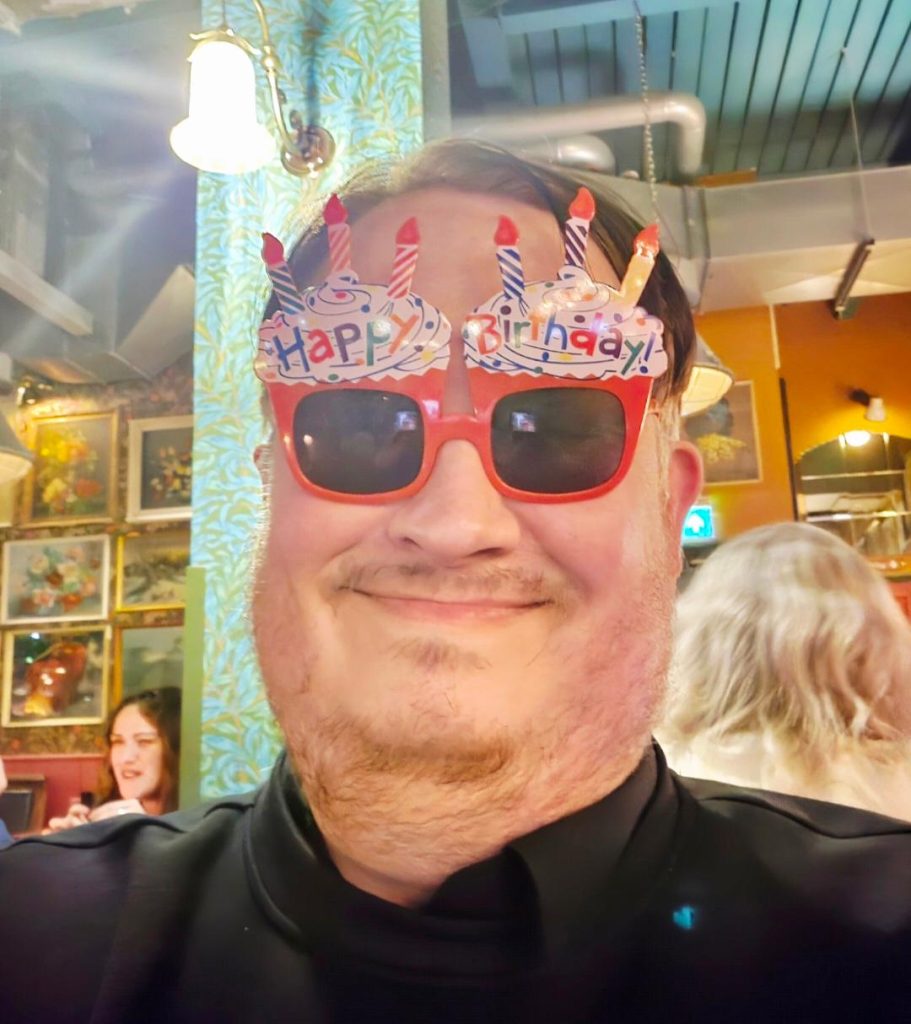 Being a Leap Year child means birthdays come with built-in ambiguity. No February 29th this year, so I celebrated on the 28th instead. That means I turned 46 on Saturday – or, technically – just 11 and a half.
Either way I’m grateful, reflective, and happy to have celebrated with many dear friends.
* Mathew Hulbert is a former Councillor, is a regular commentator on TV and Radio, and is Co-Host of the Political Frenemies podcast.
 Follow @libdemvoice.org on Bluesky
 Like us on Facebook
 Subscribe to our feed
 Sign-up for our daily email digest

 Wes Streeting is a twerp
 David Chadwick set to become next leader of Welsh Lib Dems
 How slowness at the Treasury cost taxpayers millions
 Ianto's shrine to be saved
 Walkabout
 Alex Macfie
 Nonconformistradical
 Mick Taylor
 Richard Spate
 Mark
Mark
3 Comments
Thank you Mathew for sharing your thoughts about what you believe politically and it’s really good.
The Liberal Democrat response should be be asserting what is in the national interest That is (among other things) support for international law and a stable middle east.
It may be possible to engineer further support for Ukraine from the US in some way, or other concessions, but I doubt that will be easy. I don’t envy Starmer his job on this one.
Politically at home there is an opportunity to build the case for new military and economic alliances with the European states and rearmament to support European security.
Firstly be prepared to use RAF transport aircraft if UK and European citizens becomes truly trapped. If we can get them to Cyprus then maybe airlines can collect them Secondly we must protect Cyprus Jordan and Gulf state airspace from rockets and drones. Thirdly it may become required to use warships to escort tankers out of Persian Gulf. We will need to converse with France on the latter and it will take time to deploy. No British weaponry should enter Iran. However events move so fast their may be no time for considered debate.