


Last week on this site, Maria Linforth-Hall asked a question that has stayed with me: what are the Liberal Democrats for? One line in particular. “Having individual policies is not necessarily the same as communicating a coherent political vision.” She then asked whether ordinary people can recognise liberal values in the practical answers the party offers to their everyday problems.
I should say where I’m writing from. I’m not a party member. I write for LibDem Dating, an independent dating site for liberal-minded singles in the UK, which has no connection to the party and no endorsement from it. So I’m looking in from outside. But I spend a lot of my working life thinking about how people decide whom to trust, and Maria’s question sounds very familiar from where I sit.
You might expect a dating site for liberals to be full of people listing their positions. Proportional representation, rejoining the EU, scrapping the two-child limit. Some profiles do read like that, and in my experience they’re rarely the ones that get a reply. Nobody falls in love with a manifesto. What draws people in is harder to put in a bullet point: a sense of how the other person treats people.
The profiles I find most persuasive barely mention politics at all. They talk about fairness, about curiosity, about being willing to change their mind. They mention patience with an awkward relative at Christmas, or a friendship that has survived years of arguing about Brexit. They suggest someone who can disagree with you over dinner and still want to see you again. That quality is what most of us are actually looking for, and a party label tells you very little about it. Ten minutes of conversation tells you a great deal.
A first date works a bit like a small election. You can’t check everything about the other person, so you rely on signals. How do they speak to the waiter? How do they talk about an ex, or about people who vote differently? Do they listen, or wait for their turn? None of these is a policy, but together they answer the question that matters: would this person be decent to me when we disagree?
Voters, I suspect, do something similar. Very few people read a manifesto from cover to cover, and fewer still compare costings across three parties. They look for signals too. Does this lot share my sense of what’s fair? Do they treat their opponents with respect, or with contempt? If I ended up on the wrong side of one of their decisions, would they still take me seriously?
That is why Maria’s point matters. A list of good policies on care, housing and pensions is necessary, and she is right that each needs a credible answer on cost and delivery. But detail is the second conversation. The first is recognition. People need to see something of themselves in you before they will listen to the rest.
For Liberals, I think this suggests two things.
The first is to lead with the values that sit underneath the policies, and to say them plainly. Fairness, openness and kindness to people who disagree are not soft extras. For a lot of people they are the whole point, and they may be closer to what the party is for than any single policy on the list.
The second is that values have to show up in how you behave, not only in what you say. On a date, someone who says they’re open-minded and then sneers at your choice of newspaper has told you everything you need to know. A party that is visibly generous to people who don’t agree with it, in its leaflets, its debates and its arguments with rivals, is making a case that no policy document can make for it.
There is a warning in the dating comparison too. Charm without follow-through is a familiar disappointment. A good first impression gets you a second date, but you keep someone’s trust by doing what you said you would. That brings us back to Maria’s harder questions about paying for things and delivering them. Values open the door. Substance is what keeps it open.
So when people ask what the Liberal Democrats are for, the answer they’re most likely to recognise may not be a list. It may be closer to a description of the kind of person they’d want across the table: fair, curious, honest about trade-offs and kind to the people who see things differently.
* James Bradford writes about dating and relationships for LibDem Dating, an independent UK dating site for liberal-minded singles.
 Follow @libdemvoice.org on Bluesky
 Like us on Facebook
 Subscribe to our feed
 Sign-up for our daily email digest

 Lord Bonkers 30 years ago: An Englishman's right to beat his stepson
 One farewell speech and two debut speeches from Lib Dem peers
 World Toilet Day
 What is the future of Wales' four police forces?
 David Evans
 Simon Robinson
 David Raw

10 Comments
Should the Party name be used by a commercial firm presumably without permission?
Hi Simon,
it uses the shortened version and is not affiliated with the party
@Simon I don’t think its a registered trademark or anything that might have such protection.
That said:
“LibDem Dating UK is for normal people across the United Kingdom who want dating with a brighter LibDem or open-minded British feel. Romance and personality come first. Shared values are everyday context, not a purity test and not a campaign brief.”
Is one of the most weird things I’ve seen on the internet. And I’ve seen a lot of stuff!
(Also – why is everyone white?)
@Hywel
“(Also – why is everyone white?)”
Your comment persuaded me to look at the site and, as you point out, all the couples shown are white. They are also all heterosexual.
That whole site/family of sites is very very weird and feels like an AI bot got drunk and went off on one. Eg this is about Leeds as a dating location:
“Kirkgate Market daylight beats Call Lane crush for Leeds LibDem dating. Adults aged 18 and over on LibDem Dating UK use Leeds for romance with a LibDem or open-minded outlook, then choose market halls and canal edges that still allow conversation. Personality leads. Shared outlook stays context.
Neighbourhoods and strips that suit conversation
Leeds rewards first meets that pick conversation-friendly rooms rather than peak nightlife as the whole plan. Soft LibDem daters do better when they name a specific strip and keep the plan modest.”
What an incredible torturing of the English language in a way no sane human could write.
Also the site has a whole bunch of policies of debateable relevance and meaningless content. Eg the content removal page says:
“To initiate a complaint and or content removal then any affected party, whether a registered member or otherwise is required to first get in touch with our Customer Support team. Users can report content through the following methods:
In-Product Reporting: Available directly via our online chatbot
Via Telephone: Speak with one of the team members available 24/7.
Online Live Chat: Speak with one of the team via the platform
Online Reporting Form and Submitting a help desk ticket: Accessible via the platform”
None of the first three seem to exist.
Also they don’t identify who the data controller is, just say you will be notified about this if you sign up. When you go to sign up it asks for a number of bits of data (including photos), some of which would clearly be sensitive data. The email you get on sign up has no specified details of the data controller but a link to Augustine Ltd a company registered in the Isle of Man
Where that stands in terms of GDPR compliance I don’t know. But it feels very far short of best practice (particularly as a dating site pretty much always captures sensitive data). If I were looking for a dating site this would be one I’d be avoiding like the plague.
@James, it is quite clearly to to pass itself off as associated with the Party by using the party name.
The website is very odd. There are lots of strange bits like this : “ LibDem Dating UK membership is sold in pounds sterling for UK adults aged 18 and over who want dating with a brighter LibDem or open-minded feel. Pricing below reflects current VIP and VIP Plus plans from the live hub at write time (24 Sep 2026, America/Toronto). If tiers change on the site, treat the live account screens as the source of truth and check current pricing on the site before you pay.“
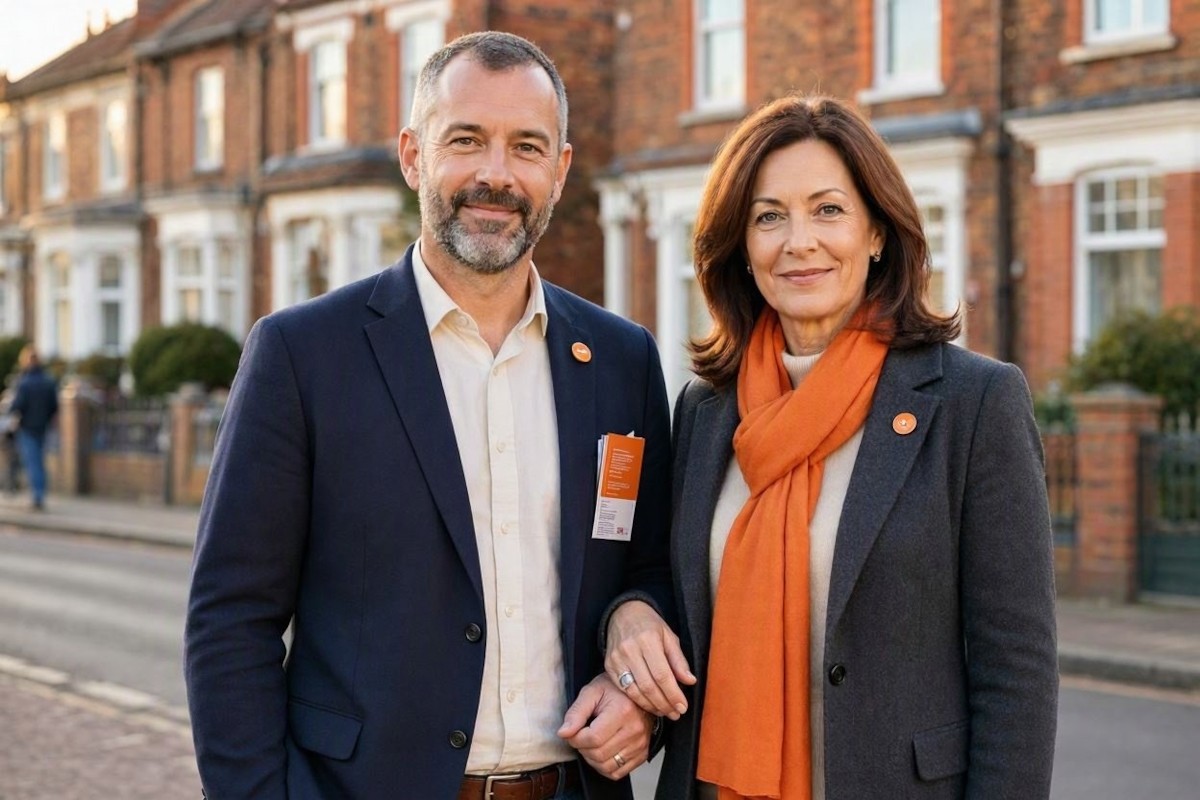
The picture is in the article if put through an AI detector comes out as high probability AI generated
This is the first time in a while that I have been on LibDem Voice; I wish more people saw this article because IMO it speaks to exactly what we need to do and what we so often get wrong.
As far as I can tell from the DNS records, the entire family of sites has only existed for just over a month – since 17 September 2026. The LibDem one is puzzling because there are apparently two different sites – liberaldemocratdating.co.uk, and libddemdating.co.uk (Note the extra ‘d’)
Assuming the sites are genuine, it’s an interesting idea. I’d have thought that ‘liberaldating’ would have been better though if the aim is to attract people who have certain overall set of values.