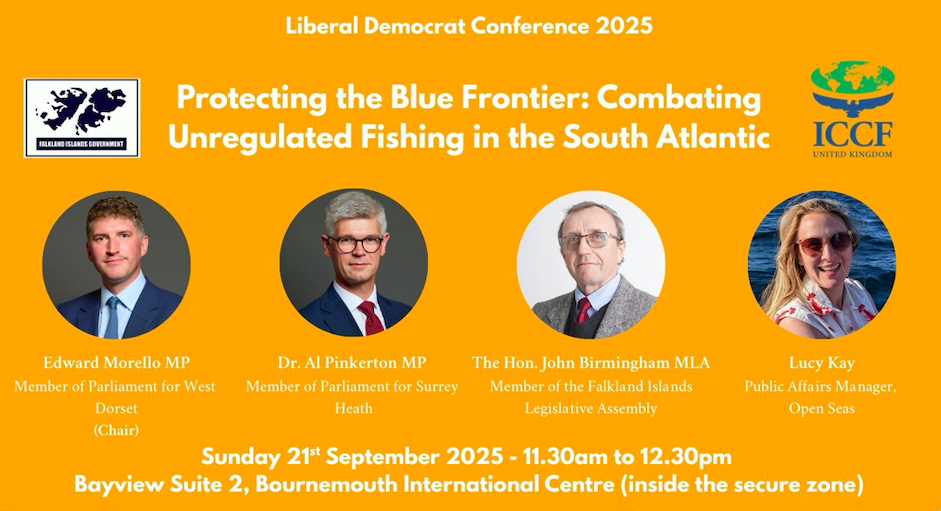
In 1986, the Falkland Islands were granted our own Exclusive Economic Zone (EEZ) and set about establishing a fishing industry. Overnight we went from being sheep farmers to fisherfolk and I remember that time well. This was an exciting time for the Falkland Islands and one that had a transformational effect on our economy.
Given that fish are a national resource, we have worked hard to develop a licensing and taxation regime that allows the fishing companies to be profitable and the owners well rewarded, whilst at the same time ensuring the wider population benefits through free education from primary school to university and free healthcare etc. Our hugely successful fishing companies also make a significant contribution, not just to our economy and government revenue, but also to our community through the sponsorship of sports teams, the restoration of local landmarks and in many other ways.
Within the Falkland Islands’ EEZ we have established a robust range of systems and measures to combat illegal fishing with vessels licensed by the Falkland Islands permitted to fish in our waters and only then with strict oversight. We have a Fisheries Protection Vessel, Lillibet, and proudly work alongside a number of international partners and NGOs to ensure that we remain vigilant against illegal activities.
I am proud that the Falkland Islands have some of the strongest environmental protections in the world and that our drive to improve the human rights of those working aboard vessels in our waters have been lauded by the United Nations.
The Blue Hole however represents not only a threat to the economy and environment of the Falkland Islands and the wider region, but it is also a grave issue of concern for the global community.


 Follow @libdemvoice.org on Bluesky
 Like us on Facebook
 Subscribe to our feed
 Sign-up for our daily email digest

 The Joy of Six 1589
 The oldest pub in Swansea and the secret tunnel
 Why I'm fighting these plans
 Latest voting intention and leadership ratings opinion polls
 Katharine Pindar
  Tim L
Tim L  Nigel Quinton
  Chris Rennard