


Microfinance epitomises Liberal Democracy and we must push the Department For International Development (DFID) to reverse the declining support the Labour years has visited on this decentralised, non-statist and very effective means of lending a hand up to the poorest people on the planet.
In the picture is the cooking stove I bought in Malawi from a gentleman called George (not his real name). George was loaned the money by a microfinance charity so that he could buy sheet metal rather than scavenge for the materials he needed.
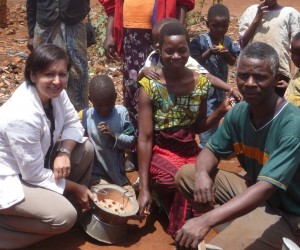 It’s pretty basic, utilitarian design is in sharp contrast to the sophistication of the machinery behind delivering the banking loan to George.
This cooking stove symbolises not just the difference that microfinance can make to the lives of some of the very poorest people of the world, but also something that is not readily visible – and that is the expensive infrastructure that is necessary to enable lending to the rural poor in a sustainable way.
The microfinance charity I visited in Malawi is pioneering an innovative banking model to reach the rural poor. The low literacy rates in such areas means that the more usual forms of ID such as a driving licence or a passport are a huge barrier to accessing banking services. This charity overcomes this by the simple (but expensive) use of biometrics such as thumb prints as ID; another example is its use of mobile banks to take services out into the countryside – thus overcoming transport issues.
However such cutting edge financial services (with the ultimate aim of being self-financing) rely heavily on support from government and donor agencies to provide start-up resources for the necessary capacity building and delivery systems development.
Yet DFID’s spending on microfinance and the financial sector has gone down from £40m in the year 2003-2004, to just £21m in the 18 months from Jan 2007-July 2008.
And this in spite of the much respected CGAP (Consultative Group to Assist the Poorest) stating that microfinance has been an important contributor to the success to date on meeting Millennium Development Goals, especially the ones that relate to women and children. Furthermore, Labour’s White Paper on International Development accepted that microfinance is “an effective means of reducing barriers to business and enterprise for the poor.”
So with all this evidence in support of the work microfinance charities why is that DFID’s support for the sector has declined?
I suspect that it is largely due to the last Labour administration’s obsession with centralised control of projects and a preference for government to government lending.
This cooking stove embodies Liberal Democrat core values of empowering individuals to make the choices that are right for them – working from the ground up, not imposing top down solutions. It is up to us, now that we are in government to instill Liberal Democrat values into DFID.
 Follow @libdemvoice.org on Bluesky
 Like us on Facebook
 Subscribe to our feed
 Sign-up for our daily email digest

 IFS warn on the budget
 Crash! (1971): An experimental television film with J.G. Ballard and Gabrielle Drake
 Peter Wrigley
 Meg Thomas
 David Le Grice
 David Raw
 Nick Baird
5 Comments
I ‘suspect’ that when You ‘suspect’ it means you have absoutely no idea what is going on.
DFID’s funding on microfinance has changed primarily because they channel World Bank funds into it in a joint agreement as part of an all party agreement. See http://resultsuk.wordpress.com/2009/12/23/dfid-releases-concept-note-for-microfinance-fund-for-africa/
Stop this puerile knocking please.
@CowleyJon
Couldn’t agree more – Lib Dems still in opposition mode shock!
International development does seem to suffer from a pendulum effect between centralised support to government to local, project based support and back again. But it is also an area where there are fewer partisan positions and perhaps it is an area where we ought to be able to find more common ground. The UK is seen as a world leader in how it approaches international development and both the last government’s increasing DFID budget and the coalition’s commitment to ring fencing the budget do much for the UK’s standing in the developing world (and I am currently in Chad seeing this first hand).
We would do well to continue to approach this complex area is as non-partisan way as we can.
Shas completely agree with the need to continue promoting microfinance. I was in Benin visiting some microfinance projects 8 years ago and it was working well. It really helped women in societies which did not always appreciate them and their capabilities as it it untapped their entreprenuerial and hardworking abilities in a business environment.
However, one thing that does need to be done is ensure that property rights are strong and respected in countries where microfinance is carrid out. Without it there is little ability for some families to put up collateral for capital. Also need to consider how can microfinance healp the poorest, it’s quite good for the poor with some assets, but not those with nothing.
Oh and ignore the Labour trolls above.
It is quite gladdening to note that D-8 is there to meet the needs and aspirations of member countries. If we do not blow our trumpet, nobody will do so for us. To achieve our goals, we must be more committed, at country levels, to economic prosperity anchored on food self-sufficiency, functional education with emphasis on science and technology, health care delivery (free or highly subsidised) to the largest possible population. At D-8 membership level, there must be true commitment to help each other to succeed, because if you do not want your friend to be a king, you will not be friend to a kind. Ultimately, both or all of you will be down. Information is life so I expect that more resources will be spent on information dissemination to give a significant boost to D-8’s activities.
I am delighted that my country Nigeria is the host of the D-8 Secretariat for the next two years. With the calibre of person to run the affairs of the chamber for the period, I am sure that the sky will be the limit for D-8. The Chairman, Dr. Herbert Demola Ajayi is a well grounded man who I will not want to talk about lest it seems I am praise-singing. Your independent investigation is all you need to make your decision.
Up Nigeria! Up D-8.