


I have an interest in chalk streams, or one in particular, the Hogsmill, which lies less than a mile from my home; its tributary, the Bonesgate, runs through my ward.
The Hogsmill rises in Ewell and flows for 6 miles to the Thames at Kingston, having passed by the Coronation Stone where seven Saxon kings were crowned and gone under the 12th century Clattern Bridge. Its name derives from the water mills that lay along its length, and specifically one belonging to someone called Hogg. The mills were used for several purposes, from grinding flour to providing gunpowder for the American Civil War.
 Millais worked on his famous painting of Ophelia along one pretty stretch of the river (see photo). He did not ask his model to actually float in the river, but painted the lush background there and more prosaically got her to pose in a bath in his studio.
Another pre-Raphaelite, Holman Hunt, knew the area well. In The Light of the World, which hangs in St Paul’s Cathedral, he depicts Jesus carrying a lamp in a dark wood and knocking on a door that is overgrown with creepers. That door was based on one of the disused mills that he found along the Hogsmill.
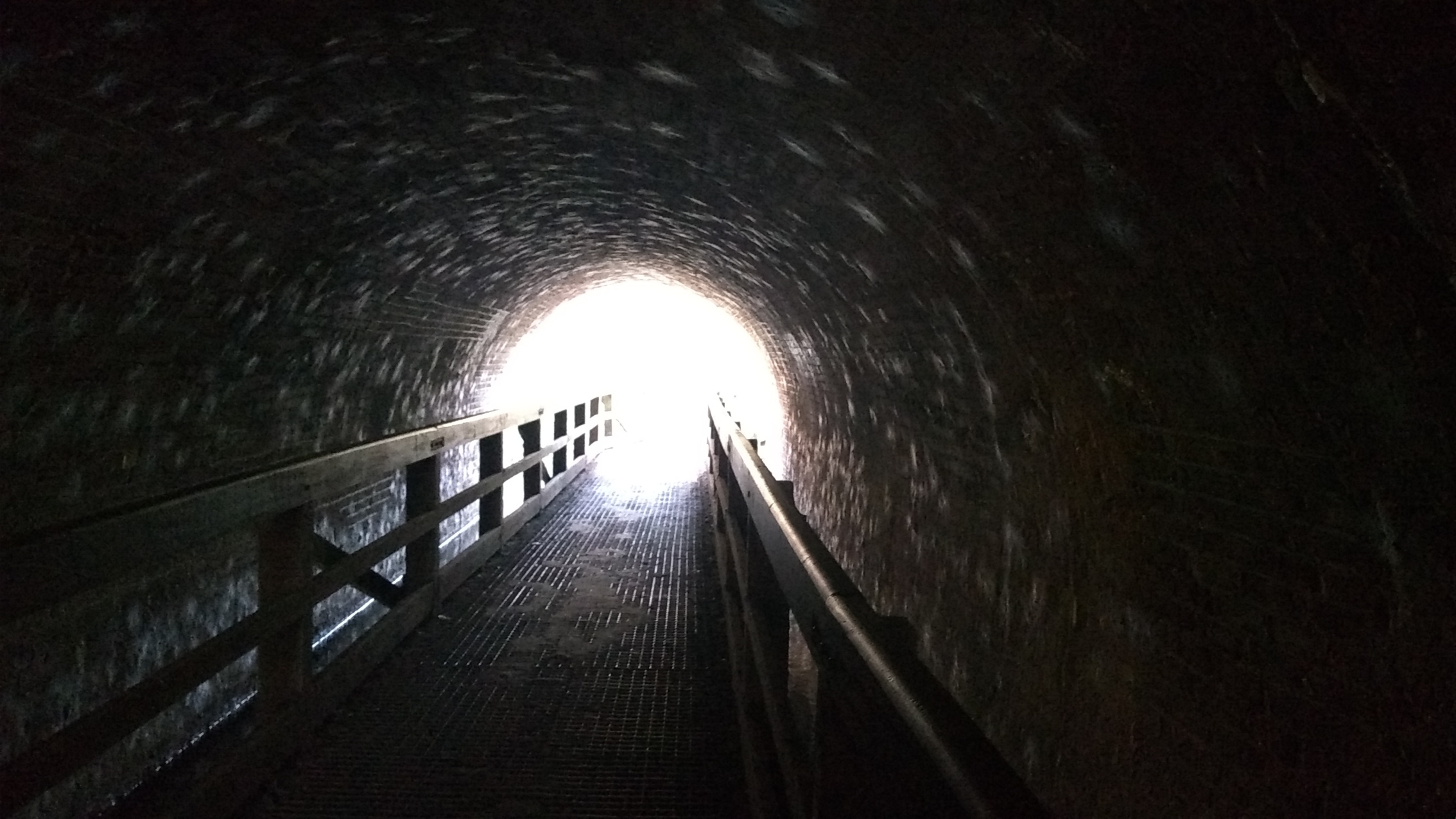 During the pandemic, once lockdown had been lifted, I decided to walk the full length of the Hogsmill. My husband’s mobility is limited so we did it in short stages. It took us through some beautiful places including a bizarre walkway over the river as it flows through a tunnel.
Almost all the chalk streams in the world are to be found in the south and east of England, so they are rather precious. The WWF explains their importance.
So why am I rhapsodising about this minor river? The answer, of course, is sewage.
A recent press release from the Lib Dems revealed that in 2022 there were 2,240 incidents of sewage discharge into chalk streams, totally 14,000 hours.
Unfortunately the Hogsmill also runs past a sewage treatment works, and there has been a long history of sewage discharges by Thames Water. Two years ago Thames Water was fined £4million after 79 million litres of sludge was released into the Hogsmill. The cleanup took 30 days. You’d think they might have made sure it didn’t happen again, but it did, in January this year. There is a more detailed analysis here.
The frightening thing is that this is not unique, as the press release shows. Many rivers across the country have been contaminated in this way, causing untold damage to the natural environment and threatening the health of people. This is definitely an issue that the party needs to be championing.
* Mary Reid is a contributing editor on Lib Dem Voice. She was a councillor in Kingston upon Thames, where she is still very active with the local party, and is the Hon President of Kingston Lib Dems.
 Follow @libdemvoice.org on Bluesky
 Like us on Facebook
 Subscribe to our feed
 Sign-up for our daily email digest

 Why I'm fighting these plans
 Latest voting intention and leadership ratings opinion polls
 Reform councillor breaches rules by being leader of his own political party
 Liverpool near bottom of the league for recycling
 Vote Tory, get Reform?
 John Studholme
 Jeff
Jeff Nick Baird
 David Wright
 Sarah
Sarah
25 Comments
Might prison sentences for the responsible senior executives and/or nationalisation, concentrate the attitudes of those leading contaminating water companies?
Why be so pussy-footed? Why not execute the blighters?
Steve: the problems in the water industry go back decades and are the result of long-term under-investment. If you criminalise water executives, no one will want to work in water management.
The solution is massive capital investment.
@Chris Moore “The solution is massive capital investment” as well as capital punishment? I don’t think I’ve seen a Lib Dem advocating capital punishment since a certain disgraced “larger than life” former MP for Rochdale…
@Chris Moore
“If you criminalise water executives, no one will want to work in water management.”
So exempting watr executives from criminal prosecutions is OK? Even if/when their failures kill people and/or do horrendous damage to our environment?
“The solution is massive capital investment.”
I thought that was what the privatised water companies were supposed to provide!
@ Alex Macfie, you seem to have missed out Alasdair Mackenzie, Liberal MP for Ross & Cromarty back in the 1960’s.
I remember him to have been an otherwise very nice human being, but he was a principal supporter of the campaign to re-instate the death penalty for the murder of police or prison officers led by Conservative MP, Duncan Sandys in 1966.
Incidentally, nationalising the water industry in England would have much more (and much needed) political impact and clout than tinkering with regulation.
Thanks to all who are having a discussion on a serious matter!
Capital punishment does not allow for redemption.
If we take more capital investment as a “what solution”, might we have some detail on the how?
If the water industry was in such a mess, why did private companies take it over?
How much in dividends and excessive executive pay could have been used as capital investment for our essential but manifestly failing water industry?
Might our party come up with some practical propositions?
I agree that nationalisation and bringing the industry back into public ownership is the way forward. All the stuff about regulation isn’t going to do much as the owners are not accountable for their actions.
@ Steve Trevethan “If the water industry was in such a mess, why did private companies take it over ?”
It wasn’t in such a mess, but in 1987 the future companies were licking their lips at the profits. It was just doctrinaire Thatcherism – and opposed by the Parliamentary Liberal Party at the time (See Simon Hughes, Hansard).
More recently, public opinion polling carried out in 2017 indicated that 83% of the British public favoured renationalisation of all water services. Also in 2017, research by the University of Greenwich suggested that consumers in England were paying £2.3 billion more every year for their water and sewerage bills than they would if the water companies had remained under state ownership. (Financial Times, 18, February, 2018).
Do Lib Dems really want to miss another open goal ?
Come on, guys, what has happened to your irony detection systems!!? Of course, I’m not in favour of capital punishment.
Hello, Nonconformistradical: water executives are already subject to criminal law, like every other citizen. As are executives in all industries. I said nothing about exempting water execs from criminal law.
Whether water is private or public, there will be spills. Look at the marvellous record – that’s irony, guys! – of publicly owned Scottish Water.
The reason is because of chronic under-investment in UK water infrastructure going back decades.
Changing to public ownership is not the solution, as it brings in no new investment.
A much better way is having the government take on all or some of private water company debt in exchange for equity in the companies. The companies would then gear up again and spend the new loans on the necessary new investment. We need tens of billions of new investment in infrastructure.
If you bring in new criminal regulations for every spill, no one will want to work in either private or public sector in water.
water executives are already subject to criminal law, like every other citizen. As are executives in all industries. I said nothing about exempting water execs from criminal law.”
If that is the case why have there been no prosecutions? Water bosses know very well that they won’t be prosecuted otherwise they wouldn’t be dumping sewerage. Indeed, Conservative MPs have just let them get away with for many more years.
Water Companies are not investing, because OFWAT isn’t insisting they do and because they are paying outrageous salaries, bonuses and dividends.
If water was in the hands of the state, then there would be no dividends and if the government insisted no outrageous salaries or bonuses. That money could be ploughed back into the water industry.
If there was a successful prosecution about sewerage dumping, then there would be a rush to stop it and the money would be found.
Incidentally, there are many people who want to work in the public sector because they believe in service delivery and are willing to work for a lot less than water bosses are currently being paid.
If there is an egregrious case of neglect or deliberate criminal damage, then prosecutions should follow. I’m in favour of THAT, Mick.
The Conservative party does not decide who gets prosecuted.
Look at the record in the water industry: there have always been sewage spills. And probably always will. It happens in other countries too, you know!
If you make every spill subject to criminal law, no-one, public-spirited or otherwise, will work in the sector. Even some of those sounding tough here, wouldn’t.
To make a real difference, and not just sound off about executives, then, please give serious consideration to my suggestion. This would introduce large amounts of new capital for infrastructure. Then you WILL see serious improvements.
From a recent news story: ‘ to get storm overflows in Wales down to spilling 10-20 times a year will cost between £14 billion and £20 billion.’
Also ‘Welsh Water control more 36,000 kilometres of sewers…most of this network was built over 100 years ago…’ Add another £9bn-£14bn to replace the old ‘combined sewers’.
How would nationalising the industry result in there suddenly being £23bn minimum to spend (in Wales alone)? (Welsh Water is not-for-profit, so currently no ‘fat cat shareholders’ creaming off millions).
About 25 years ago a friend told me that, his son who worked for Thames Water. had told him that the waste water systems in the Thames Valley would not cope with the developments proposed. That’s the problem in a nutshell. Have you ever heard waste water treatment discussed in planning applications? It’s a sad problem caused by typical UK lack of oversight.
That’s exactly the problem, Cassie B. Nationalisation transfers ownership, but doesn’t bring any new investment.
Also the record of public water companies – past amd present – in Britain is pretty poor.
If thinking could only go beyond the familiar and sterile binary of nationalisation and privatisation.
Chris Moore. Could you please produce some evidence to back up your assertion that,
“The record of public water companies – past and present – in Britain is pretty poor”.
Here is a link to an article about Scottish Water, the publicly owned water company.
2021: raw sewage dumped more than 10,000 times into Scotland’s rivers.
Poor water quality on Scottish beaches.
https://news.stv.tv/politics/public-health-concerns-raised-as-sewage-dumped-into-scotlands-waters
@ Chris Moore Nobody claims that the publicly owned Scottish Water is perfect, Mr Moore, but you fail to point out the comparison with England. In 2020, The University of Greenwich (near the Thames ?) did : They report :
“Scotland shows the true scale of England’s dirty river crisis. According to the Environment Agency, the dumping sewage overflow provision has been used on more than 400,000 occasions in 2020 alone. What was meant to be an emergency measure, has now become a routine cost-saving device.
Scottish Water is a wholly public entity directly accountable to the Scottish Parliament. It offers lower bills than any of the English companies, and invests around 35% more in infrastructure. This is delivering results for the Scottish taxpayer and public.
Whereas a recent investigation found that none of England’s rivers and waterbodies are in good health, 67% of those in Scotland are”.
PS Scottish Water is not an SNP creation….. it predates all that.
Hello David Raw,
Scottish Water is only required to monitor 3% of sewage release points. The 10,000 figure relates merely to those 3%. The real figure is therefore much much higher.
What are we going to do with those Scottish Water executives? I’m assuming, like me, you are against criminalisation……
Btw There has been a marked “increase” in sewage dumping incidents in England and Wales in recent years precisely because of an increase in monitoring points.
I was amused to see the classic “worse in England and Wales” defence of a Scottish entity.
It’s precisely the same in the Spanish Basque Country where I live. Any criticism of regional institutions inevitably elicits the claim that things are much worse in the rest of Spain.
The reality is that, hydrologically, conditions overall are very favourable in Scotland compared to England. (Wales would be a better comparator.) And Scottish Water is both mediocre and complacent.
The solution is much more investment.
Actually, I am in favour of criminalisation. In my view it is a crime to dump sewerage in any river, lake or sea. Viewers of episode 4 of Wild Isles will hear from David Attenborough just how bad the situation is and how badly wildlife is affected. In short, if sewerage dumping continues much of our wild life will be eradicated. Already it is catastrophically affected. [e.g. Salmon down 70% in 20 years].
I am confident that if one or two water bosses were imprisoned we would see a miraculous improvement in the situation and the money would be found to end this outrage,
I am personally in favour of state ownership, but nationalisation without investment, would be little better than private ownership without investment. The last Labour government did nothing to improve the situation either, so don’t expect the problem to end if they get back to power.
Let’s get a resolution to autumn conference on renationalising water and providing the necessary resources to end sewerage dumping. Our future and the UK’s wildlife depend on it.
Btw David Raw, here is a large amount of material regarding the privatisation of the water industry at the end of the 80s.
There is widespread agreement that under-investment by the government in water infrastructure for decades prior to privatisation meant Britain’s sewers, beaches etc were in a dire state. Improvements had to be made to meet higher European standards.
The early years of privatisation brought new – mostly borrowed – capital permitting long overdue investment. There were improvements in many water indicators as a result. Technogical change also brought improvement.
In the last ten or so years however, investment has dropped. Meanwhile population has gone on rising. Things are almost certainly getting worse, though this may be merely that more monitoring is being done.
Where there is NO agreement at all is between advocates of private or public water.
As I said earlier, I regard that argument as utterly sterile. State water can work, IF the state puts in massive investment. Private water can work, if there is massive private investment.
I’ve suggested a way forward, using both state and private capital.
Sorry, David Raw, there is a typo in my first sentence. I meant there is a large literature about water privatisation. I’ve tried to summarise.
So, Mick, what do you think of my idea to bring in both state and private capital? This would result in the state having large minority stakes in the private water companies.
@ Chris Moore “I was amused to see the classic “worse in England and Wales” defence of a Scottish entity”. A less negative interpretation might be this particular public sector service happens to be, “better in Scotland”.
Incidentally, Scottish Water was not set up by the SNP. It was set up in 2002 by the then Lab-Lib Dem Coalition at Holyrood. It merged the existing public sector West of Scotland Water Authority, East of Scotland Water Authority and North of Scotland Water Authority under the Water Industry (Scotland) Act 2002, an Act of the Scottish Parliament.
I’m afraid you still haven’t answered the following questions :
1. What is your evidence that Scottish Water is, “only required to monitor 3% of sewage release points” ?
2. Sewage release is a consequence of heavy rainfall. Given annual rainfall in Scotland is nearly twice as heavy as that in England, shouldn’t England find it easier to deal with ?
Volume of annual rainfall, United Kingdom by country (in millimeters)
Scotland England
2022 1,552.1 778.3
2021 1,387.4 877.1
2020 1,801.7 989.6
2019 1,558.9 979.3 Source, Statistica.
Incidentally, as a former Scottish Lib Dem Councillor writing this on a very dreich Lothian Sunday Morning, I do envy your location in the Basque country.
Hi David, we often have dreich mornings here too! Very rainy indeed is the Basque Country.
Btw my mother is half-Scottish. Her family hails from Black Isle.
The 3% figure for sewage monitoring is in the document I gave the link to. Scottish Water need to up their game. As do ALL water companies in the UK.
There are a variety of factors impacting on water quality; rainfall totals is only one.