The death of Cuban revolutionary, dictator and hard left cause celebre, Fidel Castro has reopened a debate on his legacy.
Tim Farron released the following statement
There is no doubt that Fidel Castro was a vastly significant 20th century leader, but even as we respectfully acknowledge this on his passing, we must not overlook the appalling human rights abuses including brutal summary executions for which he was responsible
As expected Jeremy Corbyn was among the more fulsome in praise, to objections from progressives:
A knock on the door in the middle of the night. “Move your car or it will be towed”. Three peaceful protestors, including two public spirited women in their 70s, arrested for the crime of “suspicion of preventing lawful work“.
Is this an anti-terror operation? Is this happening in Putin’s Russia? No. It is a Labour council seeking to cut down eight trees on the highway, that residents have been campaigning to save for the last two years. Six of the eight trees could be saved according to the council’s own Independent Tree Panel – whose advice …
I recall after the financial crisis of 2008 everybody with an unconventional opinion on banking and monetary policy felt confirmed that this showed they had been right all along. Whether they believed in more regulation of banks or less, or in the superficially plausible but ultimately wrong-headed notion of banning bank lending altogether and making up the money supply by having the government print a lot extra – they felt proven right by events.
We are in danger of doing the same with Donald Trump’s victory. Last week Helen Flynn argued that it was about inequality. Thus the solution …
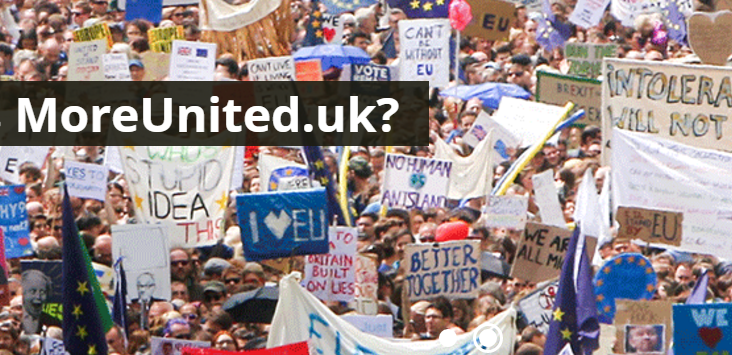
More United.uk the post-referendum cross-party campaign for an open tolerant and inclusive Britain, is consulting its members on whether to endorse Sarah Olney in the Richmond Park by-election.
This comes at a crucial moment as postal votes are landing and there is a concerted effort to speak to postal voters. If you can’t get to Richmond Park, just log into Connect and you will find a Virtual Phone Bank ready for you.
This decision by More United is a critical test of its core concept, of a willingness to endorse candidates from any one of a number of different parties, should they subscribe to the values. If it doesn’t endorse Sarah in Richmond Park, how can it ever deliver? The letter to members is as follows:
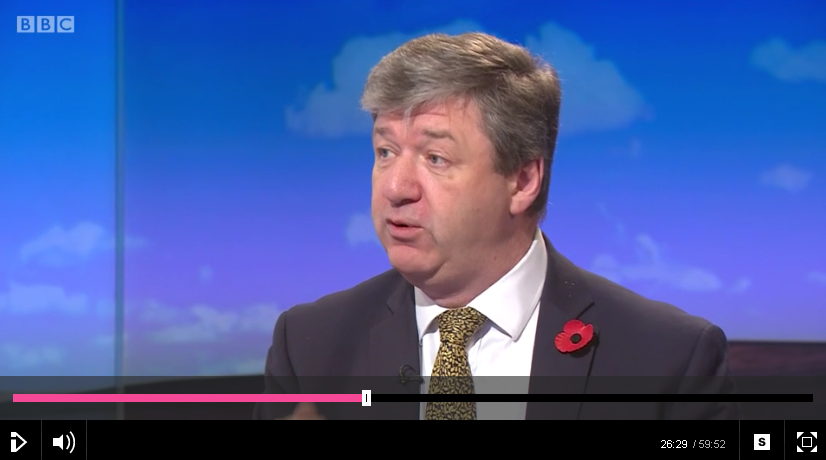
Alistair Carmichael was on the Daily Politics today, quizzed by Jo Coburn over the party’s position on the Article 50 debate, the Single Market/soft Brexit and a referendum on the final deal.
The segment starts at 21 minutes below, and Alistair is on from 24 minutes.
It was put to him that making the A50 vote conditional on single market membership and a “second” referendum was seeking to thwart the will of the people:
It is impossible for everybody who voted to leave for a whole range of reasons to get what
With the issue of whether Article 50 needs parliamentary approval currently before the courts, there is some discussion of what Parliament ought to do with the process if it gets the chance.
While clearly there is no majority for simply blocking article 50, it is quite reasonable for MPs to put constructive amendments to the proposal, respectful of the mandate from June, and to vote against if those amendments are not accepted – as one would with any other bill before Parliament.
One amendment should be to give the people a vote on the final deal, so that we can choose, once …
I read two articles yesterday, both illuminating, but doubly so when read together. This on the BBC explains a cultural difference between the UK and Germany that may be hobbling diplomatic understanding. British are liable to say “oh no I couldn’t possibly” to mean yes, to which Germans will consider the matter settled at no. Swashbuckling overpromising bluster is far more tolerated in British political culture than in German, which values consistency much more highly and is to our ears extremely dull.
The other was this at the Washington Post expressing bemusement at the “corrupt Clinton” narrative that exists, when “Trump’s history of corruption is mind-boggling.” A list of Trump’s corrupt activities is given. Each has been reported and then we move on. Journalists shrug. The Florida attorney general takes a donation from Trump and drops an investigation into his “university”. Hillary, meanwhile is investigated to within an inch of her life, and even when nothing is found, the investigation is used to support a narrative of guilt.
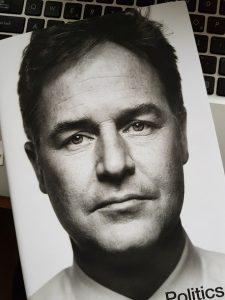
The result, in this book , is a mix of avowed optimism—that a liberal worldview can and must survive—with a hugely gloomy analysis of British political culture. Politics: Between the Extremes is part memoir of the Coalition years, part meditation on the rebellious spirit of the post-crash period (to call it an age seems premature). Its balance can be uneasy, but Clegg’s book is a necessary contribution to a pressing current debate: how much and for what reason are liberal values, in the broad sense, at bay? And can any moderate politician find a way to turn the tide of resentment against the political system and its practitioners?
I will deliver Brexit. I will be faithful to the mandate given to us by the British people. I will heed their anxieties about immigration and I will act so that we have more control about who comes in and out of our country. But, friends, I must tell you candidly that I will not act in a way which will jeopardise the open, dynamic economy upon which our great trading economy relies.
And that means I will also fight to retain our membership of Europe’s single market, the world’s largest borderless marketplace created by
Nick Clegg’s account of the coalition and its aftermath is an insightful and in many places startlingly frank account. This is not a complete review, though do buy and read the book for yourself, but I’ll pick up a few of the issues raised.
Nick devotes a chapter to “the plumage of power” – looking at how a government anchored in the centre ground by Liberal Democrats ended up appearing from the outside merely to be run by unusually moderate Conservatives. One aspect of this was being seen with the trappings of power. The value was understood all along by Conservatives – because they live for this sort of thing. Speaking at the door of number 10, etc. There’s a fascinating contrast between the coalition DPM who had a veto on government policy but no real visible trappings – and, say, the US Vice President who is well adorned with plumage, but whose powers are ‘not worth a bucket of warm spit’.
As expected yesterday, the Boundary Commission has reported its initial proposals for reviewing the Parliamentary constituencies, with the objective of having more equal constituencies (a strict 5% tolerance, down from 10%) and reducing the number of seats to 600.
This is similar to the exercise in the last parliament, though we were told there would be greater willingness this time to split wards to avoid absurd geographies.
So lets take a look at what happens to – lets say Sheffield Hallam.
Apologies for the patchy nature of this picture – as you can see the website is under rather more load than it can cope with.
Yesterday’s announcement of Stronger In’s rebranding as Open Britain pushing for greatest possible openness, and greatest retention of the benefits of EU membership post-referendum has divided opinion.
Statements like this one
Despite being drawn from different political parties, all of us campaigned proudly and passionately for Britain to remain in the European Union. The result was not the one we wanted, but of course we respect the democratically expressed verdict of the British people.
The UK may have voted to leave the EU, but the certainty ends there. What does Brexit actually mean? Europe will continue to be our biggest trading partner and
The outline agenda for Federal Conference in Brighton this September has just been published here, with the full agenda to follow mid-August.
Highlights include a slot reserved to debate Europe with an extended deadline for a motion and amendments so that we may consider something topical. Federal Conference committee was concerned that the motions proposed in July might have been overtaken by events by September.
Other policy debates include Welfare, Transport, PreP, Racism (with reference to the rise in hate crimes as a result of the Leave campaign), the Green economy and Parent Governors; there are consultative sessions on Nuclear Weapons …
Yesterday the House of Commons voted 472-177 in favour of the like for like replacement of Trident.
While much coverage has focussed on the split in the Labour Party, which voted 141-48 against its leader, to renew, Liberal Democrats, who are also reviewing policy on nuclear weapons, voted 7-0 not to renew like for like.
I just voted against like for like replacement of Trident. @libdems are multilateralist & this is our chance to step down the nuclear ladder
May has usually been described as dull, diligent and effective, but I expect now that she has the top job a little more of her personality will be stamped on the government. She is famous for calling out the Conservatives for allowing themselves to be seen as the ‘nasty party’ and was considered a moderniser, but has not always risen above the nasty herself – the “Go home” billboards for example.
Sheffield Full Council yesterday was met with a large pro-EU rally with speakers from all parties and other groups, including Sheffield Lib Dem group leader Shaffaq Mohammed.
The debate continued in the chamber, on item 10, which was moved up the agenda in response to the demo. Sheffield is one of those councils that has this kind of debate quite regularly in full council, the business of running a council being decided in cabinet. Whether this is a good use of everyone’s time is questionable, but it is how we do things.
One of the lies that didn’t survive a day after the referendum result was that there would be £350m a week to spend on the NHS. My suspicion is that this number was widely understood to be untrue but was still highly effective.
Now it would have been quite easy for Leave to say that there would be £136m a week to spend on the NHS, and although it is a lesser number, do we really think the political impact of £136m is going to be all that different to £350m (were it true)? Or to £250m? (The amount sent of which some comes back.) All are large numbers beyond our normal experience, and, in principle, if we had that money, we could spend it on a great deal of something good.
Until now the economic argument in this EU referendum has been whether you believe the experts – whose reputations depend on the quality of their prognostications – or whether you believe that an ‘expert’ is someone who automatically has less expertise than everybody else.
International Monetary Fund – Britain could cause “severe regional and global damage by disrupting established trading relationships”, should it vote to leave the EU. “Negotiations on post exit arrangements would likely be protracted, resulting in an extended period of heightened uncertainty that could weigh heavily on confidence and investment, all the while increasing financial market volatility.” The consequences ranged from “pretty bad to very, very bad”, managing director, Christine Lagarde added
PWC for the Confederation of British Industry – GDP down 3 to 5% by 2020, 5% corresponding to 950,000 jobs and £100bn lost.
Institute For Fiscal Studies – Brexit would cost the UK between £20bn and £40bn, according to the IFS. The Government would need to find equivalent of £5bn of public spending cuts, £5bn worth of savings from social security spending and roll out tax hikes worth £5bn – two more years of austerity – to cover the cost.
Organisation for Economic Co-operation and Development – GDP in the UK could be between 3-5% below the level it might have been if it had remained in the EU, equivalent to £2,200 loss per household.
No longer need we believe them. With polls in the last few days showing a high risk of Brexit, the markets have reacted.
Tim Farron writes for the Yorkshire Post today, looking behind the Blue on Blue punch up to see what is at stake for the region.
The leave campaign wants you to forget that voting to leave will endanger our access to the world’s most valuable single market. Over 250,000 jobs in Yorkshire, or almost one in 10, are linked to trade with the EU. I would never suggest these jobs would all vanish if we left, but the fact is Yorkshire remains hugely dependent on trade with
Vote Leave’s central message is one of taking back control from the EU, and returning it to the UK government. They may choose to talk about immigration as the answer to everything and to the exclusion of all else but here too, it is about control and rests on a perception that the EU, rather than national governments, is generally in control.
Now those of us who understand how the EU works, know that the EU does what the national governments tell it to do, and not the other way round, and that the EU cannot do anything that national governments haven’t agreed, unanimously, that it should be able to do. The leave argument relies on this not being understood.
And it only takes a moment’s reflection to realise that the levying of taxes and running of public services is entirely down to our own government; that the passing of laws – at least when it comes to our conduct as human beings as opposed to the construction of our toothbrushes – is down to national parliaments.
But let us ask ourselves, if the Leave picture were correct, who is it that would be most frustrated by this hypothetical bullying EU? Not the man or woman in the street – let’s face it we’re all governed by somebody. No, it would be the Prime Minister.
So how frustrated have our prime ministers been at not really being in control?
The election for a Police Commissioner for South Yorkshire was subjected to perhaps the most powerful and least effective scrutiny of any of them.
Following hundreds of children going unprotected from sexual exploitation in Rotherham, with significant and gross police failures to believe, investigate and prosecute, we finally have a large team of detectives working these cases, under the direction of the National Crime Agency.
The first Police Commissioner, Shaun Wright, had resigned (after much resistance) having been responsible for childrens’ services in Rotherham that had also failed these …
Today the Hillsborough inquest returned a verdict of unlawful killing of 96 people.
Errors and omissions by the South Yorkshire Police are ruled to have caused and contributed to the deaths on a number of counts, and also errors and omissions by the city council as the ground safety licensing authority, the engineers Eastwood and Partners, Sheffield Wednesday FC and the ambulance service.
With the Brexit debate currently focusing on the question of trade, Brexiters are able to wrongly claim that the UK would enjoy better trade agreements outside the EU, sooner or later. This exercise in hand waving complacency is not available when it comes to our security.
It isn’t the done thing here to link to opinion pieces in the newspapers by Labour politicians. So much that I’m not even sure what category to use. We have LibLink for links to articles by Liberal Democrats, and we have the slightly oddly named “Independent View” for articles by non-members.
But sometimes, hang the taxonomy, this is important enough to link to anyway.
David Miliband steps away from arguments over the costs of membership and Brexit, of whether we could get back the agreements on trade, policing, etc, that Brexit would tear up, the implications, if any, on immigration. Instead he looks at the bigger picture.
I wrote here recently on the claim by Iain Duncan Smith that he had been unhappy with the extent of cuts that George Osborne was demanding from the welfare budget.
Some light has been thrown on this by David Laws’ book Coalition, written before IDS’s resignation but published since.
Largely it seems to confirm Duncan Smith’s position. Not that he is a welfare dove by any means – for example when a complete welfare freeze for 2012 was proposed, while inflation was running at 5 per cent (p102)
As some commentators are expressing incredulity that Iain Duncan Smith has found himself a conscience over welfare cuts for disabled people, not long after signing off those very same cuts, or are attibuting these events to a phoney war over Brexit, I think there is a more interesting possibility.
If we take IDS position at face value, this reveals something about how government works – or about how it did work under the coalition and is now liable to go wrong.
One or two very welcome guests below the line at Liberal Democrat Voice have challenged us to talk more about immigration in the context of the EU referendum. Because people want the UK to “take back control of our borders”. So here we are.
Of course we do have control of our borders. We are not part of Schengen, and there is nothing they could do to make us join. We have our own immigration policy, subject, as with all policy, to treaty obligations. The specific treaty obligation of interest here is the provision in the Treaty of Rome to …
The game of chicken involves driving head on towards your opponent, as they do the same, and the loser is the one who swerves out of the way first. If neither swerves, then both lose in a much bigger sense. I was reminded of this as Michael Howard was trotting out the usual arguments for Brexit on the Today programme this morning
Howard argued that a trade deal with the EU would still happen, bringing us continued access to the Single Market, because it is in their interests. He even suggested that following a vote to leave, the rump EU should …
Guy Verhofstadt MEP, leader of the Alliance of Liberals and Democrats for Europe has commented on the ongoing negotations between the UK and other EU heads of government over the terms of a reform deal to keep the UK in the EU.
My press point on the ongoing negotiations on the UK's position in the EU #EUref
Picture Charles III, risen to the throne after a lifetime of waiting, ready to be consulted and give his advice on affairs of state, finding his views ignored and being unwilling in good conscience to give royal assent to a bill to regulate the press.
Jason Connor No that was Nick Clegg in full flow on tuition fees....
Jason Connor I couldn't agree more with the first 3 posts. I heard a figure of 75% of households still use gas. The council stopped installing heat pumps on my estate as the...
Hywel "According to the regulator’s own figures, pipeline gas from Norway is produced with less than a third of the emissions of Britain’s North Sea output."
W...
Chloe Well said David. There are 20 million gas boilers in the UK & not everyone has a spare few grand to change to heat pumps or have a suitable system that enab...
Mick Taylor John Shipley was never a Liverpool councillor, but he was leader of Newcastle-Upon-Tyne city council...





 Follow @libdemvoice.org on Bluesky
 Like us on Facebook
 Subscribe to our feed
 Sign-up for our daily email digest

 Le Beaujolais Nouveau est disparu
 Reform fined for illegal publicity
 SAVE THE DATE! Announcing The 2027 Lloyd George Society Weekend!
 Senior Reform official casts doubt over legality of huge donations
 Jason Connor
  Hywel
Hywel  Chloe
Chloe  Mick Taylor