Jodi Dean’s analysis of the economic, political and social impacts of blogging (and social networking more generally) covers broad themes that will be familiar to readers of technology authors such as Clay Shirky or media commentators such as Charlie Beckett. However, the particular aspects, the style of argument and even the vocabulary are heavily different – for this is a work of critical literary theory. The lack of overlap in cited sources, points of debate and choice of jargon highlights how even in the interconnected world of online punditry (all three frequently write online) there are many distinct niches and communities who rarely overlap even when the broad subjects of their interest are the same.
Some people like regularly visiting a site to see if there’s new stories of interest. Some people like subscribing to its news feed (RSS) and checking that way. But if you prefer email, you can instead sign up to get a daily early morning email with a summary of the previous day’s posts from Lib Dem Voice, complete with convenient links to click on if any take your fancy and you want to take a read.
Just go to our email sign up page to start getting these emails. You can also sign up for a special once-a-week email, bringing you …
Latest news in the ongoing saga of Southampton Football Club’s attempts to ban photographers from its matches, and instead insist the media buys official photographs from itself, is that the Bournemouth Daily Echo has joined the Plymouth Herald in refusing to play ball.
The Herald is using a cartoonist instead of using photographs, but the Echo has decided to take another route – and is using photographs from the 1980s instead. Footballers’ hair has never looked so good if you ask me.
The following three graphs are from the Electoral Commission and show income and expenditure for the three main political parties as reflected in their annual accounts. There are some important exceptions to what they show, such as the money brought in and spent directly by election candidates, though from what I know of these exceptions they paint a similar picture to those annual accounts of the relative trends over time.
As Stephen has often noted on this site when reporting on the quarterly donation figures, the Liberal Democrat figures show a consistently higher level of income in this Parliament than …
Shropshire Council has admitted it has only ever approved one official request for someone to link to its website, but is insisting that it is right to demand people apply to the council for permission before linking to its website.
As I highlighted last month, the Shropshire Council website has a set of terms and conditions says that people must contact the council with details, including their home address, to request permission before they link to the website. However, although there are numerous links to the Shorpshire Council website around the internet (such as this list from Google) the …
A new report about the internet and the 2010 general election (not headlined some variant on “was it an internet election?” thank goodness) has just been published by the Hansard Society. It contains some excellent contributions from across the political spectrum and, er…, one by myself.
My own piece looked at ‘Lessons from the disappearing phone boxes for the internet and politics’ which tries to get at why people so often ask the question ‘Will the next election be an internet election?’ followed shortly after by’Well, that wasn’t an internet election’ – and yet the use of the internet has become so pervasive in politics:
Does the rhetoric and analysis of Joe Trippi and Clay Shirky or the reality of the mobile phone more accurately foretell the future impact of the internet on British politics? That isthe central question for anyone looking to predict how technology may change politics andcampaigning over this new Parliament…
That’s the question which is – or perhaps more accurately, which should be – at the heart of many online lobbying campaigns which seek to flood people’s inboxes with emails. Done well, at the right moment and aimed at the right target, these mass email campaigns can be a very effective tool for stressing the level of support for a point of view and making people engage with it. Done badly, they are an extremely effective way at lowering the reputation of the lobbying organisation and damaging its cause.
A good recent example has been the online campaigning around electoral reform, …
The choice of which Liberal Democrat Parliamentarians to feature in the party’s fundraising letters is usually a hard-headed choice of who is most popular and will bring in the most money, sprinkled with a dusting of covering internal political sensitivities. So it’s interesting to see who was selected to feature in the lastest fundraising letter from Party President, Ros Scott: Vince Cable, Simon Hughes, Lynne Featherstone and Nick Clegg.
Politics isn’t about winning elections, it’s about implementing policy – and Liberal Democrat ministers are getting to do that day in, day out regardless of what that week’s opinion polls say. Winning elections certainly also helps in politics, but with the next general election years away, national voting intention questions don’t mean very much this far out. After all, three months after the 1979
Southampton football club have joined the long list of clubs that ban or want to ban the media from their matches as it suits. Back in November it was Portsmouth FC banning a journalist whose coverage it didn’t like and Alex Ferguson for a long time did not allow the BBC to interview him, again because he didn’t like the tone of its coverage.
This time it is photographers in the firing line as Southampton has banned them from its matches, wanting people instead to buy official photographs for use in media coverage. This has at least been good news for …
Although first published under a Labour government in 2009, this book is still highly relevant now we have a Conservative / Liberal Democrat coalition. In fact, it is even more relevant because the current political and economic circumstances are forcing Liberal Democrats to think carefully about how much we are worried about inequality of outcome. Wilkinson and Pickett argue that widespread inequality helps increase a huge range of social ills, with the result that everyone suffers – even the most well off. Inequality in their view isn’t just bad for the poor, it’s also bad for the rich.
Welcome to a series where old posts are revived for a second outing for reasons such as their subject has become topical again, they have aged well but were first posted when the site’s readership was only a tenth or less of what it is currently or they got published and the site crashed, hiding the finest words of wisdom behind an incomprehensible error message. I’ve slightly updated some information to keep it current.
It’s fairly cheap and easy to produce videos and make them available to the world via YouTube these days. But how do you get people to then …
Welcome to a series where old posts are revived for a second outing for reasons such as their subject has become topical again, they have aged well but were first posted when the site’s readership was only a tenth or less of what it is currently or they got published and the site crashed, hiding the finest words of wisdom behind an incomprehensible error message. Today’s has been updated with the latest hemline flip-flop.
Daily Telegraph, 12 December 2008: “Recession pulls hemlines down“.
Daily Telegraph, 6 March 2009: “Hemlines rise during economic downturns”.
Daily Telegraph, 9 July 2010: “It’s happening again. Hemlines are …
Many thanks to Mark Valladares, who this week was the first in a series of guest editors. They will be running this site for a day each over the next few months.
As Mark demonstrated so well, having a guest editor can give the site something new; in his case a very pertinent theme for the day and a range of new contributors.
If anyone else would like to be a guest editor for the day, please drop an email to [email protected] with some details of your blogging or editing experience.
Samuel Pepys is not often associated with Nigerian internet scams, yet there is an uncanny echo of modern problems in his own forgery of 1661. In August of that year the famous diarist recorded that he “counterfeited a letter to Sir W. Pen, as from the thiefe that stole his tankard lately”. A follow up letter offered to return the tankard in return for 30 shillings, a trick than William Penn fell for. Pepys retired to a pub to spend the 30 shillings drinking with his friends, where they were joined by the poor Penn who was – perhaps thankfully …
Good to see that The Straight Choice website has been picked up in Australia and is being used in the federal election coming up there:
The idea was spawned following the Lindsay pamphlet scandal, in which Liberal Party volunteers distributed bogus election pamphlets claiming to be from “The Islamic Australia Federation”, which was later found not to exist.
The pamphlets claimed the Labor Party candidate would support clemency for convicted terrorists and the construction of a mosque in the area. The husband of then Liberal candidate for Lindsay Karen Chijoff and the husband of outgoing Liberal MP Jackie Kelly were
The Association of Electoral Administrators (AEA) has published a report, Beyond 2010: the future of electoral administration in the UK, reviewing the workings of the electoral system in this year’s May elections and calling for major changes to be introduced.
The report repeats previous calls for the laws governing elections to be made simpler and codified into one act, rather than as at present scattered across numerous different acts. The AEA is also calling for a review of the way that the running of elections is funded and structured.
More controversially, the AEA also calls for a new system for enforcing election laws with the introduction of,
a clearer and local system of accountability and challenge through the introduction in election law of a formal complaints system. This should establish a court of first resort to deal with complaints arising from the conduct of elections.
A low level complaints system may help filter off some issues, such as partially missing imprints on leaflets which nonetheless are clearly from a particular party or candidate, which take up police time to little end. However, given the existing overlapping roles for Returning Officers, the Electoral Commission, the police, the CPS, Parliamentary authorities and even local government standards systems (who have dealt with complaints over leaflets), adding in a new formal complaints system could increase rather than reduce complexity and result in more time being consumed as an issue is raised repeatedly via different routes.
Electoral administrators are also calling for a lengthening of the timetable for general elections and Parliamentary by-elections. Although motivated by giving more time for administrative tasks to be completed during the campaign, such longer timescales would also tackle the long-term decline in the length of Parliamentary by-election campaigning with the resulting decrease in the time in which voters can find out about candidates and policies. (On this last point see my research Parliamentary by-elections get four weeks shorter – and why it matters.)
The review also includes a very sensible suggestion that where postal votes end up being rejected because of a human error by a valid would-be voter (e.g. they transposed date and month of birth by mistake on their original application), then Returning Officers should have more power to contact the person to tell them something has gone wrong and give them a chance to rectify the problem before any future election which is also covered by that faulty postal vote application.
The Association of Electoral Administrators is calling for election writs to be modernised and electronic delivery and return to be possible, along with electronic filing of election expense returns.
Here is the full report along with all the recommendations:
Mmm, well this is one approach to take to the internet:
TERMS & CONDITIONS
…
Do you want to add a link from your website to the Shropshire Council website? Do you want us to add a link to your website through our Community Directory?
Please email the Community Directory Officer ([email protected]) with ALL the following details:
link TO www.shropshire.gov.uk or a link FROM www.shropshire.gov.uk?
organisation
job title or position
name
address (including postcode)
telephone (including area code)
email
domain name of your website
brief description of the purpose and contents of your website
reasons for requesting a link
Alas, Shropshire Council have so far declined to respond to my request for a comment explaining …
Welcome to a series where old posts are revived for a second outing for reasons such as their subject has become topical again, they have aged well but were first posted when the site’s readership was only a tenth or less of what it is currently or they got published and the site crashed, hiding the finest words of wisdom behind an incomprehensible error message. Today’s is about Google. I’ve updated the social network usage figures.
Google dominates the search engine market, both in the UK and internationally. Although there are some countries where a local search service has the lead …
Channel 4’s investigation with the Bureau of Investigative Journalism into MPs’ election expenses has raised questions about another five MPs in addition to Zac Goldsmith.
Having already looked at some of the legal questions around Zac Goldsmith, how do the other five stack up? Two raise important points of how the law should be interpreted, one has unclear evidence so far and two appear to involve administrative errors without any actual overspending.
The good news: the Liberal Democrat have secured a commitment to introduce elections by PR for the Upper House. The bad news: the Liberal Democrat record at fighting PR records is decidedly mixed. So what should we do?
There plenty of campaigning still to be done to ensure that an elected Upper House happens, but that needn’t stop thinking about the elections too.
As with the AV referendum, one of the most important acts of preparation is upping the number of local election candidates we stand because of the impact that has on the public’s perception of whether or not we are a party that can win things. As I wrote about the AV referendum, if people go to vote in a local election but find no Lib Dem on the ballot paper:
A written answer this week confirmed that Britain’s quota of MEPs is about to increase by one:
European Parliament Elections
Priti Patel: To ask the Secretary of State for Foreign and Commonwealth Affairs pursuant to the written ministerial statement of 6 July 2010, Official Report, columns 6-7WS, on the European Parliament Transitionary Protocol, whether the Electoral Commission was consulted on the arrangements for electing a new UK MEP before the intergovernmental conference on 23 June 2010; and if he will make a statement.
Mr Lidington: The transitionary Protocol concerning the composition of the European Parliament is a technical change to the Treaty relating …
Having reviewed a complaint made about Zac Goldsmith’s election expenses (the ones that didn’t feature in that TV spat), the Electoral Commission has decided there’s a strong enough case to warrant investigation by them:
The assessment of the information indicated that there was the possibility of a failure to comply with the Representation of the People Act 1983 (RPA) and that further enquiries should be made in order to establish the facts of the matter.
The Electoral Commission could then decide to refer the matter to the police for them to investigate and, potentially, for legal action to be taken. This …
The Chancellor George Osborne and Exchequer Secretary David Gauke today established the Office of Tax Simplification (OTS).
The Chancellor has appointed a Board of tax experts who will be responsible for leading the work of the OTS over the next year. The Board Members are Michael Jack (Chairman) and John Whiting (Tax Director).
Their responsibilities will be to identify areas where complexities in the tax system for both businesses and individual taxpayers can be reduced and to publish their findings for the Chancellor to consider ahead of his Budget.
The OTS will undertake two initial reviews over the
At the time the coalition government was negotiated, Trident looked to be one of the most contentious policy areas for the Conservatives and Liberal Democrats to agree on. However, for all the barbed Cameron – Clegg exchanges over Trident during the election, it now looks as if the biggest tensions on the issue are coming from within the Conservative Party.
In my series of posts reviewing the content of the coalition document, I pointed out the compromise it contained on Trident:
It will be replaced unless there is a better value for money alternative. What the wording leaves unclear is the
Deborah Mattinson’s account of what she saw during her time as a leading pollster to the Labour Party certainly doesn’t stint in portraying her own role in what the book calls “Europe’s greatest election winning machine of the modern era”. The fact that Labour won three general elections in a row and yet the fact that, even looking no further than the same country and the same part of the century, the preceding Conservative government did one better and won four general elections in a row, does provide a warning against taking everything in the book – whether from the …
You may retrieve and display content from the Hyndburn BC website on a computer screen, print individual pages on paper and store such pages in electronic format on a personal computer for your personal and non-commercial use.
You wouldn’t want to go breaking their rules by accessing the site on a device with a screen but which isn’t a computer now would you?
It’s better that Labour figures are starting to tell the truth in public about the Brown-Blair infighting years than if they were continuing to claim they’d always got along fine, government had never been hindered and Blair loved the idea of Brown becoming Prime Minister.
However, telling the truth is, I fear, coming at a considerable cost to the reputation of politics. Because we’ve now got a succession of people saying, in effect, ‘Don’t bother with what I told the public at the time. Of course that was nonsense. The truth actually was the opposite’. That fits right with the very …
The BBC Politics Show East today profiled Norman Lamb and his new role at the heart of government. As Norman says, “This is all extraordinary. We’re conditioned to being on the outside, looking in.”
It gives an insight into how the party is adapting to government, what Norman thinks the big challenges are in his role as Chief Parliamentary and Political Advisor to Nick Clegg and, er…, has a short clip of me talking.
Not surprisingly, the sequel to Ask Simon Hughes a question is … Simon Hughes answering the selected questions. His video answers are now up on Yoosk for you to watch. (Click on “Your Questions Answered” under the scorecard.)
Alex Macfie "…a small number of technology companies hold enormous power over markets and the people who depend on their platforms." and government policy, not properly o...
Nonconformistradical @Mark
https://www.libdems.org.uk/conference#c351200 is stating that registration will be open in November...
Mick Taylor @Adam. How little you know about the holocaust.
My grandfather was one of the many Jewish soldiers who fought in the First World War and he won the Iron Cross....
Richard Spate During the run up to the dreaded Brexit vote Paddy Ashdown made an interesting predictive comment regarding us leaving the E.U. He said: 'If we leave the E.U...
Mark It would be great if next year Lib Dem Voice really promotes and informs members about early bird registration rates.
Conference is expensive. We need to ensu...


 Will Straw from Left Foot Forward has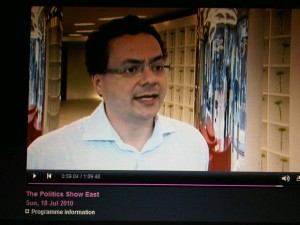
 Follow @libdemvoice.org on Bluesky
 Like us on Facebook
 Subscribe to our feed
 Sign-up for our daily email digest

 Myth and mystery on the Stiperstones ridge
 Perhaps the most pointless question PMs are asked (LDN#215)
 Wes Streeting is a twerp
 Ianto's shrine to be saved
 Walkabout
 Alex Macfie
  Nonconformistradical
  Mick Taylor
  Richard Spate
  Mark
Mark 