


The Campaign Corner series looks to give three tips about commonly asked campaign issues. Do get in touch if you have any questions you would like to suggest.
Today’s Campaign Corner question: In a previous Campaign Corner you wrote that “Less is more”, praising big headlines, white space etc. But don’t many issues need more explanation than you can fit in a dumbed down few words?
A very good question! To which (surprise, surprise) I once again have three answers:
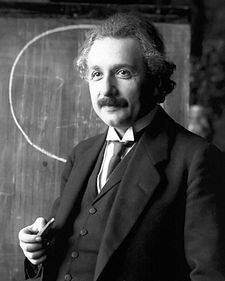 As Mark Twain put it, “I didn’t have time to write a short letter so I wrote this long one.” Short and succinct isn’t dumbed down, it’s the opposite. It’s far harder to write clear, precise and brief text than it is to write long, imprecise and waffly pieces. So don’t confuse brevity with dumbing down. Unless of course you think Albert Einstein was a stupid, idiotic scientist for lazily using just using five characters (not even five whole words!) to try to explain complex science when he wrote e=mc2.
- Writing short stories does mean thinking carefully about what the most important issues and angles really are. But that is just what you need to do if you are in power and wanting to make a real difference. Bad politicians, just like bad managers, lose themselves in reams of detail. The really good work out what is important and prioritise that.
- Whether your story is long or short is irrelevant if people don’t read it. There are times when longer stories, providing more detail, are certainly the right thing to do – as, for example, is often the case with school admission policies, where parents are very interested in the precise details. But undue brevity is a far, far rarer mistake than self-indulgent wordiness. Or as Einstein put it, “Make it as simple as possible. But no simpler”.
Got any other tips? Please do share them in the comment thread below.
Want to know more about local campaigning? Campaigning In Your Community by myself and Shaun Roberts should be right up your street. It’s available for only £4 from ALDC and you can read an extract for free here.
Previous Campaign Corners have included:
- Should you still target during a PR election?
- What to do on the doorstep
- How to make Focus leaflets looks better
 Follow @libdemvoice.org on Bluesky
 Like us on Facebook
 Subscribe to our feed
 Sign-up for our daily email digest

 The Lib Dem leadership should to listen to our MPs
 Latest PollBase is out, with all the British voting intention polls since the 1930s
 Can Davey survive as leader?
 A Week in Politics #9
 expats
 Hywel
Hywel Chloe
Chloe Alex Macfie
11 Comments
This is where somebody pedantically points out that e = mc² is a lazy special case, right?
For concise political writing, I will always recommend George Orwell’s fantastic essay . Writing more concisely will also lead you to state what you actually mean, which is an interesting technique for a politician.
I agree that being concise is incredibly important so in a sense less is more. But in Ayrshire, we’ve taken less is more to an extreme in the fact that we aren’t very active. In that case less certainly isn’t more.
Also I’ve heard some voters decide who to vote for based on how much literature they get. Some vote for the party that gives them the most literature others the least literature. Sometimes less isn’t more.
In getting your point across, short and concise is very important.
There is a difference between the style and the length of a story. The former should always be readable. The latter depends on the story. Trying to dumb down a complex issue is not only wrong, it will be counter-productive. But what passes for a Focus story nowadays is often no such thing – just crude propaganda that is not worth reading and not worth writing.
Tony Greaves
Word has readability stats. Turn them on, and take note when you do a spell check. I aim for a Flesch-Kincaid grade level of under 7. This means that someone with 7 years of education can follow your prose. It isn’t a perfect way to assess text, but it is a good starting point. Cut out the passive and use short words and short sentences. Far more people read the Sun than Prospect magazine, and you need to write for the former. This also means that Prospect readers can scan it, and understand it, between picking it up and putting it in the recycling!
I have just written the opening of an article on how to get out of the recession. I have explained 4 alternatives, in 137 words, with a F-K grade score of 5.7.
With some editing, I got my 137 words down to 108, albeit with a slight rise in the F-K grade level to 5.9…
Tim – thanks, I had no idea Word had that capability! I’ll be having some fun with that next time I write something!
Being able to be concise is crucial. Most people have short attention spans and need to be grabbed by a headline. Something short and simple needs to stick in a lot of minds. It’s not being entirely honest with ourselves, though, if we don’t accept that at the very least subtleties will get lost most of the time. There is a strong case for departing from rules of thumb in length of Focus articles occasionally where the subject is important and complex and many people will be interested enough to read about it. One example would be where a dishonest attack had been made on us, perhaps where we had power or the balance, and a schools reorganisation might be a classic example. It’s easy to say SAVE X SCHOOL FROM THE LIB DEMS!!! and takes a few more words to explain what the damaging alternatives would be. If the Focus istyle s normally short and punchy, an occasional exception, still written in memorable Plain English (or Welsh) can have impact precisely because it’s different.
I have a lot of sympathy with Tony’s point. One purpose of Focuses is to get us elected – but the others are to inform, empower and mobilise.
@Dave Page
This is actually where someone (namely me) points out that the equation should have a capital E. ‘e’ represents an electron, a fundamental unit of negative charge. ‘E’ represents energy.
George: You win the prize for the most erudite comment!
This is excellent, apt advice for comments on blogs too. I hope this post is read widely.
@tim leunig – would it surprise you to know that I once got a letter from one of our North Oxford members complaining that my foicuses were written in the active voice, not the passive voice? I still don’t know what this means but it sounds right to me 😉
@ Simon Banks ‘Most people have short attention spans’, is tue, but even many of those who don’t are very busy and have lots of other stuff to read too.