


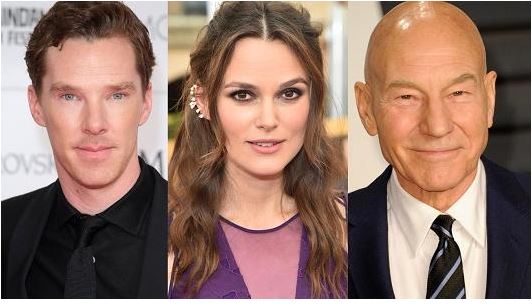
Coalition: painful for us Lib Dems at times, but this isn’t about the last parliament, it’s about the referendum. Over the last few weeks’ economists, historians, scientists and celebrities have emerged, arguing the benefits of our membership of the EU. However, recent polls indicate increased support for Brexit; prompting calls for all campaigns to up their game.
But something else is happening; Brexit campaigners are making more extreme claims as the debate goes on. Farage telling his supporters to ‘go out and bully them’, Boris Johnson accusing the EU of excessive banana regulation, Diane James’ claim of ‘we just don’t know’ when asked about border controls and, of course, the £350 million bus – to name a few. This isn’t surprising, the UKIP machine has driven this referendum from day one and they will throw everything, including the kitchen sink, at it. For Boris Johnson, this campaign is a career test; as a serial risk taker he too, will throw everything at it.
Those of us campaigning for ‘Remain’ do indeed need to drop everything else to win the EU referendum and we should be ready to counter UKIP’s strength with our own. Our greatest strength, in my view, is our propensity to work together; if this is the case, we would do well to use this to address the mixture of pathos, extreme claims and establishment conspiracy from team Brexit. To that end, there are three campaigns I would like to plug, which have helped me during the campaign.
When dealing with identity issues raised by this debate, Historians For Britain In Europe have been invaluable. They know our country better than most and have made a compelling case: The UK is at its best when fully engaged with Europe. Additionally, this piece underlines why a Commonwealth Free Trade Area is not feasible.
When it comes to making the case for an innovative forward looking UK, Scientists for EU underline the importance of EU membership to our flourishing science industries. This factsheet speaks for itself: the EU produces over a third of the world’s scientific output and Britain leads the way.
The economic case is being made time and again, but as the ever over-quoted Churchill (sorry) pointed out: “Hit the point once. Then come back and hit it again. Then hit it a third time – a tremendous whack.” Business for New Europe have helped make the economic whack hit home, not as economists, but as business leaders.
The Leave campaign began life with internal division and UKIP will make more outlandish claims as the debate rages on. The reason I believe we should lean on one another more is because it will help us capitalize on our strength: it isn’t just political parties campaigning for a ‘Remain’ vote, rather it is a coalition of individuals and organizations from a cross section of society who have compelling reasons for our membership of the EU.
By supporting one another like this, we also demonstrate something quite profound: working together we are greater than the sum of our parts. That message rings as true for our campaigns as it does for the European Union. Our pathos comes not by extravagant claims or conspiracy, but by the support we give one another during the campaign.
* The author is known to the LDV team but the article anonymised.
 Follow @libdemvoice.org on Bluesky
 Like us on Facebook
 Subscribe to our feed
 Sign-up for our daily email digest

 Jane Dodds to stand down as leader of Welsh Lib Dems
 A U-turn too far
 Ed Davey on working with Greens after Zionism conference motion
 Adam
Adam Paul
Paul Peter Davies
 theakes
30 Comments
I agree it is time to “drop everything” and focus on keeping us in the EU. But don’t do anything that will annoy voters and drive them to the other camp.
If we leave it will change British politics for a long time. All the people moaning about immigration with false facts and one sided information from the right wing press will suddenly become more influential. I complain about mass immigration too, but nothing like the right wing press.
Thanks to the link to Business For New Europe.
Wealthy and privileged celebrities living in a rarified world are not the right people to convince the working poor how to vote on an issue.
It is a mistake in political campaigning to misunderstand the emotion power of an opponent’s campaign and to think that negativism and fear is all you need to do.
Your piece completely misunderstands what makes a winning, connecting, rallying , emotionally compelling, ‘yes, that’s me’ message based,back against the wall campaign.
There were basically two possible winning ‘cries’ in the EU Referendum campaign : Believe IN Britain and BeLEAVE in Britain.
Note neither are in anyway negative.
Within them both was the possibility to echo Churchill’s (actually Teddy Roosevelt’s) “I can promise you nothing but blood, sweat, toil and tears” – and look how that went down in 1940.
And who got there first? Who got that Churchillian stuff and ‘stiffened the sinews’ (Shakespeare)?
The Sun – the LEAVE campaign.
Yet another argument for Bremain that shies away from immigration, even at this late stage of the debate.
Immigration was always going to be a huge issue: has nobody been paying attention to UKIP for all these years? But the Remain campaign has evaded it mostly and tried to shut down the debate by dismissing Brexiters as racist or downplaying their concerns by accusing them of ignoring Bremain’s preferred topics.
Bremain has a few days to make the positive argument for uncontrolled immigration from the EU. If the only case that can be made is “it’s good for the economy” then make it clear exactly how that benefits every person within the UK, especially those who feel threatened rather than those who can take advantage of cheap labour and plentiful tenants. And beware of presenting as reciprocal benefits those things that are still beyond the means of many people (skiing holidays, business opportunities, working and studying abroad, etc.).
I am with Bill on this – the Remain camp are full of people who quite simply wouldn’t have a clue as to how to win a local by-election if the popular local village school was about to be closed and all the other parties were saying it had to shut.
Indeed, this article sounds more like a presentation to the board of a plc than any sort of strategy to save the referendum.
In his first sentence Ben says “this isn’t about the last parliament,” but actually in many ways it is. It is the unwillingness to learn from mistakes. In that period, we looked more like bureaucrats than Lib Dems, the AV campaign was a total humiliation and even as things got worse and worse, there was a total unwillingness to even consider the fact it could all be going disastrously wrong by those at the top. The only mitigating factor I can see this time is that there is so much serious money behind Remain, that it might just be able to buy itself a victory.
What a depressing place for Lib Dems to be.
Today’s Sun editorial is pitch-perfect. It projects a positive message of a post-Brexit Britain that recognises the concerns and aspirations of its readers and is neither patronising nor hectoring.
Meanwhile Labour IN has allowed itself to be represented by Emily Thornberry – the MP for Islington South who is best known for her photographic composition “white van with flag of St. George”. The headlines write themselves.
Will the last person to leave the EU along with Rupert Murdoch and his followers on please switch off the lights? For there will be little cash left to put in the slot meter. 🙁
Ben,
Thanks for the reply, but do you really disagree when I say you (and almost all of the Remain camp) sound like a bureaucrat and not a campaigner?
Remain is losing because its campaign is dire.
Cameron’s pitch amounts to “Britain must stay inside the burning building, because we’re too high up to jump.” That is a loser’s campaign. It dares the voter to disagree. The voters will angrily dare to disagree, and punish Remain for their arrogance and presumptuousness.
Bill says it’s about the need to sound Churchillian and to stir emotions. I don’t think that is the key point, though genuine warmth toward the European ideal is certainly sorely missing. Extravagant praise for an EU which is in rather a muddle is only going to sound insincere.
What Remain has failed to do is to nail the lies.
Leave say we can retain the trade links and break away from free movement, all at the same time. We can’t. We can either keep the trade links within the EEA and keep free movement, or we can abandon the trade links and prevent free movement. We have had four months to explain that hard choice for Leave. We have failed to do so. It is probably now too late.
Miriam Durantez Gonzalez, sometimes known for her relationship to another Lib Dem, has blasted David Cameron’s hurried, pathetic and short-sighted renegotiation. She warns that Brussels is not exactly reforming at any rate that is perceptable to the common (wo)man:
Speaking at the annual Fortune “Most Powerful Woman” International Summit in London this morning, Miriam said:
“This is a club where everybody gets a say. You cannot be there and expect that others are going to reform it for you. I am all in favour of reform. The European Union is crying for reform. Proper reform. Not that Mickey Mouse negotiation that the prime minister did. The biggest reform that the EU needs is growth. We need growth in Europe.”
Miriam also said that she though the UK was “sleepwalking towards disaster” because it might vote for Brexit.
“I believe that this country is sleep walking towards disaster. It will not only be a disaster in this country it will be a disaster for Europe and across the whole world. In my life I have never gone through another moment when I have thought we are in the history books.”
On the day I was born, men, women, and children were being herded into gas chambers by a criminal gang which had hijacked a nation. My grandfather was still having nightmares about Gallipoli and the Western Front. Europe for me has been, is, and will always be about peace. With peace comes the chance for prosperity. I care that life expectancy in my part of Oxford is up to 10 years less than in the city’s leafier neighbourhoods. I care that parts of eastern Europe, like parts of post-industrial Britain, look abandoned and destitute. I care than Greek and Spanish kids get can’t jobs. I’m for Remain because we truly are in this together. The control we need to take back is over the impacts of globalisation and IT. That demands strength and solidarity. I’m for Britain being Great, giving a lead in the fight for a peaceful, prosperous Europe and a world of liberal values.
Who are the three people pictured?
Is one of them the actor Patrick Stewart? No idea who the others are.
Historians? Economists?
In what way are they relevant to the EU debate?
@Graham Jones
Very well said.
That is a very powerful and positive vision of the EU which acknowledges the need for a strong UK reforming it from inside. If that case had been made loud and clear from the outset of the campaign my instinctive Remain vote would not have become so wobbly.
@David Allen
“Remain is losing because its campaign is dire.”
I wonder if you remember a comment you made back in 2012:
“… “In Europe to reform it” sounds schoolmarmish. It all too obviously has been written by activists to appeal to activists, which means it will turn off everyone else. Normal people who find themselves in (for example) a pub or a shop which they don’t like, don’t usually try to reform it. They just clear off down the road and find something better.”
PS, I wasn’t stalking you, but I was looking for something that was ringing bells in the back of my head, but it struck me that not much has changed really (apart from the slogan maybe).
“Bill says it’s about the need to sound Churchillian and to stir emotions. I don’t think that is the key point …”
I would have to disagree, human beings will be voting and in most cases they will be voting on their feelings.
“What Remain has failed to do is to nail the lies.”
I would actually say that the issue is that their lies are better than Remain lies, a lot of their lies are about emotion again, Remain seems to be about technical stuff (even Project Fear has been mainly about technical things).
Ben, with respect, I don’t think you would understand emotional campaigning if you had 5,000 words.
Every time Remain wheel out a celeb or a business person or a tired old politician it confirms your campaign as representing an elite and reminds those who see and here them that they are not ‘one of us’. You lot got it wrong from the startand your piece above is evidence of that.
Here is what your target audience thinks when you when you use your message carriers: “What planet are these people on?” they ask. “Hey why should I listen to him, what does he know about my life?”
We were just this flat footed in the 2010 GE campaign, the AV ref, the Scotland Ref and the 2015 campaign. Why? Because the people in the Lib Dems who know how to campaign were never used.
David Allen, I am not trying to say that Remain needed to be Churchilian- I am saying that Leave knows its audience and has fitted its message to that audience with (as Paulsays above) absolute precision – perfect pitch. It was a classic ‘backs to the wall appeal to the fighting spirit’ of their target audience.
Leave may win – for reasons I have been giving I hope they do – but they never should have lost if they do. They had all the cards – They just were so out of touch with how people feel that everything they did alienated more and more people who were genuinely undecided.
Why do people think it is easy to be an effective campaigner?
That last sentence should of course have read that Remain should never have lost. They were just so out of touch with those who they needed to connect with. And of course their reaction to being behind and their opponents having momentum is to do more of the same and alienated for people.
Yes, Churchill stirred some emotions in 1940, but when the votes were counted in 1945 he lost – and lost big time – just as he did to a a radical opponent of WW1 in Dundee in 1922.
I’m not surprised B. Johnson has a fixation about him – he was a hot headed rascal who was always in scrapes…… yet somehow the counterfactual myth of his ‘greatness’ persists because it suits the establishment so to do.
They say don’t preach to the converted but……
How to vote? — Vote LEAVE of course…
The net cost of EU membership for 2015 was £8.5 billion – that’s after everything we get back.
Source HM Treasury – Table 3.A Page 14
The population of the UK at the last national census was 63 million. So the cost of EU membership for 2015 per person was actually £135. That figure is per person, man woman and child. Take out the children and pensioners and it’s something like £500 per tax payer. If you have a partner and you both work and pay tax, it cost your household £1000 to be a member of the EU in 2015.
That is only the membership fee! The membership fee is not the only cost.
Being in the EU also forces you to pay import duty on almost everything you buy from outside the EU. Now I can’t put a figure on that. It’s different for everybody but, tot up everything you spend on clothes, shoes, toys, electronics and everything else you buy from outside the EU each year. On average, 15% of that is import duty. Add that to your membership fee you will begin to see what the
EU is actually costing you.
The EU is a bog in which Great Britain has been stuck for the past 40 years.
It is a miserable little cartel set up to protect a few businesses which cannot compete in a free trade environment. If 28 companies were to do the same thing as the 28 nations in the EU, they would be prosecuted under the Competition Act!
The EU is also coming apart at the seems. French Unions overrule the French Government. Merkel’s immigration policy will result in her overthrow and a new fascist Germany. Draghi’s infernal money printing will hyper-inflate the Euro and, Guess what, next month Slovakia takes over the EU presidency. Slovakia, who’s prime minister, Robert Fico has publicly said “Islam has no place in my country”
Does anyone really want to be part of this!
Gosh chris_sh, your memory is better than mine – but I fear that what I said in 2012 still stands up. One more example from past history of Remain saying things which ring false.
On emotional campaigning – Yes, of course, if you can hit the emotional buttons effectively, you can win big, and Leave have done that. The appeal to patriotism is misplaced, the appeal to anti-foreigner feeling is worse, but yes, they have done it well, in a technical sense. It helps that amongst their lies are also some simple and obvious truths. We do pay money to Europe (though it’s little). We do have net EU immigration. We do lack control of it (though our failure to control migration from the provinces to London is a bigger problem!) Leave voters can all grasp these simple facts, marry them with the bogus emotional appeal, and get out and vote to trash the nation.
But Remain just doesn’t have the option of appealing to equally powerful emotions – apart, of course, from fear. Leave have been quick to call fear a bogus emotion. That tactic didn’t work in Scotland’s referendum, because the No campaigners kept it sober and didn’t exaggerate. But it is working now, because Cameron keeps trying to out-shout the professional economists. So, instead of telling us Cameron is right to be fearful, the professionals just tell us that Cameron is exaggerating. Another Remain own goal.
That’s why I think Remain should concentrate on rebutting Leave’s lies. Emotion is great when you have it to harness, but if your strong point is actually the dry facts, then it’s the facts you have to hammer. The forensic demolition of false argument can also work well.
Leave can promise all kinds of giveaways and gimmicks as if they were a party of government (!), but they can’t tell us which way they would jump – whether to abandon EU trade links, or to abandon the chance to control EU immigration. They won’t admit that we spend 98% of our total tax income within Britain and only let the EU spend a measly 2%. They won’t own up that their leaders are mainly doing it as a gamble to win themselves power. And they won’t admit that they are a disparate bunch of malcontents and mavericks who couldn’t organise a booze-up in a brewery!
@ crewegwyn “Who are these people ?”
Well, you’re no Sherlock Holmes, that’s for sure.
Yes, I gather it’s Benedict Cumberbatch (who played Sherlock Holmes on tv?) and Kiera Knightley (an actress).
Still don’t understand their relevance to how I should vote.
Anyone help?
@crewegwyn
“Anyone help?”
Cuz they is celebs, any fule nos that the plebs lap em up and wants to be them.
Alternatively, they have no relevance what so ever.
@ David Allen,
Nigel Farage has said that he has absolutely no idea what will happen if the UK votes to leave the EU.
Now that is honesty.
@Jayne Mansfield
“Now that is honesty.”
If you think about it, it is quite clever as well. When he asks the same question of a Remain representative they really only have 4 options:
1. Waffle – Which allows him to portray them in a poor light as he is willing to be honest.
2. It’ll be about the same – He’ll be able to rip that apart and highlight the dishonesty of the statement.
3. EU will become more integrated – Will point out that the implications that are undesirable to the UK.
4. Don’t know – He can highlight the hypocrisy of someone complaining about him not knowing what would happen on Leave when they can’t even answer the same on Remain.
Of course, he may not have thought that deeply about it 😀
@David Allen
“Gosh chris_sh, your memory is better than mine”
Only in my dreams David 😀 I’d just read one of your comments, then searched for something unrelated and up you popped. 😀
“It helps that amongst their lies are also some simple and obvious truths.”
Don’t they say that those are the best lies (having some sort of grounding in truth)?
“But Remain just doesn’t have the option of appealing to equally powerful emotions …”
That could have been different if some proper thought had been put in over the years. Trust is, after all, also an emotional act. Using LDV as an example, over the years I’ve seen people raise concerns about immigration here, rather than engaging and using gentle persuasion to change their mind, more often than not they have been insulted (think xenophobe and racist – 2 common words on ldv when immigration is on the menu). This means that rather than feeling that they can trust Lib Dems to look out for them, they can only trust that they will be insulted if they try to share their worries here. So a negative emotion is created that now prevents positive trust.
I say that I have seen this on ldv, but it pales into insignificance when you look at the likes of Face Book. Would it be classed as some sort of irony, people claiming to want to remove barriers between the peoples off the EU, then losing the referendum as they have spent years putting up barriers at home?
Now funnily enough, Jayne has just pointed out that Farage stated, quite openly, that he has no idea what will happen if the UK leaves the EU. He has basically said, “Look I’m showing you that I am vulnerable, but I trust you not to attack me”, he has potentially turned a good Remain attack line into something that may backfire. At a deep level people may feel that Remain are just being plain nasty by going on about it.
It’s all a shame really, I actually feel that the last few years could have been spent building an emotional connection with people, there are many true positives to the EU that could have been highlighted. But I suppose in 9 days we’ll find out if fear alone was able to swing it.
Great, so 3 attractive actors want us to stay in the EU. Make sure it’s easier to nip over to Venice for a spot of filming.
This is EXACTLY what Kate Hoey is talking about. People on minimum wage in horrible jobs DON’T CARE. If your ‘peers’ are at all swayed because 3 luvvies are pro EU then I wonder how they got into University.
And it’s NOT an ‘election’ as you say Ben. A vote for Leave isn’t a vote for UKIP.
@ chris-sh,
Mr Farage’s honesty on this demonstrates something more fundamental. It demonstrates that he is simply reckless.
If he wants to be reckless with his own future, and that of his own family, fine, but I would not want him having any influence over the future of mine.
@Jayne Mansfield
Well obviously it is reckless, however as a campaign tactic?
Hi Ben
The referendum/election confusion is common though. At the back of many people’s minds is the idea that a vote for Leave is, in some way or other, a vote ‘for’ Nigel Farage. It isn’t. If we Brexit that in no way strengthens UKIP. It could just as equally be a vote ‘for’ George Galloway or Kate Hoey.
Anyway. Ask your friends to take a short course in Critical Thinking. Look up ‘Appeal To Authority’. The form is – ‘nice or clever person A says X about subject Y, therefore X is true’. It’s a logical fallacy. It’s even a logical fallacy if A is said to be an expert in Y.
Those three actors are not even experts in the fields under discussion. They are three glamorous people with comfortable lives who are lucky to be working in a profession they love. Perhaps the idea is to add some cachet to the campaign. It’s the ‘halo effect’, and as such is weak thinking.
Think about the 3 potential targets of any campaign:
Target 1 agrees with you. ‘Great, these 3 lovely people agree with me’. No change.
Target 2 doesn’t agree with you. ‘What gives these 3 overpaid luvvies the right to tell me what to do’. No change. In fact more alienation and less thought.
Target 3 isn’t sure. ‘Pictures of film stars? So What? What have they got to do with anything?’
It’s a weak approach. But yes, you have more substantial groups mentioned in your text I agree. Although the ‘appeal to authority’ fallacy applies to them too. But maybe not the ‘halo effect’ so much.
But please, keep your peers debating. Rationally.
cheers.
Ben, thanks for all your replies. One thing is for sure, you have been a model OP writer in the way you have presented your argument, returned frequently, read comments and replied to them.
Much appreciated by all of us, I am sure.
Best
Bill