


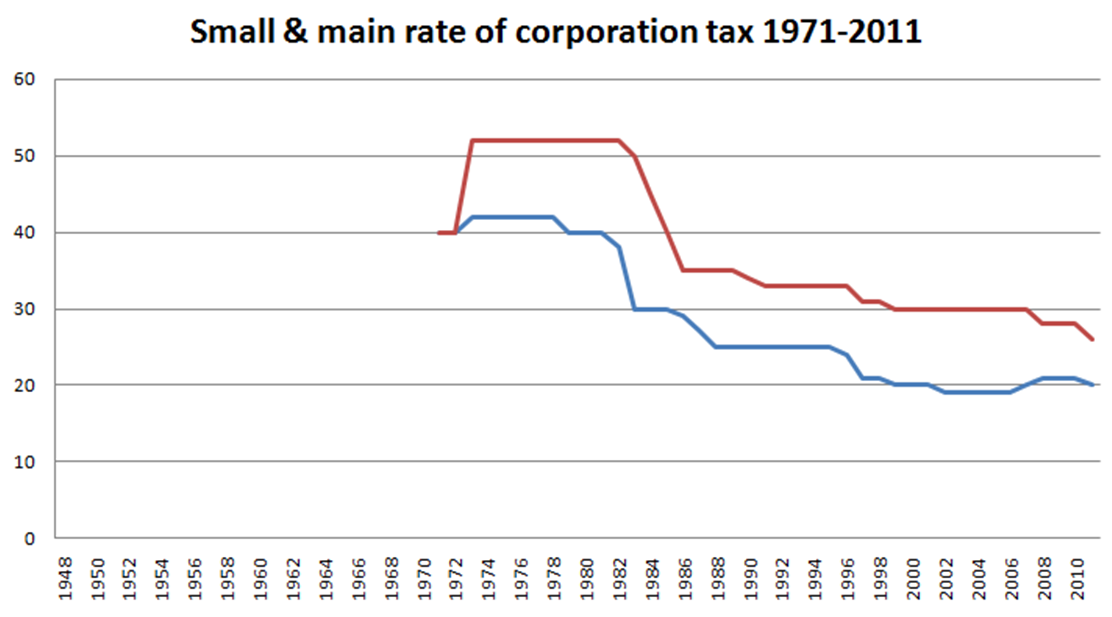
Two graphs for your Saturday enlightenment:


 Follow @libdemvoice.org on Bluesky
 Like us on Facebook
 Subscribe to our feed
 Sign-up for our daily email digest
Welcome (belatedly) to my day: 12 October 2026 – a leadership challenge, or a challenge to the leadership?… (Mark Valladares)
Is Ed Davey toast? (Caron Lindsay)
A plea from a member – more ambition and less equine pacification please… (Nick Baird)
Will the real Green party that cared about people and planet please stand up? (Kobe Bibbon)
We need better conversations on AI and the environment (Josh Matthews)
Sign-up for our daily email digest
Welcome (belatedly) to my day: 12 October 2026 – a leadership challenge, or a challenge to the leadership?… (Mark Valladares)
Is Ed Davey toast? (Caron Lindsay)
A plea from a member – more ambition and less equine pacification please… (Nick Baird)
Will the real Green party that cared about people and planet please stand up? (Kobe Bibbon)
We need better conversations on AI and the environment (Josh Matthews)

 The Joy of Six 1590
 What is Christian nationalism?
Ellesmere Yard: A living relic of the canal age
The Lib Dem leadership should listen to our MPs
What is Christian nationalism?
Ellesmere Yard: A living relic of the canal age
The Lib Dem leadership should listen to our MPs
 Latest PollBase is out, with all the British voting intention polls since the 1930s
Dean Friedman: Ariel
State of Play: the classic BBC drama, part 2
Can Davey survive as leader?
Latest PollBase is out, with all the British voting intention polls since the 1930s
Dean Friedman: Ariel
State of Play: the classic BBC drama, part 2
Can Davey survive as leader?
 Peter Davies Peter Davies
  cim
cim  Roland Roland
20 Comments
The tax allowance was much higher relative to earnings at the start – so for many people the headline rate of tax has increased from zero to twenty…
let’s not forget ni and vat – these graphs are pretty meaningless on their own.
The basic rate is entirely meaningless without thresholds.
While the from taxation has been mostly towards indirect taxes,it is still good to see the headline rates going down. Effort must go into lifting the poorest paid out of direct taxation.
I don’t think the rates are ‘meaningless’ without the threshold and other taxes, they are still one important factor.
But it is certainly more valuable to look at overall taxes, on income and overall, in conjunction with thresholds.
Tim is right to point out that the threshold is much lower now, in real terms, than it used to be, and to my mind it is raising the threshold that should remain the priority, for income tax and NI contributions. This could take millions out of the system, reducing running costs, and increases the incentive to work.
The UK’s total tax take as a proportion of GDP is lower than either the OECD or the Western European average. The flip side of this is that so, generally, is the amount we spend on education, health, welfare, local government services such as leisure facilities and so on. Defence is one of the few areas we have consistently spent more than the ‘average’ on in the last half century.
The ‘huge’ investment by New Labour in Health and Education saw us reach Western Europe average levels of spending in those areas around 2007/8 -for the first time in decades. It takes more than a couple of years of average spending to ‘turn the Tanker around’ -even without the huge sums Labour wasted on for example massive failed IT schemes in the NHS.
However much commentators might wish it you cannot have Western European levels of services with USA levels of taxation. Follow the USA model and you get the situation described by Galbraith as private affluence and public squalor. A situation where one part of Washington has the best medical services in the world while a few miles away in the poor areas there are third world levels of mortality for pregnant women.
Without stating the thresholds and allowances, those are pretty meaningless graphs.
I don’t think your graph takes into account “earned income relief”, which was abolished in (?)1973, and reduced the marginal rate for most taxpayers by 2/9. So a notional 38.75% (7s 9d in the £) was an effective rate of 30.1% (hence the apparent huge cut to 30% in 1973 was not really a cut at all, just a rationalisation).
For anyone looking for thresholds – I’ve done a fairly incomplete graph at http://blog.ruaraidhdobson.co.uk/?p=33. It doesn’t take married tax allowance into account, and I’m sure there are other things I’ve missed, but it looks like the single income tax allowance has fluctuated between £4500 and £6000 since 1973.
It’s time for Liberals to explore whether a flat tax might be more progrssive …
http://livingonwords.blogspot.com/2011/01/lunch-and-flat-tax.html
Er – where is the short-lived BR tax rate of 10%? It isn’t on your graph and will only appear as a very quick dip. It didn’t last long but, in my view, needs to be brought back, especially for those of us who are still awaiting the “promised” tax threshold of £10k!!!!!!!!!!!
@Rebekah – The 10% rate was not the Basic Rate. In fact the combination of the rise in the Allowance plus the rise in the NI threshold means that nearly everyone who benefitted from the 10% rate hasnow caught up and from next April will be better off.
@Ruaraidh – Are your figures for the ‘real’ rate based on rises in price inflation or rises in wage inflation? The latter would probably be a more appropriate comparison for income based tax allowances.
@Dan – I certainly think there is merit in looking at diffrent versions of a flat tax, the key issue being where you set the threshhold. It could certainly simplify taxes on income, massively reduce the costs of collection, substantially increase the incentive to work and, if the threshold is right, still be progressive. Unfortunately the idea is currently associated with right wingers who would want a low or no threshhold.
No mention of tax free income from ISA’s or Baby Bonds for those lucky or clever enough to have some capital, I note.
How about a study of the taxation of the transfer of wealth from each generation to the next, over the years?
As usual, discussion focuses on income from employment, from asset creation or existing assets, rather than upon the unearned ownership of existing assets by those who have inherited or will inherit them tax free.
A brief response to the varied comments: yes, there’s lots more to the overall picture of what has happened to the tax system than the headline basic rates, but sometimes there’s also a lesson in the simple clarity – which is that almost no politicians has actually got into office and then raised one of the headline rates (either they’ve not argued for it, or they have but once in office haven’t done it). That relentless historical pattern gives a pretty strong hint about both what policies are or aren’t likely to happen in future, from any party. But also knowing those broad trends is central to understanding the details in my view (and when you look at it from this perspective, isn’t it odd that tax policies are so often discussed as if headline rates go up and done as times come and go rather than this consistent long term trend?).
VAT, up, up and away.
If tax rates really have gone down overall (and I say “if” because I do take the points others have made that tax is taken in other forms so these figures are a little misleading), then it destroys the credibility of the government. We are told there is no alternative but to make this big cuts in expenditure, so big they are damaging the economy in other ways, but that is clearly wrong if the cuts are being made simply to accommodate taxation at a historically low level. It is perhaps a good idea that the cuts are put forward simply to force people to think seriously – if you don’t want these, then are you willing to accept the alternative, which may involve taxation you would at first reject? We Liberal Democrats are damaged as a party because we have been seen to turn around on our policy on higher education payment, but how many of those who have abused us on this issue have said how THEY would pay for it instead of what is now being done? I find something rather sickening in upper middle class kids leading the protest against higher education fees and saying NOTHING about the huge dollops of lightly taxed or untaxed cash that will come their way die to the unequal nature of property ownership. Who of those saying “No to fees” is saying “Yes to capital gains on owner occupied housing” or “Yes to inheritance taxed as earned income”? If they are not willing to consider such things, then their “No” to tuition fees is pure hypocrisy.
We are told we cannot have higher tax because that would damage economic growth, but here we have those graphs showing much higher tax rates at times in the past when we had much higher economic growth. How come the economy was healthier when income tax and corporation tax was much higher? Does this not suggest we have been told an awful lot of lies by those running news and comment in our country, who have continually pushed this “low tax for economic growth” message? We Liberal Democrats ought to consider from how the right-wing press treated us over the AV referendum that however much we move to their position on taxation, they will never be our friends, they will always hate us because we stand in the way of Tory domination, so there is no point in sucking up to them. This country has done all they have urged for three decades, and look where we are. The “relentless historical pattern” here, as Mark Pack puts it, fits in with the relentless economic decline of Britain. Does this not suggest something?
Progressive taxation like income tax is down, regressive taxation has increased and along with it the gap between rich and poor. This is exactly what all 3 parties want.
Matthew Huntbach,
I am with you in general, but instead of the suggestion of inheritance taxed as earned income, I would say it should be inheritance and lifetime capital gifts taxed progressively as cumulative lifetime receipts of unearned capital. For that it would be necessary also to have a flat rate 10 per cent recording tax on all capital gifts and bequests, deductible from the progressive tax on receipts starting at 10 per cent, which is all that benficiaries of modest lifetime totals would pay. All proceeds to be used, of course, to give every 25 year old UK-born UK citizen a capital sum to help towards tuition fees, business start up, home deposit or whatever. This is a Liberal Policy, and could be a Liberal Democrat policy, towards the Libeal Party Constitution Preamble’s demand for LIberty, PROPERTY and Security for all.
Dane Clouston
I am with you in general, but instead of the suggestion of inheritance taxed as earned income, I would say it should be inheritance and lifetime capital gifts taxed progressively as cumulative lifetime receipts of unearned capital.
Sure, but these are finer details. At this point what we need is to be able to move discussion to where the finer details of such proposals are being discussed. Right now the place where we are at is that no-one is seriously willing to talk about a really big shift of taxation to wealth and land, and the results are very obvious: a society becoming increasingly nastier and more unequal due to the way property ownership works when it is not taxed – giving to those who already have, taking away form those who don’t already have, and most of all destroying the bedrock of human existence, the stable family. I use the latter words deliberately to shock, as they are not words we hear from liberals, yet I find there is an utter hypocrisy in the Daily Mail etc types who do use language lie that and yet support an economic policy which destroys that which they claim to value. I always find the best way to promote any policy is to hit from the opposite side than the one the enemy expects.
It’s very hard for those of us involved in electoral politics to speak about such things, I have been there and I bear the scars. The vested interests against us are huge and have all the voice in society, those who would benefit most from reforms have little voice and do not understand how much these policies would benefit them so are easily misled by the wealthy and powerful into joining in their opposition to them. However, how great it would be if all those people organising “stop the cuts” marches and the like were capable of seeing that the alternative has to be something like this, and so starting the discussion. The utter emptiness of the political left in this country is shown by their failure to engage the public, in particular the young and the poor, into supporting this sort of reform which would do so much for them. Instead the left mostly poses on politics which are of little or no interest to those at the bottom of society.
Mark, a useful perspective on tax, but only of the “headline” sort per the post title.
But it’s only half the story and it’s someone else’s choice of headline and hence agenda – one which I for one reject.
The decline in income tax would be much greater if you showed the higher rate. It would, I think, also highlight the importance of the change in economic thinking introduced by Thatcher in 1979.
Similarly the rates for corporation tax are the nominal rates, not the rates that big business actually pays. By utilising devices such as transfer pricing the actual rates are much less – often approximating to zero as UK Uncut has highlighted. Why did it take a group started by chance in a pub to put this on the agenda? Are the political parties all so out of touch?
Conversely, VAT is way up as are many charges and lower profile imposts that do not come into the “headline” category – the infamous stealth taxes that, in opposition, the Tories used to get so cross about.
All in all, recent decades have seen a massive switch in the tax base which the the Conservatives and financiers have managed to get away with with remarkably little push back. I’m with Matthew Huntbach; this is central and ought to be at the centre of the political debate.