


It’s a year since I wrote the post below, but I wanted to repeat it this year partly because that brief hour at the Tower of London has stayed with me. The symbolism was compelling and should make us all think about the reality of war and what everyone affected by it goes through.
 Last Monday I was down in London for a meeting and had an hour spare to nip down to the Tower of London to see the poppy installation where 888,246 ceramic poppies have been laid out in an act of remembrance for all those who died in the First World War.
I found it incredibly moving. The atmosphere was one of humble quiet reflection. You know when you normally go to things, people can be pushing and shoving and trying to get the best view. Actually, here, everyone was respectful, giving each other space, despite the massive crowds.
I think what got me more than anything was seeing that this huge sea of red, made up of individual stems, symbolised one part of one side who lost their lives in the First World War.
Here are some of the pictures I took on the day. The one above is from the bridge on the east side of the Tower.
My first view came from the subway after I got off the bus. You can see how many people were there in the middle of the afternoon. It was the same all the way round.
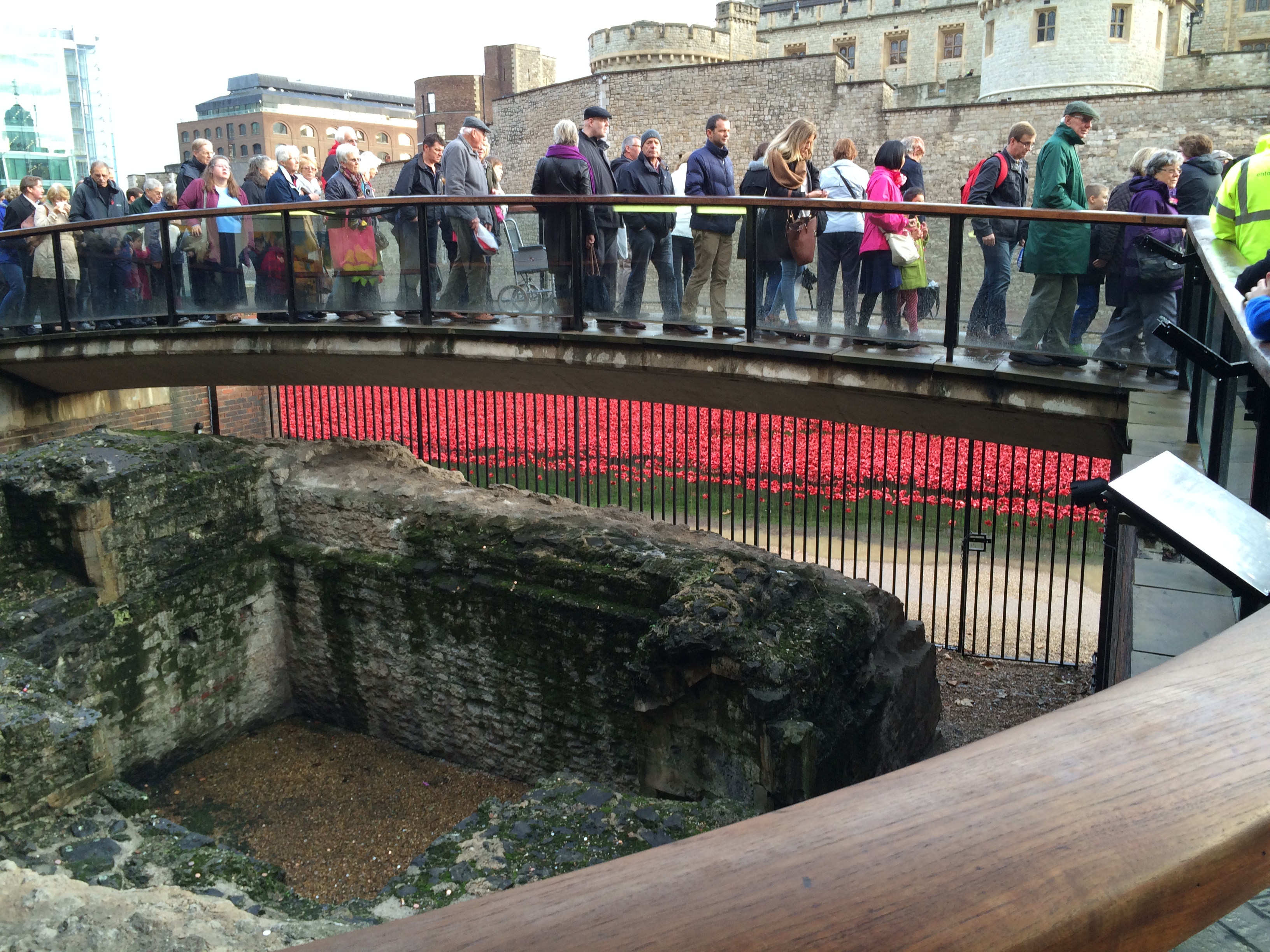
You can see some of the individual poppies here. That affected me quite a lot. I know from recent, frightening experience what it’s like to have someone close in a potentially life-threatening situation. I can only imagine what it must have been like for those families with loved ones away fighting for years. That dread that someone was going to turn up with a telegram must have been awful.

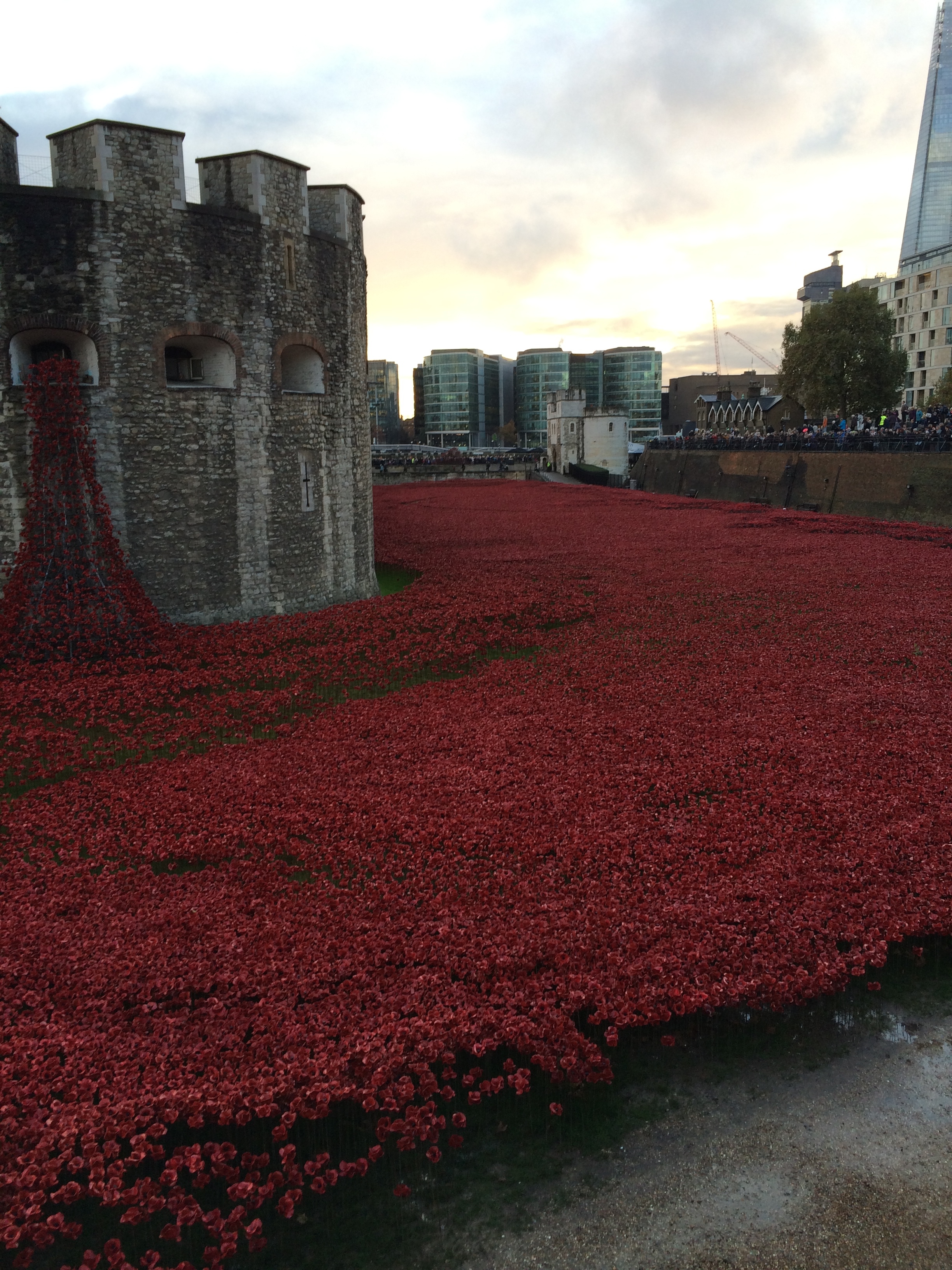
And you can see in this one how they make up their sea of red:
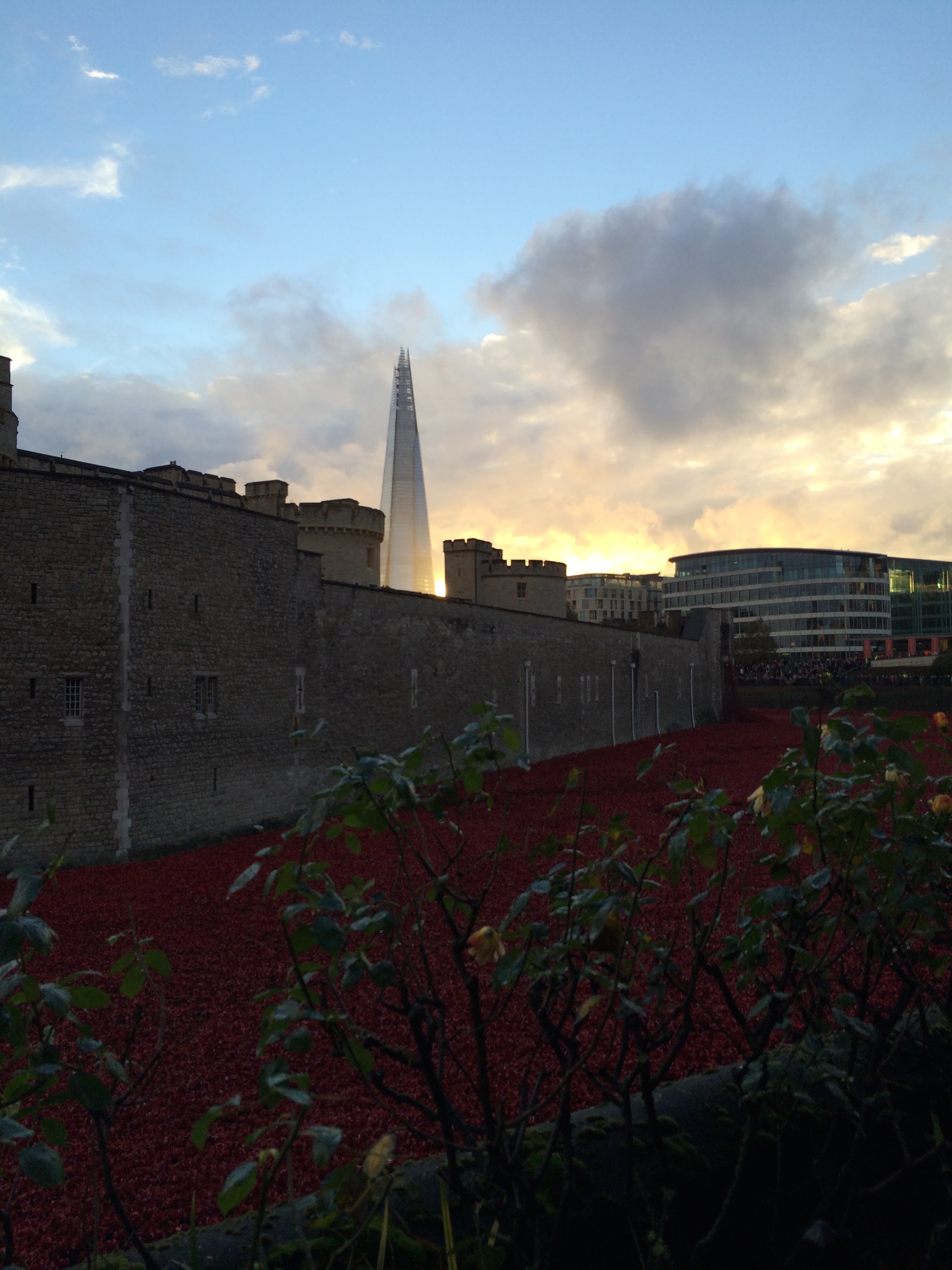
The Shard as the sun goes down. I always think it looks a bit other worldly.
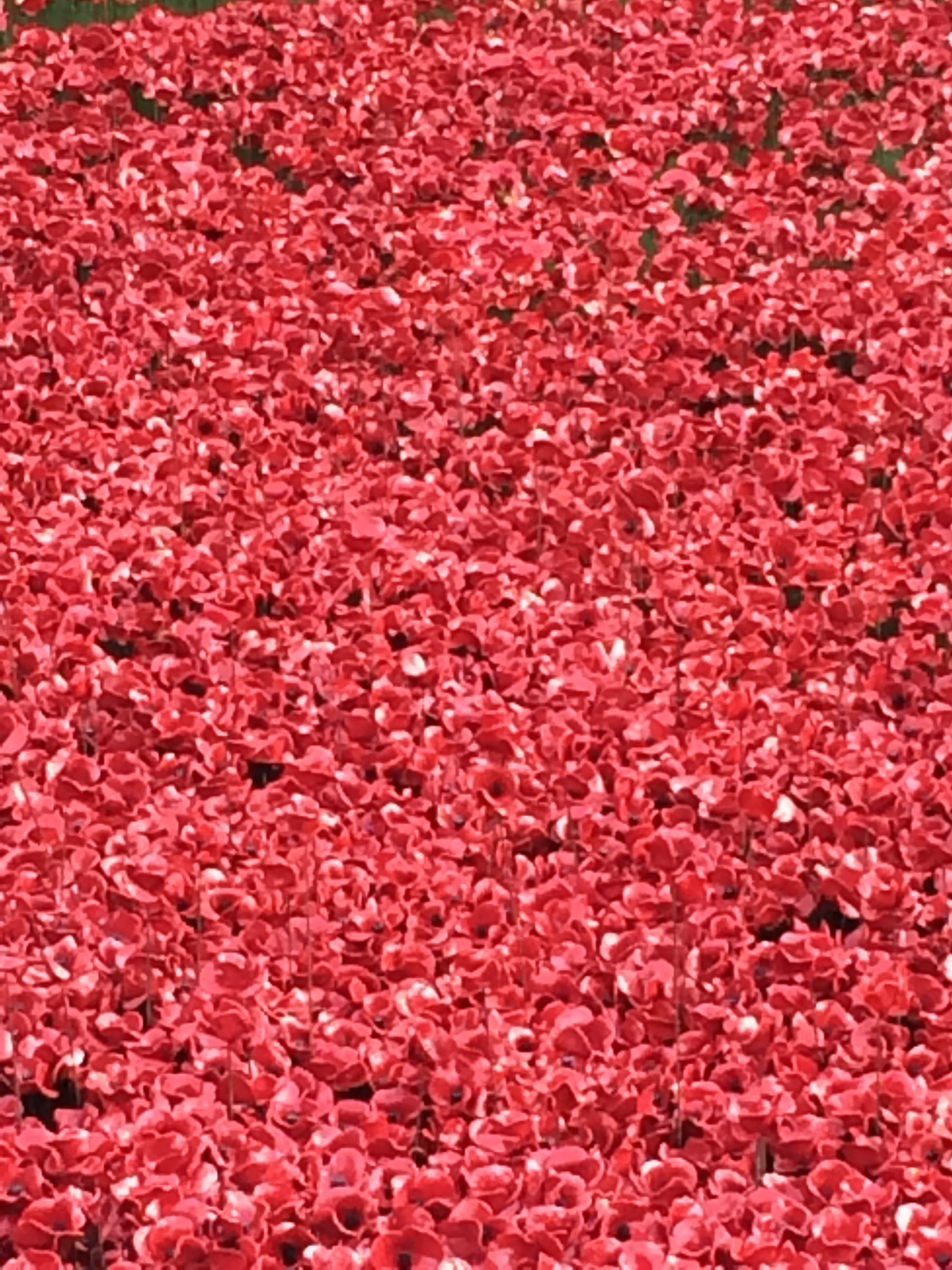
And a closer photo of the poppies themselves
While I’m sympathetic to the idea that the installation at its prime should be open for a bit longer, I do feel that the most shocking bit is yet to come. The symbolism of that sea of red being there one day and gone very quickly thereafter should make us think even more about those young lives who were cut short and the families and loved ones whose futures were changed forever without them.
We will remember them.
* Caron Lindsay is Editor of Liberal Democrat Voice and blogs at Caron's Musings. You can find her on Bluesky at caronmlindsay.bsky.social
 Follow @libdemvoice.org on Bluesky
 Like us on Facebook
 Subscribe to our feed
 Sign-up for our daily email digest

 Latest voting intention and leadership ratings opinion polls
 An article for Lion & Unicorn: Malcolm Saville and the children's holiday adventure
 The pub with no name and the Swansea poet
 "Private affluece and public squalor" rule OK?
 Jana
Jana David Warren
 Tim Rogers
 Mick Taylor
6 Comments
Profoundly agree, Caron.
It should also give pause for thought to those who want to get involved in Syria.
I’ve revived the Tower of London display on my Facebook today. It was a powerful somber work of art.
I think one year, maybe even next, we should have an even bigger display where we honour and remember those who died from all sides in Europe and beyond in the conflict that no one really knows what was about, beyond a vague notion of self-interest and moral principle.
It could involve the European Union. Not as a political statement, but just as a matter of fact that it is with us today and we should work together when possible.
Eddie Sammon ”
“No one really knows what was about, beyond a vague notion of self-interest and moral principle.”
Whether you agree with it or not there was nothing vague about it. The British declaration of war was about the Liberal Government fulfilling a treaty obligation (an obligation shared by Germany) to defend Belgian neutrality after the invasion of Belgium by Germany.
Hi David Raw, I agree, but millions dead for a treaty obligation is a lot. I’ve done reading (and watching) about this war before, but doing some more now it does seem fascinating that “Opposition to war in Britain was dying away.” after Germany declared war on Russia, France and were planning to invade via Belgium.
Sir Edward Grey says something to parliament that sounds similar to the arguments many of us make for an interventionist foreign policy ““If we do stand aside we would sacrifice our respect and good name and reputation before the world”.”
However, one of the reasons Germany declared war on Russia and France was because they mobilised their military. I don’t know what I would have done if we went back 100 years with the immense pressure that the decision makers were under.
This is a good resource about the war (BBC iWonder): http://www.bbc.co.uk/timelines/zgy334j#zt2xxnb
‘Good-Bye to All That’ by Robert Graves is another useful resource.
Eddie, “millions dead for a treaty obligation is a lot.”
Yes, ….of course…. but at the time (August, 1914) majority thought (apart from Kitchener) was that the war would be over by Christmas……… which leads me to the conclusion that it’s easy to get into a war but far more difficult to get out of it….. hence I oppose to being sucked into Syria…. and before that Lybia and Iraq. All political leaders ought to be given a compulsory course in 20th century history…… it might have stopped Blair getting in a complete mess in Iraq and Afghanistan.
If you want a proper appraisal of WW1 try anything by David Stevenson (on Amazon used from about £ 5 – although I’m reluctant to use these tax avoiders).