When the public is searching for information about prominent politicians online, one of the most common things looked for is their Twitter account – so says the data from search engine giant Google.
Chances are you’ve noticed that as you start typing a search term into Google’s search box, it tries to guess what you are typing, suggesting several ways to complete what you are typing in. Those guesses are derived from Google’s huge data set of what people having been searching for online, so seeing what Google suggests also reveals what the most popular searches made by other people have …
This is the second in our series, Why Vote Yes, where prominent Liberal Democrats explain the importance of voting Yes in May’s referendum on the UK Parliamentary voting system.
Fellow Liberal Democrats – I’ve been in politics for a long time. There’s nothing wrong with people of any age getting involved, from a teenager to a centenarian. We can all make a difference.
But when almost every politician at the top of the “No” campaign was already a dinosaur by the time I was first elected to Parliament in 1983, you have to wonder about the freshness of their arguments.
Think of the changes Britain has seen during my lifetime – and theirs:
We’ve joined the European Union. We’ve established a Parliament in Scotland and an Assembly for Wales. We’ve voted in proportional representation elections for both – a far bigger change than AV – and the sky hasn’t fallen in.
And government, always the last to change under Tory and Labour alike, has often been the last to wake up to the incredible social changes that have changed Britain for the better.
So when those old Labour and Tory hacks gang up to tell you to be afraid of a long-overdue but frankly much smaller change, it tells you far more about their fears than those of the British public. Of course they’re against change. They want to hang on to the present system because it makes life easier for politicians. Well I am more interested in a system that makes life better for the voters!
I’ve campaigned for electoral reform for as long as I can remember. I’m both President of DAGGER (Democratic Action Group for Gaining Electoral Reform) and the Liberal Democrat Group of the Electoral Reform Society, so you can imagine how I felt when I found out that we have a chance to change our outdated, broken electoral system and replace it with something better.
Let’s be clear: AV may not be perfect, but it IS better and fairer than First Past the Post. Even the ‘No2AV’ campaign know that, which is why they’ve resorted to making things up …
There’s been some promising chatter in the run up to next week’s Budget about two major changes to our tax system, both of which have often been talked about across the political spectrum and both of which politicians have previously ended up shying away from because of the political hurdles involved.
The move is expected to be signalled by George Osborne in his Budget next Wednesday. Although such a huge change would take years to implement, the Chancellor is determined to be seen as a reformer and not just
The Liberal Democrats have gained a seat from the Conservatives on Tunbridge Wells Borough Council in yesterday’s Pembridge by-election, with a swing of more than 13%.
The result in full:
LD Claire Brown 578 (43.3; +2.7)
Con 460 (34.5; -24.9)
UKIP 296 (22.2; +22.2)
Majority 118
Turnout 35.41%
LD gain from Con
Percentage change is since May 2010.
New Liberal Democrat councillor Claire Brown said,
I am delighted and honoured to win this seat in Pembury and serve the village. I am a local mother of three young children who runs my own business. We fought an excellent campaign against the Tories who put up a candidate from outside the
Last night, Nick Radford — who stood for the Lib Dems in Salisbury at the 2010 general election — announced on his blog he would not be standing again, that he ‘finally felt comfortable describing myself as a “ex-politician”‘.
Before the media gets in too much of a lather (I can already see the headlines: “Top Lib Dem quits”, “Fresh blow to Clegg”, etc, yawn), Nick’s reasons are personal and varied — and as it happens, disagreements with the Coalition are the least of his issues: ‘this isn’t because of the disastrous press that the party has received since …
1. Being introduced at a meeting or in a debate as a “Minister” is still a plus point, often triggering a round of applause. People at conference like the fact that the party is in government.
2. The Social Liberal Forum (SLF) is growing quickly in influence in the party, partly thanks to a smartly organised set of fringe meetings, amendments and motions. However, the SLF is very keen to repeatedly stress that it is not anti-coalition.
3. The NHS debate was a decision delayed. All sides are happy with the idea that a conference debate is used to set out or …
With the Liberal Democrat spring federal conference in Sheffield about to kick-off, here’s a quick reminder of some of our advanced coverage, with tips on which debates to watch out for, the best of the fringes and a taster of some of the arguments:
If you are tweeting at conference, the hashtag is #ldconf.
Further information about the Liberal Democrat federal conference is available in the Party Conference section on the main party website and the official Lib Dem conference Twitter account is @LibDemConf.
For example, the ID card database was publicly destroyed on 11th February 2011 and Project Merlin has ensured that the UK has the most transparent banking pay disclosure scheme in the world.
Sarah Teather’s SEN Green Paper has proposed key reforms to the way Special Education Needs are diagnosed and the support that children and parents receive.
The National Curriculum is under review, with the aim of replacing the current system with a slimmed-down and more competitive version.
The Government are backing Lord Clement-Jones’ Live Music Bill, which aims to cut red tape for putting on live music, as set out on page 46 of the Lib Dem Manifesto.
Motion F9 Improving the diversity of our MPs is up for debate late on Saturday afternoon at the Liberal Democrat Sheffield conference. It attempts to be a successful, and not toothless, compromise between the strongly held conflicting views in the party on what should be done in response to not only the continuing dominance of the (Commons) Parliamentary Party by white men but also the significant slippage of the party’s diversity record compared to that of both Labour and Conservatives over the last few general elections.
As it is a motion explicitly about MPs, I can appreciate why it does not address local government. However, the flatlining of the proportion of Lib Dem councillors who are female for two decades now is a much neglected subject, and the male (and white) dominated pool of councillors is an important contributory factor to the similar pattern amongst MPs in my view.
What the motion does cover is better mentoring, setting of targets and then the heart of the proposals:
The creation of a Leadership Programme for outstanding candidates from under-represented groups, which will:
a) Have a maximum number of approved candidates, with a minimum of 30 by the end of 2011, and within that, 50% of the places will be reserved for women, and 20% for those from BAME backgrounds, and 10% for those with disabilities.
b) Provide advanced training and support, particularly in media, leadership and team building skills, and fundraising.
c) Provide mentoring and coaching from the moment they are approved as a candidate until after the election day.
d) Offer them opportunities to shadow a Parliamentarian.
e) Raise funds to provide practical support to PPCs from under-represented groups.
As an added impetus, the motion says that if there are enough applicants, then at least two people from the Leadership Programme must be included on the shortlist for a priority seat. Also, development seats should advertise in clusters, making it easier for them to hit targets for diversity in shortlists across the whole cluster.
When talking about how tortoises hold the secret to online success, I only talked about the total number of people on email lists. If you are a campaigner wanting to build up an email list to effectively communicate with residents in your area, that is an important number to have a sensible target for and to work towards.
But it’s only one of the three crucial email numbers.
The second is the open rate on your emails. Email open rate statistics are provided by most of the email management services available, and indeed it’s one of the main reasons for using …
The cross-party Committee, which I chair, has been considering proposals for a wholly or mainly elected second Chamber. The Government will publish a draft Bill shortly, which will then be subject to pre-legislative scrutiny. The Government hope that that will be carried out by a Joint Committee of both Houses.
Saturday morning in Sheffield this weekend sees the LibDem conference debating two of the areas of coalition which have generated the most controversy: the NHS and the future of the Disability Living Allowance.
The motion on the Disability Living Allowance (F4) has been slightly overtaken by events as the debate within government over the Welfare Reform Bill develops and in fact the plans in this area have in effect been sent back to the drawing board. That makes the motion all the more important, because rather than being simply a chance to cast a verdict on what the government has done, it is a chance to influence what is yet to be decided. The heart of the motion calls for “the Coalition Government to reinstate the Mobility Component or otherwise fund the mobility needs of those who cannot afford to do so themselves”.
Straight after this debate comes one on the NHS (F5). The choice of Andrew Wiseman, Federal Conference Committee’s chair, to chair this debate is a good sign that this is expected to be one of the liveliest of conference as is the news that two Liberal Democrat MPs have signed an EDM expressing concerns over the policy.
Buried in the middle of the motion are lines 16-17 which says that “Conference welcomes the vision for the NHS set out in the Government’s White Paper”. That may be glossed over as a bit of padding between long lists of less controversial points or it may be the trigger for an all-out row, as also may be the amendment likely to be debated that is coming from ex-MP and doctor Evan Harris and Lib Dem peer Shirley Williams (who made her views clear in “I can’t support the coalition plan for the NHS“).
The gap between what the amendment calls for and what Liberal Democrats in government have been pressing for is not that large, however – and some have already expressed the view that the amendment may be a good route to getting more changes made to the health plans. That will provide a pointed choice for those promoting the amendment – whether to try to bring about change through aggressive antagonism or through emollient persuasion? And is modifying the government plans or setting out what a Liberal Democrat majority government would do their top priority?
The full text of both motions are in the Spring Conference Agenda and Directory embedded below.
This weekend’s Liberal Democrat conference in Sheffield starts on the Friday afternoon with three policy consultation sessions: Facing the Future, Information Technology and Intellectual Property and Inequality.
The Facing the Future policy working group is chaired by Norman Lamb MP and, as Norman explained on this site last autumn, is intended to set the party’s broad policy framework for the next few years. Having such a key party leadership figure chairing the group is good news as it raises the chances of the group’s deliberations and outcomes having an impact on what the Liberal Democrats in government subsequently do.
The big challenge for the group is to avoid the fate of previous similar broad policy reviews which generally have done a good job at the technical details of what policies need reviewing and in which order, but have tended to have either very muddled overall messages or messages that sink largely without trace. (It’s a time for Facing up to the Future of Challenge, Opportunity and Responsibility while Moving Ahead to Meet the Challenge, Make the Change a policy wonk might almost say.)
The success of this group is all the more important this time round as without a clear direction, the party’s policymaking processes are likely to get over-shadowed by the day-to-day decision making impetus from government – where the policy teams are coalition rather than Liberal Democrat teams.
Norman’s presence as chair of the group is therefore particularly welcome, and it’s the absence of a similar senior leadership figure from the chair of the other two groups that illustrates their main challenge.
The Information Technology and Intellectual Property group (chaired by Julian Huppert, and which I’m a member of) and the Inequality group (chaired by David Hall-Matthews) both need to get their own recommendations right. But almost as important is to have recommendations which Liberal Democrats in government then pay some attention to. In both cases, the more closely the policies are drawn up with regular discussion with those in government, the more likely they are to have an impact on what happens.
Take the example of the Inequality group, which amongst other issues looking at those of social mobility and how important, or not, overall levels of equality are. The consultation paper says both are “crucial” and that tackling the former “would not necessarily” lead to improvements in the latter. That, and the chairmanship of David Hall-Matthews, give a fairly strong clue as to the recommendations the group is likely to produce. The key test, however, will be the degree to which any such recommendations influence the words and actions of Liberal Democrat ministers, especially Nick Clegg whose emphasis has been very much on only the former.
In my experience, policy working groups are very open to the views of others in the party where they are clearly put and with some evidence or experience to substantiate them (not a hurdle all submissions pass, alas!). So although some of the bigger questions may be beyond the direct reach of individual party members, I’d strongly encourage people to take part in the consultation processes.
With the Liberal Democrat (federal party) spring conference coming up in Sheffield on 11-13th March, I am going to be doing a series of posts previewing some of the main items up for debate, expanding on my previous whistlestop tour of the conference agenda.
First, however, is a look at the fringe meetings being held over the weekend. These meetings may not have the power to decide in the way that conference debates can, but they do often give a great chance to hear issues discussed in greater and more expert detail than the rather staccato main hall style of 3-5 minute speeches back to to back.
The highlights I’d pick out are:
Lords Reform 1911-2011: A century after the veto power of the Lords was broken in 1911, democracy has still been kept out of the Lords. The History Group’s fringe meeting will look at both past and present attempts to reform the Lords. Friday, 8pm, Jury Inn Suite 3. Event on Facebook here.
Vince Cable and Evan Harris in discussion over further and higher education: It is a smart move by the Social Liberal Forum to get two prominent people with very contrasting views together – and in a format that should shed more light than heat if Evan’s previous ‘in discussion’ with Nick Clegg is anything to go by. Saturday, 1pm, Mercure St Paul’s Hotel, City Suite A.
Breakthrough or breakdown? CentreForum looks at the electoral prospects for the party with Tim Farron (briefly, as the new Party President is continuing the Simon Hughes tradition of doing two fringes at the same time), Chris Huhne and academic polling expert Paul Whiteley. Saturday, 6:15pm, Mercure St Paul’s Hotel, City Suite A.
Who runs the internet? The Voice’s own fringe meeting with James Blessing, Evan Harris, Jim Killock and Mary Reid as trailed here. Saturday, 8pm, Mercure St Paul’s Hotel, Meeting 6. Event on Facebook here.
These are of course only the four best fringe meetings in my own view – your own view, especially if you have different interests, may be different. So do check the full list of fringe meetings including in the Spring Conference agenda and directory embedded below.
Here’s your starter for ten in our weekend slot where we throw up an idea or thought for debate…
The military coup in Egypt was met with widespread international support – because it deposed President Mubarak. Similarly, the sending of troops into Libya by Britain and other countries to help people leave has been met with barely a whisper of concern about whether or not troops should be sent into another country without any UN motion or similar. Yet pragmatism and self-interest is hardly all the rage – for Tony Blair’s attitude to Libya has been coming under much criticism as has …
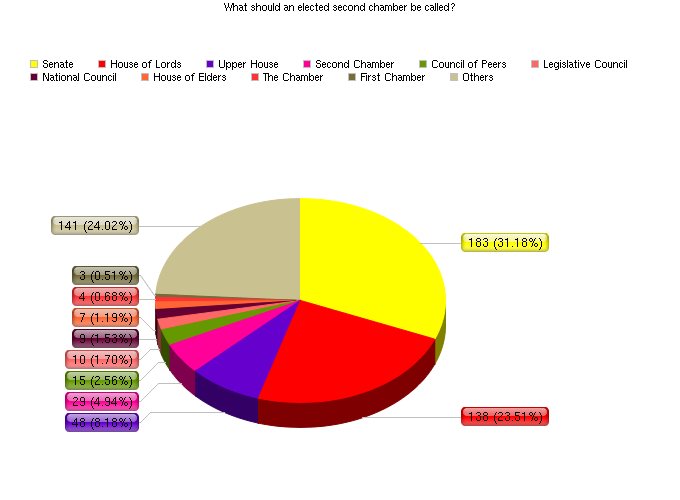
Nick Clegg said this week that the Government will shortly unveil its plans for reforming the House of Lords.
Answering questions in the Commons on Tuesday, Clegg said:
The cross-party Committee, which I chair, has been considering proposals for a wholly or mainly elected second Chamber. The Government will publish a draft Bill shortly, which will then be subject to pre-legislative scrutiny. The Government hope that that will be carried out by a Joint Committee of both Houses.
It’s very likely that the second chamber will be renamed, to reflect the constitutional changes.
Upper Houses around the world have a wide variety …
The lesson from David Meerman Scott’s post The secret to getting 50,000 followers on Twitter is just as applicable in the field of politics, such as if you are a councillor wanting to communicate with residents via Twitter or a Parliamentary candidate wanting to build up an email list of constituents.
I can remember JFK being assassinated and being taught to say that Alec Douglas Home was Prime Minister, but really my Liberalism dates from the early 1970s when my father left us (an experience that taught me I was not a Tory) and the Liberals were winning by-elections.
I realised that I was not a Socialist a couple of years before that when Boxmoor County Primary School demanded a letter from your parents before you were allowed not to have custard with your pudding.
2. When did you start blogging?
The first post on Liberal England is dated 4 March 2004.
However, I did write the diary of Whittington (Susan Kramer’s cat) during the first London Mayoral election in 2000. That has some claim to be the first political blog in Britain.
3. Why did you start blogging?
I wanted a shop window for my various writings, but blogging soon became an important activity in its own right.
4. What five words would you use to describe your blog?
6. Which post have you most liked writing in the last year (and why)?
Andrew Mitchell, the great and the good, and me from September last year. It reminds me of my trip to New York for Oxfam and reports an event that no mainstream journalist would get to attend.
7. Which post have you most liked reading in the last year (and why)?
I was very impressed by The Contented Lib Dem’s series of posts on the abolition of the Educational Maintenance Allowance. They are summarised here. He or she argued a controversial case, backed it up with evidence and engaged with the commenters, getting the better of most of them. Unfortunately, nothing has appeared on that blog since.
8. What’s your favourite YouTube clip?
Assuming that the Bible and complete works of Steve Winwood are already on the island, how about this version of Dolphins by Tim Buckley?
By Helen Duffett
| Fri 25th February 2011 - 11:49 am
Charles Kennedy MP has urged Liberal Democrat members and supporters to take action by registering their disappointment and disgust at the advertising tactics of the No2AV campaign.
The No campaign recently took out a two-page advertisement in the Birmingham Mail claiming that a sick baby “needs a new cardiac facility NOT an alternative voting system”. The ad misleadingly implies that the public must choose between an alternative voting system and frontline services.
Here’s what Charles said in his email this morning:
Over recent days No2AV have published a series of ads in local papers that can be described as distasteful at best,
Nick Clegg often talks about social mobility, but is it the right focus for the party’s social efforts?
The day after he was elected Liberal Democrat Leader, Nick Clegg set up a commission to look at social mobility in the UK. In the two years since then, he has regularly returned to the topic, and it has become a priority of his for party and then government policy-making, alongside making frequent appearances in speeches, slogans and soundbites from leading party figures.
Yet it is a phrase that risks becoming over-used, for it fails to communicate effectively what makes us Liberal Democrats …
Not quite what Liberal Democrats always says about Local Government Secretary Eric Pickles, but his pronouncement this week about access to local government meetings was spot on.
Councils should open up their public meetings to local news ‘bloggers’ and routinely allow online filming of public discussions as part of increasing their transparency, Local Government Secretary Eric Pickles said today.
To ensure all parts of the modern-day media are able to scrutinise Local Government, Mr Pickles believes councils should also open up public meetings to the ‘citizen journalist’ as well as the mainstream media, especially as important budget
As tyrannical regimes go, Libya is right there at the top and ranks alongside North Korea for the unpredictability of its ruler, the self-styled Colonel Muammar Gaddafy, who used to be referred to by Ronald Reagan as the Middle East’s ‘mad dog’.
Having given up nuclear weapons he is admittedly slightly better than Kim Jong-il, but we cannot know for sure that he has also given up chemical and biological weapons. In a country where tribal loyalties prevail and where the four main tribes occupy the main positions, Gaddafi’s own tribe occupies the top posts and much of his internal repression is carried out through a myriad of different state security institutions as well as a plethora of paramilitary units, recruited from abroad.
The country does not have a constitution, but is run by a revolutionary ruling council which has been in situ for 42 years and cannot be dismissed. There have been regular attempts at coups over this period, which have been ruthlessly put down and there are no evident pointers to a peaceful succession.
Gaddafi’s four sons have long been involved in jostling for the top position and foreign governments were betting on Saif al Islam (the second son) to take over the reins, as he was increasingly the acceptable face of the regime.
Saif al Islam al Gaddafi was awarded a PhD from LSE enticingly titled “The Role of Civil Society in the Democratisation of Global Governance Institutions”. He chairs the Human Rights Commission of Libya, and lest anyone doubt that he is therefore a soft touch, he was his father’s voice last weekend displaying a similar determination to stay in power through putting down the uprising till as he put it, the last man, the last woman, and the last bullet had been expended. He appears to be delivering on his pledge.
Several hundreds have died in the last few days, hospitals are overflowing and as a crackdown has started, anyone moving on the street is shot dead. Reports say that ambulances are also shot at to deter them from trying to save the injured. The air force has been mobilised to bomb civilian residential areas, and the reign of terror has started.
So what should be done now, that the country has descended into chaos?
I wrote in November that there is much in the Bill that we as a party should welcome. The Universal Credit sits comfortably with our own policy to introduce a single working-age benefit to replace the current nightmarishly complex system.
Today’s Bill lays a framework for a radical improvement in the way welfare works in this country. It will be simpler, clearer, and will target resources at those who need it most …
After last month’s trip down memory lane looking at how internet campaigning worked in Brent East in the 2003 by-election, here is the piece I wrote for the Hansard Society after the 2001 general election (when I ran the Liberal Democrat online campaign). As with the Brent piece, it shows how many principles have stayed the same even as different internet phases have come and gone. And no, the power to draw up sensible imprint rules for the online world mentioned below still hasn’t been used.
Introduction
Perhaps the most notable Internet innovation during the 2001 general election was the ability …
By Max Teuerman
| Wed 16th February 2011 - 11:55 am
As a tax professional, it’s not often people ask me about what I do in my day job. Sure, people will occasionally ask me about their personal tax returns, but UK corporation tax on foreign companies and branches? Not even my insomniac friends are that masochistic.
So I was surprised to see my local party debating this very subject (or so it seemed) based on an article George Monbiot wrote in The Guardian. I was curious: I’ve worked in corporate tax for 17 years, for professional firms and companies, large and small, and contributed to consultations by HM Treasury and HMRC, including …
Peter Snowdon’s history of the Conservative Party in opposition, quickly updated last year to include the final stage in their recovery, has four white men on its cover striding towards the reader – Cameron, Osborne, Hague and Clegg. It tells you immediately the sort of book that Back from the Brink: The extraordinary fall and rise of the Conservative Party is: tightly focused in on politics as seen from and carried out in Westminster.
This is an account of senior political figures and their political, policy and media manoeuvrings. The public feature very rarely (unlike in Deborah Mattinson’s memoirs from …
Salmon investigates and illustrates how usually over-looked provisions, such as the introduction of electoral registers, encouraged the formation of semi-permanent political organisations at a local level with resulting frequent party conflict over electoral registration as people tried to get their supporters on the register and their opponents knocked off it.
Rob Heale The boldest option would be to adhere to our aims set out in the Party Constitution to be free from poverty. People living in poverty can rarely be free because...
Chris Moore Battling on against the current with scarce means or attention from the media.
Excellent radical liberal focussing on the issues that really matter.
An...
Adam 4,700 Jewish soldiers fought for the Prussian army in the Franco Prussian war. They fought with distinction - many of them received the Iron Cross. When Germany...
Paul Thank you Jane for your tireless work over the last decade. You stood for leader when it would have been easier not to, you’ve fought elections when it would ...
Adam "The problem is that being ‘understanding’ of anti-immigrant views led to the holocaust."
This is both wrong, and bloody insulting to those German Jews w...


 Straight after this debate comes one on the NHS (F5). The choice of Andrew Wiseman, Federal Conference Committee’s chair, to chair this debate is a good sign that this is expected to be one of the liveliest of conference as is the news that
 The success of this group is all the more important this time round as without a clear direction, the party’s policymaking processes are likely to get over-shadowed by the day-to-day decision making impetus from government – where the policy teams are coalition rather than Liberal Democrat teams.


 Follow @libdemvoice.org on Bluesky
 Like us on Facebook
 Subscribe to our feed
 Sign-up for our daily email digest

 Jane Dodds stands down as Welsh Lib Dem leader
 The straight and narrow path to Marzipan Tunnel
 A U-turn too far
 Rob Heale
 Chris Moore
 Adam
 Paul
