


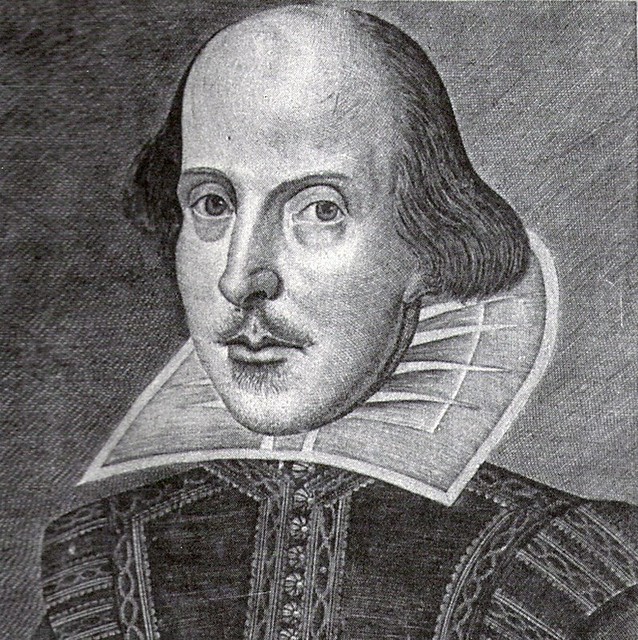
 I’ll immediately rubbish my own title. Of course, the BBC does thousands of things. Its beauty is that hundreds of thousands of people can point to be one thing and say “That is what the BBC is for” – be it “Strictly”, Greg James or BBC Radio Ulster.
For me, if I was to identify one programme series which summarises all that is great about the BBC, it would be “Hollow Crown“, a quartet of Shakespeare kingly history plays currently showing on BBC2.
It takes considerable courage to show two hours of Shakespeare at peak hours on Saturday night. But when you add together the magic of Shakespeare, sumptuous productions directed by Rupert Goold, Richard Eyre and Thea Sharrock and an array of superb performances by our best luvvies such as Simon Russell-Beale, Jeremy Irons, David Suchet, Julie Walters, Alun Armstrong, Joe Armstrong, David Morrissey etc etc you have a feast of television drama at a level not often witnessed.
As critic Mark Lawson remarked: “The Hollow Crown feels as good as TV Shakespeare is going to get.”
But, of course, the highest priority of the BBC is not drama, but tennis, as we all know. So, as Alex Wilcock has described, the second episode of “Hollow Crown” was postponed at the last minute due to the over-running of the Wimbledon Men’s Doubles finals. I still don’t know when the heck they broadcast it and my Sky Box lost the will to live and failed to capture it whenever the BBC did deign to show it. Never fear, I eventually caught up with Henry IV Part One via BBC iPlayer – another “What the BBC is for” miracle.
* Paul Walter is a Liberal Democrat activist and member of the Liberal Democrat Voice team. He blogs at Liberal Burblings.
 Follow @libdemvoice.org on Bluesky
 Like us on Facebook
 Subscribe to our feed
 Sign-up for our daily email digest

 Crash! (1971): An experimental television film with J.G. Ballard and Gabrielle Drake
 What is Christian nationalism?
 Latest PollBase is out, with all the British voting intention polls since the 1930s
 David Le Grice
 David Sparrow
 Peter Davies
 Tristan Ward
16 Comments
And wasn’t Jacobi good on acting Richard II, Paul.
Or much of the output on BBC4. There was an excellent history of coach travel recently. Fascinating stuff.
A few years ago BBC Parliament showed the entire election night broadcast for the 1964 General Election. A gripping election, of course, and Grimond was typically brilliant when discussing the appalling Conservative campaign in Smethwick. It would be interesting to see more of those.
“And wasn’t Jacobi good on acting Richard II, Paul.”
Though my wife (huge Jacobi fan) and myself both ended up booing at the screen when he started coming out with all that “Shakespeare didn’t really write the plays” guff – a particularly lame conspiracy theory which seems to be based largely on a kind of intellectual class snobbery that one would not expect from somebody with Jacobi’s background.
But Paul is right about the BBC. It’s continuing status as one of the world’s highest quality broadcasters is proof that state organisations can actually do some things better than the private sector. Olympic security being another example, apparently.
@Paul at Twickenham – indeed, I saw much of that. It is one in a series, they have been gradually showing all the post-war election broadcasts, normally on bank holidays.
Details here:
http://en.wikipedia.org/wiki/BBC_Parliament#General_election_repeats
The BBC reflects an establishment which rates arts above science, maths and technology and the reason is that the majority of the top people at the BBC went to private school and/or Oxbridge where arts are supreme. It is the core reason why the UK is so uncompetitive in the world and why we only succeed on a major scale when managers are brought in from other countries.
“It is the core reason why the UK is so uncompetitive in the world” — what, the poor old BBC is to blame for that? I think that’s a bit hyperbolic.
I was just about to say the same thing, Martin … but instead, I will ask David Pollard: what did you think of Guy Martin’s “The Boat that Guy Built’? And while we’re here, how do you rate Keble’s engineering team?
@David Pollard : I broadly agree with your statement about science programming.
As a trained scientist myself, I find that the BBC has (pardon the hoary old cliche) largely dumbed-down science programming. We now have photogenic, floppy-haired presenters who follow a strict methodology:
1. They tell you they are going to tell you a thing.
2. They tell you the thing.
3. They tell you that they have told you the thing.
It is annoying. However there are a few honourable exceptions to the rule – Marcus de Sautoy is good.
It might be helpful if we knew that – for example – scientific programming shown on BBC4 would assume that its audience consisted of intelligent adults who do not require presenters to point at things or stand on top of mountains with a far-away look that gives them the appearance of an attack of indigestion.
For David Pollard: To try and set up a conflict between science and art, imply that they are exclusive and then seemingly ignore the fact that we dominate a significant global economy in creative and cultural pursuits is disingenuous or ignorant. Then, to suggest that the ‘arts’ are supreme ‘at Oxbridge’ [try following the funding and you will know this is not true, and why attack Oxbridge?] and, by implication, suggest that arts are valueless economically is similarly inaccurate. Finally, whilst I would agree with views about current science programming, your tangential attack on the nebulous concept of ‘the arts’ contains too many unfounded generalisations.
Paul, and in the Breakfast programme they give you a trailer of the weather, then a bit later they tell you ‘Carol will be here with all the weather in a couple of minutes’, then she is here for a full five minutes telling you ALL about the weather for the whole of GB, and then how its going to be tomorrow, and even the next day(for the whole of GB) what a waste of time! It always seems to be the interesting interviews where they ‘run out of time’ as a result…. and then she is back again. meanwhile the interesting news has either been skipped through hurriedly, or missed all together and you need to find out the other items by switching channels.
But somehow I prefer the BBC…………..
Stuart, I too skirmed at that old guff which I agree is an expression of intellectual snobbery, and it shocked me coming from Jacobi, but my comment refered to his insights into ‘playing’ Richard.
The intoxication from words that comes through for instance in many of the ‘lists’ in Henry IV Part I, which I watched on i-player last night, could not surely have come from someone so constrained as Oxford?
did everone appreciate my use of the Tudor verb to skirm?
Bill: Oh yes, I agree with that. Jacobi – great actor, but should leave the conspiracy theories to others.
Paul in Twickenham, Those 3 steps are very good. They certainly help my students learn what I have to teach them, and they are quite possibly what helped you get to wherever you are now!
Methinks the role of the BBC is indeed to educate, and to inform, amuse, soothe, heal, motivate. Its radio programs can help housewives through the housework, and its evening programs can help lonely people through the night. Overall it helps reflect and create what we and others think of as Britain. So it needs to be diverse. And Tudors and Shakespeare are nice parts of that.
Is “skirm” really a Tudor word? http://www.thetudorswiki.com/page/Tudor+Words+Glossary
‘skirm’ – only is this part of the country Richard 😉 Great link, though.
B
“We now have photogenic, floppy-haired presenters who follow a strict methodology:
1. They tell you they are going to tell you a thing.
2. They tell you the thing.
3. They tell you that they have told you the thing.
It is annoying.”
Got to agree with Richard here. This is the standard and effective way of educating