


The Telegraph reports:
Mervyn Barrett has flooded Lincolnshire with expensive leaflets, free DVDs and full-page newspaper adverts in his bid to be elected as its policing supremo next month.


The Telegraph reports:
Mervyn Barrett has flooded Lincolnshire with expensive leaflets, free DVDs and full-page newspaper adverts in his bid to be elected as its policing supremo next month.

 Nick Clegg is at the Mansion House tonight talking to business leaders about the economy. The BBC reports that his speech is covering three main themes: Europe, banking and responsible enterprise, emphasising an approach based on pragmatism, not dogma.
It must be a struggle for the man who knows Europe backwards from his time there working for Leon Brittain to have to work with Tories whose ideas are most often borne out of xenophobic,

 Owen Paterson’s announcement on the delay of the badger cull is good news for badgers and for the Liberal Democrats.
The ill-conceived policy may have had the backing of significant interest groups such as the NFU – Paterson repeatedly acknowledged their efforts in his speech – but it was always going to be difficult to present and ‘sell’ this policy to a nation with a strong affection to its environment and wildlife, especially after the debacle of the proposal to sell off the country’s forests.Combine public opinion with the …
 Scotland has had its share of political drama these past ten days. First there was the Edinburgh Agreement which saw Liberal Democrat Secretary of State for Scotland Michael Moore given an honourable mention by CentreForum. Then the Scottish Liberal Democrats unveiled their vision for Home Rule and a federal UK. Then last Friday, the SNP abandoned their opposition to NATO membership ahead of the Independence Referendum, a decision led to the resignation of two of their MSPs. This leaves Alex Salmond’s Government with a tiny single vote majority in Holyrood. In practice, though, the two MSPs will mostly vote with the Government.
 It’s fair to say that Liberal Reform and the Social Liberal Forum don’t always see eye to eye on economic matters, but on the issue of Secret Courts, they speak with one voice.
Last month, Liberal Democrat Conference in Brighton overwhelmingly passed a motion calling for:
- The Coalition Government to withdraw Part II of the Justice and Security Bill; and put in place instead a statutory scheme reflecting the current Public Interest Immunity system to be enacted which will retain judicial discretion, be
…

 Brace yourself — you’re about the hear the SNP getting some praise.
Are you sitting down? Good.
Over the summer, the SNP announced something that student groups like the NUS and groups such as Shelter and the CAB had been calling for a long time. They announced that they would issue a clarification on the illegality of any fees that tenants were being

 The Telegraph’s James Kirkup, one of that paper’s few fair-minded political commentators, has written a thought-provoking article, A devil’s advocate defence of David Cameron and No 10. His case for the defence is first, that we (public, media) shouldn’t assume the role of Prime Minister has always to follow the command/control style of Margaret Thatcher or Tony Blair:
Implicit – and sometimes explicit – in the various critiques of the Cameron style and No 10 outfit is the idea that a Prime

 The long-awaited Energy Bill will be published at the beginning of November and will give Ed Davey a unique opportunity to prove that Lib Dems are the greenest of the main political parties. But in the innermost circles of the Coalition Government a battle royal is currently being played out over crucial details of the text.
This bill will establish the Electricity Market Reform (EMR) that will shape UK energy policy for decades to come. It therefore offers a once-in-a-generation opportunity to set the parameters for tackling climate change, the greatest challenge of the twenty-first


Last week, the First Minister, Deputy First Minister, the Prime Minister and I signed an agreement on the terms of the independence referendum which means we can now get on with the real debate over Scotland’s future. In the next two years, it is vital that both sides set out their arguments clearly and robustly and last week the UK Government began this process by submitting evidence to the Defence and Foreign Affairs

 Times are tough for people on low to middle incomes. As a group they have seen their quality of life remain stagnate even during times of sustained economic growth. The financial crisis of 2008 and ensuing recession has made getting by much more difficult for large numbers of people who are unable to make ends meet and with no savings to fall back on when the money runs out.
Which is why I was delighted when I was asked to chair the Lib Dem Working group on a Balanced Working Life. Our remit is to

 Our country’s relentless focus on punishment for punishment’s sake, rather than as a tool for crime reduction and rehabilitation, has consigned thousands of individuals to a hopeless life with no way out. A staggering 90% of those sentenced in England and Wales in 2011 had committed a previous offence.
Even in the best of circumstances – where criminals are caught, trials are fair and judges pass sentence – prisoners aren’t rehabilitated; victims remain unfulfilled and citizens are rightly angered.

“Fellows near Mr. Quelch’s study window heard a sound from within—the rhythmic sound of a cane on trousers.”
Just who, I wondered, as I watched the House of Commons Select Committee hearing held last week, does the speaker remind me of? Then, as he spoke about using sticks against the laggards, an image from decades ago slipped into my mind.
Oh crikey! I realised that am listening to Mr Quelch, the merciless form master who beat Billy Bunter and his ill-behaved companions at Greyfriars with jolly regularity in the weekly Magnet. I swear that Nick Boles is Quelch reincarnated.

 Lib Dem News is changing. After 14 years at the helm, editor Deirdre Razzall is retiring and the time has come for us to take a fresh look at one of the key ways members can get information about what’s going on in the party.
First of all we’re going to change the format. In the age of news websites, blogs and social media there’s less of a need for a weekly publication to supply members with news.
By switching to a monthly magazine format we can do a whole lot more – features, interviews, long form journalism, debates.

 A brief footnote to Stephen’s piece yesterday Government suffers defeat in Lords over ‘new poll tax’ changes to council tax benefits. Note what the rebellion was over:
An independent review of the changes to be carried out within three years of them being introduced.
Yup, that shocking idea that after a new policy is introduced, we should leave it a little while and then someone should go and take a look how
For an organisation that looks to the past and to party politics, it is almost inevitable that the Liberal Democrat History Group’s publications are rather dominated with accounts of men. Even now, well into the 21st century, we only just have the first female Liberal Democrat ministers, whilst female Liberal Democrat Cabinet members or party leaders are still something for the future.

 This weekend I sacrificed both of my two possible lie-ins for London Regional Conference and a Liberal Youth executive meeting respectively.
Both left me feeling frustrated, and cynical about the future of the party for one main reason: our insularity. Regional conferences are diligently organized – usually by the same people – but feature a similar rotation of speakers, uncontroversial debates and excessive coffee breaks.
Some senior cabinet members want to limit the number of TV debates in the next election campaign to just one, but they are likely to face a counter-offer from Channel 4 that there should be four debates: two during the campaign itself and two in the months before the election, due to be called in June 2015.
Discussions between the parties and the broadcasters are likely to start soon with initial feelers being put out by the broadcasters.
 Here’s the thing: I don’t have a problem with elected police commissioners. I know they were a Tory manifesto idea and that the Lib Dems are opposed to them (while reluctantly agreeing to vote for them as part of the Coalition Agreement). But I’m just fine with them. My support for directly elected police commissioners is paralleled by my support for directly elected mayors:
For too long, city council politics have been in the hands of amateur part-time leaders: some have been very good, some not so
…
 The Government has suffered a defeat today on changes to the system of paying council tax benefit. As part of the Coalition’s existing welfare cuts, council tax relief is being reduced and local authorities are being given the power to set their own eligibility criteria from April 2013. As the Financial Times reported last week:
The coalition has earmarked £100m for councils that promise to limit the sums poorer people must pay to around 8.5 per cent of the full council tax rate – less than half what some local authorities are considering. … Lord Best, president of the Local Government Association, will on Tuesday propose an amendment

 In the Independent, Nick Clegg writes movingly of the need for constant reminders of the horrors of the Holcaust. This follows his recent visit to Auschwitz-Birkenau with students organised by the Holocaust Educational Trust:
The constant threats of racism, Holocaust denial and anti-Semitism still lurk every day. Anti-Semitism has been described as a light sleeper. Cemeteries are still vandalised, discredited conspiracy theories are spread over the internet, Jewish people
 There are just 16 days to go until the US Presidential election. Liberal Democrat Voice will be live-blogging the election results as they come in on the night. Hopefully, the count won’t go on as long as it did in 2000, or we might be in for a very long live blog.
I should declare, up front, that I am inveterately
 I’ve written before about ways to recruit more party members and related issues such as the need to respond well to people who are interested in joining or helping. Underpinning that latter post is an important point – a good strategy for getting more people involved and helping isn’t just about formal membership of the party.
Pretty nearly all local parties recognise that these days. The idea that the “members newsletter” only goes to paid-up members, as used to be the case, is now a rarity. Instead …

 From the Sunday Times (£):
A CABINET rift over the Conservatives’ decision to block the release of letters from the Prince of Wales to government ministers has raised fresh questions about the government’s openness agenda.
Liberal Democrats have claimed that not allowing the letters to be released could breach the spirit of freedom of
 With nominations closed and the elections less than a month away, time for a quick recap on where the Lib Dems are at in the forthcoming police commissioner elections.
As ConHome has taken some pleasure in pointing out, the party is standing in 23 out of the 41 contests, little more than half. A little self-righteously, they argue: ‘This is a political party that is supposed to believe in radical change, in making the state more accountable to the citizen, and in boosting local democracy.’

 A month after taking up my new role as Minister for Africa in the Department for International Development, I’m currently on my first trip to the continent – South Sudan, via an overnight stop in Kenya.
Though I’ve actually been to Africa in my role as International Champion for Tackling Violence against Women Overseas, a role I’ve held since soon after the Coalition was formed, I’m anxious to see first-hand the work that DFID does toward alleviating suffering, bettering people’s lives and working with partner governments to improve their
 Welcome to the Golden Dozen, and our 296th weekly round-up from the Lib Dem blogosphere … Featuring the seven most popular stories beyond Lib Dem Voice according to click-throughs from the Aggregator (14-20, 2012), together with a hand-picked quintet, normally courtesy of LibDig, you might otherwise have missed.
Don’t forget: you can sign up to receive the Golden Dozen direct to your email inbox — just click here — ensuring you never miss out on the best of Lib Dem blogging.
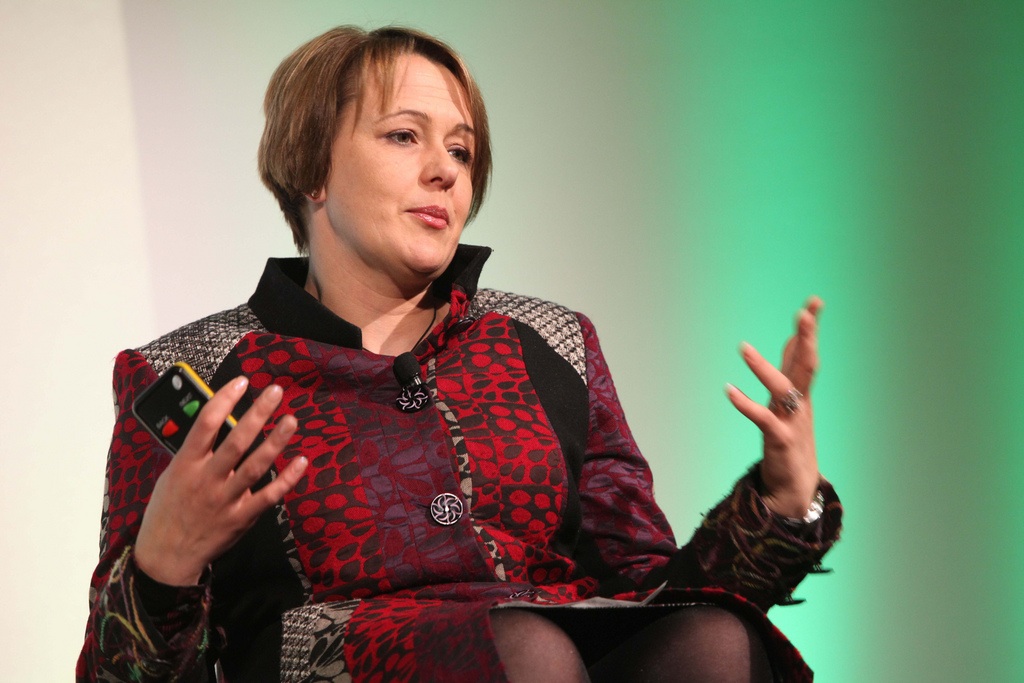 Here’s a round-up of stories we haven’t had time to cover on the site this past few days…
Disabled benefits: Tanni Grey-Thompson and Steve Webb (BBC News)
The paralympian and cross-bench peer Tanni Grey-Thompson tackled the Liberal Democrat work and pensions minister Steve Webb over government changes to benefits. … minister Steve Webb told her the changes, which will be phased in over a number of years, would mean “spending more money overall”, adding that the amount of cash disabled people get will be protected.
…

 The Economist’s front page this week signals its leader on immigration – which says that the Government is getting it wrong on immigration.
The Economist is right. The Government is getting it wrong. All the evidence points towards skilled migrants having a positive impact on the economy for everyone that’s already in the country. And the evidence for unskilled workers having any negative impact on wages or jobs is at best ambiguous. As the article points out (give it a read if you haven’t), making it near on impossible for …
There’s no prize at stake – just the opportunity to prove you’re wittier than any other LDV reader…
 (Photo by Dave Radcliffe from Lib Dems’ Flickr photostream.)
Here’s Nick Clegg meeting comedian, actor and Hacked Off campaigner Steve Coogan. What do you think might be being said or thought here?
Some fantastic entries for our most recent caption competition, Clegg meets Bono “Not U2″ Edition.
 On the off-chance that Voice readers missed The Sun’s interview with Lib Dem energy and climate change secretary Ed Davey on Friday, here’s an excerpt:
In a grim admission to millions of hard-pressed Brits, Energy Secretary Ed Davey said ministers cannot reverse rising global fuel prices. But he insisted that they can help to ease the blow for millions of households hit by the global trend. In a bid to placate furious consumers, he today
 Follow @libdemvoice.org on Bluesky
 Like us on Facebook
 Subscribe to our feed
 Sign-up for our daily email digest
Conference or What? (Roderick Lynch)
Where next on the Triple Lock? (Shaun Ennis)
I watched Ed Davey’s speech. Here’s why it matters (Kamran Hussain)
Citizens abroad and party strategy (Tom McAdam)
How to capture the Tonbridge Tories (Cody Butler)
Sign-up for our daily email digest
Conference or What? (Roderick Lynch)
Where next on the Triple Lock? (Shaun Ennis)
I watched Ed Davey’s speech. Here’s why it matters (Kamran Hussain)
Citizens abroad and party strategy (Tom McAdam)
How to capture the Tonbridge Tories (Cody Butler)

 Alan Garner: The Edge of The Ceiling
My days in the Lib Dem News broom cupboard with Jock Gallagher
Alan Garner: The Edge of The Ceiling
My days in the Lib Dem News broom cupboard with Jock Gallagher
 Children and their parents need holidays
The Joy of Six 1581
Jeremy Clarkson left red-faced over 'stolen' sheep that were never even missing
Children and their parents need holidays
The Joy of Six 1581
Jeremy Clarkson left red-faced over 'stolen' sheep that were never even missing
 Lib Dems come from third to win by-election in Katie Lam's constituency
 Brexit was a 'unilateral declaration of political impotence'
Ken Farnes: The forgotten England fast bowler who died in WWII
Local campaigner wants to see the River Teme given rights
Brexit was a 'unilateral declaration of political impotence'
Ken Farnes: The forgotten England fast bowler who died in WWII
Local campaigner wants to see the River Teme given rights
 Michael BG
  Suzanne Fletcher
  Robyn Peel
  PM
PM  Peter Davies
