


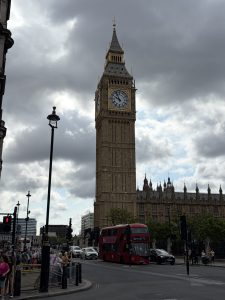
 Parliament is now fully in recess until September – the House of Lords sat for an additional week – and now there’s not much “politician on politician action” for five weeks, leaving the field open for commentators and journalists to speculate on what might come next. And, given that the line between reporting and comment is now so blurred, it becomes increasingly hard to separate the two.
Now I’m not the sort of person who tends to don rose-tinted spectacles and opine about how much better things were in the past – improvement is very much in the eye of the beholder – but one thing that the rise of twenty-four hour rolling media and the democratisation of comment has spawned is an increasing sense that, if nothing is actually happening, something – anything – has to be said for fear of risking loss of public attention.
Add to that, an increasing polarisation of the mainstream media, and you end up with a series of increasingly ludicrous headlines designed to scare the British public, and its politicians, in particular policy directions. Does Andy Burnham intend to raise taxes by £96 billion, as I saw on the front page of one national newspaper? And if he does, over what period? Over one year, it might be perceived to be alarming. Over a decade, not so.
But new ministers will be familiarising themselves with their new departments, civil servants will be briefing on priorities, emerging issues and upcoming legislative agendas, and a new Prime Minister will be attempting to draw up a list of quick wins to announce when Parliament resumes.
It is an opportunity for opposition parties, pressure groups and representative bodies to influence what is effectively a new administration, and thinktanks will be dusting off neglected policy proposals for recycling. And all of this strikes me as being how politics should work, with a little bit of time to draw breath, take the temperature and consult a bit.
And so, with Ed Davey offering to work with the new administration to develop solutions for the social care crisis, and Andy Burnham suggesting that he’s open to cross-party collaboration, you probably wouldn’t be surprised to find me supportive of that. I’ve always felt that long-term reform requires the building of broad-based coalitions.
I am, perhaps, wary of collaboration with Labour. Years of being urged to work with other “progressive forces” has taught me that Labour tend to be all in favour of big tents, just as long as they’re red and covered in roses. But some issues are too big to be tribal about – Europe being another obvious one – and sometimes the public good is more than the Party one.
Of course, there will be the distraction of Clacton, and the unanswerable question of how much does Nigel Farage have to win by to avoid embarrassment. But the absence of credible opposition makes it a sideshow rather than anything important, allowing the media to continue its focus on Reform UK’s finances – far more interesting.
It will probably be a bit quieter than usual here at LDV Towers too. The Editorial Team will escape from time to time, and the flow of articles is usually a bit lighter, although, if you’ve got a policy idea, or news of an event, why not send us an article for publication? We’re still the leading independent website for Liberal Democrats – and possibly the only one reliably publishing articles by Liberal Democrats for Liberal Democrats – so your thoughts will gain an audience.
On other site news, our usual Monday columnist, Mathew Hulbert, is taking a summer break too, so you’ll have to wait until September for more punchy commentary from him. But we do have articles on council housing from Chris Perry, and on the situation of children in Palestine from Maggs Mackechnie, plus whatever else comes in during the course of the day.
So, kick back, and enjoy the day ahead…
* Mark Valladares is the Monday Editor of Liberal Democrat Voice.
 Follow @libdemvoice.org on Bluesky
 Like us on Facebook
 Subscribe to our feed
 Sign-up for our daily email digest

 Mozart died in 1791. Neil Young believes one 1960s songwriter has the same immortality
 Latest voting intention and leadership ratings opinion polls
 The pub with no name and the Swansea poet
 "Private affluece and public squalor" rule OK?
 Jana
Jana David Warren
 Tim Rogers
 Mick Taylor
3 Comments
Mark, your summary is right on the spot. The way in which opinion and speculation is reported as if it were news is appalling. It is getting worse as each month ticks by.
Do people realise what is happening or is their disinterest in government so ingrained that it doesn’t matter to them?
A free media really should aspire to having true integrity.
The legacy media no longer control the narrative. The views from online podcasts and social media videos are huge. Legacy news media has degenerated into titbits of gossip and so called reliable sources. So many now source their information from elsewhere.
“Legacy news media has degenerated into titbits of gossip and so called reliable sources.” and social media hasn’t?
Political podcasts and social media tend to be followed mainly by people who have already made up their minds about whom they are going to vote for. The bots and trolls who inhabit the comments are not representative of public opinion.