Category Archives: Op-eds

Let’s make the UK a better place for those with mental health challenges


Imagine being in a situation where you have had months of no sleep, you have lost over 15 kilos in weight when you were already under weight and you cannot do anything but ruminate over problems. You go to your GP, he gives you some shiny pills then tells you to book an appointment in a few weeks, and offers you no therapy or treatment. A few weeks later your mental health deteriorates to a point where you consider self-harm.

That was my story and I am lucky because I am here to tell it. I paid privately for treatment as the only other option was being sectioned under the Mental Health Act, which could have had devastating consequences for my financial and employment prospects. Luckily this episode is well behind me and my life has moved on to a much better place.

Sadly many cannot because they do not have the financial means, or support of family or friends to get through it. Around 4400 people end their own lives in England each year – that’s one death every two hours – and at least 10 times that number attempt suicide.

Tagged , and | 2 Comments

Brexit’s potential impact on sport


There have been a number of voices over recent months hinting at the negative impact that Brexit could have on British sport. Earlier this year BBC Sport analysis suggested that 332 players in the top two divisions of English football, plus the Scottish Premiership, would be at risk by a Leave vote – a view backed up by Karen Brady from Stronger In a letter that she sent to all of the professional football teams in England, Scotland and Wales in January. Similarly, she hinted at the impact on competition and travelling fans – something relevant not just in football, but in the two rugby codes, both of which have commitments in European club competition on a regular basis – and I say that as a fan of a rugby league team that got beaten 44-16 by a team from Toulouse at the weekend!

Whilst football and rugby, with their European dimension, would be hit at professional level, it is the grassroots impact on sport that is perhaps more significant.

Tagged and | 16 Comments

Opportunity, opportunity, opportunity


Each day seems to bring another installment in the ongoing sagas of the red and blue camp. Either it’s the EU referendum backbiting and divisiveness in the Tory party or the long, slow and painful fall out from Corbyn’s election and the unleashing of some rather unsavoury elements in the party.

Scandal, drama and political machination may command media attention and interest from keen political observers, but it’s another nail in the coffin for the reputation of politicians and crucially politics in the eyes of the voter.

Politics should be about improving people’s lives, creating a more harmonious society and ensuring that our country is in the best position economically both now and in the future. In a word it should be about ‘opportunity.’ Opportunity and improvement is something we all strive for and is a uniting and resonant word shared with people across classes, faiths and creeds. It’s a word that often crops up in our conference speeches, slogans and leaflets because it is a natural fit for our party, but now is the time to make it central to our message and communications.

Tagged | 10 Comments

Three ways our democracy is being undermined

The articles that have appeared after the BBC’s referendum debate in Glasgow have given a lot of prominence to that one man who blamed the state of political discourse for his confusion as to how to vote.

This was too interesting not to comment on.

The audience was divided into leavers, remainers, and undecideds.

Leave and Remain both have their own ‘Project Fear’. Leavers tout a cultural crisis in the form of mass migration. Remainers raise the spectre of economic catastrophe.

Fear Projects, whereever they come from, are a concerted attempt to sway the public with threats dangerous enough to repeat frequently in scarce media time.

On the face of it my generation ought to be the most engaged generation there has ever been. Social media has turned every one of us into campaigners and journalists: we auto-report our lives and volunteer our opinions publicly. We are also happy to parrot or share anything we agree with.

Tagged , and | 4 Comments

Jonny Oates tells House of Lords about his experience of depression

In a speech to the House of Lords yesterday, Liberal Democrat peer Jonny Oates talked about his experience of depression as a young man.

This experience was not unrelated to the times in which he was growing up. As a young gay man, having the government legislate against him was not easy to deal with. He also suggests that the churches should reflect on the impact they can have on people’s mental health, referring to Archbishop Michael Ramsey who was Archbishop of Canterbury at the time homosexuality was legalised and who was supportive of that change in the law.

Here is the speech in full:

My Lords, I welcome the opportunity to take part in this important debate on the Five Year Forward View for Mental Health initiated by my noble friend Lady Brinton. As my noble friend said, mental health is a topic which touches almost everyone in this country, whether through direct personal experience or through families and friends who have suffered from mental ill-health.

For much of the time when I was growing up, it was pretty much a taboo subject. Few people talked openly about mental illness; it was too often a personal burden not to be shared, understood or tackled but to be hidden away even from those closest to one. In recent years there has been a welcome shift in our attitudes, and I pay tribute to the mental health charities and the many activists and campaigners, such as Alastair Campbell, who have helped break down taboos and get mental health on the agenda, but I also pay a real and heartfelt tribute to Norman Lamb in particular who, as a Health Minister in the previous Government, strongly supported by the then Deputy Prime Minister, Nick Clegg, did so much to push the issue of mental health right up the government agenda, placing mental health literally on the front page of the Liberal Democrat manifesto.

Tagged , , and | 1 Comment

Holding Kirsty to account

When set against the backdrop of our worst performance in a National Assembly election, Kirsty Williams’ elevation to the Welsh Cabinet is nothing short of remarkable. It is no exaggeration to say that she is one of the most powerful Assembly Members in the Senedd Chamber; she may be a lone Welsh Lib Dem voice, but the power to make or break the Welsh Government is hers.

With Kirsty’s support the Welsh Government can command 29 votes, the same as the opposition (less the presiding officer and deputy). A tied no confidence vote results in the presiding officer voting in favour of the status quo. Simply put, Labour’s First Minister Carwyn Jones loses his insurance policy if he doesn’t keep Kirsty onside.

The Welsh Party overwhelmingly endorsed the agreement at a special conference by more than 4 to 1. It is a huge, huge gamble, but it has nothing left to lose. With a Cabinet post comes profile, coverage and exposure that a sole backbench Lib Dem would never have. If you think the Party struggles to get coverage at the UK level, our Welsh coverage is next to nil outside of an election. Frankly, it gives the Welsh Liberal Democrats relevance in Welsh Politics when we should, according to our vote share, be irrelevant.

Without an Assembly group from which to take counsel, or to hold her to account, it also places Kirsty in a very powerful position in her relationship with the Party. With the Party’s endorsement under her belt, she can effectively operate as an independent and take decisions as she sees fit. So what measures will she be judged against, and who will hold her to account?

Tagged and | 11 Comments

Why I’ve just joined the Liberal Democrats

Hello! My name is Tom Sutton and I am a 16-year-old student from the Wirral Peninsula near Liverpool currently sitting my GCSEs and I want to just explain what brought me to the party.

I have been interested in politics since I was about 8 or 9. I was a Labour supporter who liked Tony Blair and Gordon Brown. This was probably due to the fact that my parents owned a rather successful business during that period so I personally saw prosperity under their rule. I always said my favourite PM was Brown because in my mind, he managed to prevent national bankruptcy during the dark days of recession.

When the 2010 Election came along, I was hoping for another majority or a Lab-Lib Coalition as the Lib Dems were my second favourites. This to me seemed feasible after the result but it went differently. So I spent the last 5 years of my life calling the Tories fit to burn. However, I was indifferent to the Lib Dems. That indifferent, I would often forget they were there as you could’ve easily thought there was a Tory majority!

The same thing occurred at the 2015 Election and I hoped that the electorate would “see sense” as I was livid with Tory policies such as the Bedroom Tax and the GCSE reforms and thought we needed real change. Then the result came and it was a shock. What the biggest shocks for me were the colossal drop in Lib Dem seats and the massive rise in SNP seats. I felt the Lib Dems’ pain, but I still supported Labour.

Tagged | 19 Comments

We are all leaders

There is a simple yet important question we need to ask ourselves if we are to rebuild our party: Am I a leader?

It is a simple question but one we rarely ask. Leadership has become defined by the extraordinary, by those who are able to do things which many others cannot, but this means that when we do show leadership – even for a short period – we undervalue it or worse, we don’t acknowledge it at all.

During the recent local elections I stood (for the first time) as a paper candidate in my local ward. Despite my small chance of success (earning 5% of the vote would have been seen as a major coup) I decided to press on regardless and printed some leaflets. As the local party hadn’t resources to spare for a FOCUS run I decided to pay for some out of my own pocket and create Street FOCUS, meaning I only had to print 50 or so at a time. The major issue I focussed on in the tight roads of my local area was Residents Parking Permits and whether Blue Badge holders should have priority parking outside of their homes.

4 Comments

Liberal Democrats need to oppose this government with more passion and rage

Thank heaven we have had no major crises while our Government is weak and split. The lordly predecessors of the present set must have turned in their graves when Cabinet responsibility was temporarily abandoned, in defiance of historic practice. The ghosts should then have howled when leading Tories began to spit insults at each other and denounce the supposed lies of their colleagues.

Yet we are stuck with this Tory Government, in or out of the EU. This collection of sophisticated predators, who systematically promote the interests of their own kind and seek the further enrichment of the moneyed classes despite the deep inequalities in Britain, know how to survive.

Where was Iain Duncan Smith’s consciousness of his Government’s preferring tax cuts for the wealthy when poor and disabled people, hit by his benefit cuts, were struggling to survive? Those were the days when David Cameron’s response to Nick Clegg’s attempts to adjust the balance of taxation in favour of the poor was ‘But our donors wouldn’t like it’, and the reply to requests for more public housing was ‘It would only create more Labour voters’. Yet, only this year did Duncan Smith apparently find his conscience and notice that the parrot-cry of ‘We are all in this together’ was false.

Tagged , and | 44 Comments

Dutch King in European Parliament: UK belongs inside the EU

In Dutch government and politics, it is a rare occasion indeed when the reigning monarch makes a clear political pronouncement. He only can do that with full political backing by the prime minister and his Cabinet, and that implies that the pronouncement reflects a very broad national consensus. Usually, speeches by the Dutch monarch contain diplomatic and political platitudes; when it gets more specific the Dutch nation sits up and takes notice.

7 Comments

Lord Paul Tyler writes: Party funding is back on the political agenda

On 18th May the 2016-17 Parliamentary session officially started with a somewhat thread-bare Queens Speech. It was well noted by Lord Fowler (Conservative) in the first day of debate that;

The most significant words in the Queen’s Speech yesterday were that, ‘other measures will be laid before you

These are often the most important part of the “Gracious Speech”. One of the GREAT omissions from the gracious Speech is of course the issue of Party Funding. Fortunately for Ministers I am happy to provide them with some private enterprise assistance in this matter. As many of you will remember I sat on the House of Lords Committee on the Trade Union Bill, which focused on the party funding issue across the board.

The recommendations, which were almost all unanimously agreed by the cross-party Committee, were also universally welcomed in the House of Lords. Indeed Ministers in both Houses lauded the noble Lord, Lord Burns, and the rest of us, praising our conclusions. Indeed, the Government backed down when faced with amendments to their Trade Union Bill based on those recommendations. However they have yet to fulfil the most vitally important recommendation of all- to “take a decisive lead” on party funding reform.

Tagged , and | 2 Comments

EU Referendum: Don’t forget to register to vote and other musings

Ballot boxOn 23 June 2016, Britain will face one of the greatest electoral questions of this decade. Voters will be asked to decide whether or not they wish to see the UK remain in the European Union.  Yet as this crucial election draws ever-nearer, there is an important issue which must be contemplated: registering to vote.

The deadline to register to vote for the referendum is midnight, 7 June. The party-neutral Bite The Ballot (of which Lord Roberts is Honorary President) is running an innovative #TurnUp campaign in the week approaching this deadline. I urge everyone to support this cause. It’s vital to ensure that the 30% of young people missing from the roll are able to have their say.

Regardless of how you choose to vote, it is crucial that all eligible voters turn up to vote and have their say on the future of Britain’s membership of the EU. That said, Lib Dems have adamantly chosen to become the party of remaining ‘IN’ the Union. Our party chooses this path because it’s not only the right thing to do, but it’s the smart thing to do. 

Tagged , , and | 1 Comment

Reforming Drug Policy Shouldn’t Just Be About Cannabis

drugsWe are the party at the forefront of drug reform policy. There are and have been smaller, single-issue parties that have been campaigning for the legalisation of cannabis for years, but we are the only major party to bring the debate on to the political mainstage.

There are different arguments for the cases of decriminalisation or legalisation – though the two main arguments are almost always centred round healthcare. The first is: with decriminalisation, we can treat addiction like an illness instead of a crime – a noble idea, …

Tagged , and | 29 Comments

Your Liberal Britain: It’s not about the words: it’s what we mean by them

Your Liberal BritainA Liberal Britain has to be three things

It has be free, is has to be tolerant, and it has to be fair.

But those are dangerous words. Not because people disagree openly with them, but precisely because hardly anybody does. They are safe happy fluffy words that everyone nods along to, but then take to mean many different things and can use to justify more or less anything.

So what do I mean by them and what do they look like?

Freedom clearly must include a lack of state interference in area where the state has no business, like reading my emails or dictating my lifestyle choices, for example if I want to choose to use cannabis, or to choose to end my life, or indeed to eat sugary food. I should add in fairness that eating sugary food is the only one of those choices that I intend to exercise whilst writing this article, but that is not the point. We must allow people choice and not insist that everyone values the same thing or pursues the same goals.

However this negative freedom, the lack of legal limits to actions that primarily affect yourself, isn’t enough. A liberal Britain must also value positive freedom, tackling Beveridge’s five giants of poverty, idleness, ignorance, disease and squalor so that everyone has equal opportunities. This requires a government role: a locally accountable education, a National health service, a rehabilitative justice system. A Liberal Britain must not fall prey to the temptation to radically strip back the state on the grounds that it increases choice. For many people it doesn’t.

Tagged | 5 Comments

A Liberal Path Towards a Basic Income

Is the Basic Income an idea whose time has come?” asked Caron, back in February and it seems now that two-thirds of the British public agree.

The advantages seem to speak for themselves: a universal cash payment from the government, means that no one needs to starve, no one is trapped in a bad work situation, and perhaps most important from a Liberal point of view, puts the choices in the hands of the recipient not leaving them beholden to the generosity of the government.

Tagged and | 47 Comments

What next Mr. Gove? Martians flooding your A&E departments?


It is always useful to know what you’re talking about when invoking possible EU expansions in any debate about Europe and European membership.

  • The Dutch army and society were traumatized when poor UN organization and a British/French/American No Bombing deal forced our DutchBat soldiers to witness helplessly how a Serbian massacre got underway at Srebrenica in 1994. The Dutch have been taking extra attention of Balkan goings on ever since.
  • Inside the past year, Erdogan has first interned and then expelled (or: allowed to slip away) two critical Dutch journalists working from Turkey. The first was Mrs. Geerdink, an expert on Turkish-Kurdish relations working from Diarbakir (Turkish Kurdistan); the second was the Dutch & Turkish columnist Ebru Umar staying with her Turkish parents in a sea resort. The Dutch governments have been closely involved in all kinds of talks about Turkey joining the EU since the formal EU procedure for that was started around 2005; that is because like Germany, we have a substantial segment of Dutch citizens from Turkish descent (holding obligatory Turkish passports as well, and voting in Turkish elections).
Tagged | 6 Comments

Liberal Britain – Changes for the better

Your Liberal BritainA Liberal Britain cannot simply consider this country alone. The picture must include Britain in Europe and the wider world. The vision should be long-term, not simply the life of the current Parliament. I suggest:

  1. A United Federal Kingdom. The existing Parliament suffices as a federal one, provided voting on matters of sole concern to England is restricted to English MPs. At present many issues relate to the ‘four nations’ but the more powers are devolved to Scotland etc the more likely federal concern will be limited

Tagged | 5 Comments

Is it the BBC’s fault that Bargain Hunt is so popular?

I have a confession to make. I watch BBC’s antiques competition, Bargain Hunt, three times a week. Perversely, I watch it with the volume turned down, reading the sub-titles (I’m on the treadmill in the gym at the time).

It’s a strange programme, because, as my lifelong auctioneer father often says, in exasperation:

They’re going the wrong way!

What he means is, that prices are lower at auctions than flea markets/boot sales. So, if you buy some things at an auction, you can earn good money on them at a boot sale. But if you go the other way, you are often on a hiding to nothing.

Tagged and | 142 Comments

The man who braved the Bradford riots & was slated by a Tory secretary of State is now Lib Dem Lord Mayor of Bradford

Geoff ReidThis week, Liberal Democrat Councillor Geoff Reid became Lord Mayor of Bradford. He was proposed for the office by fellow Councillor Jeanette Sunderland. Extracts from her speech follow. It’s longer than our usual articles, but it’s a fascinating read.

Geoff has a lifelong record of community service as a Methodist minister and Councillor. He has spoken truth to power and provoked the ire of a Conservative Cabinet Minister. He played a pivotal role in providing support and healing for communities in Bradford after the riots.

You can read more about him on the Telegraph and Argus site here.

It is with great pleasure that I ask for the support for the nomination of Councillor Geoff Reid to be the Lord Mayor of Bradford for the municipal year 2016-2017.

Geoff Reid will bring a depth to the role of Lord Mayor which finds it roots in his history as a Methodist Minister, a politician, a collaborative write, a visitor to pubs and his love of public transport.
Geoff Reid born on the same day in 1946 as Freddie Mercury, in a two room flat in the Scotswood Road area of Newcastle upon Tyne. His parents wanted a council house but having only one child failed to qualify.

His father, who had returned from five years as a Prisoner of War to become a leading light of the Tyneside Anglo-German Friendship Society, joined a self-build group of 32 men who completed 32 houses in their spare time. Geoff moved across the city to North Heaton, eventually attending Heaton Grammar School. In the 1950s he came on an early visit to Ilkley with Newcastle Methodist Mission Poor Children’s Summer Camp.

Tagged , and | 5 Comments

We are not a party of compromise

In the autumn of 1980, former Prime Minister Margaret Thatcher was urged by political commentators and members of her own party – including Ted Heath – to U-turn on policies that ushered in a fierce liberalisation of the economy. In a response that was to gleam through the decades as one of the most memorable moments of UK politics in recent history, with her now-iconic sternly glare and aura of authority, she addressed her party at the Conservative conference with the immortal phrase, “You turn if you want to – the lady’s not for turning”. And so, Thatcher’s ferocious refusal to compromise was to solidify her part in British history, play a juggernaut role in keeping her in power for the next eleven years and earn her the nickname ‘The Iron Lady’.

However, for the past six years, public perception has been that the Liberal Democrats are the antithesis of that caricature Thatcher had built for herself – we have been branded as the party of the centre ground; the party of compromise. The party that sells itself as radically centrist, able to flexibly navigate in and out of both the left and right, pandering to voters on both sides. I am here to argue that this is not only unabashedly false, but frighteningly hurtful to the causes of liberty, freedom and equality, the three main tenants of our party.

29 Comments

PJS/YMA – Ultimately a sensible judgment by the Supreme Court

It is rather disconcerting that, sitting down to write this post, I have to think quite hard about what I can and can’t say. It does seem that free speech is rather trammeled when people can’t talk directly about this case. Those who have bothered to spend a little time googling (try Australian, US and Canadian outlets or a well-known political blog), will know what I am talking about. Those who haven’t, won’t. It’s all a bit strange.

Tagged and | 20 Comments

Coalition: Yes or no?

Liberal Democrats quite like to be in government. We like to think that we can make a difference. So when the larger parties find themselves without an overall majority, we – as individuals – are courted.

This article deals with two aspects of the decision to go into coalition – political legitimacy and our party’s mandate to govern.

Liberal Democrats do not support the current unequal voting system. Put simply, we want every vote to be valued equally. We want the number of elected representatives to correspond to the number of people who voted for each party. So, if a party overall gets 10% of the vote, we believe that they should have 10% of the representatives.

When this doesn’t happen – which is nearly all of the time – the main question to ask is whether we make our decisions based on the numbers of representatives, or based on our vote share. For example, if we have 10% of the vote but only 2% of the representatives, do we say our mandate reflects our 10% or our 2%?

Tagged | 21 Comments

Norman Lamb on why improving mental health care is so important to him

This interview with Norman Lamb in the Telegraph.

In it, he talks about why he is so motivated to change mental health care. We knew about how he and his wife Mary have supported their son Archie through battles with OCD and, for the first time, he talks about losing his sister Catherine to suicide last year.

Anyone who has gone through those sorts of experiences, or who has tried to get treatment for mental ill health, will understand the frustrations that he describes and will understand how that drove him on to transform as much as he could while a Minister.

If you have no experience of this particular field, be in no doubt that he is telling the truth.

The Telegraph article has a letter from a 9 year old boy with Depression which was read on the Today programme. It’s horrible to think of a young child going through such pain at all, but when you think they may have to wait years for diagnosis and treatment, it makes you so angry. You need to think of the consequences of that. Think of the impact of a year, or even two years’ wait. Think how much worse a condition can get in that time. There is often no quick fix, either, so there’s more time trying to find something that works. By that time, you’re probably talking about between a quarter and a third of your years in education which have been dominated by ill health. Think of the knock-on effects on life chances, particularly if you are not from an affluent background. It truly is a scandal that we tolerate this as a society.

Tagged and | 9 Comments

+++Breaking: Welsh Special Conference to debate whether Kirsty Williams should enter Cabinet as Education Secretary

Kirsty Williams 2We knew last weekend that Kirsty Williams was talking to Welsh Labour about accepting a Cabinet position and now we know what it is and what she will be bringing to the Cabinet table, subject to the approval of the Welsh Party at a Special Conference on Saturday.

From the Welsh Liberal Democrat website:

Kirsty Williams and the First Minister have reached a Progressive Agreement between the two parties to work together in Government.

The First Minister has invited Kirsty Williams to serve as Cabinet Secretary for Education and subject to ratification by the Welsh Liberal Democrats this weekend, she has accepted.

The agreement enables the implementation of key Welsh Liberal Democrat policy priorities that the party campaigned on during the recent election, ensuring that:

Infant class sizes are reduced to a maximum of 25;
There are more nurses, in more settings, through an extended nurse staffing levels law;
20,000 extra affordable homes are funded;
A new ‘Rent to Own’ housing model is introduced;
Mental health discrimination is ended.
Members of the Welsh Liberal Democrats will be asked to endorse this agreement at a Special Conference will take place this Saturday (21 May).

Commenting on the invitation to be Cabinet Secretary for Education, Kirsty Williams AM said: “Government in Wales has entered a new era. Where there is common ground, we must have the confidence and ambition to work together for the good of its people.

“The test of our new approach is not the warmth of our words, but our commitment to get things done.

Also posted in News | Tagged , and | 45 Comments

Cakeonomics and Free Trade


Crumbs!

Not heard of Cakeonomics?

Cakeonomics is a simplified, quick and sometimes fun approach to economics and its connections with everyday life. It uses the metaphor of cake in an effort to make Economics more accessible and attractive, so that more of us can ask better questions about it and be sharper at assessing any answers. We need stronger, more confident knowledge to better analyse and help address the problems of our times, which are also likely to be the problems of our children and theirs.

Your piece of cake depends on various factors. Two crucial factors are the size of your slice and the size of the cake from which your slice comes.

Here’s some data and information about the global economic cake:

The richest 1 per cent increased its income by 60 per cent in the last 20 years (1992-2012) with the financial crisis accelerating rather than slowing the process.

Tagged , and | 10 Comments

Next #INtogether action day on 28 May

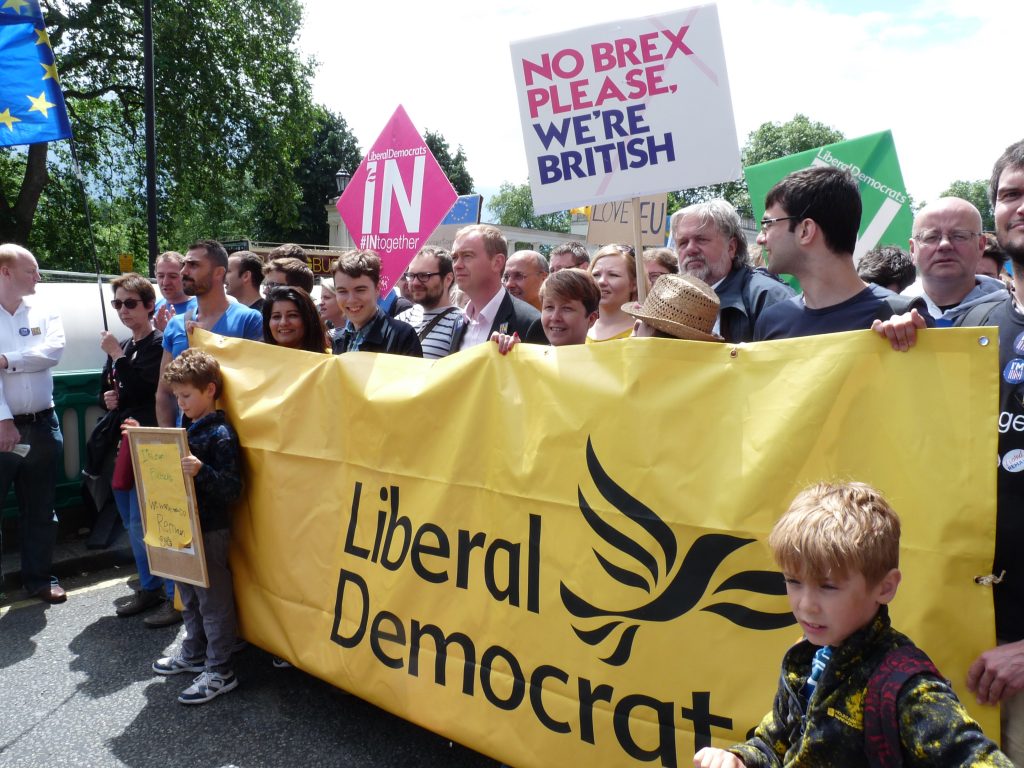
IntogetherTeam #INtogether want to say a massive THANK YOU to all our LibDem activists and friends who hit the streets last Saturday and made our first National Day of Action a huge success!

INtogether 2Last Saturday, the Liberal Democrats proved that we are back, fighting harder than ever. Over the course of the day, over 1000 LibDems across England, Scotland and Wales hit the streets, holding over 200 street stalls and talking to countless people, making a positive, progressive case …

Tagged and | 4 Comments

What being in the EU has meant for my family

What has Europe ever done for me? It’s a question that the impending referendum has caused me to ask myself. I had always been supportive, but throwing myself into the campaign to remain meant I needed to be clear in my mind why I was supportive and what the benefits were. And having helped so far at street stalls in Truro, Plymouth, Taunton, Yeovil, Bristol and Stroud, it has proved a useful exercise as voters have rightly demanded to know what good the EU has done.

And the way I thought about it was to think about the generations of my own family. How have their lives been different because the EU exists and because we’re in?

Take my father, for example. He was a Royal Marine in the Sixties and Seventies. My brother too served in the armed forces, in the Eighties and Nineties, and his daughter – my niece – too. And my brother-in-law is a serviceman today and has been so for about 20 years. All of them have seen active service, but none of them thankfully were thrown into a conflict on the European mainland. Indeed, in the case of my father and brother, they once stood ready to defend our country from communist dictatorships in eastern Europe that are today our democratic friends and allies.

It is true that Nato helped prevent war between the West and the East during the Cold War, and stands ready to defend us today should Putin get a bit too trigger-happy. But there is a difference between an absence of war and a culture of peace. And it has been the European Union that has made it the boring, day-to-day norm that European countries talk with each other and work with each other on the big issues facing our continent. And it was the pull of EU membership, not the defensive military alliance of Nato, that helped embed democratic government and civil liberties in those eastern Europe countries that joined the EU a decade or so ago.

Tagged , and | 19 Comments

Farron: Queen’s Speech is dogmatic assault on civil liberties and empty rhetoric on key challenges

Funnily enough, Liberal Democrats aren’t that impressed with the Queen’s Speech. There certainly is a lot to worry people of a liberal disposition. Three immediately come to mind:

The Queen might as well have said: “My Government will indulge all its prejudices regardless of the evidence.” For “upholding the sovereignty of Parliament and the primacy of the House of Commons” read “My Government will do all it can to avoid being held to account despite only having the support of a third of the electorate.”

The counter-extremism stuff is pretty sinister, as Alistair Carmichael said the other day:

Rumours about what the upcoming extremism bill will include paint a dark picture. The government seems to think that the answer to every problem is to ban it. The last thing we should be doing is driving extremists into the shadows and underground.

The government is not only threatening our safety with this bill but the very fabric of our multicultural society by alienating certain communities.

I’m slightly worried about the adoption measures. If the state is going to remove children and allow them to be adopted by other people, there does need to be proper safeguards. That could and should take time before permanent ties are broken, especially if the parents do not have the support in place to help them overcome their problems.

Tagged , and | 3 Comments

“This is about control” – yes, of course it is


This video clip sums up the whole EU referendum debate. It hits the nail on the head. It is virtually all you need to see, to make your mind up on the matter.

It’s from a Daily Mirror debate, chaired by Mark Austin. The Guardian summarises the clip thus:

Tagged , and | 16 Comments

What does the Queen’s Speech mean for Liberal Democrat strategy?

When the Government sets out its agenda for the next year in the Queen’s Speech, it gives the other parties a chance to do the same. What can we learn from the frenzy of Liberal Democrat activity in the press in the past few days about where we might be going.

Well, Tim had a piece in the Huffington Post the other day that put education at the heart of our thinking. This is far from being a new concept. It’s one of our core principles that we’ve always talked about. Tim had developed a 5-point education charter with the aim of giving young people and the economy the skills they need for the modern world.

The future is full of exciting opportunities, as technology changes the way we work and live. However, there are also massive challenges, from giving people the skills they need to adapt to our changing economy, to tackling climate change.

Education is key to meeting these challenges. That is why the Liberal Democrat vision is for a country which enshrines the rights of every child to a decent education. We believe this should be the number one priority of the Government when they set out their agenda. We are calling for a Charter for Education which guarantees every child is taught a curriculum which includes creative arts subjects, sports, languages, technical and vocational courses and practical life skills.

Over the years education has become more about passing tests and getting a good Ofsted rating than making sure children get the skills they need and grow into healthy, happy and confident adults. This is harmful for young people, and my fear is that it will leave them ill-equipped to deal with the challenges – and opportunities – of the future.

It’s a bit more satisfying than the Tories’ battle with teachers and local authorities for the sake of it. It also looks at wellbeing and happiness which are crucially important.

The nuts and bolts of the Charter are:

Tagged , , , , , and | 10 Comments
Advert

Recent Comments

  • Chris Cory
    @Richard Whelan. You speak the truth. There is no compelling narrative. People feel that we represent a sort of middle of the road, a tweak here and a tweak ...
  • Peter Davies
    @Peter water companies are generally geographically split according to the centres of population supplied not the areas from which it is extracted. They dispose...
  • Barry Rhodes
    Caron this is such an accurate account of the all talk show. Iain Dale is such a great interviewer bringing out the best in anyone he interviews. I agree...
  • Peter Martin
    @ Peter, " If you treat (supply of water and sewage disposal) as one industry and structure it to provide the commodity, the real problem will not get f...
  • Simon Horsman
    I've not looked at the agenda in depth but although it seems most worthy I saw little on the economy, taxes and money. Resources are not sufficient but they ar...