Author Archives: Mark Pack

Mark was the Liberal Democrat Head of Innovations until June 2009 and is now at Blue Rubicon. He also lectures at City University and is co-author of 101 Ways To Win An Election. He blogs at www.markpack.org.uk and is on Twitter as @markpack. He likes chocolate. Lots of it.

Campaign Corner: How to make Focus leaflets look better

The Campaign Corner series looks to give three tips about commonly asked campaign issues. Do get in touch if you have any questions you would like to suggest.

Today’s Campaign Corner question: I understand some of the principles of graphic design, but I’m not a professional designer. What are the easiest ways to make my Focus leaflets look better?

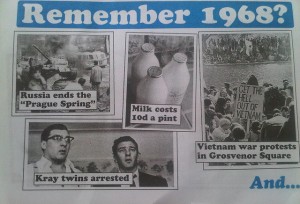
  1. Headlines: make your headlines big, short and clear. Put the leaflet on the floor and stand over it. If you glance down can you (a) easily read the headlines and (b) get from them the main messages? If not, make the headlines better/bigger – as a quick glance at the headlines is often all a leaflet will get before someone decides to read more or bin it. Even if they do decide to bin it, with the right headlines they will have got the main messages.
  2. Captions on photos:
Posted in Campaign Corner | Tagged | 23 Comments

How to get Lib Dem Voice by email

Why not join hundreds of other Lib Dem Voice readers in getting our latest headlines by email?

Some people like regularly visiting a site to see if there’s new stories of interest. Some people like subscribing to its news feed (RSS) and checking that way. But if you prefer email, you can instead sign up to get a daily early morning email with a summary of the previous day’s posts from Lib Dem Voice, complete with a note of how many comments each post has got and convenient links to click on if any take your fancy and you want to take a read.

Posted in Site news | Leave a comment

Dishonourable Insults by Greg Knight

Over the years, Conservative MP Greg Knight has made a mini-cottage industry out of collections of political insults, wit and invective, of which the new Dishonourable Insults is the fifth.

Spot checking the content of this volume against one of his previous works – Parliamentary Sauce – you find that there is a fair amount of reused content, including whole passages which reappear with varying degrees of editing. Generally the 19th and early 20th century figures have had their range of insults edited down, losing as a result one of my favourite Disraeli insults, directed at a backbench MP: “He is not …

Posted in Books | Tagged , , , and | Leave a comment

Moving to CONNECT

The all-member edition of Liberal Democrat News recently posted out included this piece from myself about the party’s new electoral database software, CONNECT:

One of the big talking points amongst party activists at the Birmingham conference was CONNECT, the party’s new electoral database software which was put through many demonstrations to different groups of future users – data officers, treasurers, campaign organisers and so on.

Like others, I am impressed by its ability to make what we have tried to do in the past easier, more effective and quicker – especially given my experience using existing systems since the 1990s and also …

Posted in Party policy and internal matters | Tagged , and | 1 Comment

Individual electoral registration, credit and social mobility

One aspect of electoral registration, and the potential problems with making registration voluntary, is the knock-on effect on credit and social mobility. That was the aspect which Liberal Democrat peer (Lord) Chris Rennard took up during a debate in the Lords this week:

Lord Rennard: My Lords, does the Minister accept that it really is necessary to carry out a thorough, door-to-door, face-to-face canvass in order to ensure both the accuracy and the completeness of the electoral register? Does he accept that failure to do so not only threatens the integrity of the democratic process but could also cause problems for

Posted in Election law | Tagged , , and | 3 Comments

Local liberal heroes: Roger Hayes

Earlier in the year, I penned a series of posts profiling forgotten liberal heroes (to which a couple of other people also kindly contributed), looking at some of those who achieved great things for liberalism in their time but have been unjustly forgotten – such as Margaret Wintringham, the very first female Liberal MP.

There is also another group of people who I think are often unjustly obscure – those local campaigners who are often at the heart of their local community and local party, delivering liberalism and helping others, but as their stage is a local one they are often

Posted in Op-eds | Tagged , , and | 6 Comments

Electoral Commission calls for local Council Tax referendums to be postponed

The Electoral Commission has called on Parliament to modify the Localism Bill to delay the proposed start date for local referendums on Council Tax levels, neighbourhood development plans and local authority structures (e.g. elected Mayors) from Spring 2012 to Spring 2013.

It’s forthright message, headlined (in capital letters no less): “IMPORTANT RECOMMENDATION TO PARLIAMENT” is that with the legislation not yet passed by Parliament, there will simply not be enough time between it being passed and the proposed first possible local referendum date for the contests to be properly run. Instead, it says implementation should be delayed by a year in order to provide a sufficient gap between legislation and implementation.

This sort of warning by the Electoral Commission has become a regular feature of autumnal politics as governments of different political complexions have pushed through legislation ahead of the following spring. However, in this case their views are being expressed in a particularly strident manner.

That is no doubt due to the fact that the creation of local referendums raises far more issues of administrative organisation than the changes introduced by previous rounds of legislation. In theory, for example, some lucky voters could get to vote in five different referendums on the same day in the spring, with those different referendums taking place across differing organisational boundaries.

Localism Bill: Electoral Commission briefing for Lords Third Reading

Posted in Election law | Tagged and | 3 Comments

Housing: six things that could be done

As Tim Leunig pointed out last week, housing plays an important role in most people’s concept of social mobility, a point highlighted in Stephen Gilbert’s piece over the summer recounting his own personal circumstances:

Last year I was probably the only MP to be elected while still living with my parents. Of course, I’d moved out of home and, like many others, had to move back again. It’s a symptom of the fact that housing policy in the UK is in crisis. We have millions of people languishing on social housing waiting lists, first-time-buyers priced out of the market

Posted in Op-eds | Tagged , , , , , , , , and | 14 Comments

Should the way members of federal committees vote be public?

At the end of my post on the Federal Executive’s decision that the Liberal Democrats should (mostly) not fight police commissioner elections, a decision at odds with the views of party members we surveyed, I made reference to the fact that the details of such votes are not published and usually remain confidential. Sometimes news of who voted which way seeps out but, for example, you’re not officially meant to know that three members of the FE voted against that decision or who the three were.

Posted in Party policy and internal matters | Tagged , and | 12 Comments

Campaign Corner: What campaigning books are worth reading?

The Campaign Corner series looks to give three tips about commonly asked campaign issues. Do get in touch if you have any questions you would like to suggest.

Today’s Campaign Corner question: I prefer learning by reading rather than by hearing people speak at training sessions. What campaigning books would you recommend?

Lots of possible answers, but in the spirit of Campaign Corner’s love of threes, here are just three, deliberately chosen as one each from the main party perspectives:

Posted in Campaign Corner | Tagged , , and | 6 Comments

The Leadership Programme: the first 11

The all-member Liberal Democrat News currently in the post to party members includes this update on the party’s Leadership Programme, designed to support candidates from under-represented groups:

Of the first 11 candidates, five are women, three from black and minority ethnic backgrounds, three have disabilities. There is one LGBT candidate and five of the 11 come from low socio-economic backgrounds … we have four candidates on the Programme so far who are under 30.

The scheme is due to expand to support at least 30 people.

You can get a subscription to receive each weekly edition of Liberal Democrat News here.

Posted in Party policy and internal matters | Tagged , and | 2 Comments

Commonwealth governments agree to end sexism in Royal succession rules

From the BBC comes the news:

Sons and daughters of any future UK monarch will have equal right to the throne, after Commonwealth leaders agreed to change succession laws.

The leaders of the 16 Commonwealth countries where the Queen is head of state unanimously approved the changes at a summit in Perth, Australia.

It means a first-born daughter of the Duke and Duchess of Cambridge would take precedence over younger brothers.

The ban on the monarch being married to a Roman Catholic was also lifted.

Posted in News | Tagged , , and | 4 Comments

How were the Scottish elections run?

The Electoral Commission’s report into May’s Scottish elections is now out and broadly paints a positive picture of how the elections were administered.

As is often the case in such reports, it is the apparently obvious recommendations that highlight how something, somewhere took a rather unfortunate turn. In the case of this report, one such recommendation is tucked way unobtrusively in the middle of p.8:

Following any boundary reviews ROs and EROs must make thorough checks with the relevant Boundary Commission to ensure they are able to precisely identify the exact boundaries that are set out in legislation.

Indeed.

(700 people in Glasgow were sent poll cards telling them to vote in the wrong place.)

On the big issue in many people’s minds ahead of the elections, the report rightly brings good news. The 2007 Scottish elections were marked by controversy over the much higher proportion of rejected ballot papers than for previous Scottish Parliament elections.

This time, aided in part by the use of different ballot paperwork, the rejection rates fell right back down to levels last seen in 1999.

Looking to the future, the paper echoes the Electoral Commission report on the AV referendum when it comes to following up invalid postal votes and also promises a discussion paper on the thorny issue of when elections should be counted.

Scottish Parliament Elections Report – Electoral Commission

Posted in Election law | Tagged and | Leave a comment

The best Conservative blog post of the week…

… came from Lord Ashcroft, taking to task fellow Conservatives for their obesssion with Europe:

f there is one thing that unites Conservatives it is the desire to win the next general election outright.  Certain things follow from this.  The first is that we need more votes at the next election than we received at the last.  This means attracting people who voted for a different party last year.  This in turn imposes two requirements: to address the things they care about most, and to show that we are changing the things that put them off voting Conservative in the past.

You

Posted in News | Tagged | 5 Comments

Liberal Democrats decide to pass up on fighting Police Commissioner elections (mostly)

The Liberal Democrat Federal Executive (FE) decided this week that the federal party will not be providing any financial backing to Liberal Democrats wishing to stand for election as Police Commissioners. The expectation is that instead the party will end up backing independent candidates, although it has been made clear that local areas can decide to field candidates if they wish to – albeit without any financial backing from the central party.

The strong preference given, however, is for Liberal Democrats to back independent candidates. As FE chair and Party President Tim Farron wrote to regional parties:

Posted in News, Party policy and internal matters and Selection news | Tagged , , and | 35 Comments

34 PR agencies agree to internship pledge

A quick update to my previous post about the campaign, backed by Nick Clegg, to get PR agencies to pay interns at least the national minimum wage:

Thirty Four Agencies Sign Up To PRCA Pledge To Pay Minimum Wage To Interns
But of the ten biggest UK agencies – according to the PRWeek Top 150 Consultancies table – only Edelman and MHP had signed up. (PR Week)

Declaration of interest – MHP Communications is my own place of work.

Posted in News | Tagged , , and | Leave a comment

Tim Farron: good speech, but wrong message

Sometimes the toughest speaking gigs for MPs is when they are talking to a friendly audience – but something interesting is happening behind them. So it was a few months ago with Julian Huppert talking to Putney Liberal Democrats. Very thoughtful speech, well received by the members and supporters present – but Julian had to struggle to avoid being upstaged by the cute, preening, attention-seeking cat paddling back and forth behind him.

When Tim Farron came to speak to Haringey Liberal Democrats last night, there was no cat to distract – but instead the minor drama of the stalwart member who …

Posted in Op-eds | Tagged , , , , , and | 21 Comments

A trio of Tory / Liberal Democrat disagreements in government

Like London buses, Tory / Liberal Democrat disagreements are coming along all bunched together at the moment:

Energy Secretary Chris Huhne has criticised “climate sceptics” and others who he argues are decrying the UK’s potential for renewable power … His comments are being interpreted by some as a riposte to Chancellor George Osborne who is believed to be more sceptical about the investment needed. (BBC)

Vince Cable rejects proposal to abolish unfair dismissal laws: Business secretary said plan devised by strategist Steve Hilton was unnecessary and unlikely to improve labour market flexibility (The Guardian)

In order to safeguard the NHS, free at

Posted in News | Tagged , , , , , , and | 2 Comments

Don’t Take No For an Answer: Lewis Baston and Ken Ritchie on the AV referendum

The May 2011 electoral reform referendum is not a happy memory for Britain’s electoral reformers, which makes this book from two long-standing electoral reform campaigners surprisingly positive. As the title indicates, their view is that the overwhelming No vote does not signal the death of electoral reform in the UK.

In part the optimism comes from the gory details it gives of the appalling mistakes and mismanagement in the referendum Yes campaign. This was not a superbly organised push for electoral reform that got defeated; the weakness of the campaign gives some hope for a future if, as the authors express the hope, the book helps people learn from the mistakes made.

Posted in Books | Tagged , , and | 30 Comments

Electoral administration lessons from the AV referendum: the Electoral Commission’s view

Last week, the Electoral Commission published its report into the administration of the May’s AV referendum. Despite the high political temperatures during the campaign, the administration got little criticism at the time and so the report rightly reflects that. However, amongst the details are some important pointers to issues that are likely to come up at future elections.

10pm cut-off for voting

Posted in Election law and News | Tagged , and | 3 Comments

How do the university application figures match up against my five questions?

On Sunday, ahead of the publication of the first tranche of university application figures, I posed five questions for judging what they meant. Now the full figures are out, how to do they compare to those five tests?

Let’s see…

Posted in News | Tagged , , , and | 22 Comments

Do you agree with Will Self about poverty, class and racism?

Over on the BBC website Will Self writes:

Racism is rarely a sole cause of social injustice, but alongside other factors it can limit people’s social mobility, says Will Self

All too often pundits and policymakers seek a single cause for social stratification when they should accept that in a nation where inequality in real monetary terms is increasing – and has been doing so for quite some time despite the so-called boom years – the reasons for being at the bottom of the heap are manifold.

It’s not a case of class or family or education or money or race, it’s

Posted in News | Tagged and | 5 Comments

Free casework software coming for ALDC members

A great new benefit is on the way for members of ALDC, the Liberal Democrat body for councillors and campaigners – access to the CONNECT database’s casework system.

Starting early in 2012, all ALDC members will get access to CONNECT’s casework facilities for free (or rather, for no extra charge beyond their ALDC membership subscription). It is a logical extension of ALDC’s similar free provision of its MyCouncillor blogging system and will make a good system available to thousands of councillors.

One of the nice touches of …

Posted in Local government and News | Tagged , , , and | 2 Comments

“The best pensions minister we have had in a generation”

I think you can guess who this quote is about… but here is what Andrew Hilton wrote in the Evening Standard this week:

is the best pensions minister we have had in a generation.

Hat-tip: Vote Clegg, Get Clegg

Posted in News | Tagged and | 1 Comment

Campaign Corner: Should you still target during a PR election?

Welcome to a new series of posts, each of which will look to give three tips about commonly asked campaign issues. Do get in touch if you have any questions you would like to suggest.

Today’s Campaign Corner question: Should you still target during PR list elections, such as for the London Assembly or the European Parliament?

A very good question – and one that I could easily write more than three tips about! But here are three:

  1. Repetition is what persuades people to change their votes: so it is much better to campaign repeatedly over a small area than to stretch thin over

Posted in Campaign Corner | Tagged | 4 Comments

Five questions you should ask to make sense of the university application figures

Tomorrow the first UCAS application figures for this year are officially published, with some leaked figures having appeared in the Sunday Times today. Superficially the headline figures are not great with an apparent 10% drop. But I’m holding off forming a view until I’ve seen the full figures, because there are five key questions to ask about the figures:

1. Some courses, such as medicine, tend to have much earlier application deadlines than those for other courses. Are applications for those early closing courses dropping (which would indicate a problem) or is it that early applications for courses with later deadlines …

Posted in News | Tagged , and | 24 Comments

Want to hear Asquith’s defence of the 1909 People’s Budget?

Of course you do. So listen to Asquith here.

(And you can find out more about the 1909 People’s Budget and why it is so famous courtesy of the Liberal Democrat History Group website.)

Posted in News | Tagged and | 1 Comment

First Sure Start director has a positive verdict on new government’s children policies

Naomi Eisenstadt was the first director of the Sure Start program when it was created under Labour and in a press push around the publication of her new book has some interesting things to say about both Sure Start’s origins and the current coalition government.

On Sure Start’s creation and then rapid expansion, she points out how it didn’t fit the claimed public emphasis of the time on evidence-based policy because the expansion was rushed through before the initial pilots have been evaluated. However, she thinks pushing ahead regardless was right:

Posted in News | Tagged , and | 1 Comment

Ken Livingstone ‘cannot win’, says top Labour official

News from the troubled Labour campaign for Mayor of London:

The official in charge of the London Labour Party has been removed after saying that Ken Livingstone, Labour’s candidate for the mayoralty, “cannot win” next year’s election if he continues as now.

Hilary Perrin, Labour’s London regional director, has been moved back to her previous role overseeing all the regional directors after Ken and his chief of staff, Simon Fletcher, appealed to Ed Miliband’s office. Another London Labour official, Paul Harrington, has also left his job. An awayday to plan the campaign, supposed to take place last Friday, was cancelled. (Daily Telegraph)

You …

Posted in News | Tagged , , and | 7 Comments

Congratulations to our competition winners

Many thanks to everyone who took part in our competition, in conjunction with MOO, to come up with what Nick Clegg should have on his business card.

Here are the winners…

Posted in Site news | Tagged | 3 Comments
Advert

Recent Comments

  • David Allen
    A clear, credible, principled strategy from the Yorkists! Makes a welcome change. Sadly, followed by twenty below-the-line posts, providing nearly twenty ve...
  • Simon McGrath
    so we get a permanant increase in costs for these subsidies based on ( alleged ) windfall profits. Its another big increase in spending -how is it to be paid ...
  • Peter Davies
    @Kira CollinsThat assumes we want to help people more with their energy bills than with all the other bills they may be struggling with. There is no reason why ...
  • Rob Heale
    Agree that we need to focus on strategy and have clearer messaging:- 1. We MUST prioritise membership recruitment in all we do, including PPB's, most leaflets...
  • Kira Collins
    Disappointed. The most obvious means of reducing energy bills is to remove VAT. Relatively straightforward to do and does not adversely impact on the attractive...