Category Archives: Op-eds

The Independent View: Making coalition government work – lessons for the future

In 2011 the Constitution Unit spent one year examining how the Conservative-Liberal Democrat Coalition works. We interviewed almost 150 people about the Coalition: individuals from both parties—both in and outside Parliament—as well as civil servants, journalists, and interest groups. We have just published the result of our study in a book: The Politics of Coalition: How the Conservative-Liberal Democrat Coalition Works

We are particularly grateful to all those Lib Dems who were so generous in giving their time to be interviewed, and for Mark Pack’s very kind review of our book. And in the same spirit, we offer some thoughts on lessons for the future. Professor John Curtice argues that the conditions that led to a hung parliament in 2010 remain; and even if the boundary reforms goes through, the possibility of a hung parliament is still quite high. Even if, as some suggest, the Liberal Democrats will lose a large number of seats in 2015, they may still be in a position to determine the shape of a new government. So what lessons are there to be learned from the last two years of the Coalition, and how might the Lib Dems approach a hung parliament in 2015?

Also posted in The Independent View | Tagged , , and | 10 Comments

Sticking up for David Gauke and his tax-avoidance comments

David Gauke, the exchequer secretary to the treasury, is a Conservative minister I’m quite happy to stick up for. He’s in the headlines this morning for an interview he gave to the Telegraph in which he states it is “morally wrong” to pay cash-in-hand to get a nod-and-a-wink no-tax discount:

“Getting a discount with your plumber by paying cash in hand is something that is a big cost to the Revenue and means others have to pay more in tax. I think it is morally wrong. It is illegal for the plumber but it is pretty implicit in those circumstances that there is a reason why there is a discount for cash. That is a large part of the hidden economy.”

His comments have provoked an unfair backlash.

Tagged , , , and | 41 Comments

Opinion: What’s wrong with the Welfare State?

Last Saturday the Social Liberal Forum met for its 2012 conference. Being in a centre-right Coalition with the Conservatives has not lead to an abandonment of our centre-left principles. Our achievements in Government represent a broader party ethos of our social democratic belief in the Welfare State. However, instead of evolving with the times, the Welfare State stands rigid and unreflective of the world we live in today. For example, our nation is getting older: 10 million people in the UK

Tagged and | 9 Comments

Norman Lamb MP writes… Liberal reform in employment law

On the last day before Parliament’s summer recess, while many MPs were packing their bags for home, I was handling the last of seventeen committee sessions for the Enterprise and Regulatory Reform (ERR) Bill.

Along with important measures establishing the Green Investment Bank and creating a powerful new competition authority, the Bill contains a whole range of provisions designed to improve regulation, increase

Tagged | 5 Comments

The crisis of trust facing the news media

The Hansard Society this week published part two of its annual Audit of Political Engagement, focusing on the media and politics. Three graphs in particular stood out for me…

63% of public say tabloids “look for any excuse” to tarnish politicians

… tabloid newspapers are consistently identified by two-thirds of the public as displaying negative traits in their coverage of politics and politicians. … Tabloids are three times more likely to be perceived to be negative in their approach to the coverage of politics than are the other

Tagged , , and | 4 Comments

Opinion: Unions are not our enemy. Don’t make them into one.

The announcement yesterday by the Public and Commercial Services Union (PCS) that its members would strike on Thursday 26th July – the day before the Olympic Games begin – risks turning our country into something just shy of a laughing stock and damaging Britain’s reputation and tourism industries in the short and medium term. 

Tourism is a massive industry and hundreds of thousands of people from countries across the globe will be descending on London over the next few weeks to watch the games. Tourists bring in massive amounts of money into the country, and I’m fairly sure that everybody agrees …

Tagged and | 28 Comments

Simon Wright MP writes… Creationism won’t be taught as fact – Fact!

New Free Schools will not be able to teach Creationism as fact. That sums up precisely what the rest of this article is about. If you just wanted a firm answer as to whether free schools will be able to teach Creationism in science classes, then feel under no pressure to read on. I won’t be offended.

A debate has arisen on this subject following rumours that the new Exemplar Free School intends to teach its students that Creationism is scientific fact. I can confirm, however, that this is not the case.

The 2013 Free Schools application process specifically says creationism, intelligent …

Tagged , and | 35 Comments

Opinion: Lords reform – how Labour could learn from the Germans

Labour clears the way. So says the century-old Labour campaign poster depicting working men smashing down the door to the House of Lords. Oh dear. Given the opportunity earlier this month to live up to that proud boast they sided instead with rebel, anti-reform Conservatives and together succeeded in forcing the Government to abandon a vote on its proposed timetable for the bill.

Without the timetable, those who, for whatever bizarre reason, don’t believe that the governed should elect those who govern them could talk until the cows come home, ensuring the reform bill is killed off.

Labour could easily have sided with the Government. The …

Tagged , , , , and | 14 Comments

The SNP, equal marriage and a large dose of red herring

Equality campaigners across Scotland were quietly confident on Tuesday. It had been widely expected that the SNP Government would at least allow equality in civil marriage if not religious. After all, the measure had already secured the support of a majority of MSPs and the Equality and Human Rights Commission report suggest sthat it has the support of over 60% of Scots. The Government’s plans have, however, attracted vocal opposition from some religious organisations.

However, the Government announced that it was delaying the decision and setting up a Cabinet Committee to “further examine some particular issues of detail”. A …

Tagged , , , , , and | 8 Comments

Opinion: Standing by hard-won freedoms helps remind us what the EU is all about

European Commission President Barroso yesterday used uncharacteristically tough language to condemn the current political turmoil in Romania. Calling for “urgent action” by the country to win back the confidence of its EU partners, Barroso talked about the “exceptional events” which have been “a major source of concern to the EU” and “shaken our trust.” Barroso also announced that the EU was extending a special system of checks on Romania’s respect for the rule of law and judicial independence, instigated after the country joined the EU five years ago.

The unprecedented language from the EU follows a political crisis which has …

Also posted in Europe / International | Tagged , and | 2 Comments

Opinion: Free schools good, free schools bad?

Liberal Democrats don’t like free schools do they? After all they undermine local authorities and are bad for the democratic accountability of our state school system. They introduce demand as opposed to need for the creation of new schools. Certainly there is some truth in these objections, but the reality is not black and white.

In my ward in LB Camden the Labour administration has refused to take action to meet the shortage of primary school places. They have fudged the issue with figures that show that they are adhering to statutory requirements. I was elected in 2009 and every …

Tagged | 13 Comments

‘Could a Lib Dem / Labour agreement happen before 2015?’ asks Hopi Sen

I realise the headline may well pre-destine this post for John Rentoul’s ever-expanding #QTWTAIN category. But Hopi Sen, an influential Labour blogger, is always worth listening to, and this week he put forward a scenario in which “a LibDem-Labour realignment could foil the Tories”:

Could this happen?

For the first time, it seems at least plausible. Senior LibDems feel let down by the Conservatives over Lords reform and the AV referendum. They feel they have delivered painful changes to their policy programme for the sake of national unity and this generosity has not been reciprocated. They see the Tory backbenches unafraid

Tagged | 18 Comments

The compromiser’s dilemma: House of Lords reform

House of Lords. Photo: Parliamentary copyright images are reproduced with the permission of ParliamentYou propose something. Someone objects to it, giving many reasons. You offer to make some changes to meet some of the objections. A deal is made and progress is achieved.

A perfectly normal sequence of events, both inside and outside politics and whether the matter is as mundane as what to eat for dinner tomorrow or as public as the wording of Parliamentary legislation.

One big …

Tagged , , , , , , and | 17 Comments

The Independent View: Liberal Democrats should support Financial Transaction Tax

Charles Beaumont has recently written on this site about the potential for the Lib Dems to go further in taxing the financial sector. In doing so, he raises two options: the Financial Activities Tax (FAT), which he favours, and the Financial Transaction Tax (FTT). For clarity at the outset, the FAT is generally understood to be an additional corporation/income tax on the excessive profits/remunerations in the financial sector. An FTT, on the other hand, taxes all the transactions of financial organisations, such as banks and hedge funds, at the point at which their deals are settled.

Whilst the overarching thrust …

Also posted in The Independent View | Tagged , , and | 15 Comments

Do the Lib Dems have a core vote, and can we grow it?

Is it possible to build a bigger Lib Dem core vote? Mark Pack has previously written here on the need for the party to adopt a ‘core vote’ strategy to protect the party from the adverse headwinds of the next election. I don’t disagree with the aim, I’m just not sure of its realism. Here’s why.

What do we mean by a ‘core vote’?

First, let’s define what’s meant by a ‘core vote’: voters who identify with the party and stick with it through the bad times as well as the good. Traditionally this identification has tended to be class-based: working-class …

Tagged , and | 49 Comments

Immigration: a supply-side measure to boost growth the Tories fiercely oppose

I suggested at the weekend that there was one over-riding policy area where the Lib Dems and Conservatives agree more often that we disagree — the economy, and the need for deficit reduction — and that we should focus our combined energies on ‘reforming capitalism’. But of course there are also fundamental disagreements between the two Coalition parties on how best we can boost growth.

The Tories would prioritise implementing in full the ‘Beecroft proposals’ — including no-fault dismissal of employees — to make it easier for businesses to …

Tagged , , , and | 11 Comments

Opinion: The Lib Dems’ moment of Reckoning

It has been widely remarked that House of Lords reform is not such a major issue and that it should not break the Coalition.

Maybe so.

However what is of fundamental importance is the Coalition Agreement. It was that that was broken last week by Tory MPs.

Up until then the Coalition Agreement had been considered sacrosanct. Lib Dem MPs had loyally voted for policies they didn’t agree with on the understanding the Tories would do likewise; this is how Coalitions work. However it is clear that a substantial number of Tory MPs do not want it to work, and there are more …

Tagged | 21 Comments

Opinion: Britain and the EU-Liberal Democrats need to help reduce the democratic deficit

Following the launch of the Balance of Competences review of EU powers last week, the next major debate within the coalition looks set to be over Britain’s relationship with Europe. Nick Clegg has emphasised that the review should not be used as a way to exploit the eurozone crisis and carve out a special EU deal forBritain. However, many Tory eurosceptics will no doubt view it as a platform to push for a significant repatriation of powers, in the run-up to an eventual referendum on EU …

Tagged | 36 Comments

Opinion: The myth of the referendum convention

All three major parties committed to Lords Reform in their 2010 General Election manifestos, however Labour promised an elected Second Chamber via a referendum. This explains why Labour MPs dragged their heels during the Second Reading of the Lords Reform Bill, though a cynic may suggest that Labour did so not as its job as Opposition but because of a more insidious agenda to break up the Coalition. Nevertheless, Labour profess that their opposition stems from a belief that ‘constitutional convention’ requires that the Bill must include a …

Tagged , , and | 13 Comments

Opinion: Hollow Crown – Is this what the BBC is for?

I’ll immediately rubbish my own title. Of course, the BBC does thousands of things. Its beauty is that hundreds of thousands of people can point to be one thing and say “That is what the BBC is for” – be it “Strictly”, Greg James or BBC Radio Ulster.

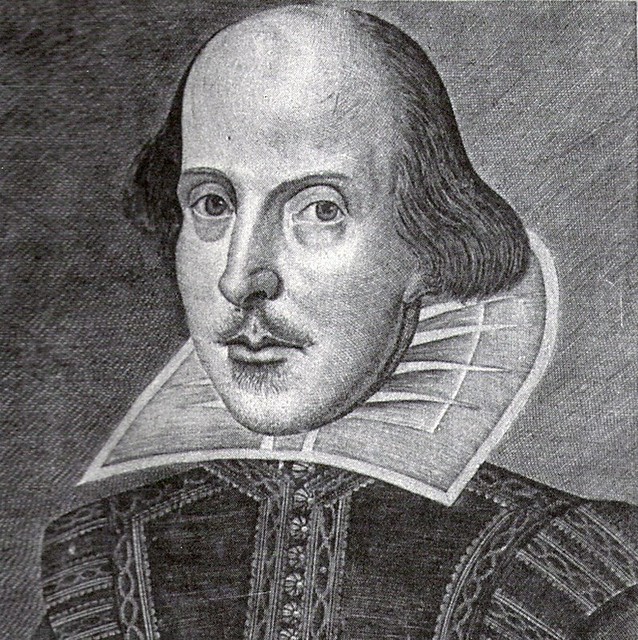
For me, if I was to identify one programme series which summarises all that is great about the BBC, it would be “Hollow Crown“, a quartet of Shakespeare kingly history plays currently showing on BBC2.

Tagged | 16 Comments

Opinion: Presidents, mops and turkeys – The future of House of Lords Reform?

Whilst recalling the successes of the 1997 General Election, in which the Liberal Democrats earned a net gain of 28 seats, Paddy Ashdown brought his speech at a commemoratory reception hurtling into the present with talk of the now embattled Lords Reform Bill.

In a manner delivered only by a character such as Paddy, he proclaimed that the current proposals were of Lincolnian proportions in that they existed to

Tagged , and | 14 Comments

Opinion: Lords reform – the lies & lessons from the AV referendum

I invite you to join me in a thought experiment. Let’s imagine Lords Reform has been passed as an Act. But let’s also imagine the Act includes a commitment to a referendum…

A Lords Reform referendum will be perceived as a Liberal Democrat ‘fix’, much like the AV referendum. This perceived fix, in the eyes of the electorate, is personified, regrettably, in Nick Clegg. According to UK Polling Report, Clegg’s

Tagged , and | 15 Comments

Opinion: Make the bankers pay

Back in May I posted on a distinctive message for the next election. This post looks at the defining global political issue since 2008: no, not the House of Lords; the financial sector.

Long before the LIBOR scandal, the financial industry dragged millions into poverty, awarding the perpetrators staggering salaries. But you already knew that. What we need is an intelligent, credible policy response. It is tempting to

Tagged | 21 Comments

How Jeremy Thorpe (and then Nick Clegg) broke the electoral system

Democratic Audit this week published its latest analysis, its depressing conclusions summed up by The Guardian’s headline British democracy in terminal decline.

A fascinating aspect of the Audit, even for those of us still scarred by the rejection of electoral reform in the 2011 referendum, is its detailed dissection of how the First-Past-The-Post system is failing democracy. And in particular the pinpointing of the year when FPTP started to go bad: 1974, and the Liberal insurgence under Jeremy Thorpe, when the party increased its support from 7.5% in 1970 to 19.3%.

This, say the Audit’s authors, marked a turning point in the UK’s electoral history, a moment when ended the dominance of the ‘Golden Age’ of FPTP (1950-70) and introduced instead its ‘Dysfunctional Age’ (1979-2005):

Tagged , , and | 41 Comments

Why the Lib Dems cannot end the Coalition. And what we should do to try and rescue it.

How do we revitalise the Coalition? I realise that for many Lib Dems that’s the very last question on your minds. After a week in which Tory rebel MPs forced the Government to delay a key plank of the Coalition Agreement — House of Lords reform — rather more Lib Dems, and not just the ‘usual suspects’, are turning to the question: how quickly can we be shot of the Tories?

After all, didn’t enough of our MPs walk the plank on the Coalition’s behalf on tuition fees, a policy directly counter to the Lib Dem manifesto? Meanwhile David Cameron cannot even persuade his party to back a reform that’s featured in the last three Tory manifestos. So what’s the purpose of the Coalition any more?

I get the emotional pull of the argument… but it doesn’t persuade me.

Coalition matters more to the Lib Dems than the Tories

The simple truth is that it’s more important for the Lib Dems to try and make this coalition work than it is for the Tories.

Also posted in News | Tagged , , , , and | 65 Comments

Opinion: How my life changed forever – 100 days in!

At the start of this year I was a Lib Dem from Yorkshire working and studying in London who according to some journalists was an “unknown” – although I was quite well known in certain Lib Dem circles, especially for my quiches! The resignation of Diana Wallis, as Lib Dem MEP for Yorkshire and the Humber changed all that.

In 2009 I was third on the Lib Dem list for Yorkshire and the Humber. When you are third on a regional list and the …

Also posted in Europe / International | Tagged , , , , , and | 13 Comments

Opinion: Why a referendum on second chamber reform would be good for the party

The Liberal Democrats built their electoral success on the three ‘Cs’: Concentrate, Communicate and Campaign. The campaigning zeal of the Party took us from a handful of councillors and a few MPs dotted around the Celtic fringe in the mid ‘Seventies to a truly national party, with over 3,500 councillors, 60MPs, power and influence in the Welsh Assembly and Scottish Parliament, power and influence in over 150 councils, from Newcastle to Newquay, Liverpool to Islington.

Campaigning is the life blood of the movement we endeavour to create around the drive to seize and redistribute power. We do this by the simple means of helping people to take and use their power in their communities. Campaigning succeeds by involving people beyond the party in our campaigns. It energies and strengthens communities and nurtures the tolerance that comes from understanding others and identifying the common causes that link us. These common causes centre upon the injustice stemming from subjection to illegitimate power – be that banks that gamble with our money and provide shocking service, supermarkets that drive farmers to ruin and fix prices or bureaucrats who entangle citizens in red tape and restrict people’s opportunities.

Tagged , , , , and | 41 Comments

Opinion: No economic case for regional pay

The clamour against regional pay received renewed vigour yesterday as 25 Liberal Democrat backbenchers endorsed a paper calling for the government to scrap any plans to link public sector pay to private sector earnings across the UK. The paper prepared in the office of John Pugh MP, analyses the evidence submitted to the Treasury and Office of Manpower Economics and concludes that there is no economic case for introducing regional pay.

The government has considered the introduction of regional pay in light of concerns that public sector pay premiums across the UK are ‘crowding-out’ the private sector. However statistics show that the private sector is not struggling to recruit staff, as vacancies in the public sector go unfilled for longer and a survey of business leaders shows that the majority have not struggled to compete with public sector wages.

Tagged , , and | 31 Comments

Opinion: Liberal Democrats must not apologise for cuts

Occasionally Nick Clegg, or his speechwriters create a phrase which deserves to live on in the political lexicon long after the rest of the speech has been confined to the political dustbin. The pre-2010 General Election debates were transformed by Nick referring to the “two old parties” and asking voters to “do something different this time”.

While the phrases were memorable, they were hardly that effective. Voters did what they did the last time they faced a Labour government mired in staggering incompetence and a Tory party leadership tacking to the centre while the grassroots howled. That was in the 1970’s when voters gave Labour a kicking and the Tories the mandate of largest party in parliament but no overall majority. In 2010 the outcome was the same with Labour weakened and the Tories becoming the largest party, except that on this occasion, the Liberal Democrats, from MPs to ordinary members, voted by a huge majority for a coalition. But while the phrases used in the debates were clever and eye catching, it was another of Nick’s phrases which should help set the tone for the party in the future. Nick said there would be “savage cuts”, while Vince Cable joined his Tory and Labour colleagues in saying that post-election there would, under a Liberal Democrat government, be “cuts faster and deeper than Thatcher”.

Tagged , , , , , and | 38 Comments

Lords reform – what exactly have the ‘rebels’ achieved?

Here’s what I tweeted on Tuesday evening:

And I think this is still a pertinent question. There is one thing that the rebels clearly achieved, and that it to make Lords reform less likely to happen. Lords reform is by no means dead, but it would have been more likely had the programme motion been passed. But given that much of the rebellion wasn’t driven by hard principle (given …

Tagged | 21 Comments
Advert

Recent Comments

  • Mick Taylor
    I requalified as a primary school teacher from being a secondary teacher. There were, and may still be, one year courses for this purpose and I imagine that cou...
  • Jana
    “ One practical solution would be to make it much easier for primary school teachers to requalify and go to work in our secondary schools” Really? Most p...
  • Michael BG
    Peter Davies, In the report the IPPR suggest that the 2% could start being paid by pensioners from the personal allowance (£12,570) level. From this income ...
  • Michal Simon
    @Sarah Dyke You have highlighted an important problem. Climate change is already hitting farmers in practical ways: wetter winters, flooded fields, longer drou...
  • Andy Daer
    @Matthew Harris, I don't share your fascination with ChatGPT, but when asked about Israeli politicians who've advocated the killing of Palestinian children beca...