


Listen to Liberal Democrats make speeches and there are frequent references to historical figures, but drawn from a small cast. Just the quartet of John Stuart Mill, William Gladstone, David Lloyd George, David Penhaligon corner almost all of the market, especially since Bob Maclennan stopped making speeches to party conference. Some of the forgotten figures deserve their obscurity but others do not. Charles James Fox’s defence of civil liberties against a dominating government during wartime or Earl Grey’s leading of the party back into power and major constitutional reform are good examples of mostly forgotten figures who could just as well be a regular source of reference, quotation and inspiration as the traditional quartet. So in this occasional series I am highlighting some of the other figures who have been unjustly forgotten.
More usually known as H.A.L. Fisher, Herbert Fisher was the doubly rare combination of an academic who successfully took his expertise to a mass public audience and a thinker who successfully implemented his ideas as a politician.
Born in March 1865 in London and educated at Winchester and Oxford, Fisher was very much part of the then chattering classes with the Prince of Wales as a godfather, Viginia Woolf as a first cousin, and subsequently both Ralph Vaughan Williams and Francis (son of Charles) Darwin as brothers in law.
He was first elected as a Liberal MP in 1916 for Sheffield Hallam and served six years as President of the Board of Education including achieving the landmark Education Act of 1918, frequently known as the Fisher Act in his honour. Despite the twist of his eventual successor in the seat, Deputy Prime Minister Nick Clegg, also having a passion for improving education, the contributions of H.A.L. Fisher have slipped from the party’s collective memory.
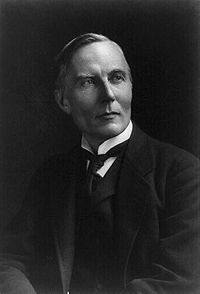 Both before and after his political career he was an academic at Oxford, winning both academic respect and public interest for his work as an historian. His three-volume A History of Europe was a popular textbook for many years.
He also served as Vice-Chancellor at the University of Sheffield and on the Royal Commission on Public Services in India. This reflected and fuelled a growing interest and expertise in education, including a strong belief in the need for a good education system to underpin a successful society and economy.
David Lloyd-George gave him the chance to put that into practice when he appointed him as President of the Board of Education on the formation of his coalition government in 1916. He secured not only increased funding and a unified framework for education in the country but also managed to awaken and enthuse people more widely to the need for good educational provision.
The Fisher Act’s achievements spanned the full age range for children, from the first legislative provision for nursery schools through to the first national government funding of universities. Post-First World War austerity saw many of the provisions delayed, with the 1944 Butler Act and then the post-Second World War prosperity only eventually delivering them.
Despite the path-breaking role for national, central government in Fisher’s reforms he retained a strong belief in the power of local variation and the resulting “wholesome variety of experimentation”. He also strongly believed that people had to be understood as social animals, with a need and desire to work together. As Michael Steed puts it,
He argued for local feeling as the basis of education in citizenship; affection for school, village, town or country is the basis from which loyalty to society and patriotism develops. He praised a French writer for his ‘gospel of provincial culture’ against the stultifying uniformity of French education and rejoiced in the local autonomy entrenched in his Education Act.
H.A.L. Fisher died in April 1940. Three year later a pair of his underpants was used to help dress the body of a fake British soldier as part of the Operation Mincemeat deception.
For the other posts in this series see our Forgotten Liberal Heroes page.
 Follow @libdemvoice.org on Bluesky
 Like us on Facebook
 Subscribe to our feed
 Sign-up for our daily email digest

 Write a guest post for Liberal England
 Green leader doubles down on Zionism is racism policy
 Do shouty politicians gain long term votes?
 Chloe
Chloe Jack Meredith
 Jana
Jana Jason Connor
2 Comments
Pleased you’ve done this profile of Herbert Fisher – a man who should be much better known in the party and was the last Liberal MP for Sheffield Hallam until Richard Allan was elected in 1997. I did a much shorter profile of him for the Lib Dem newsletter in Sheffield so it’s nice to know a bit more about him.
Herbert Fisher’s underpants used in Operation Mincemeat feels like a spoof. Anyone remember Alan Bennett as captain in command of the British Arm of the Rhine underpant clearing station and the discovery of Franz Kafka’s Y-fronts?