Tag Archives: sudan

The Importance of ‘Red Sea Jigsaw Puzzle’ (Part 1)

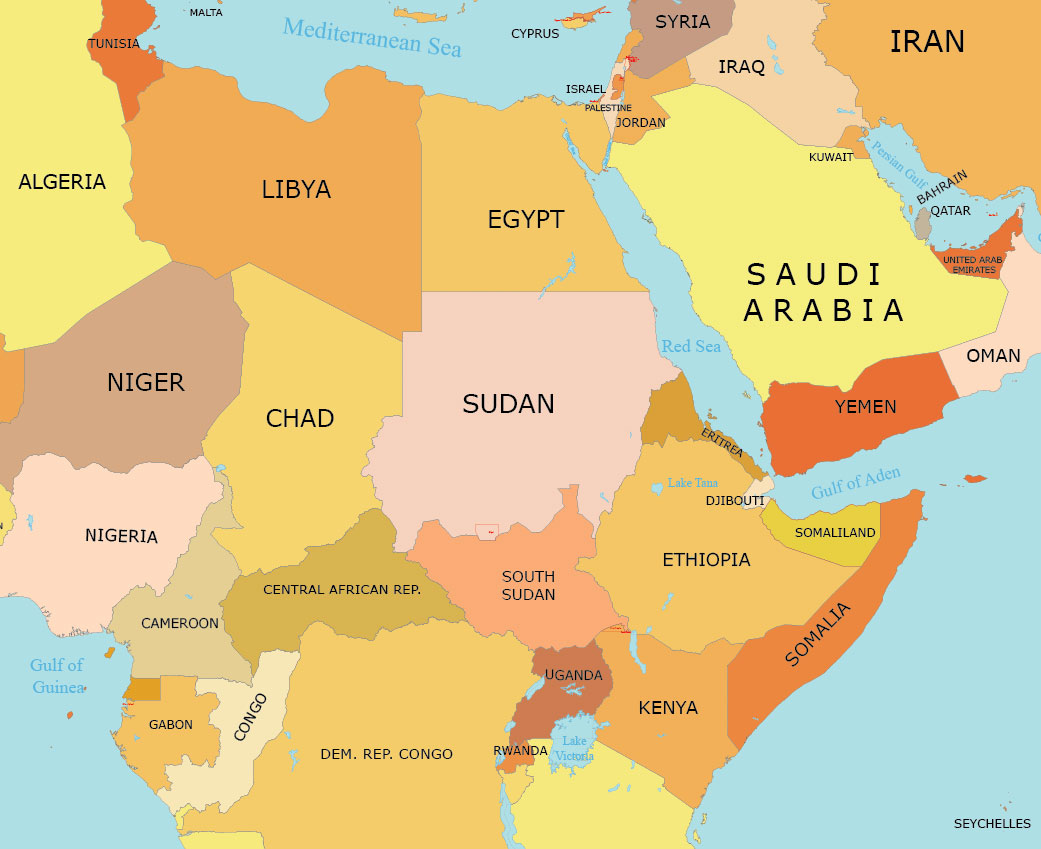
Source: Horn of Africa Simple Map

While foreign policy circles in London are focused on Ukraine, the Middle East/Iran and now Venezuela, as well as the dramatic new US National Security Strategy,  a set of interconnected lower key conflicts around the Red Sea are escalating. This has global ramifications, especially in relation to the two Red Sea ‘pinch points’ for Europe; the Suez Canal and the Straights of Mandeb.

These conflicts involve Saudi Arabia, UAE, Sudan, South Sudan, Somalia, Turkey, Israel, Yemen, Egypt, Ethiopia, Libya … and Eastern and Western land gateways to …

Posted in Op-eds | Also tagged , , and | 3 Comments

Tom Arms’ World Review

Sudan – and gold

Gold is currently selling at $4,038.05 an ounce. It has increased in value 121 percent in under five years.

It is also financing a civil war in Sudan which, according to the UN, has killed 150,000 civilians, displaced 25 million people and left 30 million facing acute hunger.

The two main Sudanese warring parties — the Sudan Armed Forces (SAF) and the Rapid Support Forces (RSF) — now rely heavily on gold as a source of income.

In 2024, gold production reportedly generated $1.7bn for Sudan via official channels. But then there are the unofficial channels, and, according to a UN Sanctions Committee Report, illicit smuggled gold is worth many times more than that which leaves the country through legal official channels.

The conflict over gold isn’t just a domestic issue. It is tied into a regional ecosystem with armed Sudanese actors with both camps connected to smugglers, refineries and foreign governments. All of which allows the two armies to convert gold into cash to buy weapons, fuel, food and other war needs.

Gold is the ideal money source for Sudan’s warring parties. For a start, Sudan has a lot of it. It is in the world’s top five for gold production. And geologists reckon that because conflict has prevented full exploration, there could be a lot more glitzy minerals in the Sudanese hills.

Next, it is relatively easy to mine, especially if you have no compunction about using environmentally dangerous and toxic mercury. The Sudanese warlords are not known for their green credentials.

Then, there is the fact that it is easily transportable. You can melt it down and mould into any easily smuggable shape, paint it black and carry it out to the gold markets where there is a constant and strong demand which means that the gold can be quickly converted into cash.

The biggest market is Dubai in the United Arab Emirates. The Dubai Gold Souk has been a major gold trading hub for centuries. In addition to the traditional souk with its hundreds of bullion shops there is a major free trade zone known as the Dubai Multi Commodities Centre. There is also a major gold refinery—Emirates Gold. In 2024 $186 billion in gold passed through the UAE.

More than 97 percent of Sudan’s gold is sold on the Dubai markets after being smuggled out through Egypt or Chad. Some of it is perfectly legal—about $1.52 billion. Just how much is illegal can be guessed at, but Swissaid, which monitors gold transfers, reckons that 60 tonnes of illegal smuggled gold is sold in Dubai. This could be worth up to $7 billion.

The UAE authorities say they follow OECD Due Diligence Regulations for Responsible Mineral Sourcing to ensure that the gold that they sell is coming from legitimate sources and is not being used to fund war. But this is challenged by Swissaid, Chatham House and the Financial Action Task Force, which was set up to combat money laundering and terrorist financing.

If the UAE authorities can be persuaded to stop the flow of illicit gold then it will sever the pipeline which is financing the fighting in Sudan and—hopefully—lead to its end.

Ukraine

Details of Trump’s latest peace plan for Ukraine are starting to leak out. The plan basically calls for Ukraine’s surrender.

Crimea, Luhansk and Donetsk would be “recognized as de facto Russian, including by the United States.”

“Kherson and Zaporizhzhia will be frozen along the line of contact, which will mean de facto recognition along the line of contact,” the proposal states. “Russia will relinquish other agreed territories it controls outside the five regions.”

The proposal also states: “It is expected that Russia will not invade neighbouring countries and NATO will not expand further.”

Posted in Op-eds | Also tagged and | 29 Comments

Time for a Distinctive Liberal Democrat Policy on Ending Conflict

The Foreign Office has an unspoken strategy: whenever possible, it frames conflict as a humanitarian disaster, not a political problem requiring a political solution. Supporting UN aid efforts is laudable, but it is also easier than devoting diplomatic time and capital confronting deep-seated issues like systemic corruption, the persecution of minorities or the marginalisation of ethnic groups. No wonder so many civil wars defy our efforts to secure a genuine sustainable peace.  

The current violence in Sudan is an example of how officials respond to conflict as if it were an earthquake rather than a man-made disaster. Twenty years ago, officials treated the ethnic cleansing in Darfur like a disease rather than a racist expression of the Sudanese regime’s policy to eliminate its Black African civilians. The ideology behind the slaughter in Darfur was never acknowledged, just as Milosevic’s plans for Greater Serbia and the Interahamwe’s genocidal ambitions to erase Rwanda’s Tutsi minority were ignored by diplomats at the time. 

Another Foreign Office strategy is to cling to the old, discredited elites when searching for a negotiated settlement. In Sudan, the architects of the violence were seen as the international community’s partners in the search for peace. Over the last two decades, the voices of civilians were largely ignored, while the elite – and the men with guns – made promises they were never asked to keep. No benchmarks were set, and there was no mechanism to deliver consequences for failure to fulfil commitments made to negotiators. It was Bosnia all over again.

Posted in News | Also tagged , , and | 5 Comments

The continuing threat to democracies

I wrote an article earlier this week about the hope for renewed democracy in Turkey should the opposition leader – Kemal Kılıçdaroğlu – be successful in the upcoming Presidential elections. But democracy continues to come under threat across the globe, as more countries seem to be sliding down the steep path to dictatorship and the abolition of civil liberties and human rights.

Human Rights Watch has today published an article focusing on the state of affairs in Tunisia. The authorities have placed a further 17 current or former members of Ennahda, the largest opposition party in the country, in prison. That means that, as of today, over 30 political figures who are critical of President Kais Saied are behind bars accused of “conspiring against state security”. According to Human Rights Watch, the detainees include former ministers, the party President, two vice presidents and the former Speaker of Parliament. The Tunisian authorities have simultaneously shut Ennahda’s offices across the country.

In Myanmar, the military has used a “thermobaric” munition – designed to cause the maximum amount of casualties – on the village of Pa Zi Gyi in response to an opposition-controlled administrative office being opened. The blast was followed by helicopter assaults using cannons, grenades and rockets as innocent civilians tried to flee. A resident confirmed that the anti-junta People’s Defence Forces was present at the opening, but that the office was for tax filing, town meetings and judicial events, not for military purposes.

Posted in Op-eds | Also tagged , , , , , , and | 8 Comments

British citizen evacuation from Sudan – Call for Official Enquiry

An estimated four thousand British citizens have needed evacuation from Sudan. The UK government commenced its evacuation effort on Tuesday, 25th April, after it had reportedly evacuated its diplomats.

By contrast, one day earlier, on Monday 24th April, EU High Representative Josep Borrell announced that 31 flights would have evacuated an estimated 1,200 EU citizens by the end of the day, with a remaining 400 EU citizens left to be evacuated. “There has been an incredible mobilisation of the Member States” said Mr Borrell, “that have air facilities and air capabilities to move planes, to move soldiers and to move military protection, and taking everybody that they could”.

The UK has denied that its efforts to evacuate embassy staff from Sudan last weekend interfered with Germany’s plans to get its citizens out. It is said that the Sudanese army initially closed access to the key airport after being infuriated by the unauthorised presence of British armed forces on the site.

The delay in British evacuation was one of the reasons why the British Ambassador had to negotiate an extension of the 72-hour ceasefire between the warring factions to allow for more time. The FCDO said eight flights had airlifted 897 people to Cyprus as of Thursday, 27th April. Hopefully the UK has asked EU Member States – alongside the United States – to lend a helping hand to get everyone evacuated, as used to be the case automatically when the UK was a EU Member State. Australia has just thanked France for assisting in the evacuation of its citizens.

The difficulty of non-British nationals with UK residency permits – such as the well-publicised case of Sudanese-born Dr Abdulrahman Babiker and 23 other NHS doctors – to board UK rescue flights has also been heavily criticised by Layla Moran amongst others. If there are any spare seats on a flight, they must certainly be allocated to them.

Posted in Op-eds | Also tagged , , , and | 1 Comment

Observations of an expat: Shifting Arabian sands

Embed from Getty Images

The recent establishment of diplomatic relations and business ties between Israel and the United Arab Emirates raises a host of questions, hopes, problems, issues and consequences.

Is it good or bad?  In the constant shifting sands of the Middle East where tribal loyalties overlap with religious and ethnic rivalries it is probably best to say that it is a bit of both, and the need for a supreme balancing act will continue to be the order of the day.

The UAE has at least partially opened the diplomatic floodgates and other Arab countries are expected to soon follow. It is reckoned that the next Arab country to establish links with Israeli will be the Gulf island kingdom of Bahrain. King Hamad bin Isa Al Khalifa was among the first to congratulate both Israel and the UAE on their bold move. The reason? Sunni king Al Khalifa is terrified of Iran. The Persians have long claimed the island as part of their territory, and 60 percent of the population is Shia.

Next on the likely list is Oman. The late Sultan Qaboos regularly acted as a mediator between Arab and Israeli interests. In 2018 he hosted a visit to Muscat by Israeli Prime Minister Benjamin Netanyahu. Omanis have been praised for their regional diplomacy, not only between Israel and the Arab world, but also between Iran and Arabia.

Posted in Op-eds | Also tagged , , , , and | 26 Comments

LibLink: Lynne Featherstone – Darfur is still suffering ten years after conflict began

Women in the Abu Shouk camp for displaced people, north Darfur, Sudan - Some rights reserved by DFID - UK Department for International DevelopmentJust back from a visit to Darfur, Lynne Featherstone writes on Huffpo about continuing concerns for the region:

Britain’s aid programme is about people, not numbers. But sometimes, the figures are so shocking it is impossible to escape them.

This year marks 10 years since the start of conflict in Darfur and the numbers speak for themselves. During

Posted in LibLink | Also tagged | Leave a comment

‘Sent back by Britain. Executed in Darfur’

So reports The Independent today:

A failed asylum-seeker who returned to Darfur under a government repatriation scheme has been murdered by Sudanese security officers after they followed him home from the airport in Khartoum, The Independent has learnt.

Adam Osman Mohammed, 32, was gunned down in his home in front of his wife and four-year-old son just days after arriving in his village in south Darfur.

The case is to be used by asylum campaigners to counter Home Office attempts to lift the ban on the removal and deportation to Sudan of failed asylum-seekers. Next month, government lawyers are expected to go to

Posted in News | Also tagged | 1 Comment

Opinion: With Darfur still burning, the question that must be asked – has the Liberal hand lost its touch in times of crisis?

With the relentless genocide in Darfur still incendiary, our attention must turn to the lack of affront from the liberal contingent. Unlike the Arab/Israeli conflict or the violence in Sri Lanka, the Liberal Democrats have lucid policy on the crisis in Sudan. Without a doubt the strength of Lib Dem rhetoric does not match the strength of our policy. This begs the question: has the Liberal hand lost its touch in times of crisis?

It was Liberals who hailed the end of Apartheid. The recent death of Helen Suzman was a poignant reminder of this. It was liberal democracy that salved …

Posted in Europe / International and Op-eds | Also tagged , and | 9 Comments
Advert

Recent Comments

  • George Thomas
    Have just come from the latest post discussing Welsh Lib Dems struggles to a post regarding better transport. Does this mean support for retrospective funding f...
  • Tristan Ward
    “Let’s start by arguing that the economic benefits of the Single Market far exceed having to accept freedom of movement into the UK, and take it from there....
  • Chloe
    'Needless to say the poorest in British society paid the price for this' I remember canvassing , the poorer the area the less interested they were. Membership ...
  • GWYN WILLIAMS
    A balanced and fair assessment of the Senedd campaign. Unlike in Scotland, Wales has not as yet polarised into for and against Independence camps. The Welsh Lib...
  • Jana
    The logic of this article is that we should be rejoining the Single Market. That is different from signing up to complete political Union by joining the EU. ...