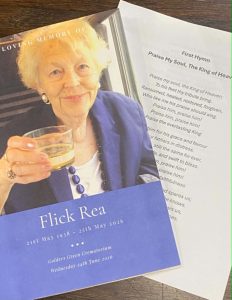
 At most funerals you go along with your slither of the story and learn so much more about the person, that you never previously knew. At most funerals the family have been busy organising and deciding readings and hymns. At most funerals…
Let’s be honest, the funeral of Flick Rea was never going to be like other funerals…
First, it was the hottest day of the year, decade… ever and heck did we sweat under the relentless sun.
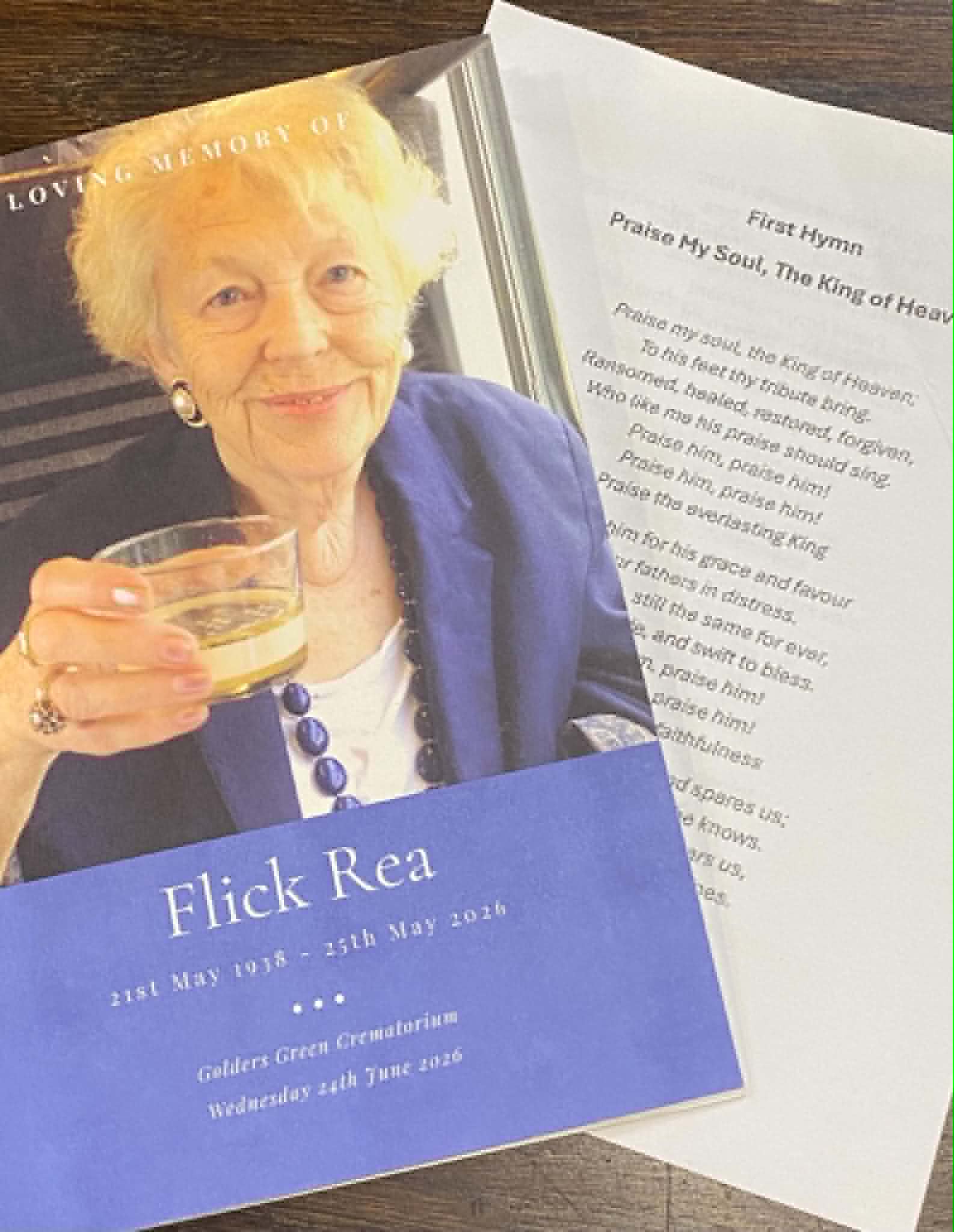
Second, the funeral was planned in detail by Flick herself, the readings, who should read them, the hymns, even the photos for the order of service… each personally chosen by Flick.
And third, the number of people… I counted 162 give or take 10 and Golders Green Crematorium was literally bursting.
Oh and the vicar leading the service, Jonathan Kester of Emmanuel Parish, West Hampstead, was a personal friend and requested by Flick.
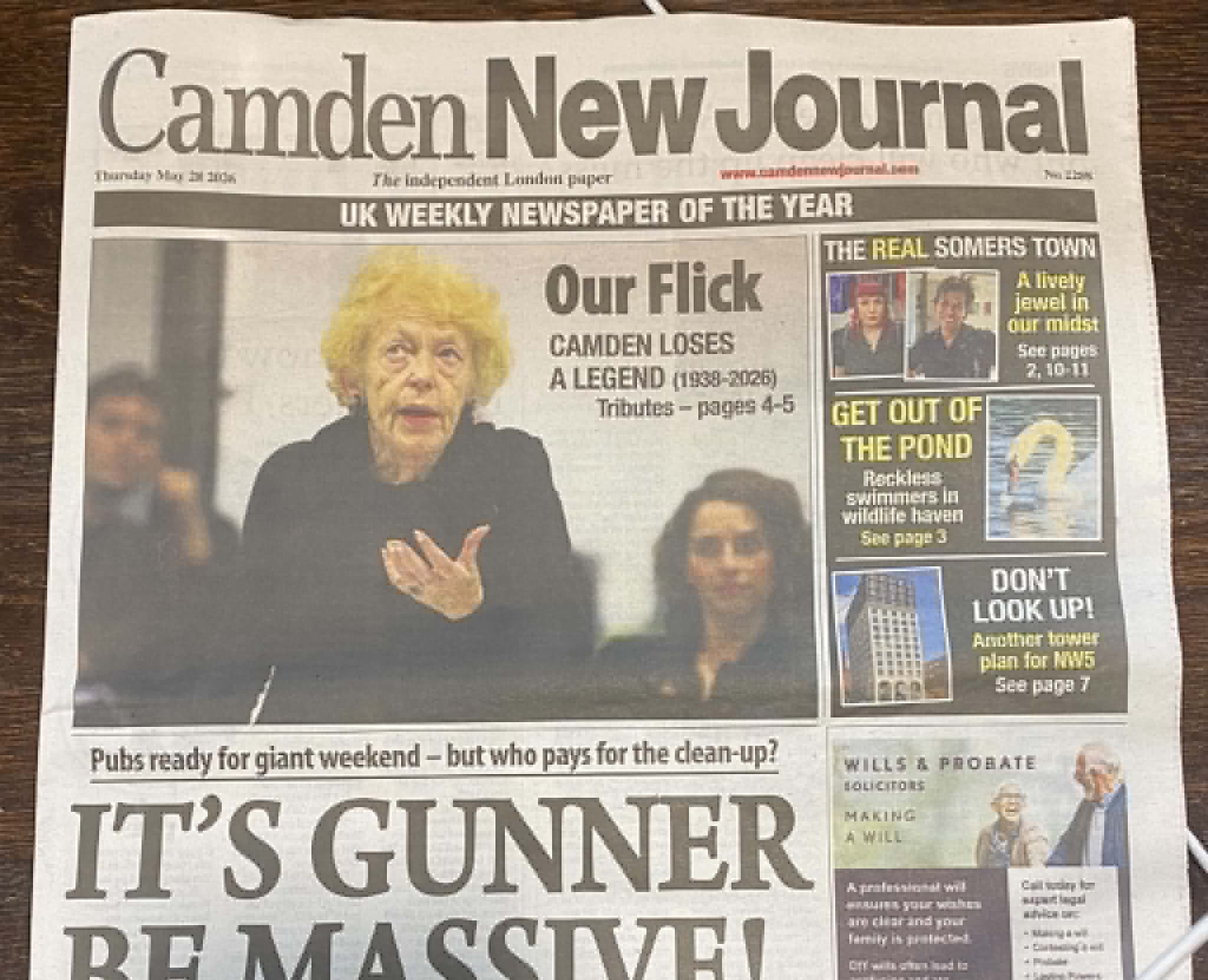
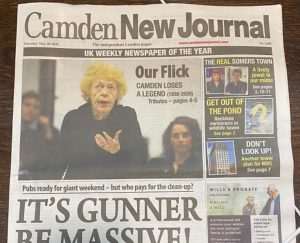 Copies of the local newspaper of record, the Camden New Journal were handed out at the end of the service as Flick’s passing was on the Front Page, page 4, 5 and 6, she led the editorial on page 16 and already a letter of tribute on page 18. And the very personal and touching letter from Party Leader Rt Hon Ed Davey MP to the family was read out in full by her son Robert, only to be followed by a letter of condolence from Prime Minister Keir Starmer KCB KC MP.
The gasps of admiration in the chapel were audible at these tributes – all much deserved for the “Queen of West Hampstead”.
Now, one of the best things about the many achievements of Flick was that we have all known her for so long, loved her, her stories, her style, her camaraderie that most of those present at the funeral knew the details of most of those achievements. We weren’t there to learn, we were there to say thank you, to share the loss of one so special and to support each other with a hug and a tot or whisky or two. In the end, the real legacy of Flick Rea was in the people who she loved, and who loved her in return. It is a living legacy.


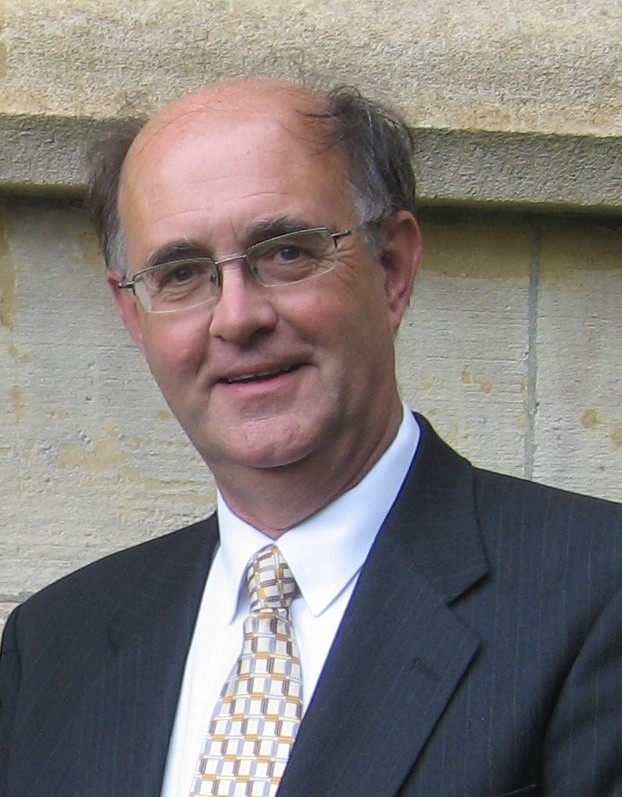
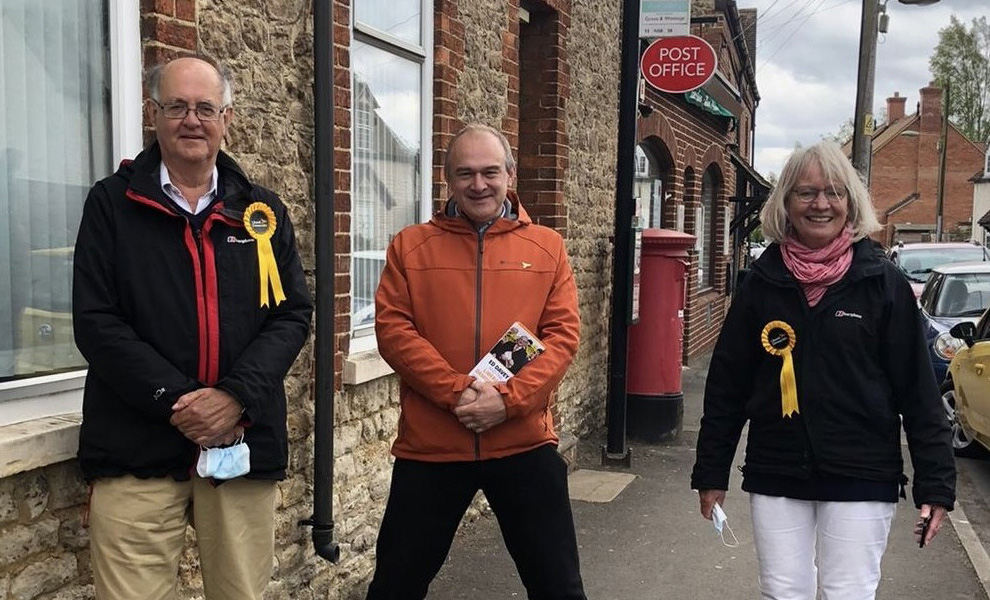





 It is very sad to report that David Patterson passed away peacefully in hospital on 24 April 2023 at the age of 83. David was the backbone of Tooting Liberals and the Battersea and Tooting Liberal Democrats for more years than I can think of.


 Robert Woodthorpe Browne, the former veteran Chair of the Party’s International Relations Committee, latterly Federal International Relations Committee, died on Tuesday morning, following a stroke the previous week. An internationalist to his fingertips, his reputation as one of the leading players in global liberal politics was a tribute to hard work, an almost uncanny ability to make deals and a sense of pragmatism that stood him, and the Liberal Democrats, in good stead over many years.

 Follow @libdemvoice.org on Bluesky
 Like us on Facebook
 Subscribe to our feed
 Sign-up for our daily email digest

 Ellesmere Yard: A living relic of the canal age
 Latest PollBase is out, with all the British voting intention polls since the 1930s
 Can Davey survive as leader?
 Hywel
Hywel  Sarah
Sarah  David Raw
  Chloe
Chloe  PM
PM 