Each day this week I’m giving a tip related to computers and campaigning. The exact details of how you follow each tip will vary depending on your own situation, so if you’re not quite sure what to do by all means pop up a question in the comments.
Today’s tip: make sure your local website is listed in the main places.
Each day this week I’m giving a tip related to computers and campaigning. The exact details of how you follow each tip will vary depending on your own situation, so if you’re not quite sure what to do by all means pop up a question in the comments.
Today’s tip: use NutshellMail.
I’ve eulogised about it before. I’ll eulogise about it again. But it’s simple: with NutsellMail you can easily keep on top of what’s happening on different social networks, all through one daily summary email. You can also respond then and there via links in the email.
Each day this week I’m giving a tip related to computers and campaigning. The exact details of how you follow each tip will vary depending on your own situation, so if you’re not quite sure what to do by all means pop up a question in the comments.
Today’s tip: use a feed reader.
Feed readers (also known as RSS readers or news readers) are a massive time saver. Rather than having to slog round different websites to see if they’ve got any new stories or blog posts on them, you subscribe to them via the feed reader. The feed reader then …
The gap between Christmas and the New Year is often a great period to catch up on some of those things you always meant to get round to doing and which will save time and avoid heartache if you do. So each day this week I’ll be giving a tip related to computers and campaigning. The exact details of how you follow each tip will vary depending on your own situation, so if you’re not quite sure what to do by all means pop up a question in the comments.
The Orwell Prize, Britain’s most prestigious prize for political writing, is inviting entries for a Blog Prize for a second year.
If you’d like to enter, you need to submit 10 URLs you’ve written in 2009. They do not have to be from the same blog, but they should all be written by you – the prize is self-nominating.
One of the most common reasons I hear people give for not joining a social network site such as Facebook, Twitter or LinkedIn is, “I know it’s useful, but where would I find the time to keep up with what’s happening?”
A typical way of tackling, at least in party, this dilemma is to go through carefully tweaking your
Welcome to the final part of our “Introduction to blogging” guide for Liberal Democrat bloggers or would-be bloggers. It’s been appearing each Saturday in the run-up to Christmas, with all the posts available via this page. The series will then be revised and collated into an e-book, so please do post up your comments as the series progresses. Today we’re finishing where we started, with reasons to blog. Alix Mortimer is at the keyboard…
Why blog?
The whys and wherefores of political blogging generate a lot of heat. Amble around the internet a little, and you’ll find denunciations of blogging as a …
Shashi Tharoor is probably not a name familiar even to readers of The Voice who follow online politics closely, but he’s one of the highest profile politicians on Twitter. The Deputy Foreign Minister of India, he has approaching half a million followers on Twitter.
He’s had some criticism for travelling in first class air travel and staying in five-star hotels, even though in both cases he says he pays for it himself.
Asked in September whether he’d consider travelling in standard (aka “cattle class”) in future, he deployed humour: “Absolutely, out of solidarity with all our holy cows.” The result? Complaints from …
Welcome to part ten of our “Introduction to blogging” guide for Liberal Democrat bloggers or would-be bloggers. It’s appearing each Saturday between now and Christmas, with all the posts available via this page. The series will then be revised and collated into an e-book, so please do post up your comments as the series progresses. Today it’s the turn of Jennie Rigg.
So you’ve read all the foregoing articles, and you’re still doubtful as to whether this blogging thing is for you? This is where I come in. I am by no means a typical Lib Dem Blogger, as you …
Welcome to part nine of our “Introduction to blogging” guide for Liberal Democrat bloggers or would-be bloggers. It’s appearing each Saturday between now and Christmas, with all the posts available via this page. The series will then be revised and collated into an e-book, so please do post up your comments as the series progresses. Today it’s the turn of Charlotte Gore.
So you’ve picked your blogging platform, created your blog-roll, found your niche and worked out your style – you’re blogging! But is it enough to rely on libdemblogs.co.uk to bring you new readers and win you new friends?
Sadly not. At least, not since the rise of Twitter. Oh no, you’re thinking. Not Twitter! Oh yes, Twitter. If you want to make the most of your blog, you’re going to want to join the “Twitterati” too.
This time I note they split 50/50 between Blogger and WordPress. The debate on which is the best to use will rumble on I’m sure, though if you are a councillor don’t forget the many merits of using ALDC’s (WordPress-based) MyCouncillor system.
Good luck to all the new bloggers, and why not take a moment to pop over to their blogs, take a …
Just two weekends ago, we helped run a moderately successful Bloggers’ Unconference in Edinburgh, the guests of the Scottish Liberal Democrats at their HQ in Clifton Terrace. The Scottish Lib Dems were generous with their facilities and their time, giving us a room for a day, feeding us, and making sure lots of interesting senior Scottish Lib Dems came to talk to us. In the end four English bloggers made the …
By Alex Foster
| Mon 30th November 2009 - 11:15 am
Last Saturday at the Bloggers’ Unconference, our final interview of the day was with Jo Swinson MP – which was particularly kind of her, since she’d flown back from New York the day before, and must have been jet-lagged.
Falling at the end of the day, the discussion we had with Jo was one of the most informal of the day, but was all the better for that. Her enthusiasm for finding new ways of communicating really shone through, and she talked to us about creating the video below. In particular, she was really keen to show us her new Flip video camera, which is extremely portable and can be used by just the one person, without needing fancy lights, an off-camera microphone or an extra person working as camera operator.
Jo used her Flip to make a series of mini videos about the work she was doing at the UN, and quite simply to give some basic impressions of what visiting the UN buildings in New York are like. The buildings are iconic, but not particularly fancy. Working in the main office block is like working in any slightly old fashioned tower block. She also takes time out of her schedule to show us a moving statue rescued from the rubble of Hiroshima – on the face, undamaged and intact; on the rear, scraped raw by the heat and debris of the nuclear explosion.
If you follow LDV’s twitter feed, you may also have seen this message promoting a short audio interview with Helen Duffett asking Jo the questions.
Chris Keating and Sam Lockwood from party HQ have penned this piece about the new LibDem social network, Act:
Launching a social network is a step into the unknown. If you open something up to thousands of Lib Dems then, frankly, the only thing you can expect is surprises. So those of us in Party HQ who are involved with online campaigning and supporter relations have been watching closely to see the kind of use people are making of this new tool.
We’ve been pleased so far with the response – over a thousand people registered in the last week, and a …
Welcome to part eight of our “Introduction to blogging” guide for Liberal Democrat bloggers or would-be bloggers. It’s appearing each Saturday between now and Christmas, with all the posts available via this page. The series will then be revised and collated into an e-book, so please do post up your comments as the series progresses. Today it’s the turn of Kingston councillor Mary Reid.
You probably already know that 7% of Liberal Democrat councillors have a website/blog, compared with 2% of Tory …
As we covered earlier this week, the Liberal Democrats now have a new social network – ACT. Unsurprisingly one of the most common comments made since its launch has been, “how does this fit with Facebook?”. The party’s previous decision to have a heavy emphasis on using Facebook, both for its centrally inspired social networking activities and also as the tool recommended and supported for widespread use at the local level, was one largely made by myself when working there, so it’s a question that interests me too.
By David Loxton
| Wed 25th November 2009 - 11:49 am
Today sees the public launch of ACT, the Liberal Democrats’ new social action network. This is the second launch in our three-part strategy,following on from the new-look libdems.org.uk.
ACT is a place where supporters can connect with one another, organise events and campaigns, share photos and videos and talk about politics.
Our aim is to reach a community of Liberal Democrats that extends beyond the formal boundary of party membership. So although ACT will be maintained as a Liberal Democrat supporting community, it is open to non-members as well as members.
The site has been running for a few days after a soft-launch to get the content started, but there is now a link to it on the Home Page of libdems.org.uk and other Lib Dem sites. It will also be promoted through various Lib Dem email lists.
ACT is built on the Californian-based social network platform Ning that has great usability and, with its use of Ning Apps and the OpenSocial framework, will allow further innovation and customisation.
We plan to develop a number of bespoke campaigning and fundraising apps over the coming months to extend the capability of ACT.
The third part of the web strategy, launching in December, is a completely new Members’ Website that will deliver party news, information and campaigning resources.
By Iain Roberts
| Tue 24th November 2009 - 10:51 am
No, not my campaign to enter the hallowed halls of Westminster – much to the relief of my colleagues who undoubtably feel they get more than enough of me on the council. Besides, I’m lucky enough to already have an excellent Lib Dem MP.
This is a new feature on the ALDC MyCouncillor blog service.
ALDC, the Association of Liberal Democrat Councillors, offers a handy blogging service for all members. It’s based on the popular WordPress platform and customised to help busy councillors and campaigners get blogging with the minimum of fuss. Over 500 people already have an ALDC MyCouncillor …
The November edition of Total Politics has the second in a series from me on councils and communicating. The first part, Yes, council websites can, looked at lessons from the Obama campaign for local council use of the internet. This piece now looks at email in more detail.
In October’s Total Politics I wrote about the broad lessons councils can learn from Barack Obama’s Presidential campaign, for both councils and election campaigns need to communicate successfully online with large numbers of the public.
Despite this similarity of aim, many of the internet techniques which are now second nature to most political campaigns are still almost unknown in local councils. As I wrote of one example, “Whilst for political websites the email sign-up box is a near ever-present feature, on council websites it is almost never there.”
The Voice recently highlighted how popular Blogger is with new Liberal Democrat bloggers. But if you’ve started with Blogger and want to move over WordPress what do you do? Paul Walter recounts the lessons he learnt along the way:
NERD’S CORNER, with apologies to any grandmothers for ovum-evacuation lessons herein
On 28th September I decided, in a fit of conscience, to clear out all the posts from my Blog archive with other people’s photos in them. I did it the wrong way and, in a tantrum, deleted all my old blog posts and started a fresh blog on …
Welcome to part seven of our “Introduction to blogging” guide for Liberal Democrat bloggers or would-be bloggers. It’s appearing each Saturday between now and Christmas, with all the posts available via this page. The series will then be revised and collated into an e-book, so please do post up your comments as the series progresses. Today it’s the turn of The Voice’s Mark Pack to talk about building up your audience.
There are many reasons for blogging and, depending on your own …
All but one are using Blogger, the exception being Prue with the ALDC MyCouncillor system. If you’re thinking of starting up a blog yourself, both have much to recommend them but there are a range of other strong contenders too as Mat
Colin Byrne, CEO of Weber Shandwick and former Labour Party press chief, recently knocked the possible importance of internet campaigning for British elections and suggested Hazel Blears was right with her YouTube jibe.
We surveyed 1,000 potential voters at the time of the recent party conferences. They were asked what communications channels would have an influence on deciding how to vote. When a parallel sample of consumers were asked the same question about purchasing decisions, by far the biggest influence was digital and social media (26%). Print and broadcast media ranked second in influence, with only
Yesterday was London Region’s autumn conference, during which I heard from two recent converts to Twitter.
First, Keith House – leader of Eastleigh Council and probably the person with the best record of election results at both local and national level year in, year out in any council run by the Liberal Democrats.* Perhaps understandably given his record of electoral success, he hasn’t been chomping at the bit to innovate online – but even Keith has now seen the benefits Twitter can bring and joined himself.
Keith highlighted how much greater the role of the internet would be at the next …
Welcome to part six of our “Introduction to blogging” guide for Liberal Democrat bloggers or would-be bloggers. It’s appearing each Saturday between now and Christmas, with all the posts available via this page. The series will then be revised and collated into an e-book, so please do post up your comments as the series progresses. Today it’s the turn of Alex Foster.
When writing for a blog, perhaps the default view I have of my reader is someone who is familiar with my entire body of work, someone who started at the first thing I wrote, and read it through in …
Comparing the popularity of different words in the latest stories from the the Liberal Democrat, Conservative and Labour Party websites reveals striking differences in the messages being put out by each party online.
Reproduced below are three word clouds, where the bigger a word is the more often it appeared on that party’s latest website stories. The word clouds were generated yesterday (Thursday) based on the then state of each of the three websites.
Welcome to part five of our “Introduction to blogging” guide for Liberal Democrat bloggers or would-be bloggers. It’s appearing each Saturday between now and Christmas, with all the posts available via this page. The series will then be revised and collated into an e-book, so please do post up your comments as the series progresses. Today it’s the turn of Paul Walter, who looks at the question of how to handle comments which appear on your blog.
There are a number of approaches on handling comments. It’s a question of finding a method which you are comfortable with.
If you’ve visited the Liberal Democrat party website in the last 24 hours, you’ll have noticed quite a dramatic change. Here, David Loxton, the party’s director of marketing, fundraising and members’ services explains the thinking behind the new site, and previews some of the other exciting new changes emerging within the party’s web strategy.
The new Liberal Democrat web strategy has been launched with a redesigned libdems.org.uk as its first stage. The new version is much more focused on setting out what the Liberal Democrats stand for, who we are and what visitors to the site can do to …
Welcome to part four of our “Introduction to blogging” guide for Liberal Democrat bloggers or would-be bloggers. It’s appearing each Saturday between now and Christmas, with all the posts available via this page. The series will then be revised and collated into an e-book, so please do post up your comments as the series progresses. Today it’s the turn of Jonathan Calder with a set of essential writing tips.
Blogging is a very personal thing that we do in public. And there …
Chris White – good to see another councillor using ALDC’s excellent MyCouncillor system.
Giles Wilkes – a think tank blogger spawns his own blog, which is an interesting take on the question of why there are so few successful think tank blogs. His explanation? “‘Institutional’ blogs look and feel terrible. You need individual personality.”
Jeremy Rowe – do not look at the photograph on this post if you are easily scared.
John Ault – the man who triumphed on Top Gear turns to blogging.
PM The recent political events in France have come at an unfortunate time for those involved in a renewed push for the UK to rejoin the EU.
France has been in i...
Peter Hirst However political parties are funded there are some common sense considerations. Politics depends on equal votes and to this should be added equal funding. At l...
expats Chloe 11th Oct '26 - 10:39am.........expats; Looking at the big three economies in the EU – maybe they have a point. Where is this magical growth going to com...
Hywel Found this. Doesn't sound like a challenge is coming soon!
https://www.politics.co.uk/2026/10/full-list-where-lib-dem-mps-stand-as-bid-to-topple-ed-davey-em...
Hywel I'm surprised nothing further has developed from Charlie Maynard's resignation. Usually with these things there is a sort of plan so the first stone leads to a...


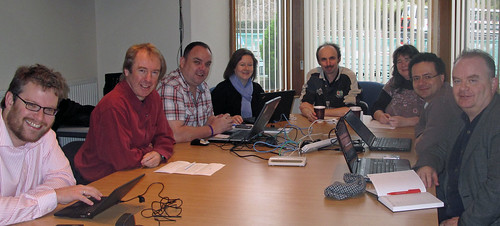


 You probably already know that 7% of Liberal Democrat councillors have a website/blog, compared with 2% of Tory …
 Today sees the public launch of

 Follow @libdemvoice.org on Bluesky
 Like us on Facebook
 Subscribe to our feed
 Sign-up for our daily email digest

 The Lib Dem leadership should to listen to our MPs
 Latest PollBase is out, with all the British voting intention polls since the 1930s
 Can Davey survive as leader?
 A Week in Politics #9
 PM
PM  Peter Hirst
  expats
  Hywel
Hywel 