For me, the Liberal Democrats have always been about reducing the inequality that poisons our society, that holds people back from opportunities.
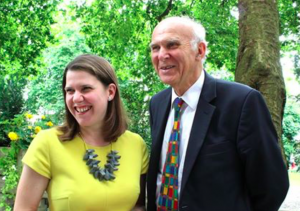
We have always talked about it, but perhaps in the last few years the language has been a bit different. I was really chuffed when Vince talked about the need to tackle inequality so explicitly in his leadership manifesto. Today, his first major speech since becoming leader is on this issue and you can watch a clip here.
The full text of the speech is below. It’s thoughtful, serious stuff as you would expect.
Yes, under his leadership we’ll be looking for the exit from Brexit, but our main mission as a party is to do something about this inequality. That works for me.
Politicians talk at length about fairness and unfairness. Verbal confetti. Bland. Something almost everyone can relate to emotionally. And it can be defined in so many different ways that it can be applied in almost every situation, for about every audience. Inequality narrows the subject down a bit but, again, has a wide range of definitions and meanings.
Putting aside the health warnings and the academic qualifications there is however, in the UK in 2017, something stirring around the idea of inequality: something new and worrying. It starts from the observation, or the belief, that inequalities of income, wealth and opportunity, between classes, regions and generations, are getting worse; that Britain is becoming relatively as well as absolutely unequal when we look at comparable countries, especially in Europe; and that this inequality is not merely offensive to the sensibilities of progressive minded folk but is doing serious damage to the wider society and economy.
Sometimes an event crystallises this feeling. The Grenfell Tower disaster wasn’t just a horrific accident with a large loss of life but illustrates in a graphic way that relatively poor people were not listened to by those in authority and attracted a casual approach to life threatening risk. And close by geographically, but light years away socially and economically, lived London’s super-rich.
What motivates me personally and politically is the way this this new Britain contrasts with the more egalitarian culture and mobile society that I grew up with: parents who progressed in 20 years from being factory workers living in a terraced house with an outside loo to being part of the professional class living in a detached house; from parents who left school at 15 progressing though ‘night school’ to a son at an elite university. There were of course ‘posh’ people in post-war Britain but they were few and largely inconspicuous; and there were poor people on the council estates but they were distant relatives or friends and we played and watched football together. A provincial British city, even today, does not have the jarring contrasts of London; but my sense is that even there, big differences in living standards and opportunities have opened up.



 Follow @libdemvoice.org on Bluesky
 Like us on Facebook
 Subscribe to our feed
 Sign-up for our daily email digest

 A promotional film for Northampton from 1965
 Latest voting intention and leadership ratings opinion polls
 Mixed messages on smart glasses
 David S
 Pawel Urbanski
 Truthspeak
 Jeff
