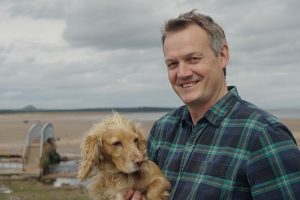
Some thoughts on the brilliant Lib Dem results in the local elections

As usual, the Liberal Democrats are not getting the coverage we deserve for some pretty spectacular election results. The BBC spent most of its coverage talking up Reform, Lewis Goodall on the News Agents spent a disproportionate amount of time on Farage and not enough on Ed Davey. Everyone picked up Farage going on about what he wanted to do in the future,  but paid little attention to the other stars of yesterday, us.  I mean, we won more councillors than the Conservatives and Labour and beat the Tories into fourth place in terms of vote share.

It is, frankly, horrifying, to see Reform in charge of so many crucial services and I fear for people from marginalised communities who need the support that the Council provides.  Our goal for the future must be to offer a kinder and more compassionate and practical alternative to their divisive rhetoric.

And while the BBC showed acres of Farage and his fireworks in Kent, Ed’s sundown speech in Oxfordshire got a few frames. But, don’t worry, you can watch it here:

We are on track to overtake the Conservatives at the next General Election, he said, adding that the Liberal Democrats will stand up for true British values to counteract the rise of populists like Nigel Farage.

Ed wasn’t the only leader to comment on our success. Alex Cole-Hamilton said:

It’s clear from the spectacular results that the Liberal Democrats are putting up that not only is the Conservative Party toast but if you want to stop Reform we are the party you should put your trust in.

It takes a bit of cheek for John Swinney to talk about populism, deception and false hope. When is he going to cut class sizes, dual the A9 and abolish the council tax like his party have been promising for almost twenty years?

People deserve better. With a year to go until the Scottish Parliament election, my party will be setting out plans to give people swift access to local healthcare and set their communities back on the right track.

Posted in Op-eds | Tagged and | 24 Comments
Advert

Good… but still a long way to go

Yesterday Jim Coupland offered us his election predictions. Here is his follow-up.

Well, it’s done. We’ve seen the overall results of the local elections and what a brilliant result for us Liberal Democrats! Congratulations to all the fantastic Liberal candidates and members for their hard work and success on the campaign. As I said in my prior prediction, Reform made massive gains, and we made considerable gains too. Conservatives are the biggest losers and the public’s current view of the Labour government has been delivered… and they’re not happy.

Of course, these are only the local elections and the big one (the general election) is a few years away. However, these are important elections for three reasons:

  1. People mainly vote on national issues

Did Reform make all these gains because they had detailed policy on bins, parks and potholes? Of course not. The public, unfortunately, feel that Reform has the right answers to the national issues and are dissatisfied with the status quo. People, whether you define their votes as a protest vote or not, want change.

  1. Local issues

At the same time, local issues matter. These elections are a form of direct democracy that affect our lives. We Liberal Democrats are rightly impassioned by local politics. We wear Kemi Badenoch’s church roof insult as a badge of pride, the more Liberal councillors the better.

  1. Two party politics is over

The calls for proportional representation in Westminster should and will be bigger. People are fed up with Labour and the Tories, they want something different.

Going Forward

So, going forward, what do all these results mean? Where should we go as a party from this? Yes, we had a successful campaign, and we made net gains but where do we want to be after the next general election? We know that with first past the post, we can’t win the general election. That is a fantastical thought. I feel that in the long run, what we should aim for is another coalition. That would mean we, at least, have roughly the same number of MPs in the commons and rely on Labour making enough losses where they would need us to stay in Downing Street.

Posted in Op-eds | Tagged | 12 Comments

Update on election results

We have much to be pleased about. As I write Lib Dems have 327 County Council places, up 131 on the previous results in those seats. The big story, of course, is that Reform has gained 575 while the Conservatives have lost 566 and Labour lost 160.

As hoped, the good news is that we have gained Oxfordshire with 36 seats out of 69, and Cambridgeshire with a knife-edge 31 seats out of 61. Congratulations to both teams!

Late news: We also control Shropshire, with 39 seats and counting out of 74. Brilliant news!

On top of that we are the largest party in Gloucestershire, Hertfordshire, Wiltshire, and Devon.

In Gloucestershire we have 27 seats, just one short of overall majority, so we will undoubtedly be forming the administration.

In Hertfordshire, we have 31 seats out of 78, so negotiations will probably be underway with the smaller parties, in this case Labour and Green who hold 5 seats each.

In Wiltshire, we have 43 seats out of 98, though it is not obvious where potential partners may lie.

In Devon, we have 27 out of 60 seats, and we have wiped out Labour.

Counting is still underway in Cornwall, but it is clear that it will result in NOC. At the moment we lead with 22 seats.

A recurring pattern in other counties are Conservatives losses to NOC, but with Reform coming through as the largest party. There may well be some interesting coalition discussions going on between the two parties.

Mike Ross put up a great challenge for the Hull and East Yorkshire Mayoral Election, but sadly came second with 37,510 behind the Reform Candidate on 48,491.

Posted in News | Tagged | 2 Comments

So what can we expect today?

Results have been relatively quiet overnight. And there is a hiatus this morning until the next wave of results start after lunch.

Most Councils are counting today, which makes sense from a human resources standpoint but is rather frustrating for those of us who love the drama of election night. Some ward results are trickling in, but we will have to wait until this afternoon to see whether we have managed to take control of councils in those areas where we bucked the trend last summer and gained Westminster constituencies before winning the local council. Watch Devon, Oxfordshire and Shropshire, all expected to declare late afternoon.

As far as the Metro Mayor elections are concerned, most are fights between Reform and Labour, although Greens are hopeful in West of England.  However one stands out as a three cornered contest with Lib Dems in with a chance – Hull and East Yorkshire. Our candidate there is Mike Ross, who is Leader of Hull City Council and predictions have placed him second, behind Reform, with Labour close behind.  Mike is well known to party members as a popular and effective Chief Steward at Federal Conferences. The result is expected mid afternoon today.

Posted in News | Tagged | 43 Comments

My predictions for the local elections

I’m challenging myself with a prediction of how the local elections will pan out. Admittedly, I don’t quite have the time or energy to go through each ward of each council up for election in England and estimate who I think will win. However, what I will predict is the general overview of each party and how they will fair nationally. Do they make net gains or losses? What will be the spin on their reflections of their results? Will it have a big impact in British politics over the coming year? For clarity, to make a good prediction, I will have to take my Liberal hat off and look at everything objectively.

Gains and Losses

Overall, the party I believe will have the most gains are… Reform UK. Why? Unfortunately, there are two reasons. Firstly, the national polls. Reform UK have been polling at virtual tiebreak with Labour, with the latest MRP poll showing that Reform would be the largest party in Westminster if a general election were to be held today. It is quite unusual to see a party (other than Labour or the Conservatives) be near the lead in the polls. Also, with the huge membership drive in their ranks, they have an impassioned base with many candidates and members on their campaign trail. 

Of course, there is the debate over whether national polls matter in local elections. Don’t voters vote on local issues? I’m sure there are and I’m sure that it will have some effect in certain areas. When the Tories held onto Uxbridge and South Ruislip in the by-election a couple of years ago, it did buck the national trend in the polls. However, in my opinion, the majority will vote on national issues. When they see the party logos on the ballot paper, they don’t think about potholes or bins (unless you’re in Birmingham), but they think of what they see of the parties today. They see what the government are doing, and the people are not happy.

Secondly, Reform UK in numbers, have nothing to lose. The seats are from the 2021 cycle, which the Conservatives overwhelmingly won. They are taking the right-wing vote, and they will make many gains in these circumstances.

Moving onto the Liberal Democrats, I think we will make some modest net gains. Aiming to be the party of ‘Middle England’ is a smart strategy where we can gain some further ground from the Tories. So far, a smooth campaign from Sir Ed Davey and avoiding any major blunders, I think it will be a successful campaign… fingers crossed!

Labour will make losses. Unlike 2021, incumbent governments have struggled in local elections and Labour has certainly lost support since the election win last year. There is plenty of fertile ground for Reform UK to make gains from Labour too, especially areas like Runcorn and Helsby where a by-election is taking place.

The Conservatives best brace for themselves. I am sure Kemi Badenoch is having nightmares right now, picturing the scenes of despair. Crestfallen colleagues in parliament, Tory councillors losing their jobs and the headlines. Oh, the headlines… I bet Robert Jenrick and James Cleverly are rubbing their hands in glee. With the Tories currently losing to Reform UK in the polls, hardly being mentioned in the news (for now) shows that the country do see Reform being the ‘real’ opposition to Labour and voters have not yet forgiven the Tories on their record in government and there are plenty of seats to lose. This election could not have come at a worse time for her.

Posted in Op-eds | Tagged | 2 Comments
Advert

Ed Davey: Lib Dems on course for best ever winning streak with big gains in former Conservative heartlands

Ed Davey sounded a confident note with his close of poll statement:

We are expecting to see big gains against the Conservatives in their former Middle England heartlands.

Last year the Liberal Democrats won a record number of MPs and became the largest third party in 100 years. Now we are on course for our seventh year of local election gains, making this our best ever winning streak.

Voters have delivered their verdict on a Conservative Party that broke the country and a Labour government that is too timid to fix it.

Every Liberal Democrat councillor elected will be a strong local champion fighting tirelessly to deliver the change that people are crying out for.

Posted in News | Tagged | Leave a comment

Risk, Strategy and Reform UK

Our Party is working on strategy for the next Parliament and, I hope, beyond.

A key part of business strategy is assessment of risk.  A major element in risk is competition – what will competitors do and what risks does that create for us?  Strategy must understand context, including the competitive environment.  Our market-place is politics, including the structure and future of the party political structure in Britain.  There are differences in Scotland, but the broad analysis holds true.

The biggest changes in the political environment are:

  • The demise of the two-party system. Both traditional leading parties have lost their sense of identity, which is based on a twentieth-century division between capital and labour. A sentence which had most resonance in my Council Chamber is quoting a Labour member that “this isn’t the party I joined and even less that my parents joined”; some Conservatives accept that it also applies to them.  Voters have more important things on their minds than outdated stereotypes.
  • First Past the Post, where 30% of the vote can now mean victory.
  • The challenges: the lost credibility of underlying economic analysis of the last 45 years; unwillingness to set out the Liberal case and the facts on immigration; the breakdown of consensus about the state and welfare; climate change; the global threat of nationalist populism.

These factors are playing out throughout the democratic world.

What are the risks of a strategy based on the assumption of Reform and Conservatives continuing to fight each other with more or less equal shares of the vote, so allowing Liberal Democrats to come through the middle?

Posted in Op-eds | Tagged | 8 Comments

A future written by Generative AI looks miserable

I’ll start by thanking Hugh Andrew for his excellent LDV post from the 23rd April – ‘A thief in the night’, which I completely agree with. I’m old enough to remember the Napster file-sharing era when ordinary people started downloading music over the internet for free. This mightily offended big business in the form of the music industry who, pretending to care about the artists they profited from, declared this was stealing and so successfully lobbied Governments to change the law and make it easier for them to prosecute file-sharers.

Fast-forward 20 years, and now other big companies are downloading creative works over the internet for free, often created by ordinary people who are aspiring or actual artists, writers or musicians. This is also stealing, but those big companies are once again lobbying Governments to change the law, weaken copyright in their favour and legitimise what they are already doing anyway. And Governments, forever in thrall to the lure of the ‘next big thing’ are listening to them.

Where does this leave creatives such as artists, musicians, writers and academics? An aspiring musician might now put their work on Spotify, who will typically pay the princely sum of $0.004 per stream. A new author self-publishing on Amazon might earn a couple of quid per Kindle download of their book. A talented or lucky few may create a buzz, go viral or build a following that allows them to make a living doing what they love. However the vast majority will earn peanuts, but at least their work is out there to take pride in and get credit for, and those that enjoy it will know the creator’s name.

Or so we thought. Now their creative work could be swallowed by a machine and regurgitated without credit by anyone who can type the right prompt into an AI model.

Posted in Op-eds | Tagged | 5 Comments

Ed Davey: Kemi Badenoch facing a “reckoning at the ballot box” as former Conservative voters rally behind Liberal Democrats

Ed Davey and Lib Dem MPs and activists with many diamonds launch election campaign

The polls open in eight and a half hours. I hope that all the bundling is done and the Eve of Polls are out and all campaigners are tucked up in bed sleeping soundly ahead of an early start with the Good Mornings.

All the very best from the LDV team to everyone getting out the vote tomorrow and a huge thanks for all the work that you have all done. Elections are not won on polling day. It’s been a long, hard slog. Thanks to everyone from agents to stakeboarders, to organisers to candidates who have achieved so much.

Ahead of polling day, Ed has predicted that Kemi Badenoch faces a reckoning at the ballot box as Conservative voters back the Liberal Democrats. I suspect she may come to regret that comment about us fixing roofs instead of being on Twitter.

He said:

Posted in News | Tagged and | 4 Comments

Council Tax is broken – It’s time for Liberal Democrats to lead reform

Council tax is one of the most outdated and unfair taxes in the UK today — and yet it continues to underpin the finances of every local authority in the country.

The system we use now was introduced over 30 years ago, and it still relies on property valuations from 1991. In that time, the housing market has transformed, but the tax bands have not. As a result, households are paying wildly different amounts of tax for properties of similar value today, simply because their homes were assessed differently decades ago. That’s not fair, and it’s certainly not progressive.

In places like North Somerset, we see the effects every day. A modest three-bedroom home in Weston-super-Mare might be paying more council tax than a far more valuable property in central London, simply because of the quirks of the old banding system (and then compounded by the government funding formulas). Families on modest incomes, pensioners, and young renters bear a disproportionate share of the burden, while those in high-value homes often pay less, relatively speaking.

Even the Institute for Fiscal Studies has called council tax “outdated and arbitrary”. And they’re right. Research shows that the poorest households pay a higher percentage of their income in council tax than the wealthiest. That’s not just bad economics — it’s bad ethics.

The Lyons Review, commissioned by the last Labour government in 2007, highlighted many of these problems and suggested a path forward. It called for regular property revaluations, new council tax bands to reflect modern housing values, and greater flexibility for councils to shape local taxation in ways that match their communities. Yet nearly two decades later, little has changed.

It’s time to revisit those ideas — and go further.

What would real reform look like? Here are steps we should be seriously considering:

  1. A full revaluation of properties across England and Wales, bringing council tax bands in line with today’s market values.
  2. The introduction of new, higher bands for very expensive homes, so that the wealthiest households contribute a fairer share.
  3. A shift towards an income-based local tax, such as a local income tax, which the Liberal Democrats have long supported.
  4. Greater devolution of fiscal powers to local councils, so they can tailor fairer funding systems to their communities.
  5. Stronger protections for those on low incomes, including national support for relief schemes and discounts.

And this brings me to one of the most glaring inconsistencies in the current system: Council Tax Support (CTS) or council tax benefit in the old terminology.

Posted in Op-eds | Tagged and | 18 Comments

Mark Pack’s report to Members

Thank you and good luck

Due to an impressive collective effort, our candidate tally for this May’s elections is our best showing since May 2009. That is, the proportion of seats we are contesting this time, compared with the proportion Labour and the Conservatives are contesting, is the best since before the 2010 Coalition government.

We still have more progress to go to get to matching their numbers of candidates, but this year is another important step forward. It shows a continuing spread of our grassroots campaign efforts beyond simply our held and target Westminster constituencies.

Thank you to everyone who has played a part in that, especially those standing for the first time this May and the many agents who have taken on agenting for extra candidates.

A particular shout out to the team in County Durham, where we are standing at least one candidate in every ward across the whole council for the first time ever, ensuring that there is a Lib Dem alternative to Labour, Reform and the Conservatives in every single community.

If we can also go on to make net seat gains in the local elections that will make it seven rounds of net gains in a row – again an important spreading of our grassroots strength, and the longest run of such gains since the 1980s. Even more importantly, it will mean more Liberal Democrats in office, able to implement more of our policies in order to make people’s lives better.

In a neat demonstration of both these points – the importance of putting up candidates and of winning more political power to improve people’s lives – we already have the first Liberal Democrat council gain in. It is Melksham Town Council, guaranteed to have a new Lib Dem majority after not enough other candidates got nominated.

Lib Dems secure limits on emergency new government powers

While supporting the government’s emergency legislation to safeguard the Scunthorpe steel works, the Lib Dems successfully pressed in Parliament for important safeguards on the use of the emergency powers the law grants the government.

In the Commons, Daisy Cooper secured a promise from the relevant minister that, “the powers that he is giving himself will be repealed as soon as possible, within six months at the latest, and if they are still required after that, whether he will come back to this House to ask for another vote”.

Following up on that in the Lords, Chris Fox got an assurance from the relevant government minister that the powers granted in the bill would be debated in six months in a substantive motion that will be voted on – further locking the government into allowing Parliament to have a say in their continuation or cessation.

Posted in Op-eds | Tagged , , and | Leave a comment

Ed Davey turns DJ to support Mike Ross in Hull

If you do nothing else in the next couple of days, please try and help Mike Ross become Mayor in Hull and the East Riding of Yorkshire.

Ed Davey has done his bit by visiting the Beats Bus in Hull earlier this week.

Mike Ross really does look like he is living his best life. Ed doesn’t maybe look so comfortable, but as always he is willing to give it a go.

Ed told Hull Live:

“This is a serious post with a serious budget and serious objectives, not least to sort out the transport problems of Hull and East Yorkshire and we need someone who’s got that clout and Mike already has it. I think we can win and Mike will be a fantastic first Mayor for this area,” adding that Mike is a “big name” with “huge experience.”

I really want Mike to win on Thursday. Last Summer I spent two weeks in Hull. It was a really tough and challenging time but every single person I met in Hull was so friendly and so kind and willing to help. The city itself is absolutely gorgeous and you can see the benefit of having a Liberal Democrat Council committed to serving the city and getting stuff done.

I was pretty heartbroken to see rioters in the same spots where I had been just days before. Reform is really stoking up divisions and making people angry while Lib Dems actually do things to improve their lives. I suspect that many people who are disappointed with the Conservatives and Labour will be lending their vote to Mike, who is best placed to stop Reform.

This is what Mike wants to achieve if he becomes Mayor:

Posted in News | Tagged , , , and | Leave a comment

A great victory for Liberals everywhere

Embed from Getty Images

Mark Carney and the Canadian Liberals have won an extraordinary victory which seemed impossible a few months ago.

In hispowerful victory speech in English and French, he said that he would be guided by 3 values ; Humility , Ambition and Unity and stressed the importance of bringing the whole country together to deal with the new world we are in.

He could not have been clearer about the threat and the fundamental change: “America wants our land, our resources, our country …. President Trump is trying to break us, so that America can own us. Our old relationship with the United States is over ….. The system of global open trade .. is dead”

Posted in Op-eds | Tagged , and | 8 Comments

Political Liberalism

How do we apply Liberalism in day-to-day politics?  A thoughtful new book, When We Speak of Freedom, edited by Paul Hindley and Benjamin Wood, deserves more discussion here. The subtitle is ‘Radical Liberalism in an age of crisis’. For the editors, the crisis is part-political, caused by the challenge of populism and nationalism, but primarily ethical, about a failure of community and a sense of alienation.

Alan Butt Philip’s foreword introduces one important theme of the book: how individual citizens can find a way of living that is environmentally sustainable and morally fulfilling.  Michael Meadowcroft’s opening chapter addresses the ‘deep hollowness at the heart of our politics’ and the need to reorient community identities away from the rat race in an era of low growth.

Posted in Books | Tagged and | 14 Comments

ALDC by-election report – 24 April 2025

Thursday 24th April saw four principal by-elections (each of them with a Lib Dem candidate), including a Liberal Democrat defence.

Congratulations are due to Cllr Tom McCann and the West Berkshire team, who held Thatcham North East, despite an increased field. Both Labour and Reform were new onto the ballot, and their combined support was much more than the dip in the Lib Dem vote share.

West Berkshire District Council, Thatcham North East

Liberal Democrats (Tom McCann): 690 (41.1, -14.8)
Conservative: 428 (25.5%, +0.1)
Reform UK: 367 (21.9%, new)
Green Party: 127 (7.6%, -11.0)
Labour: 65 (3.9%, new)

Liberal Democrat HOLD

Meanwhile, there was a near miss in Arun, where there was a Lib Dem/Reform battle to gain from independent in Marine ward, whose other councillor is a Liberal Democrat. Commiserations to Paul Wells and the team, who were pipped by just ten votes.

Posted in Local government and News | Tagged | 2 Comments

Maiden speech: Lord (Mark) Pack

Making your maiden speech in the Lords is, in many ways, perhaps more daunting than doing so in the Commons. You’re surrounded by ex-Ministers, many of whom have been responsible for policy making in the field being debated, or have a professional reputation. And, on Friday, our former colleague in this place made his maiden speech in that place, in a debate on a paper from the Lords Communications and Digital Committee, “The future of news”…

My Lords, it is both an honour and a privilege to be making my maiden speech. I give sincere thanks for the warm welcome I have had from noble Lords from all sides of the House, and from the attendants, doorkeepers, clerks and other staff, including those who put on the excellent induction programme for new Peers. In addition, both the clerks and my fellow Peers on the Secondary Legislation Scrutiny Committee have been particularly kind in helping direct my interest in procedural detail in productive directions. I am grateful too to my noble friends Lady Featherstone and Lord Newby, who introduced me.

I know that, were it not for the dedicated efforts of thousands of volunteers from my party across the country to help it recover from previous setbacks, I would not have had the huge privilege and opportunity of joining this House. Many of those volunteers know me well from the email newsletters that I produce, with several million emails from me landing in inboxes each year. Stephen Bush of the Financial Times once said—and who am I to doubt him?—that I write the longest-running solo-authored political email newsletter in the UK. Whether or not he is correct, that is certainly a large part of how I became the first non-parliamentarian to be elected by members to be my party’s president—a record I have of course sullied a little since.

Posted in News and Parliament | Tagged and | 1 Comment

Welcome to my day: 28 April 2025 – this time, I’ll give it to someone special?

In July, voters across the country decided that what they wanted more than anything was to give the Conservatives a good electoral kicking. And so they did. In seats where there was an obvious challenger (or at least, where someone could establish themselves as the obvious contender), voters flocked to them. In other seats, where that choice wasn’t really so obvious, they appear to have leant towards Labour based on the national polling figures at the time.

In my own county of Suffolk, that led to Labour victories in places like Suffolk Coastal, where Labour had come fourth in the previous year’s council elections, and Bury St Edmunds and Stowmarket, where they had no electoral presence outside of Bury St Edmunds itself. The challenge for other parties was to establish themselves as the obvious choice on the ground and, in some places, we/they were successful.

But, as a voter, what do you do when Labour are unpopular too and there isn’t an obvious national choice either? Well, we had a preview of that this week in Suffolk, where all five parties fought the St Johns division by-election as though they meant it. The result:

  • Labour – 600 votes (28%, -19.7%)
  • Greens – 458 votes (21.4%, +13.6%)
  • Reform UK – 442 votes (20.6%, new)
  • Lib Dems – 323 votes (15.1%, +9.8%)
  • Conservatives – 318 votes (14.9%, -24.3%)
Posted in Op-eds | Tagged | 19 Comments

Labour’s welfare cuts are a choice – Liberal Democrats choose compassion

The welfare cuts – which according to charities are bigger than the Tories’ – are set to impact 15,000 disabled households here in Southwark alone, costing most thousands of pounds a year. That is not what people voted for. That is what Rachel Reeves and the Labour Party has chosen to do.

When people put their cross next to Labour in 2024, they did not vote to push 250,000 disabled people, including 50,000 children, into poverty. But that’s exactly what’s happening – not to fund hospitals, or schools, or social care – but because Labour refuses to tax tech giants and the super-rich.

This wasn’t a mistake. This was a choice.

Here in Southwark, I’ve seen the impact of these decisions firsthand. I’ve knocked on the doors of people waiting on disability assessments for months, carers juggling unpaid work with relentless bureaucracy, and families living with the daily pressure of foodbanks and fuel debt.

And yet, this Labour government is offering nothing but more of the same.

Southwark Labour councillors – who once campaigned against austerity – have twice voted unanimously against Liberal Democrat proposals to push for change. In November, they refused to call on the Government to reinstate the Winter Fuel Payment for pensioners. Then in March, they rejected our motion to scrap the two-child benefit cap – a cruel and arbitrary limit that is currently affecting 7,670 children in 2,170 families across Southwark.

Posted in Op-eds | Tagged , , , , and | 12 Comments

Tom Arms’ World Review

Pakistan and water

Pakistan is a water-stressed country. It is totally dependent on the Indus Valley Basin for survival.

That is why it has threatened war in response to India’s suspension of the Indus Waters Treaty following the killing of 26 Indian tourists in Kashmir.

The 1960 Indus Waters Treaty is considered the most successful treaty of its kind in the world. Probably in the history of the world. It has held through three wars and numerous skirmishes between two countries whose religious difference mean that they truly detest each other.

There are six rivers in the Indus Basin (Indus, Chenab, Ravi, Beas, Jhelum and Sutlej). India administers the three eastern rivers and Pakistan the three western rivers. Both countries use the network for transport, drinking water, hydro-electricity, agriculture and industry.

But here is the rub. The main headwaters for the Indus Basin are in India which gives it the power to control the flow of water downstream. And Pakistan needs the water more than India.

Ninety percent of Pakistanis live in the Indus Basin. The rivers provide 90 percent of the irrigation water needed for Pakistani farms which provide 24 percent of the country’s GDP and employ 34 percent of the labour force. Eighty percent of the water needed for domestic and industrial use comes from the basin and nearly a quarter of Pakistan’s electricity is hydro based.

Economists reckon that Indian withdrawal from the treaty would lead to a flight of capital from economically hard-pressed Pakistan and the destruction of the country’s economy. Even worse, it raises a spectre of a war for survival between the regions two nuclear powers.

The Easter Bunny

The Easter Bunny played a centre-stage diplomatic role this week. When Donald Trump announced the death of Pope Francis this week he stood next to an actor dressed as the Easter bunny.

The juxtaposition was symbolic. Trump hated the Pope and wanted to demonstrate this by belittling the announcement of his death.

He has proven form for such occasions. When the widely-admired Senator John McCain died, Congress directed that America’s flags be lowered to half-mast. McCain and Trump were enemies. Trump ordered that the White House flag stay up.

Donald Trump and Pope Francis could not have been more different. The Pope lived a life of poverty. Trump lives a life of gilded ostentatiousness.

There was also policy substance behind the stylistic differences—mostly on the issue of immigration and migrants. The centrepiece of Trump’s first election campaign was a “big beautiful wall” to keep out illegal immigrants.

On a trip to Mexico, Pope Francis said: “A person who thinks only about building walls…and not bridges, is not a Christian.”

Pope Francis believed that Christian love required compassionate care for migrants. Trump called them “rapists, murderers and terrorists.”

After Trump’s second election victory, the Pope gave a television interview in which he said it would be a “disgrace” if Trump implemented his mass deportation plans. He followed that up with a letter to America’s Catholic bishops in which he said: “I exhort all the faithful of the Catholic Church not to give in to narratives that discriminate against and cause unnecessary suffering to our migrant and refugee brothers and sisters.”

The Pope’s last visitor before he died was Vice President JD Vance, himself a Catholic convert. What the two men discussed is not known. But it was reported that after the audience JD Vance was sent to a Vatican cardinal to be lectured on the responsibilities of a Christian leader.

Who benefits from the Chinese/American trade war?

South American farmers are delighted with the Sino-American trade war. Especially those in Argentina and Brazil.

Posted in Op-eds | Tagged | 1 Comment

What is “biological sex”, according to the UK Supreme Court?

In its recent judgement on “biological sex”, the Supreme Court avoided defining what “biological sex” is. It says it is “commonly understood”, however the phrase does not appear in most leading dictionaries. 

This is of particular interest to me. As an intersex person, I am not, in UK legal terms, transgender, and I am comfortable presenting as a man in many contexts. I typically use men’s loos, and play men’s sports. But I would not call myself “biologically male”, except in some very peculiar contexts. Reading the recently released EHRC guidance, this seems to imply that I should not use men’s loos or play men’s sports. Does it?

Wiktionary, the only dictionary I have to hand that attempts to define the phrase, defines biological sex as “assigned sex”, that is, the documented sex one receives at birth from a brief identification of one’s observable sex characteristics. Unfortunately, this is clearly not what the Supreme Court intended, as it does not mention birth certificates or medical identification at all, and it explicitly distinguishes between “biological sex” and “certificated sex”. It also wouldn’t help intersex people, who have all sorts of fantastic claims made on their birth certificates.

It also cannot refer to how “biological sex” is sometimes used in genetics, that is, to chromosomal sex. Chromosomal sex is almost never observed in humans, and when it is, it is observed to be only one of many factors that contributes to the meat (as it were) of what is observable “sex”.  

One must infer, therefore, that the UK Supreme Court intended to define biological sex as “some observable sex characteristic or characteristics at birth, which is typically recorded on a birth certificate”. And perhaps this is what they mean by “commonly understood” – that is, sex at birth is what is observable at birth to some common analysis. 

Now, nobody is a woman or man at birth – these are terms we use for adults – and trans people have all sorts of biological and biochemical characteristics, depending on their medical transition or absence thereof. Unless the Court imagined transgender people as springing like Athena from the mind of a god, one must therefore further infer that what they mean by “biological man” is “a person who was identifiable as male at birth due to some bundle of biological characteristics”, and the same for “woman” and “female”. 

Posted in Op-eds | Tagged and | 7 Comments

The ridiculous war on headphone dodgers

The Liberal Democrats have recently announced a new policy. A policy that transforms the political landscape, changes our society for the better and inspire millions… enforce a legal fine of up to £1000 on people who play loud music on public transport. Of course, I’m being sarcastic and quite frankly this is embarrassing.

Now don’t get me wrong, I believe that our party has come up with the right approach on lots of the big issues of the day, but this policy is a stinker for many reasons. Firstly, let’s look at the morals of this policy. Yes, I think we can all agree that when we use public transport and a fellow passenger plays loud music, it is annoying. Very annoying. However, this policy goes way too far.

As I referred to in my previous op-ed on Lib Dem Voice, My Journey from Socialism to Liberalism, I called for our party to go back to our core principle of freedom. Yes, so called ‘headphone dodgers’ may be irritating (to say the least) but they are in a public space. Whether we like it or not, they shouldn’t have to face the consequences of the law. Another reason why this policy is so bizarre, as referred to in the BBC article, is that people are already prohibited from playing loud music on public transport. So, this policy already feels redundant.

Let’s also look at the justifications made by our party. The BBC article also refers to a poll that are party created on this ‘issue’. 38% of respondents said that they have experienced other people playing loud music on public transport ‘often or sometimes’. I don’t want to point out the obvious but that is less than half. Our Home Affairs Spokeswoman, Lisa Smart said “Everyone deserves to feel safe and respected on public transport”. While I agree with that blanket statement, I would never say that I have felt unsafe when another passenger has played loud music on public transport.

Posted in Op-eds | Tagged , and | 18 Comments

Observations of an ex pat: The big split

The possibility of a “Big Split” between Europe and America has taken another giant leap forward with a take-it-or-leave-it Ukraine plan from President Trump.

In addition, there are dangers of widening chasms opening up between EU and European members of NATO.

US Secretary of State Marco Rubio and chief negotiator Steve Witkoff were expected in London this week for talks on Ukraine with key European leaders. But at the last minute they pulled out, saying that the president was tired of negotiations and demanded that all sides accept an agreement hammered out in Moscow between Witkoff and Putin.

The proposal on the table is basically a sell-out to Putin: International recognition of the annexation of Crimea; defacto control of Eastern Ukraine; Ukraine banned from NATO and the end of sanctions. Ukraine gets undefined “robust security guarantees” the return of small slice of the Kharkiv Oblast and undefined sum to rebuild the country. The US gets a minerals deal with Ukraine; operating rights for Zaporizhia nuclear power plant and increased cooperation with Russia, especially in the energy and industrial sectors.

Trump’s proposal makes no effort to uphold any principle of international law. It turns back the diplomatic clock to pay homage to the pre-war axiom might is right.

Vladimir Putin must be turning somersaults. If this proposal is accepted by Zelensky and his European backers the Russian president will have won. As German Chancellor said, if the Russian-American agreement goes ahead, Putin can say: “I can afford such aggression. I will prevail and I will achieve my goals.”

Posted in Op-eds | Tagged | 13 Comments

Russia sanctions ten Lib Dem Parliamentarians

The Russian Foreign Affairs Ministry have banned 6 peers and 15 MPs from entering the Russian Federation for:

Hostile statements and unfounded accusations coming from members of the UK Parliament, including public statements in favour of seizing Russian assets “immobilised” in Western jurisdictions

Lib Dems are very well represented on the list. Among the  peers are Lord Purvis and Baroness Smith (and Lord Alton, a cross bencher was a Liberal MP for 18 years ) and Russia has sanctioned no fewer than 8 of our MPs – Alistair Carmichael, Chris Coghlan, Helen Maguire, James Maccleary, Mike Martin,  Manuela Perteghella, Cameron Thomas and Will Forster.

Alistair Carmichael said :

“In all honesty, I wasn’t expecting to travel there anytime soon,” he said.

“On one view, it’s nice to know they hear the criticism, even if they don’t like it.

“I wear this ban as a badge of honour.”

James MacCleary said on X :

and

Helen Maguire said on X :

Posted in Op-eds | Tagged , and | Leave a comment

Say hello to the Groper’s Charter

In delivering the Supreme Court’s ruling last week, Lord Hodge went to great lengths to stress that it should not be portrayed as a victory for one side over the other, and that the rights of trans people remained protected under both the ‘gender reassignment’ and ‘perceived gender’ clauses of the Equality Act.  He urged caution.

It’s a shame that nobody listened to him.

One of the first things I was taught in the first week of my archaeology and ancient history degree in 2006, was that it is impossible to accurately sex a human skeleton due to the chaotic and often contradictory combination of genetic, epigenetic, endocrine, physical and neurophysical factors that go into it, few of which survive very long – for instance, one thing that stayed with me was that up to 8% of the population have chromosomes inconsistent with their gender, and there are XY women who have given birth, and XX men who have fathered children.  (This, incidentally, is why the IOC stopped doing chromosome testing of athletes in the 1990s, and why chromosome testing is not done in schools, because halfway through your Biology GCSE is really not the time to find that out.)  The overlap between the ranges of typically male and female builds, proportions, skeletons, etc., is too broad to give any certainty either, particularly when one considers how many people were doing physical labour in historical times.

The scientific implications of attempting to define sex biologically aside, a very real practical consequence of doing so is coming down the rails towards us.  Within hours of the ruling, the British Transport Police announced that trans passengers would now be strip-searched by officers of their sex as registered at birth, rather than of their destination sex.  This was met with celebration from some, and much consternation from elsewhere.  Our own MP Tom Gordon has now written to the BTP to seek urgent clarification on the legality and presumption of this change.

But there’s a more insidious implication, and it’s lurking behind the ruling as a whole.

Posted in Op-eds | Tagged , and | 23 Comments

Kashmir in Crisis: Navigating the Aftermath of the Pahalgam Attack

I write from Pakistan, where I’ve been visiting family and reconnecting with my roots. What began as a peaceful visit has been overshadowed by two tragic events that have shaken the region and pushed tensions to the brink.

On 22 April 2025, militants from a group calling itself the “Kashmir Resistance” carried out a brutal attack in Pahalgam, Jammu and Kashmir. Twenty-six tourists—25 Indian nationals and one Nepalese—were killed, and 17 others injured. The group claimed the attack was in response to what they view as demographic change and “outsider” settlement in the region.

Just weeks earlier, on 11 March, the Balochistan Liberation Army (BLA) hijacked the Jaffar Express, which was travelling from Quetta to Peshawar. Over 400 passengers were taken hostage. The standoff resulted in the deaths of 31 people—21 civilians and four security personnel among them.

These twin tragedies are not isolated; they are part of a deeper, escalating conflict across South Asia that risks boiling over.

The powder keg of South Asia

This region is on edge. Fear is palpable. Each attack deepens distrust and fuels calls for retaliation. But this is not just another regional skirmish—it’s a dangerous game involving two nuclear-armed states. Miscalculation could be catastrophic.

Retaliation is easy. Restraint, though harder, is the only way forward.

To New Delhi: direct your fury toward diplomacy, not retribution. To Islamabad: confront and curb extremism with sincerity, not just soundbites.

Military theatrics may please TV studios, but they don’t bring back the dead. Nor do they bring peace to the farmer who works beneath the looming threat of war.

The global community, particularly the UN Security Council, must not be passive. Kashmir is not only a political flashpoint—it is a humanitarian crisis. Years of international neglect have allowed violence to fester.

Pakistan’s power in uniform

Posted in Op-eds | Tagged , and | 1 Comment

The responsibility of Parliament to act on the Gaza War

Following World War II, in which tens of millions of non-combatants were deliberately targeted and killed, internationally agreed laws were drawn up to safeguard civilians in future conflicts.  A heavy responsibility was laid on signatories, first to ensure that their own forces didn’t commit the newly specified war crimes, and second to take action to prevent others from doing so.  Sadly, the Israeli military action in Gaza since late 2023 has shown that the noble aspirations Great Britain solemnly signed up to have vanished into the ether.  Israel’s retaliation after the Hamas attack has turned into a one-sided slaughter which has been horrific to watch and has involved multiple breaches of humanitarian law.

The idea that the UK has had no power to stop the killing destruction in Gaza is totally false.  We could have ended verbal support and military assistance to Israel in November 2023, when it first became clear that for many of Israel’s military leaders the real target was the Palestinian people of Gaza, not Hamas.  We could, and should, have followed that up with sanctions – imposed not on a few of the West Bank settlers, but on the whole of Israel.  Such action by the British would have been welcomed and imitated by France, Spain and Ireland, putting pressure on the rest of Europe to follow suit.

Although it may seem too late, we can still do this now.  With Trump in the White House, those who feared challenging Biden’s US position have a much easier question to answer: do we want to be seen to side with Trump’s America and support a genocidal land-grab by Israel, or is it in our own interest to dissociate ourselves from it ?  Not only would we be doing right by the Palestinians, but a European refusal to continue supporting Israel would put Trump in a difficult position.  He might feel he had to follow our lead, but if he didn’t, the American public would find themselves isolated as supporters of what will very likely be officially declared a genocide; home support for Trump could be damaged as a result, which would be another win for the action I’m proposing.  

Posted in Op-eds | Tagged , , , and | 15 Comments

William Wallace writes: How should liberals mark VE Day

Once the local elections are over, commemoration of the 80th anniversary of VE Day on May 8th – the end of the second world war – will provide a focus for public attention and local celebrations.  Many of us will be caught up in ceremonies, street parties or receptions.  I will be singing in a commemorative concert in Westminster Hall (with Mike German, Joan Walmsley and 100 others in the Parliament Choir; do listen to it, broadcast on Classic FM).  

The government and the media will want to make this a patriotic occasion.  What additional twist should Liberal Democrats add to this?  I suggest that we should emphasise what Britain and its American ally declared they were fighting the war for: for political and democratic values, for an open international order and for social democracy at home – all values that are now being challenged by President Trump in the USA and by populists in Britain and in other democratic states.

I’ve just re-read President Roosevelt’s ‘Four Freedoms’ speech, and the Atlantic Charter that he and Winston Churchill signed on a warship off Newfoundland in August 1941.   Together these set out the shared aims for which the UK and the USA fought the war.  Roosevelt’s speech to Congress on January 6th 1941 declared that:

 We look forward to a world founded upon four essential human freedoms.

The first is freedom of speech and expression–everywhere in the world.

The second is freedom of every person to worship God in his own way–everywhere in the world.

The third is freedom from want–which, translated into world terms, means economic understandings which will secure to every nation a healthy peacetime life for its inhabitants-everywhere in the world.

The fourth is freedom from fear–which, translated into world terms, means a world-wide reduction of armaments to such a point and in such a thorough fashion that no nation will be in a position to commit an act of physical aggression against any neighbor–anywhere in the world. …

The world order which we seek is the cooperation of free countries, working together in a friendly, civilized society.

Five months before, Roosevelt and Churchill had signed the ‘Atlantic Charter’ – drafted by the British, revised by the Americans – which set out their shared aims in the war.   ‘…their countries seek no aggrandizement, territorial or other; they desire to see no territorial changes that do not accord with the freely expressed wishes of the peoples concerned; … they desire to bring about the fullest collaboration between all nations in the economic field with the object of securing, for all, improved labor standards, economic advancement and social security;….’

Posted in Op-eds | Tagged , , , , , and | 7 Comments

Last chance: Opportunities in our disciplinary and appeals system

A reminder of some vacancies for have been advertised for two important volunteer roles in the Party. The deadline for the Disciplinary Sub Group post is this Friday, 25th April at noon so get your applications in now.

Disciplinary Sub Group

The Disciplinary Sub Group ” is responsible for ensuring the independence, efficiency and effectiveness of the Complaints Procedure. As part of this it will monitor, review and amend the procedure and relevant guidance on an ongoing basis and support Party staff in their roles within the Complaints Procedure. The DSG is not involved in the handling of individual complaints.”

Applications are sought from party members who can:

demonstrate their affinity with the values of the party, as well as an understanding of its structures and the context within which the party’s internal processes operate.

A commitment to the Liberal Democrats is required but evidence of substantial prior involvement is not and induction and training will be available. The Party is keen to encourage new talent.

In making its appointments, the Board will take into account:

  • Specialist skills, knowledge and experience including in one of more of creating and delivering training; data recording and/or case management systems;, law, disciplinary matters or HR; drafting policies and procedures, including ensuring they embed best practice on diversity and inclusion; and specialist knowledge and/or training in addressing certain types of complaint (e.g. sexual impropriety cases, protected characteristics under the Equality Act 2010, religious representation or social media management);

  • All aspects of diversity, and the need to reflect the representation from all three State Parties;

  • Previous experience with the Complaints’ Procedure, or with similar procedures inside or outside of the party; and

  • The need for DSG members to, and to be seen to, exercise objective and impartial judgement in assessing the efficacy of the procedure.

The closing date for applications is 25 April 2025. Full details of how to apply are here.

Federal Appeals Panel

Posted in News | Tagged | Leave a comment

A thief in the night

Imagine if you will that you are sitting quietly in your house when you hear the door open. A man comes in and starts helping himself to your possessions. You remonstrate with him and he pays no attention. A quick phone call brings in the authorities but to your astonishment they arrive, ignore you, congratulate the thief and tell him that to incentivise him in his good work he will get a series of tax breaks.

It couldn’t happen here. 

It is. 

We are a publisher and recent months have seen a growing swell of complaints from our authors about theft of their texts without any permission. At least 7.5 million books without license or recompense into Artificial Intelligence systems, tens of millions of articles and shorter pieces. The action of the UK government is not to defend the intellectual copyrights and property of its citizens but to legislatively legitimise this theft with a generous dose of cream in tax breaks on top.

Posted in Op-eds | Tagged , , , and | 4 Comments

Pope Francis and his legacy

Fragile, unwell, but always determined to serve. After his long stay in the hospital, it was so nice to see the Pope yesterday on the famous Vatican balcony. It almost feels as if he wanted to celebrate Easter with Christians and Catholics around the globe, before he was ready to leave this earthly life.

This morning, the Mass at Our Lady Queen of Apostles Church was quite emotional. We were all quite sad and shocked. Father Norbert Fernandes, in his short homily, said something, which I think is really important; the role of the Pope is a difficult one. We should …

Posted in Op-eds | Tagged | 7 Comments
Advert

Recent Comments

  • Peter Martin
    @ David Allen, @ Tristan. "That’s PFI, or something like it." Absolutely. Except I'd drop the "something like it". It is PFI. PFI is esse...
  • David Garlick
    I guess we all had some idea that the picture you illustrate was there but good/worrying to see it laid out so clearly. Thank you....
  • cim
    @David Allen - Absolutely. If the best the Lib Dems have to offer is "competently managed decline" because anything else would be fiscally irresponsible, or ups...
  • cim
    So because some rich tech companies have a big marketing budget, a willingness to break national and international law, and a complete disregard for the truth ....
  • David Allen
    Tristan, You're right in the sense that you didn't specifically call for PFI. But you did say "if you can persuade private money to provide the funding on t...