Category Archives: Op-eds

Isolation diary: Marking VE Day

Embed from Getty Images

I was born a few weeks after VE Day, but before VJ Day which marked the end of global warfare in 1945. At the time my father was in India serving as an Army Chaplain with the Gold Coast regiment and he didn’t actually get home to see me until the following summer.

My parents rarely talked about the war, and it was years before I learnt anything at all about my father’s time in India and Ghana. In fact, their generation just wanted to get back to normal life and protect children from information about the atrocities. We weren’t taught anything about the two World Wars in school, either. It was a shock, many years later, to learn about the Holocaust and the Blitz in the Second War, and about the slaughter in the trenches in the First War.

We were to have happy childhoods, unlike the generation just before us. Things didn’t get back to normal straightaway, though. There were still food shortages and ration books.

I used to hate Remembrance Sunday in those days.  I started writing to a German penfriend in my teens (and we are still very much in touch), so I was uncomfortable with its latent anti-German sentiment.  It was left to my generation to build the bridges with our former enemies, and that included the European project.

Tagged | 21 Comments

The Lib Dem Leadership election: Can we please now just get on with it?

Embed from Getty Images

There may originally have been good reason not to proceed with the Lib Dem leadership election this spring at the height of the uncertainty as to how the Covid-19 pandemic was going to progress,but with hindsight it was quite wrong to announce a postponement of twelve months or more.

For the whole of this year so far, Ed Davey has been able to speak only as “interim co-leader”and as a result the impact of the Lib Dem contribution to reasoned critique of the government’s performance has been significantly diminished, as has the effectiveness of our input to proposals for radical policy change as our society and our economy recover from lockdown. In this time of national crisis we are missing the clear Liberal voice of an elected Party Leader able to speak and negotiate with authority on behalf of the whole party.

The Federal Board should please decide at its next meeting to hold the leadership election just as soon as it is possible to put in place the arrangements necessary for virtual hustings and for a robust voting system.

I am told that the Federal Conference committee is well on the way to finding a way to hold the Autumn Party Conference virtually, including software to enable votes on-line. If those conference logistics can be handled, it should also be quite feasible to arrange for a series of virtual Leadership hustings, for a robust combination of electronic and postal voting,and for the distribution of manifestos by post and email as usual. Why not give the candidates a say in the structure and detailed regulations of the campaign to allay any concerns that the novel format could favour any one candidate over another? And why not maintain a traditional feature of past leadership campaigns by giving some virtual events a regional or a specific policy focus ?

Tagged | 18 Comments

Ten years of living with the Black Dog

Embed from Getty Images

My first encounter with what I call the black dog was in the early months of 2010, not long after I went off work the previous autumn. I initially rebuffed my GP’s offer of antidepressants. That was partly because of a misplaced idea that it would be an admission of weakness to start taking drugs and a concern that being on them might adversely affect my ability to care for Daphne, who was seriously ill.

Eventually the pressures of caring and the feeling of isolation resulting from having had no contact from work colleagues led me to a point where I felt I needed medication. The first course of tablets the Doctor prescribed made me feel really ill (I can’t remember their name) so she switched me onto a different one. After a few weeks they started to help me cope better and in December of that year when my personal work situation was more or less resolved I felt well enough to stop taking them. Unfortunately I wasn’t told to taper the withdrawal, and going cold turkey was tough. That said, I managed fairly well eventually.

My next encounter with the medication came in January 2015. By then Daphne was in residential care, her condition deteriorating and my attempts to obtain some sort of part time role at my old work were going nowhere. Those were the triggers, this time it took longer for me to feel any real impact. In fact, I would say it was between 12 and 18 months. In addition on this occasion my sleep was badly disturbed and I was also given tablets to help with that. By the summer of 2017 I felt OK and again began the process of coming off the tablets this time in stages. Then my Daphne died which was hard and I started going through a bereavement process. I continued with the withdrawal.

Tagged , and | 5 Comments

Observations of an expat: Coronavirus exploitation

Embed from Getty Images

A pandemic is a perfect excuse for politicians to exploit public fear for their own political advantage—and many of them are doing just that.

Let’s start with Trumpland where the administration’s mishandling of the pandemic means that the country is fast heading for a world-beating 100,000-plus deaths. Trump is using coronavirus to stoke the fires of Sinophobia. China has been the US administration’s chief bogey since 2016 when advisers such as Steve Bannon were warning that a Sino-American war was inevitable. The anti-Chinese stand is also proving popular with the voters in an election year with 70 percent of the electorate critical of China.

China’s President Xi Ji-ping is just as bad. Between Beijing and Washington an increasing number of outrageous conspiracy theories have been launched by both sides. The Chinese have also used the pandemic to boost military operations in the South China Sea and is selectively dispatching its medical equipment to countries where it thinks it can establish a stronger foothold. It has also used Covid-19 to crackdown on Hong Kong dissidents and is claiming in capitals around the world that its relatively successful handling of the pandemic demonstrates the superiority of the country’s political system. The latter claim is a leaky bucket as increasing doubt is poured on Beijing’s death statistics.

One of the most blatant pandemic power grabs is in Hungary. President Viktor Orban has managed to persuade his parliament that the danger of the pandemic means he should rule by decree for an unlimited period. As a result, the already sycophantic press has been further muzzled and public protests have been banned and in some cases criminalised.

In Turkey, President Erdogan, released thousands of prisoners from jail—except the political prisoners. He has also blocked fundraising efforts by opposition city councils in Ankara, Istanbul and Izmir.

Tagged , , , , , , and | 5 Comments

Localism under threat

Liberal Democrats are running 53 local councils. Our response to the Covid pandemic has highlighted how important are the LibDem values of community empowerment and ensuring everyone can reach their potential.

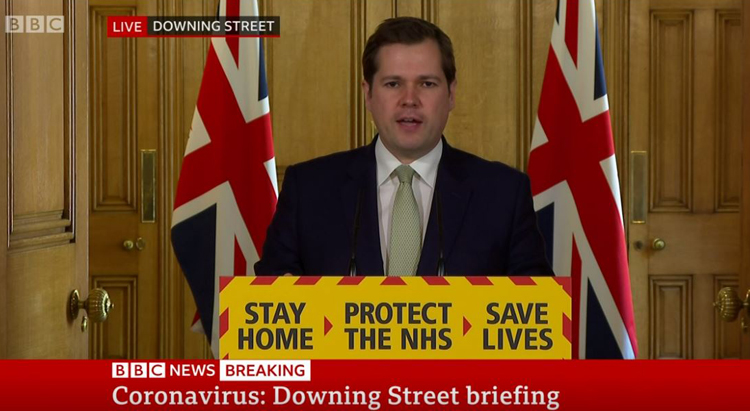
At the beginning of the pandemic Robert Jenrick, Secretary of State for the Ministry of Housing, Communities and Local Government told council leaders to do what it takes to protect communities from Covid, gave us specific tasks and repeatedly said government would cover our costs.

In a matter of days my council has worked with communities and volunteers to set up brand new support networks to provide for vulnerable residents who are isolating, arranged shelter for all our rough sleepers and paid out £millons in grants to small businesses to help them survive. We were able to do this so quickly and effectively because we are already rooted in our communities, we understand their needs and work with local people.

But over the past few weeks government have u-turned on their promise to reimburse councils, for their lost income during Covid. So how will our cash strapped council keep afloat? How will we afford to deliver the services residents need like waste collection, planning and leisure facilities … surely, they don’t want district councils to go bankrupt, do they?

Tagged and | 7 Comments

Universal Basic Income, why now?

Embed from Getty Images

We are currently in the midst of an unwanted sociological experiment.

Society is reliant on its citizens being responsive to the current restrictions in a way that cannot realistically be enforced by coercion.

The lessons to be drawn can offer us significant hope. A hope that, as a counsellor working in mental health, I have always had. It is a hope in the possibility of the majority to find a way to do the best for themselves and others.

An army of volunteers have been found. Neighbours are mostly, neighbourly. Politicians have asked that citizens be trusted to pay their part in the current challenges and we have not been found wanting. (Apart from my own glass recycling, I include myself in this). In the counselling room I see that the human spirit has both conscience and drive, often in the face of appalling experiences.  Daily I see people trying to find a way to become the person they want to be, across all social groups, often hampered by shame of circumstance.

The radical idea of Universal benefit has been floated by economists and idealists since Tudor England and the writings of Thomas Payne, but those holding the mindset of the poorhouse have never trusted that “handouts’  wouldn’t create a culture of workshy reliance.

The truest form of Universal Basic Income (UBI) provides a base to all via the income tax code. It could equalise the starting point of income for all at a basic minimum. Zero income means a negative tax rate (a credit)  but it is not about making all equal, although less inequality is inevitable.

UBI is and should be seen as the provision of stability.

Tagged | 38 Comments

Philip Alston and Transformational Change

Embed from Getty Images

Eighteen months ago Philip Alston, the UN Special Rapporteur on extreme poverty and human rights, visited Britain for a fortnight, and travelled round all four countries to meet officials and ordinary people and community organisations. After also studying all the documents that had been published on the state of poverty here, he issued a Statement. This document still makes very sad reading. It shows up serious societal problems which the political absorption on Brexit last year and on the health crisis this year have distracted from, and which a progressive party such as ours must surely address.

He wrote in his Introduction:

It seems patently unjust and contrary to British values that so many people are living in poverty. This is obvious to anyone who opens their eyes to see the immense growth in foodbanks… the people sleeping rough in the streets, the growth in homelessness, the sense of deep despair that leads even the Government to appoint a Minister for suicide prevention and civil society to report in depth an unheard of level of loneliness and isolation. And local authorities, especially in England, which perform vital roles in providing a real social safety net have been gutted by a series of government policies.

Describing people he had talked to dependent on foodbanks and charities, some homeless and sleeping on friends’ couches, young people who feel gangs are their only way out of destitution, and people with disabilities told to go back to work against their doctors’ orders, he also remarks on “tremendous resilience, strength and generosity” shown by neighbours, councils and charities in support.

Tagged , and | 36 Comments

Isolation diary: Missing the theatre

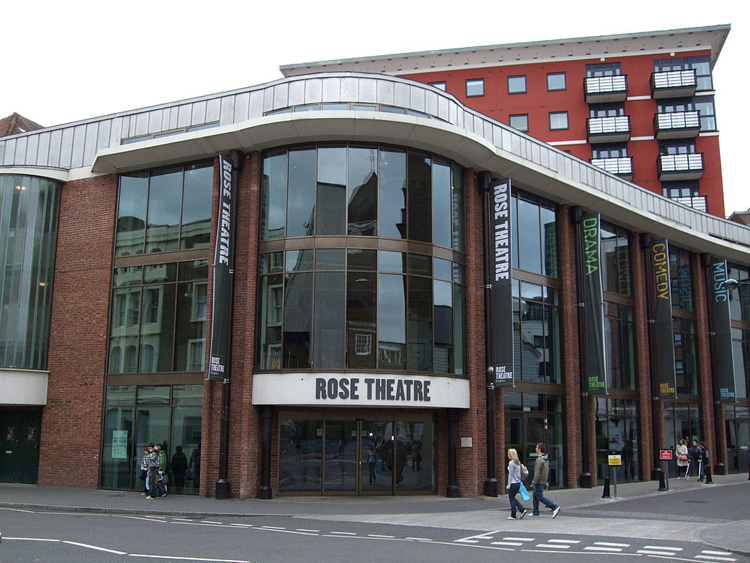
Theatre is one of my passions. Last week I wrote about the development of the Rose Theatre in Kingston, and I will return to that subject again, no doubt.

I am no longer on the Board of the theatre, but I am an Ambassador, and I do still get involved in several ways. As a volunteer I turn up at least once a week in my natty uniform for Front of House duties – ushering, looking after the cloakroom or selling programmes. For many years I have also attended one or other of the many drama groups that come under the Rose Participate umbrella, along with over 1000 other people. In fact, we have the biggest Youth Theatre in the country. And, of course, I get to see all our in-house productions, plus many of the visiting companies.

So I am rather missing all that.

My drama group has continued to meet each week via Zoom, mainly to talk about and recommend productions and box sets to view at home. We all make a point of watching the National Theatre at Home offering for the week and review it together. Our tutors have also set us some simple tasks – last week we each selected and read a poem that we loved.

The Rose, like many other theatres, is trying to find ways of creating content, and giving work to actors and other creatives during lockdown – theatres expect to be shut for many months to come. Every day it posts a new contribution to Readings from the Rose, which have so far included poetry readings by Niamh Cusack, Anton Lesser, Arthur Darvill, Christopher Eccleston and others, including my favourite by Paterson Joseph.

Tagged | 2 Comments

How to stop deforestation

Embed from Getty Images

A recent webinar discussed policy, a market intervention and monitoring technology to help stop deforestation

The Liberal International British Group together with the Paddy Ashdown Forum organised a webinar on 27 April 2020 hosted by BrightTALK on how to stop deforestation. 428 people registered for the event from around the world. The aim of the discussion was to learn how to stop deforestation in a socially just manner, given that the largest rainforests exist in parts of the world that are economically lagging developed nations that have already denuded their natural environments of tree cover.

Jon Shepard, a director at Global Development Incubator, explained why we should care about deforestation: forests absorb a third of global carbon dioxide emissions. A quarter of CO2 emissions are absorbed by oceans. The rest goes into the atmosphere, acting as a greenhouse gas, causing global warming and the climate crisis.

The destruction of forests has also been associated with a rise in zoonotic pandemics. Olivero et al (2017) showed in Nature Scientific Reports that destroyed forests with closed canopies in Africa resulted in outbreaks of Ebola, with a lag of two years. The Ebola virus has been associated with increased interaction between bats and humans when bats lose their natural habitats. The COVID-19 virus has also been associated with bats.

Duncan Brack, an advisor to the UK government’s Global Resource Initiative Task Force, explained that agriculture is the main driver of forest loss in the tropics. Consumer-country demand for commodities such as tropical timber, beef, soy, palm oil, rubber, cocoa and coffee, wood pulp all drive deforestation; for most of these, the Asia-Pacific region accounts for the bulk of consumption, but Europe and the US are both important sources of demand.

Tagged | 4 Comments

Housing, Liberalism, and Mutualism

Embed from Getty Images

Liberals have long believed that wide property ownership, serving as a bulwark against state tyranny, is essential to the preservation of liberty.  However, our pluralism has ensured that we have historically been committed to a diversity of housing models, including social housing. With the need for our party to engage with, and empower, communities who often feel forgotten, and deprived of real power over their lives, Liberal Democrats must offer a clear, distinctive, and liberal approach to social housing. What should this look like?

In recent years, various local authorities have brought their housing stock under their direct control,  replacing arms-length management organisations, and other local authorities, including my own, Gateshead Council, are planning to do likewise.

However, both of these models – the ‘partial privatisation’ offered by arms-length management organisations and the (local) statism of in-house control –  suffer from the same weakness: they deny tenants meaningful control over the management of their homes. Just as ‘Tenant panels’ and ‘Focus groups’ are not a substitute for participatory democracy, the opportunity to lobby local Councillors, in the hope that they will come to aid of a tenant, ignores the need to decentralise and devolve power to the level at which it should be exercised: with the tenant. Both of the above models exemplify the stale and dull bureaucratic managerialism of much of local government and are premised on a paternalistic ethic that has little, if any, concern with empowering local residents to take ownership of their communities.

Tagged and | 2 Comments

This time next year, London will be different.  We must be too. 

This morning, Lib Dems should have been out delivering good morning leaflets, ready for the long slog through to 10pm when polls close. Instead, like all Londoners, we are staying home to save lives and the elections for our next Mayor and Assembly have been pushed back by a year.

Nobody knows what the landscape will look like in May 2021, but it’s clear that nothing will be the same.  And that includes politics itself. The postponement gives us a chance to re-evaluate the London campaign.  One thing is very clear – our capital is resilient and dynamic but it will be significantly different post lockdown.  We must be too.

Rory Stewart has announced that he is withdrawing from the race. There’s no hiding from the fact that his presence was challenging.  As our members and activists recovered from an exhausting General Election, Stewart’s energy was attractive to voters looking for an alternative.

But let’s also be clear, from drugs reform and tackling the root causes of knife crime to radical green measures like road pricing and introducing a wellbeing budget for City Hall, we had – we have – the most progressive policies.  Our task, as we help London to thrive post-Covid19, is to ensure that every voter in the capital knows it.

Here are two ideas to help kickstart our revamp.

Tagged and | 14 Comments

Is our party hierarchical?

Despite the rhetoric, evidence might give us cause for thought. MPs and MSPs/Welsh Assembly Members seem to take precedence over the councillors who build up the party’s base again and again. I would argue that we should be an integrated whole – with much more mutual respect and understanding. And of course, never forgetting the parish councillors and Lords who serve us so well.

Councillors delivered excellent results last year, arguably giving the credibility which benefitted the party in the European elections. The party then extrapolated predicted General Election success from the latter; neglecting wisdom which cautions against using only quantitative information. Had other smaller parties built up that local government base, would the European results have been different?

When the Scottish Parliament came into being, our MSPs seemed to give less priority to proportional representation for local government than some serving councillors hoped for. In fact, that proportional representation took a number of years, and contributed in a small way to my decision not to seek re-election after 13 years (1990-2003). It can become disheartening to be always in opposition; I had a satisfying career as a research librarian, and wanted time to index books. The seat remained Liberal Democrat at the next election.

Tagged | 9 Comments

Covid-19 five tests: By sleight of hand, the government seems to be trying to remove the spotlight from testing and PPE issues


Embed from Getty Images

You would have thought that the government’s five tests for moderating the lockdown have stayed the same, wouldn’t you?

Well, think again.

Comparing Dominic Raab’s reading of the five tests on Tuesday with his original announcement of them on April 16th, there is at least one significant difference:

Tagged | 12 Comments

Civil Liberties and the NHS App

The NHS has launched a tracing App for trialling in the Isle of Wight. How does it measure up against the civil liberties checklist that I authored on Lib Dem Voice on 15th April, along with some excellent additions within the comments?

First, the positives:
I urged that opting in should be voluntary. It is. A liberal society works best by consent.
It is good news that this is an NHS App, rather than being owned by the central government or by a private company. Moreover, as the NHS has overwhelming public support, this makes it more likely that there will be significant uptake of the App.

It is to be welcomed that the App uses Bluetooth rather than GPS. It records only our phones’ proximity to other phones, rather than pinpointing our precise locations at the moment of proximity.

Tagged and | 12 Comments

Isolation diary: Watching TV

I don’t usually view TV during the day, apart from the rolling news, and that hasn’t changed since we have been in isolation. We don’t watch any news, on any media, after 7pm and by 8pm we are ready to sit on the sofa and relax with light entertainment.

Having been brought up on the Radio Times I do like the the weekly rhythm of watching my favourite programmes as they are broadcast.

So that means Would I Lie To You on Mondays. I don’t care how many repeats I watch, the inspired combination of Lee Mack, David Mitchell and Rob Brydon is guaranteed to keep me laughing throughout.

Then we always enjoy The Great Celebrity Bake Off on Tuesdays in aid of StandUp4Cancer. Once they had worked though this year’s episodes, Channel 4 started showing repeats. Yesterday’s offering with Lee Mack (again) was priceless.

Wednesdays bring us the The Repair Shop on BBC1. This was a show my husband had spotted when it was in the early evening slot and it well deserved being promoted to prime time. It combines gentle family stories with the real skill and artistry of the craftspeople who repair much loved objects.

On Thursdays we abandon broadcast TV for the weekly National Theatre at Home offering. This week it will be Ralph Fiennes and Sophie Okonedo in Antony and Cleopatra. These productions were all originally shown live from the National for event cinema, and are now made available for one week only on YouTube.

On Fridays we look forward to BBC1’s Have I Got News For You, which has now found its form again having floundered a bit with the unfamiliar technology during the early weeks of lockdown.

Tagged and | 5 Comments

How the pandemic exposed the stark inequalities of our society

High deaths within BME communities – CLICK TO SEE THE VIDEO

COVID-19 has devastated the lives of people of all faiths and nationalities. Yet, there are increasing indications that the Black and Minority Ethnic (BAME) community in the UK has been disproportionately affected. This bias towards those of BAME origin suffering most, and more acutely, is also reflected in the US Afro-American population.

Since the government’s delay in imposing lockdown, I have seen the tragic loss of people from BAME communities in London and across the UK, and how COVID-19 restrictions have exacerbated the respective families’ grief.  

Mohammed Rakib, who lost his aunt to COVID-19, said: “My aunt, a lifelong asthma sufferer, was admitted to hospital a few weeks ago where she was kept in for observation. Within hours of being sent home, she started displaying symptoms of COVID-19. On readmittance to hospital, she was diagnosed with COVID-19. We were not permitted to see her, so she died alone just four days later. Friends and neighbours have also lost relatives, and I now have another aunt in a hospital with COVID-19.”

Tagged | 5 Comments

Consistency in Devolution

I saw first-hand growing up in Scotland the ability Devolved Government has to impact and change lives. Growing up in Inverclyde in the late ’90s and early 00’s we had ranked consistently among the highest rates for drug and alcohol abuse. At one point regarding the ‘Heroin Capital’ of the UK, with overwhelming numbers in the area registering an addiction problem.

The reality then was depending on the area you grew up in; it was more likely for you to encounter hard drugs than go on to further education. The reality was the area was hit by a long-term economic depression brought on by the dismantling of traditional industries in the 1980s, with little to no alternatives and a brain drain elsewhere.

Also posted in News | Tagged | 3 Comments

The covid tracking app is all wrong; I will use it anyway

Trialled this week on the Isle of Wight, and soon to be rolled out to us all: an app for our smartphones will record who we come into contact with, so that if either we or they are discovered to have covid-19, the other party can be informed and take action.

Embed from Getty Images

Don’t confuse this with the Covid Symptom Tracker app, which you should have already. This allows you to anonymously record your symptoms daily to assist in research on the spread of the disease and on how symptoms begin to manifest.

Tagged | 10 Comments

Today marks the beginning of a new chapter for Wales

With the establishment of the Welsh Parliament, we are sending a clear message to people across our nation that our politics is changing. Now is the time for us to learn the lessons of the past and changing the way we do things.
For too long we failed to convey a clear message of what the purpose of the Assembly was and what it had the power to do. Instead, we let it be portrayed as ineffective, a barrier to change that was little more than a glorified talking shop.

We need to cut …

Also posted in Wales | Tagged , and | 4 Comments

Isolation diary: Drowning in plastic

Like many of you I had banned single use plastic from my kitchen.

The public campaign to reduce plastic shopping bags had been highly successful. We had all got into the habit of taking our own fabric, jute or reusable bags with us when we went shopping – although I tried not to acquire long life plastic bags, because they do fall apart eventually. But I wanted to take it further.

Clingfilm was the first to go. I tried bees wax wraps, which can be used to cover anything kept in the fridge in a bowl or cup. They are also a useful way of wrapping leftovers, although they do need to be lined with greaseproof paper.

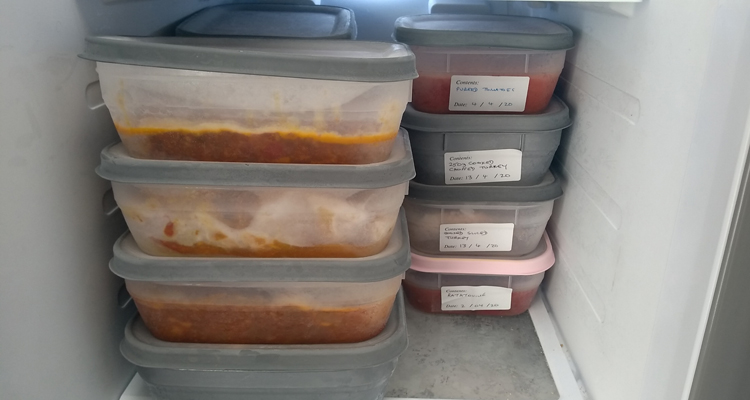
I had gradually acquired a pile of stackable boxes in two sizes and I used those to store leftovers in the fridge. I often cook enough for 4 or 6 servings and freeze the remainder in two portion sizes in the boxes.

Next to go were the tear-off bags provided in the supermarket for loose fruit and vegetables.  Instead I sourced some washable drawstring mesh bags which I took with me when I went shopping.

I then turned my attention to packaging, which can be more of a challenge. Much of it ensures that food reaches the home in a healthy state, and these days a good proportion is recyclable. I do wash and save any plastic that can’t be put in the household recycling and store it. Some of the supermarkets encourage us to return anything like that, so I dutifully take it along with me, hoping that they have found some way of recycling it all. At the moment I am storing packaging in my spare room (along with the shredded paper and other items destined for the charity shop or tip when all this is over).

Tagged | 16 Comments

Tackling the PPE problem

It became apparent very early in the COVID-19 pandemic that there was going to be a problem with the supply of PPE. All eyes at that point were understandably on the NHS and our hospitals in particular and available supplies of PPE were directed their way.

But, as City of York’s Executive Member for Health and Adult Social Care, I was very aware that there were other front line workers who also needed PPE, although of a different specification from that used in hospitals. Regular reports came to me about supplies in care homes and home care organisations and I knew …

Tagged and | 5 Comments

Sticking down the Overton window

Government and public opinion have for most of the last few decades described deep societal injustices as a matter of inevitability and described government action – or inaction – as the morally right thing for government do to.

We’ve been told, and most largely believed as a general public, that it’s inevitable that the economic cycle will see huge numbers of people out of work, huge numbers of people experiencing the worst forms of homelessness as inevitable, inevitable that some of the most deprived and marginalised will live with in poorer health, with less housing and income security and less opportunity.

We’ve …

Tagged and | 17 Comments

The journal of a new councillor (part 1)

Helen Burton was elected as a new councillor in Eastbourne last year. In this moni-series, she explains what led her to run in the first place…

I can’t believe it was a year ago I was elected as an Eastbourne Borough Councillor, the time has absolutely flown by. Who could have imagined a year ago that I would be writing this during lockdown in the middle of a pandemic, a crisis affecting local councils across the country?

My path to becoming a councillor in Eastbourne started with my volunteer role in the local community. I had already been a Parish councillor in …

Tagged and | 2 Comments

After the virus: an economic future for Wales

Our economy in Wales was already facing difficulties. The Welsh economy’s long-term problems are well-documented; low productivity, a long-term lack of investment, a declining working-age population, significant public health issues. Add to that the likely effects of Brexit – especially a no-deal Brexit, which, on the basis of the OBR’s own figures, would be likely to deliver a severe productivity shock to the UK economy – and the effects of February’s floods, and even before the effects of lockdown are considered, it is clear that Wales was facing serious economic challenges. A recent report by the Centre for Towns and …

Also posted in Wales | Tagged and | 3 Comments

Isolation diary: Exiting lockdown?

The Government is exploring the options for easing lockdown and will be announcing their plans next Sunday. The lifting of some restrictions will no doubt be welcomed by most people and we can expect some slightly late, but exuberant,  VE Day celebrations.

However, no-one should forget that, whatever the new normal is, it will make no difference to a large number of people.

Everyone over the age of 70 was told to self-isolate for 12 weeks from 21st March, which takes us up to 13th June.

In addition 1.5 million people have been ask to take the more stringent shielding precautions for 12 weeks. The first wave of those letters were issued during the week when lock down began, and a second wave was sent out around 2 weeks later. So those people can expect to be shielded in self-isolation until the end of June, at the earliest.

Tagged | 11 Comments

Stop the carbon offsetting Greenwash

The current virus has temporarily reduced carbon emissions, but climate change is still important.

Carbon offsetting is used to enable an organisation or person engaged in an activity that emits CO2 (or other Greenhouse Gas (GHG)), such as flying, to pay to support project(s) that reduce emissions so they can claim a neutral net effect on climate change. There is a wide range of such projects on offer commercially, an example being planting trees. The cost in £/ton of CO2 varies very widely, and the control and auditing of the validity of their claims is weak. Naturally, both organisations and …

Tagged | 4 Comments

What’s happening in Israel and Palestine?

While international focus has been on Covid-19, one could be excused for thinking all was quiet in Israel and Palestine. Benny Gantz, who got one more seat for his coalition than Netanyahu in the January elections, tried to form a government initially which included Arab and Centre Left support. He failed, as did Netanyahu with the far right. The two of them have now agreed terms for a centre-right coalition, in which Netanyahu becomes PM for the first 18 months and then Gantz follows.
The Netanyahu/Gantz agreement specifies a timetable formally to annex East Jerusalem and the West …

Also posted in Europe / International | Tagged and | 15 Comments

Ode to something less than Joy

There was a time, not so long ago, that any news interview conducted outside the Westminster Parliament would be punctuated by a loud and long cry, “Stoooopppp Breeeexiiiit”.

Brexit was not stopped. December 2019 saw a Tory government returned to power, transformed from a handcuffed minority to a stomping majority. The Liberal Democrats did not benefit in any huge way from the Stop Brexit stance, lost one seat overall, and a certain person did not stand before us as the next Prime Minister.

We could focus on a post-mortem – all the events that led to that outcome – refining …

Tagged and | 24 Comments

Over-centralisation and the response to Covid-19

England would have managed its response to the Covid-19 epidemic better if our local government had been stronger, and encouraged to play a larger role. Liberal Democrats should now be arguing, even more vigorously than usual, that over-centralization leads to failure on the ground.

The first wave of testing centres was outsourced by the government, through a non-competitive contracting process, to one of our largest consultancy firms. The consultants’ understanding of regional and local geography was evidently limited, and their assumption that all health workers would have their own cars and would be willing to drive long distances for several …

Also posted in Parliament | Tagged , and | 13 Comments

Isolation diary: Redefining time

Before lockdown Stephen Fry gave some advice on managing anxiety during self-isolation.

Anxiety and stress are almost as virulent as this awful coronavirus.

Take a deep breath and allow time to take on a different dimension, taking more time to do everything.

He says that we would be wise to redefine our sense of time. To do that he suggests drawing up a timetable for each day and allow plenty of time for all the tasks.

We should also turn off notifications so we are no longer constantly being bombarded by headlines, and then decide on a time during the day when we will look in on the news. Some weeks ago a friend advised me not to watch any news reports in the evenings – and I have found that really has helped my sleep patterns.

To reduce anxiety Stephen Fry says that we need to cut out the noise. He makes one very salient point: the real experts, such as scientific advisors, tend to qualify their statements with phrases like “We think” or “It’s possible”. Anybody who claims to know what is going on, with great certainty, probably doesn’t, and we should blank them out.

Tagged | 1 Comment
Advert

Recent Comments

  • Jana
    “Pensioners deserve that respect, as do younger people who will help fund the system and may one day depend on it.” Yes, just as current pensioners funde...
  • Nigel Orchard
    I welcome the announcement of this Review, particularly its proposed examination of the fairness, timeliness and consistency of the Party's complaints and disci...
  • Jana
    “ our Federal party Constitution makes clear that, as a party, we reject all discrimination and prejudice based on religion or belief and that we respect the ...
  • Chris Nicholson
    I am not sure where Theakes gets his information but Lambeth Lib Dems are not in cahorts ( or cahoots) with the Greens. We are not in coalition with the Greens ...
  • Pete Roberts
    There is another key issue that still needs to be resolved, namely how the party and indeed the legal system, deal with the intersection of protected characteri...