Search Results for: feed

Ed Davey: Lib Dems are here to empower people

Ed Davey has been giving interviews ahead of tomorrow’s local elections:

He spoke to Cathy Newman tonight. She asked him whether he got exhausted as a carer and if it all got too much. He said that he and his wife Emily wanted to use their privileged position to fight for carers. He said that Liberal Democrats were all about empowering people.

Watch here:

Liberal Democrats believe in empowering people: whether it’s carers who feel exhausted and unheard, families struggling to get support, or communities failed by water companies.

It’s why we’ll continue to stand up to Nigel Farage as he tries to import Trump-style politics here.

— Ed Davey (@eddavey.libdems.org.uk) May 6, 2026 at 5:03 PM

\

In an interview with the Guardian, he said tht the Lib Dems were the best placed to stop Reform:

Davey said the Lib Dems were a better bet than the Greens, adding: “We are finding that when people realise the choice is us or Reform, lots of people who were even thinking of voting Conservative were coming to us, certainly Labour and Green are coming to us. Tactical voting will be key, Reform is working really hard, spending lots of their money, meaning results will be on a knife edge.”

He said that in parts of the north of England polling showed a straight fight between the Lib Dems and Reform, including Stockport and Hull, and that areas such as Portsmouth in the south should consider voting Lib Dem to stop Reform. “I am determined we stop them now,” he said.

A lack of opposition to Donald Trump and weakness over the war in Iran had hurt the chances of Reform and the Conservatives, he said, adding that it was a mistake for the Tory leader, Kemi Badenoch, to have tacked so hard to the right.

“When you talk to that traditional one-nation, pro-Europe liberal Tory, they are pretty upset with Kemi Badenoch; they feel the Conservative party has left them,” he said. “They look at us and see us standing up for Britain against Trump’s bullying, they like what we are saying on the economy and defence, and they feel more comfortable with us.”

Here’s a reminder of this year’s local elections Party Election Broadcast:

Posted in News | Tagged | 3 Comments

18-19 April 2026 – the weekend’s press releases

  • Cole-Hamilton urges voters to postal vote for Scot Lib Dems on peach ballot paper
  • Cut the rural cost of living and help farmers to flourish
  • Reid hits out as ministers drop fines for poor ferry performance

Cole-Hamilton urges voters to postal vote for Scot Lib Dems on peach ballot paper

Alex Cole-Hamilton has today used a visit to a climbing wall in Edinburgh to urge voters voting by post to reach for the Scottish Liberal Democrats on the peach regional ballot paper, saying that more Scottish Liberal Democrat MSPs will get more good things done in the next session of Parliament.

At the event, he highlighted his party’s record of achievements over the past five years which included:

  • £178m to support businesses through rates relief, including a package over 3 years to help licensed premises like pubs, restaurants, hotels, music venues, licensed clubs and night clubs – linchpins of the high street that have suffered in the cost of living crisis and deserve better. There was also £4m for self-catering businesses to cap their increases and provide a bridge to the next revaluation.
  • £70m for colleges – equivalent to a 10% uplift on last year’s budget.
  • £20m for social care so providers have the funding they need to lift workers’ pay to the Real Living Wage.
  • £9.4m for hospices to help them attract and retain staff by mirroring NHS pay rates.
  • £5m more for the Investing in Communities Fund, keeping open projects, services and activities in disadvantaged communities.
  • £7.5m to speed up autism and ADHD assessments.
  • £2.5m to back young entrepreneurs.
  • £7.1m for islands-specific investment, with money to remove peak ferry fares and a commitment to kickstart a new accelerator model.
  • Facilities to help new mums and babies born addicted to drugs
  • Cash for flood-stricken families and businesses in Fife when the government initially turned its back.
  • Suzanne’s Law and Michelle’s Law, strengthening the rights of victims and their families.
  • Specialist support for long Covid, ME and chronic fatigue.
  • A future for Corseford College for young people with complex needs.
  • Money restored to the housing budget after it was cut by the Greens and SNP.
  • The right for family carers to earn more without being penalised.
  • Work restarted on Edinburgh’s Eye Hospital and the Belford in Fort William.
Posted in News, Press releases, Scotland | Tagged , , , , , | Leave a comment

100 things @ 100 days

Hello lovely Liberal Democrats!

This week, we reached 100 days since I took office as Party President – and what an honour it’s been so far!

I’ve been working with incredible members, activists, councillors, parliamentarians and staff across our party to help us to reach more people – voters, donors, volunteers, media and more – with our liberal message and to reinforce our position as the last line of defence against populism and division in our country.

Below are 100 things that I’ve been doing since I was elected to play my part in that fight as Party president. It’s not an exhaustive list but I hope it gives a flavour of what I’ve been up to!

(PS It’s in a random order, so please don’t read too much into that!)

Posted in Op-eds | 9 Comments

Rejoining the EU – what £1.2 trillion really means for Britain (part 2)

If the UK economy were permanently £180 billion larger every year, and that translated into around £54 billion of extra tax receipts annually, the real‑world impact would not be abstract. It would be measured in hospitals built, nurses hired, waiting lists cut, teachers recruited and classrooms made smaller. This is where the story moves from macroeconomics to people’s lives and to the choices a government can make with new, sustainable revenue.

The NHS: more staff, shorter waits

Take the NHS first. Recent estimates suggest that one additional NHS doctor costs the public sector roughly £100,000 per year when salaries, training and overheads are included, while a nurse costs around £40,000 to £50,000. If even a quarter of the extra £54 billion a year – about £13.5 billion – were directed into health and care, it would support a transformation on the ground.

That level of funding could pay for roughly 135,000 extra doctors or around 270,000 extra nurses, or a mixed workforce of, for example, 60,000 doctors and 110,000 nurses. In practice, a phased approach would be more realistic and more powerful. A government could plan to recruit 5,000 new doctors and 20,000 new nurses each year for a decade, backed up by thousands more radiographers, physiotherapists and paramedics, as well as sustained capital investment in scanners, theatres and digital systems.

Posted in Op-eds | 23 Comments

Improving our food resilience is essential to managing food price volatility

Food prices have become one of the biggest pressures on family budgets in Britain. Yet behind the rising cost of the weekly shop lies a deeper problem: a food system that is failing households, farmers and the economy alike.

In the past decade, we have experienced the highest food price inflation in 40 years. UK production of some of our most nourishing foods, such as beans, fruit and vegetables, is stalling as they no longer offer a viable livelihood for farmers. Domestic fruit and vegetable production has dropped by 16% since 2015, and we see the largest trade deficits for fruit and veg – relying on imports for 83% of our fruit supply and 45% of our vegetables. New evidence from a cross-party Parliamentary report shows that, without urgent reform, this could exacerbate across the board, with domestic food production potentially falling by up to a third by 2050.

This increasing dependence on food imports at a time of heightening geopolitical instability and climate disruption has made us more exposed to these shocks than ever before. The outbreak of war in Iran reveals how successive government policy has left the UK’s food supply chain exposed to global factors.

The solution is clear: Britain needs a Good Food Bill. By setting long term targets for food security, production and affordability, legislation could give farmers the certainty to invest while protecting families from future price shocks. Supporting farmers to produce more fruit and vegetables is essential to our food security, while also helping to manage food price volatility in the long term. Too many families are struggling with the cost of the weekly shop as they are subject to volatile prices, making the job of feeding children that much harder for struggling parents. While short-term inflation may fluctuate, long-term forces are pushing costs higher.

The Prime Minister has made tackling the cost-of-living crisis his number one priority this year to rectify Labour’s falling position in the polls. Yet, addressing the challenges within our food system appears to be low on the Government’s agenda. Since the publication of the food strategy last summer, this has yet to be sustained into anything concrete despite 65% of the public supporting a Food Bill which would introduce duties and targets on government bodies to make healthy food more accessible and affordable. We cannot allow a system that delivers rising bills and diminishing domestic production to continue.

Posted in Op-eds | Tagged , | 8 Comments

2 April 2026 – today’s press releases

  • SNP set to miss key child poverty target
  • Welsh Lib Dems urge Reeves to scrap fuel duty hike as global instability drives rising petrol prices
  • Cole-Hamilton sets out mental health plan with visit to therapy llamas
  • Greene: Reform set to lose 26 constituency candidates by polling day, figures show
  • Murray: Lib Dem 10p fuel duty cut will get Scotland moving again
  • Welsh Lib Dems slam Reform’s “fantasy” coal plans as a threat to jobs, bills and climate
  • Reform candidate’s Ukraine comments spark outrage as Lib Dems warn of “dangerous” pro-Kremlin rhetoric

SNP set to miss key child poverty target

Responding to IFS analysis which indicates that Scotland is on course to miss its target to reduce relative child poverty to below 10% by 2030-31 “by a considerable margin”, Scottish Liberal Democrat economy spokesperson Jamie Greene MSP said:

Despite the grand rhetoric from the SNP, they have left thousands of children in poverty.

For the past nineteen years, the SNP have failed to use the powers they have had at their disposal to move the dial.

Just like Nicola Sturgeon broke her promise to close the attainment gap, John Swinney has broken his promise to reduce child poverty. They simply cannot be trusted.

Scottish Liberal Democrats are focused on tackling the root causes of child poverty, and everyone in Scotland has the chance to vote for these plans by backing us on your peach, regional ballot paper in May.

Welsh Lib Dems urge Reeves to scrap fuel duty hike as global instability drives rising petrol prices

The Welsh Liberal Democrats have called on Labour to cancel their planned fuel duty increase, warning that continued instability in the Middle East is already driving up global oil prices and risks placing further pressure on households and businesses across Wales.

The intervention comes as forecourts begin to reflect rising wholesale costs, with industry experts warning that sustained geopolitical tensions could keep prices elevated in the weeks ahead. Edmund King, President of the AA, has previously warned that such instability would “inevitably lead to price hikes,” with sharp increases often feeding through to drivers within days.

Labour’s planned changes would see fuel duty rise for the first time in 15 years, beginning with a 1p increase in September, followed by further rises through to 2027. The Welsh Liberal Democrats have warned that pressing ahead with the increase at a time of heightened global uncertainty would compound cost-of-living pressures, particularly in areas where people have little choice but to drive.

Posted in News, Press releases, Scotland, Wales | Tagged , , , , , , , , , | 5 Comments

Elections kick off – six exhilarating weeks ahead

It’s that time of year again. My social media feeds are all full of pictures of groups of people out canvassing or leafletting, of people handing in their nomination papers.

It must be the start of the “official” campaign for the huge array of national and local elections coming up on May 7th.

The Scottish Parliament, the Senedd in Wales and every Council seat in London is up for grabs along with local elections around the country from Liverpool to some places where they didn’t know until a few weeks ago that the elections were back on again.

I have to show you …

Posted in News, Op-eds | Tagged , , , , , | 3 Comments

The only thing we have to fear is fear itself

At his first inauguration as US President, back in 1933, Franklin Roosevelt famously said “The only thing we have to fear is fear itself.”.

Over 90 years later, that phrase could be applied to the Palestine/Israel conflict or, more precisely, to Palestinians and Israeli Jews. The biggest driver in preventing a solution is that Palestinians fear Israelis and Israelis fear Palestinians.

Of course, many individual Palestinians and Israelis have friends, good friends, on the “other” side but there are also many more who do not have any contact across the divide except through the ongoing violence as participants, as victims, or simply as observers.

It is this lack of knowledge about the lives, the desires, the pain of those who live close by but in a different world that has allowed cynical politicians on both sides to exploit the natural fear most of us have of those who we don’t know. Especially when there has been a long, bloody history of attacks and atrocities by both sides for over 100 years.

Posted in Europe / International, Op-eds | Tagged , | 6 Comments

Education in 2050: Preparing Today for Tomorrow’s Schools

Imagine a classroom where every student is learning something different, guided by technology that adapts instantly to their needs. Some collaborate with peers across the world, while others receive tailored support from artificial intelligence tutors. The teacher is no longer delivering a single lesson to the whole class, but acting as a mentor, supporting creativity, discussion, and critical thinking. This is not a distant fantasy, but a realistic picture of education in 2050.

The schools of the future will look very different from those many of us remember. Traditional models: rows of desks, fixed timetables, and a heavy reliance on memorisation; are already evolving. By 2050, education is likely to be more personalised, more connected, and more closely aligned with the demands of a rapidly changing world. The challenge for governments today is not whether change will come, but whether they are prepared to shape it.

A defining feature of future education will be personalised learning. Advances in artificial intelligence will allow lessons to adapt in real time to each student’s progress. Instead of moving at the same pace, learners will receive support or acceleration as needed. This approach has the potential to make education both more effective and more equitable, ensuring that no student is left behind or held back.

Technology will also transform the role of teachers. Rather than serving primarily as sources of information, teachers will increasingly become facilitators of learning. Digital tools will assist with grading, feedback, and routine tasks, freeing up time for educators to focus on developing students’ creativity, critical thinking, and emotional intelligence. In this way, technology will enhance, rather than replace, the human element of teaching.

Posted in Op-eds | Tagged , | 4 Comments

President Bola Tinubu ‘s state visit to the United Kingdom, a Nigerian Liberal Democrat’s take on it. 

President Bola Tinubu of Nigeria came to the United Kingdom for a State visit from 18th to 19th March. This is a historic event as it is the first state visit by a Nigerian leader since 1989, when then military head of state Ibrahim Babangida was received by late Queen Elizabeth II. President Tinubu is the first Nigerian president to receive a state visit since the return of democracy to Nigerian in 1999. Considering the historic relationship of Nigerian and United Kingdom as Nigeria is a former colony, and Nigeria itself as a key player in the African continent and most populous black nation in the world, the visit signals a thawing of relationship between the two nations, which can only be a good thing for the two nations. 

Is it as simple as that? Is it all positive and we can all clap and cheer for this positive move in global geopolitics? No, hold the champagne and let’s examine the implications and the issues that this visit tries to gloss over. The impression that this visit gives is that Nigeria is doing well and that this administration has turned things around for the citizenry. Nothing could be further from the truth. Nigeria is worse off by every measure since the All Progressive Congress (APC) party of Tinubu took over in 2015 under former president Buhari, now late. And since Tinubu himself took over in 2023, things have gotten even worse; terrorism has continued to rise, kidnapping, banditry, economonic hardship, corruption and mismanagement of resources have all become all too common, to the point of being routine in Nigeria. Nigeria has always been known as a corrupt nation; it was former PM David Cameron who famously said that Nigeria was fantastically corrupt under Buhari’s APC administration, but it would now be argued that the government under Tinubu has made corruption under Buhari seem like a dress rehearsal. 

Posted in Op-eds | Tagged | 1 Comment

The best chance of voting reform in a generation

Invigorating. That’s the best word to sum up the LDER (Liberal Democrats For Electoral Reform) fringe last night.

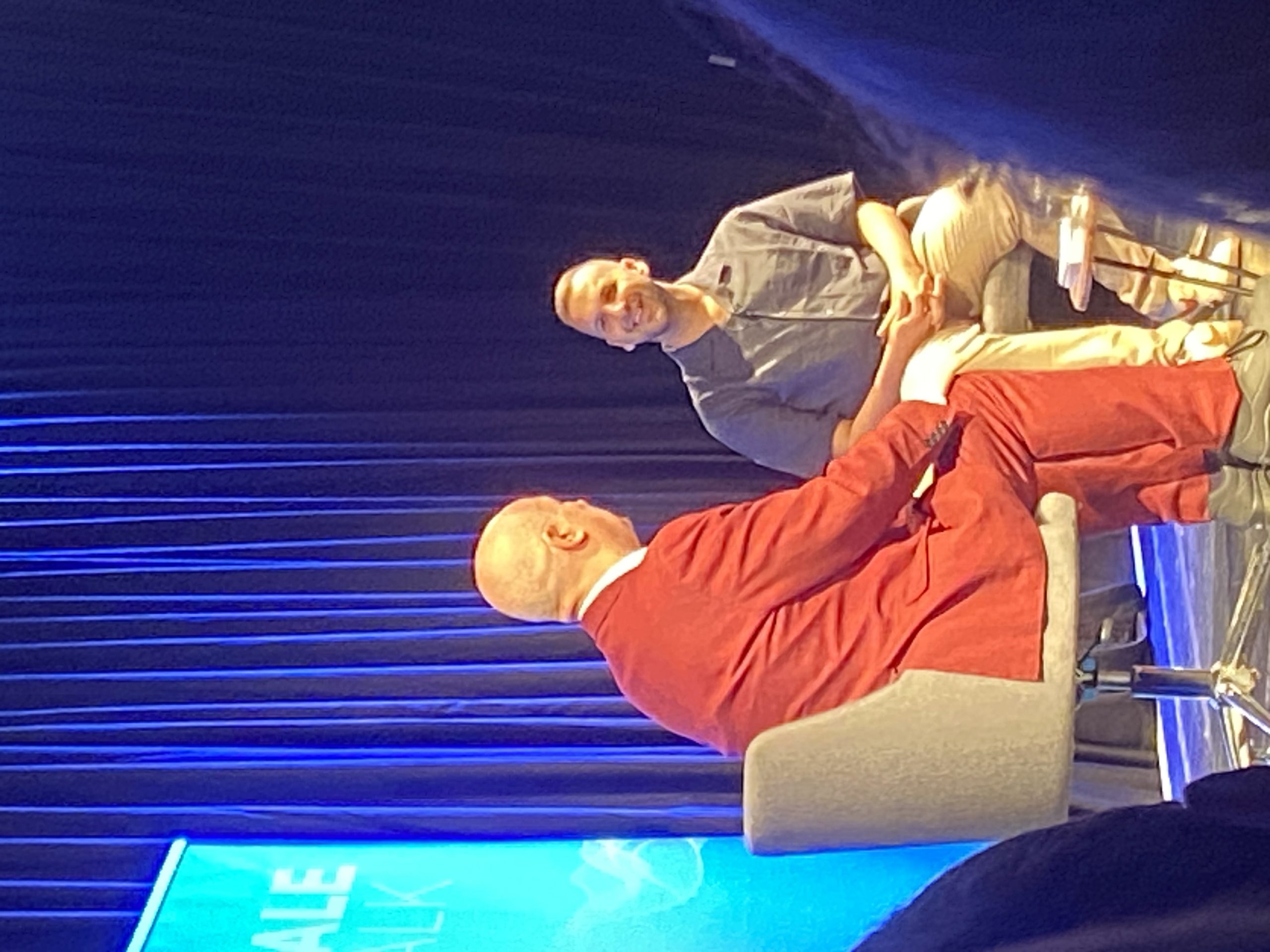
The panel, brimming with optimism and passion, was (L to R in the photo above): Chair Keith Sharp (LDER), Emma Harrison (Make Votes Matter), Lena Swedlow (Deputy Director, Compass), Lisa Smart MP (Cabinet Office spokesperson & Vice Chair Fair Elections APPG (All Party Parliamentary Group)).

Posted in Conference | Tagged , | 12 Comments

Towards a third way – a reformed, liberal Palestinian party

When I welcomed a delegation of British Liberal Democrats to Jerusalem and Ramallah last week, led by Gavin Stollar OBE and the Party’s Foreign Affairs lead, Calum Miller MP, I was reminded that politics, at its best, is not a transaction but a relationship. It is built on trust, curiosity and, above all, friendship.

In a region where suspicion is often the default setting, the simple act of sitting together – listening, disagreeing respectfully, and breaking bread – can itself feel radical. Our conversations were frank. They were searching. They were, at moments, uncomfortable. And they were deeply encouraging.

I write this for Lib Dem Voice because what I encountered was not a party looking for slogans, but a movement seeking understanding. The delegation came not to lecture, nor to posture for headlines, but to ask difficult questions: What do Palestinians owe to peace? What political renewal is possible? Where does responsibility truly lie? And who, among Palestinian actors, is capable of delivering a future compatible with liberal democratic values?

Posted in Op-eds | Tagged | 13 Comments

Can we prevent Middle Eastern conflict dividing British politics and society?

Immediate domestic reactions to American bombing of Iran have displayed how divided British political parties are on Israel, Iran and US approaches to Middle Eastern politics. Priti Patel as Conservative shadow foreign secretary was firm in her support. Nigel Farage was even more enthusiastic and uncritical. Liberal Democrat MPs have been critical, and insistent that the UK should not become directly involved. Labour has been cautious, contributing only to ‘defensive’ operations against Iranian responses. The Greens have condemned the American attack. The old idea that politicians of all parties should stand shoulder to shoulder when international crisis threatens has long gone.

Attitudes to the USA partly shape this. But we have to be aware, in our ethnically and religiously diverse country, of the domestic dimension, and do whatever we can to limit bitter divisions abroad from becoming rooted within Britain. We have a valued and long-established Jewish community, many of whom are deeply unhappy about Bibi Netanyahu’s hardline policies but who nevertheless take their turn in guarding their synagogue and defending their community. We have also a growing Muslim community, from South Asia, Yemen, the Gulf states, Malaysia and East and West Africa – many first-generation immigrants, but most now their children, grandchildren or even great-grandchildren. Younger British Muslims naturally feel solidarity with their Palestinian and Iranian counterparts. Relations between British Hindus and Muslims of South Asian origin have in some places been adversely affected by Prime Minister Modi’s Hindu nationalism, feeding into a narrative of Islam under attack.

Posted in Europe / International, Op-eds | Tagged , | 13 Comments

Observations of an Expat: Shadow Fleet

Russia’s shadow fleet of oil tankers is now believed to be over 1,000-strong. The ships are 20-25 years old. Putin has neither the time nor the money to build all the ships he needs.

And he needs a lot because a major slice of Russia’s oil exports are seaborne. International oil sales provide 20 percent of the government’s revenues and the government is spending 40-60 percent of its revenues on the Ukraine War.

The floating rust buckets in the shadow fleet are uninsurable and an environmental disaster waiting to happen. But Putin doesn’t care about their seaworthiness. They are cheap to buy and run and thus make the big profits he needs to feed his war machine.

Stop the Shadow Fleet and you seriously damage the Russian war effort.

Trump has shown the way – possibly. Those are words that have never before appeared in this blog and are unlikely to ever appear again. But as far as dealing with the growing sanctions-busting shadow fleet of oil tankers goes, the US president could be the trend setter.

In recent weeks, Donald Trump has ordered the boarding of seven oil tankers; arrested the crew; sailed the ships to a safe port; impounded the vessels and their cargo and announced plans to sell both.

It was a bold move and the legal framework for Trump’s moves is—to say the least—dicey. The procedure goes something like this—the US tracks a vessel with satellites; monitors its signals; checks to see if it is manipulating its Automatic Identification System (which is illegal); watches to see if it is transferring oil to other ships (also illegal); is uninsured or operating under a false flag (both illegal).

If it is doing anything likely to contravene the UN Convention of the Law of the Sea (UNCLOS)  then it can be deemed a suspect “stateless vessel.” As such it can be boarded. Its cargo, registration papers, insurance documents can be checked along with the ship’s seaworthiness. If it is found wanting in any of the above then it is confirmed as “stateless.” The crew is arrested. The ship sailed to a safe port and the vessel and cargo are impounded.

The Royal Navy would love to follow suit. So would the French and the Scandinavians. The French have already detained one shadow fleet tanker in the Mediterranean (the Grinch) and the Royal Navy participated in the detention of a ship in the North Atlantic (the Marinera).

But it is in the Baltic and the English Channel where the shadow fleet is most vulnerable. A large proportion of the Russia’s tanker-borne oil is loaded at Primorsk or Ust-loga and sails through the Baltic, the Danish Straits and then the North Sea and the English Channel on their way to Asia via the Mediterranean and the Suez Canal.

That first leg is largely British and Scandinavian territorial waters where local navies could easily board the shadow fleet tankers.

Posted in Op-eds | 7 Comments

Tom Arms’ World Review

Russia

Russia is a petro-state. Its economy. Its ability to feed its people and, most important of all, its ability to wage war, is tied to the price of a barrel of oil. Twenty percent of government revenues come from the oil and gas industries.

Back at the start of the Ukraine War the price of oil peaked at $120 a barrel. Vladimir Putin was able to wage war, pay pensions and maintain social services while keeping inflation under control and fending off sanctions.

This week oil prices dipped to $62 a barrel. And to persuade the likes of China, Hungary and Slovakia to face the wrath of sanctiongs-imposing countries,  Moscow discounts the oil price by $20 a barrel.

But there is more. One of Russia’s biggest oil customers was India. Recently, Narendra Modi caved in to American pressure and dramatically cut Russian oil imports.

And there is still more. The Americans, French, British, Swedes and others are starting to board and impound ships in the “shadow fleet” of unregistered oil tankers carrying sanctioned oil around the world. Sixty percent of the roughly 1,000-strong “shadow fleet” of oil  tankers are believed to be carrying Russian  oil.

All of above, plus the cost of the war, is beginning to be borne by ordinary Russians. Food inflation, for instance, has soared by 12 percent since Christmas. And if Russians want to eat out that option is fast disappearing along with restaurants and cafes displaying “Open” signs.

Growth in the Russian economy is slowing to a crawl last year it grew by just 0.6 percent and the IMF forecast for this year is 0.4 percent. VAT has gone up. Interest rates are 15.5 percent. Corporate taxes have increased. The government is twisting the arms of bank managers to buy war bonds and the sovereign wealth fund has shrunk from $130 billion at the start of 2025 to $50 billion.

Finance Minister Anton Siluanov is under increasing pressure to produce new and better money-making ideas. His latest is government-owned online casinos.

None of the above is surprising when one considers that the defense budget is reckoned to take up between 40-60 percent of the government budget.

Ukraine is in a terrible state. But Russia—with a million war casualties on top of its economic problems—is not far behind in the war of attrition.

Japan

The unexpected landslide victory of Japan’s Liberal Democratic Party has opened the door to a long-cherished aim of Japanese conservatives—revision of the constitution to allow Japan greater military freedom.

In the aftermath of World War Two the allies forced a constitution on Japan which “forever renounced” war. Over the years the pacifist document has been re-interpreted several times to allow the development of a formidable “self-defense force.” But the Japanese military is still constitutionally prohibited from participating in foreign wars or building any weapons that allow them to do so.

Takaichi wants to change the constitution to allow Japan to develop a “more normal” military. With a two-thirds majority in the DIET she can achieve that aim.

Posted in Op-eds | Tagged , , , | 3 Comments

The new Gilded Age: A liberal case for radical reform

In 1900, the wealthiest one per cent of people in Britain controlled an estimated 70 per cent of all personal wealth. By 1990, that share had fallen to under 20 per cent. It was the most sustained redistribution of wealth in British history, and it was not inevitable. It was the product of deliberate policy choices: progressive taxation, labour rights, universal public services, and democratic reform.

That settlement is now being unmade. The wealthiest one per cent of UK households again hold the same share of wealth as the entire bottom half combined. The 50 wealthiest families hold more combined wealth than 34 million people. UK billionaire wealth has grown roughly four times faster than median household wealth since 2008. We are living in a new Gilded Age, and it should trouble liberals deeply, because concentrated wealth is concentrated power, and concentrated power is the enemy of individual freedom.

This is the point that gets lost when inequality is treated as a concern only for the left. The liberal tradition, at its best, has always understood that freedom without material security is hollow, and that unchecked economic power threatens political liberty just as surely as unchecked state power. Lloyd George understood this when he introduced the People’s Budget of 1909. Beveridge understood it when he identified Want as one of the five giants to be slain. The question is whether today’s liberals are willing to apply that same logic to the new concentrations of wealth and power that define our era.

At A Just Society, we argue that they should, and we have set out a detailed programme for how. Our proposals operate across the same three domains that ended the first Gilded Age: taxation, universal provision, and democratic reform.

Limitarianism would introduce a progressive annual levy on extreme wealth: 1 per cent on fortunes between £5 and £10 million, 2 per cent up to £1 billion, and 3 per cent above that. The revenues would be earmarked for opportunity-enhancing investment: ending child poverty, a £10,000 citizens’ inheritance for young adults, care provision, and the green transition. This is not punitive redistribution. It is the principle that extreme fortunes built on shared foundations should sustain those foundations.

Posted in Op-eds | Tagged , | 62 Comments

Why Vince is wrong about Gorton

Jackie Pearcey surrounded by orange diamondsHowever much I love Vince Cable, I can’t let his comments urging people to vote tactically for Labour in the forthcoming Gorton and Denton by-election pass without comment. He told the I Paper:

He pointed out that in previous by-elections and at the last general election, the Lib Dems had benefited from tactical voting by presenting themselves as the main anti-Conservative force in certain areas.

Cable – who was business secretary in the coalition government before leading his party from 2017 to 2019 – said: “First of all, the Lib Dems are not going to win here.

There is a flipside to tactical voting – the Lib Dems have benefited from perfecting organised tactical voting, and there is a reciprocal side of it that when we stand no chance of winning, we have to be honest about what we would do instead.

We do have a duty to get behind the candidate – and the sense I get, we’re all floating in the unknown here, is that whether it’s local surveys or the kind of feedback our people are getting on the ground, is that, for all the problems of the Labour Government they are still strong enough to present the main challenge to Reform and we have got to therefore get behind them.

Where he is right is that we do, of course, encourage tactical voting when we are in a position to win a seat. Squeezing the third, fourth or fifth place candidates’ votes is a legitimate campaign tactic. We need those people to vote for us if we are going to do well.

And I suspect that many Lib Dems vote tactically to stop other parties at the same time as campaigning in target seats to ensure other Lib Dems win. And I’m not going to judge them. However, it’s not for us to pro-actively encourage our supporters to vote a certain way. It’s for the party who wants their vote to persuade them. We might, by the size of our campaign in a particular area not stand in their way but we should always be about encouraging people to vote Lib Dem.

The party spokesperson who responded to Vince’s comments did so with respect, which was good.

Vince Cable has made an invaluable contribution to the party over the years and he is entitled to his own view.

As a party we’ll always make the case for voting Liberal Democrat, and that’s why we’re standing a candidate in Gorton and Denton and fighting for every vote.

For me, though, there are no circumstances in which I could vote Labour at the moment. There is a time when I might have considered voting tactically for them. The closest I ever got was in 2015 to counteract the SNP surge. However, I voted Lib Dem because I didn’t think my Labour MP was worth saving.

Not now, though. Labour are clearly worried about the Scottish Parliament elections because they canvassed me a couple of months ago. I told them that they had disappointed so much on various things, such as the two child payment, Starmer’s “island of strangers” speech and the way they had thrown trans people under the bus that I wouldn’t even give them a preference in a Council election (we have STV up here).

I don’t necessarily have a problem with the idea of voting for another party to stop Reform. Farage’s party is the ultimate nasty party that brings the worst of Trumpian politics to Britain. And we only have to look at innocent protesters being gunned down by barely trained thugs on the streets of Minneapolis, people being ripped from their families and sent to prison in another country without due process, the blatant corruption (Trump has enriched himself by a minimum of $1.4 billion) in the first year of his second term and the dismantling of the international order and democracy itself in the US to know that we don’t want that here.

But Labour’s answer to Reform has been to imitate them, to ape their narrative and paint themselves as a sort of Reform Lite. And the more they do that, the more the Reform narrative on immigrants, on marginalised groups of people, becomes embedded.

Posted in Op-eds | Tagged , , , , | 36 Comments

Ofcom has failed; banning under-16s won’t fix it

By 261 votes to 150, the House of Lords has backed a social media ban for under-16s.

Arguments for the ban

On the one hand, I understand the need for action. A study from the Child Mind Institute suggests that the use of social media from a young age impairs the ability of teenagers to understand nonverbal cues and body language, and feeds into teenage mental health issues, with growing cases of comparisons with perfect online images that lower self-esteem.

The United States Surgeon General’s study on social media use among young people found that children aged 12-15 who spent more than 3 hours a day on social media faced greater risks of developing depression and anxiety.

Brown University conducted its own study, finding that increased use of social media among young people has also led to an increase in cyberbullying, with nine out of ten LGBTQ young people online experiencing online abuse, and suicide rates among 10- to 14-year-olds increasing by more than 50% over the last three decades, with social media playing a role in modern times.

Posted in Op-eds | Tagged | 1 Comment

Observations of an ex pat: TACO

TACO or “Trump-Always-Chickens-Out” was especially apparent in Davos Switzerland this week when the US president backed down on his threat to use force to acquire Greenland. He also dropped his threat to impose additional tariffs on the eight European countries—including Britain—that backed Denmark’s refusal to cede sovereignty.

NATO Secretary General Mark Rutte appears to have stepped in at the last minute to prevent Trump from dropping the expected Davos bombshell that would have left NATO in tatters. Mind you he probably had some help from Secretary of State Marco Rubio and Treasury Secretary Scott Bessent. Key Republicans in Congress, the stock market and even the opinion polls were also against feeding Trump’s property-driven ego by the forced acquisition of the misnamed Greenland.

Even the other side of the world—Asia—joined battle. Japanese Defense MinisterKoizumi Shinjiro warned at a conference to strengthen US-Asia military ties: “The Indo-Pacific and the Euro-Atlantic are inseparable and indivisible”

Europe may have won this battle but it is battered and bruised and faces a long war with a dangerously unpredictable president whose administration appears to live in Alice’s looking glass world.

The old continent’s leaders are having a difficult time adjusting to the new America. For 80 years it has been a friend, confidant, ally, partner and, most of all, protector. The political, cultural, educational, intelligence, military and financial establishments are so intermeshed as to be almost impossible to imagine untangling them let alone actually doing so.

And then Trump arrives. Europe is villified. It is suffering “civilisational erasure”. It has done nothing for America. Europe’s loyalty to the alliance is being questioned by an American president whose grasp of history and reality is somewhere between tenuous and non-existent.

Europe’s leaders are practically spluttering with anger. But their ire is nothing being belt by the friends and families of the 1,000-plus non-American NATO soldiers who died fighting Afghanistan after 9/11 when America invoked Article 5 of the NATO treaty for the first and only time in the history of the alliance.”Nato,” said Trump “has done nothing to help America.” They gave their lives

It is possible that an agreement can be reached on US bases in Greenland using as a template the British sovereign bases in Cyprus. This would mean that Denmark would allow the US to carve out bits of Greenland that would become sovereign American territory and would be used solely for security purposes.

If the arrangement followed the deal for the British bases at Akrotiri and Dhekelia then the US would be given full sovereignty over designated territory in Greenland. That territory would be governed by US law.

To make a similar arrangement palatable to Cypriot public opinion, the British had to agree that there would be no economic exploitation, commercial development, customs or migration abuse or extraction of natural resources on the sovereign airbases. Legally speaking, the Cypriot bases are what is known as “sterile” territory.

Posted in Op-eds | Tagged | 8 Comments

Spring 2026: Agenda Selection Report

The Federal Conference Committee (FCC) met on Saturday to review motion submissions and begin finalising the agenda for Spring Conference 2026, which will take place in York from 13 to 15 March 2026. We are very much looking forward to returning to York for what promises to be a busy and engaging Conference.

Motions Submissions and Agenda Planning

As ever, we received a strong and diverse range of submissions, reflecting the breadth of engagement across the party. In total, the FCC received:

  • 28 policy motions
  • 2 business motions
  • 1 constitutional amendment

Following very detailed discussion and several rounds of selection, the FCC agreed to include on the agenda:

  • 7 policy motions, including one late-deadline policy motion (see below)
  • 1 slot for emergency motion(s)
  • 1 constitutional amendment (which was in order and must therefore appear on the agenda)
  • 1 business motion.

We are extremely grateful to all members, local parties, and Associated Organisations who took the time to draft and submit motions. The quality and thoughtfulness of submissions were high, which inevitably made the selection process challenging.

Spring Conference is particularly tight on time. Alongside policy debates, there are mandatory business items. As always, we wish we could include more debates, but we have done our best to maximise discussion within the limited time available.

Late Deadline Motion: Trump and the wider world

Given the fast-moving international situation, particularly in relation to the United States / Trump and its actions concerning Venezuela, Greenland and the wider world, the FCC agreed to allow a later deadline for motions concerning the US international relations. We have allocated a 45 minute debate for this.

Motions submitted by the standard deadline would already have been overtaken by events by the time the FCC met – indeed, further developments, including tariffs and statements on Greenland, were announced during the FCC meeting itself, and new announcements continue. The Committee also felt that this subject matter would be better handled as an amendable policy motion, rather than as an Emergency Motion, which is unamendable.

Posted in News | Tagged | 6 Comments

Why banning social media for children misses the point

The Government is  considering following Australia’s lead with a blanket ban on social media for under-16s. It’s a move that will appeal to anxious parents and play well in focus groups. It also represents a fundamental misunderstanding of both the problem and the solution.

This isn’t to dismiss legitimate concerns about children’s online experiences. The evidence on mental health impacts is real and concerning, particularly for young people already vulnerable. Algorithmic amplification of harmful content, cyberbullying, and the manipulation of attention through addictive design features cause genuine harm. Parents are right to worry.

But a ban throws the baby out with the bathwater. It looks decisive whilst avoiding the harder work of actually fixing anything, and in the process, eliminates the genuine benefits alongside the harms.

The practical problems are obvious

Age verification technology remains unreliable and privacy-invasive. Australia’s ban, which only came into effect this month, relies on platforms policing themselves – the same platforms that have consistently failed to enforce their existing age limits. VPNs and workarounds are readily available to any teenager with basic digital literacy, which is to say, most of them.

More fundamentally, a ban creates an unregulated underground. When young people inevitably access social media anyway, they’ll do so without adult guidance or support, less likely to report problems or seek help when things go wrong. We’ve seen this pattern before with abstinence-only approaches to sex education and drug policy: restricting access doesn’t eliminate risk, it just pushes it into the shadows.

But the deeper issue is one of rights and autonomy

Children and young people are not simply adults-in-waiting, passive recipients of adult protection. They are rights-holders under the UN Convention on the Rights of the Child, including the right to freedom of expression and access to information. These rights don’t disappear because we’re uncomfortable with how they’re being exercised.

For many young people, particularly those who are LGBTQ+, disabled, from minority backgrounds, or geographically isolated, online spaces provide crucial community, information, and support that may not exist in their immediate physical environment. Social media is also where civic life increasingly happens. Youth climate activism, political organising, and public discourse occur online. Excluding an entire age group from these spaces is excluding them from democratic participation at precisely the age when political consciousness typically develops. We can’t simultaneously lament young people’s disengagement from politics whilst banning them from the primary forum where political conversation occurs.

What would actually work?

The answer isn’t another badly designed law, it’s properly addressing the actual problem: platform business models that profit from harm. None of these proposals are untested fantasies – elements exist in various jurisdictions – but nowhere has implemented them comprehensively or with adequate enforcement.

Rather than banning access, we should be banning the business model. That means:

Posted in Op-eds | Tagged , , , | 16 Comments

Replace the Police Commissioners with new Police Liaison committees

Liverpool Lib Dems Spokesperson on Governance, Cllr Richard Kemp, has written to the Home and Community Cabinet Secretaries of State suggesting that when the position of Elected Police Commissioner is abolished in April 2028, they should be replaced with new Police Liaison Committees made up of representatives of the local upper tier or unitary councils in the areas that they cover.

Lib Dems campaigned against their establishment and welcome their abolition for the same reasons. They are pointless, costly, confusing, are inadequately scrutinised and lack the gravitas to push innovative ideas forward.

There are two ways forward, the attachment of the role to Regional Mayors or creating a new Police Liaison committee with the local authorities that they cover

I strongly favour the latter approach. In practice there are no other services provided by the Mayor which provide adequate links to the actions required outside crime fighting.

For example, a Merseyside Police Liaison Committee composed of members from the 5 councils who have responsibility for crime prevention and community safety would ensure that strong links are created between the police service and councils who are responsible for most of the services that could, in the long term, prevent criminality and in the short-term deal with problems faced by communities.

Posted in Op-eds | Tagged | 4 Comments

Lib Dem Friends of Israel respond to Andrew George MP

Andrew George MP frames his recent article on Lib Dem Voice (“Israel/Palestine: Complicity”) around laudable principles—respect for law, opposition to hatred, and concern for civilian life. However, those principles are undermined when language departs from legal definitions, evidence is selectively presented, and allegations of the gravest crimes in international law are asserted as settled fact when they are not.

This matters not only for accuracy, but because such rhetoric risks feeding narratives that blur into antisemitism under the guise of moral critique.

The most serious flaw in the article is the repeated assertion that Israel is committing “genocide.” Genocide is not a descriptive adjective; it is a specific crime defined under the 1948 Genocide Convention, requiring proof of intent to destroy, in whole or in part, a national, ethnic, racial, or religious group as such. As of today, no international court has ruled that Israel is committing genocide.

The International Court of Justice (ICJ), often misrepresented in public debate, has not found Israel guilty of genocide. In its provisional measures rulings, the ICJ explicitly stated that it was not making a determination on the merits of the genocide claim. Provisional measures are procedural safeguards, not verdicts.

To describe Israel as having been “recognised” as committing genocide is therefore factually incorrect and legally false. Misusing the term genocide not only cheapens a grave legal concept but also contributes to the collective demonisation of the world’s only Jewish state—a pattern that, historically, has had direct consequences for Jewish communities far beyond the Middle East.

There is no question that Gaza has experienced an acute humanitarian crisis, including severe food insecurity. However, the claim that Israel is deliberately starving Gaza as a policy of war is not established fact. Independent monitoring mechanisms such as the Integrated Food Security Phase Classification (IPC) reported famine-level risks in parts of Gaza in early 2024. Yet subsequent assessments in 2025 concluded that famine conditions were not present across Gaza, largely due to increased aid flows following ceasefires and humanitarian corridors.

Severe hunger persists, but that is not the same as proof of an intentional starvation policy. Israel has facilitated hundreds of thousands of tonnes of humanitarian aid into Gaza via multiple crossings and coordination mechanisms, even while fighting an armed group that embeds itself within civilian infrastructure.

Posted in Op-eds | Tagged , , | 27 Comments

BBC : How to blame the Conservatives for Trump’s $10bn damages claim 

We should publicly blame the Conservative Party for its role in ousting Tim Davie as the BBC’s Director-General, and for President Donald Trump’s $10bn lawsuit. The Party has insufficient grounds for `looking the other way’.

Our Party Leader Ed Davey’s `Guardian’ article of 10 November was superb. 

His demand that Sir Robbie Gibb resign from the BBC Board was well focused. Even after Gibb had been exposed to many people who didn’t realise his power within the BBC, shining the spotlight on him was right.

I have been monitoring Gibb for the last couple of years, after my attention had been drawn to the harm he was causing as a `grey eminence’ inside the BBC who had accumulated huge power.

Our Party Leader was able, in his article, to strike a powerful blow for BBC independence (which many voters believe in as passionately as we do).  

Lib Dem Shadow Culture Secretary Anna Sabine MP echoed this perfectly, as reported in the Guardian by Media Editor Michael Savage published on or around the next day.

Now we can teach the Conservative Party a bigger lesson while striking another powerful blow ourselves for the independence of BBC journalists.

The thin fence that they have ducked behind consists of the fact that, technically, the Director-General is appointed by the Executive, consisting of BBC Board Members.

How then can the Conservative Party still be collectively blamed for the debacle which led to Tim Davie’s resignation as Director-General on 9 November whose resignation, alongside Deborah Furness’s, was seen as `cauterising the wound’?

The three figures most clearly involved in the conflagration which led to this were all Conservatives. The Party had so engineered the set-up within the BBC that it was decided that only a Conservative should be Director-General.

Posted in Op-eds | Tagged , , | 20 Comments

The digital battlefield: Why the Liberal Democrats must supercharge online communications

​In the rapidly evolving landscape of modern politics, the campaign trail is no longer just paved with leaflets and street stalls—it’s dominated by algorithms, viral content, and instant digital connection. For the Liberal Democrats, a party with deep roots in local activism and a compelling national vision, improving online communications is not merely an optional extra; it is a critical necessity for survival and growth.

​The challenges we face in a multipolar political environment are compounded by structural disadvantages—particularly the overwhelming dominance of established parties in funding and the disproportionate attention given to populist rivals. This imbalance makes the digital sphere our most crucial, most direct avenue to voters.

​The triple threat: Media bias, big money, and digital disruptors

​The Liberal Democrats operate under structural disadvantages that online communications must actively seek to overcome.

​1. The Mainstream Media Squeeze and Reform UK’s Over-representation

​For a third party, achieving fair representation in national print and broadcast media is a perennial struggle. The news cycle overwhelmingly prioritises the two largest parties. Crucially, studies have shown that despite the Liberal Democrats having a significantly larger number of elected MPs (e.g., 72 vs. Reform UK’s 5 MPs in a recent comparison), Reform UK receives considerably more airtime on key news bulletins.

The Skewed Narrative: This imbalance means Reform UK is often framed as the protagonist—setting the agenda and driving conflict—while the Lib Dems are often relegated to a passive role, merely responding to the policies and claims of others.

Online is Our Direct Channel: We must utilise social media to bypass these gatekeepers entirely. We can deliver our core messages on the cost of living, the NHS, and environmental policy directly to the public without mediation or spin.

Good Practice Example: AOC’s Instagram Q&As. US Congresswoman Alexandria Ocasio-Cortez uses live Q&A sessions to break down complex policy issues, building authenticity and trust. Lib Dem MPs and spokespeople should regularly host similar sessions, turning the active scrutiny the media denies us into a direct, empowering conversation with voters.

​2. The influence of large donations and campaign spending

​The traditional power of large political donations further skews the playing field. While all major parties benefit from big donors, the scale of funding available to the largest parties and those supported by ‘mega-donors’ creates a significant resource disparity in overall campaign spending.

Party resource disparity impact on campaigning solution 

Donations to established rivals Funds massive staff numbers, high-cost polling, and huge digital advertising budgets.

Focus on organic reach, ingenuity, and local authenticity to achieve cut-through at a lower cost.

High national spending limits 

Allows dominant parties to spend up to the high legal limits on national advertising.

We cannot compete with multi-million-pound war chests on advertising spend alone. Our digital strategy must be built on ingenuity, authenticity, and grassroots mobilisation, turning every local activist’s social media account into a campaigning asset.

​3. Learning from the digital disruption of populist rivals

Posted in Op-eds | 6 Comments

Observations of an Expat: MAGA Conned

MAGA is waking up to the fact that it has been conned. Almost everyone else knew years ago that Donal J. Tump is a con artist whose talent lies in feeding prejudices with lies that people want to believe.

But in America—as in most countries—there is a socially conservative and fiscally liberal base of voters who are frightened of change while anxious about their bank balances. The Democrats and old school Republicans had failed them. Trump convinced them that he had the answer with his “Make America Great Again” campaign.

Proof of the MAGA’s disillusionment came this week in the form of a special election for a congressional seat in the deeply conservative state of Tennessee. The Republicans held it, but dropped nine points compared to the 2024 poll. If this result is reflected in next year’s mid-term elections then the Democrats will win up to 30 seats in the House of Representatives and possibly half a dozen in the Senate.

This would give the Democrats control of both houses of Congress and guarantee a third impeachment for Donald Trump.  On top of that, recent polls indicate that up to 18 Republican senators are prepared to break with the president. That would be enough to impeach, convict and remove Trump from the White House.

The causes of the disillusionment are many and varied. Top of the list is what has been termed the “affordability crisis.” For some reason, Trump insists that “the word affordability is a con job by the Democrats” and that prices are actually “way down.”

For any American who walks down a super market aisle this is an obvious porky pie (rhyming cockney slang for lie) that insults the intelligence of even the most loyal MAGA voter.

Inflation is not the only problem. MAGA is delighted at the dramatic drop in people attempting to cross America’s southern border. In 2022 they reached an historic high of 2.2 million apprehensions. In June 2025 they fell to an historic low of 6,000.

Posted in Op-eds | Tagged , | 3 Comments

ALDE Party Congress: Liberal Democrat leadership at the heart of Europe’s liberal family

Three weekends ago, I had the privilege of leading the Liberal Democrat delegation to the Alliance of Liberals and Democrats for Europe (ALDE) Congress in Brussels — one of the most important international gatherings for liberal parties from across Europe. It was the culmination of months of preparation and a clear demonstration that the Liberal Democrats are once again stepping up as leaders within our wider liberal family.

The response to our call for delegates was exceptional. We took 35 members to Brussels — one of our largest, most diverse delegations in recent memory. We were proud to include a wide mix of ages, genders and sexualities, with representation from a range of ethnic backgrounds and lived experiences. Importantly, members with disabilities and those requiring carers were fully supported to participate. Many were first-time delegates.

The feedback was inspiring. Delegates repeatedly described the weekend as energising — one told me it reaffirmed their political home in the Liberal Democrats at a moment when they had been uncertain whether to stay in the party. The improvements we have made over the past three years — pre-Congress webinars, structured support, clear communications and social activities that build team spirit — have turned our delegation into one of the most effective in ALDE.

We should celebrate that success. We are not just showing up — we are shaping the international liberal agenda.

Posted in Europe / International | Tagged | 5 Comments

Mathew on Monday: In defence of the BBC even in its hour of turbulence

The BBC is far from perfect.

At times we in the Liberal Democrats have been among its sharpest critics, rightly pointing to its uneven decision-making, occasional failure to challenge populist narratives, and its choice to give disproportionate airtimes to parties such as Reform UK whose parliamentary representation remains limited.

Yet, as the Corporation faces one of the most serious crisis in its recent history, we should step back and recognise that, despite its flaws, it still stands as one of the last bulwarks against the malign forces corroding our politics and media ecosystem.

Yesterday the BBC’s Director General, Tim Davie, and the News Chief, Deborah Turness, tendered their resignations.

The immediate trigger was a whistleblower memo that accused the BBC of “serious and systematic” bias in its coverage of issues including Donald Trump, Gaza, and trans rights.

The specific spark was the editing of speech by the US President which, critics argue, omitted key phrases that softened his rhetoric and thus altered its meeting.

It is a messy episode, one that the BBC must address with humility and urgency.

But it is precisely because the BBC is meant to be a strong, independent, public institution that this moment matters so much.

We must defend its purpose even as we demand reform.

It is fashionable to bash the BBC.

To the populist Right, it is a bastion of “metropolitan liberalism”-to sections of the Left, it is a tool of the establishment.

Neither caricature holds up.

What the BBC truly represents is an institution trying-often imperfectly-to balance truth, fairness, and impartiality in an age when those qualities are very much under siege.

The rise of hyper-partisan online media, the decay of local journalism, and the growing influence of billionaire-backed broadcasters have created a toxic environment for democracy.

In that context, a publicly-funded broadcaster with a clear duty to inform, educate, and entertain remains essential.

The BBC is not only a trusted source of news at home, it is one of Britain’s most effective instruments of soft power abroad.

From the World Service to natural history documentaries it projects values of curiosity, decency and global awareness that are infinitely more powerful than any ministerial press release.

Defending the BBC, then, is not about pretending it gets everything right.

Clearly it doesn’t.

The resignations of its most senior, and until now apparently secure leaders are testimony to how seriously a failure of trust can hit a public institution.

The corporation has at times been timid when courage was required; it has been slow to adapt in a more plural media age; it must do better in reflecting the full diversity of the United Kingdom.

But these reforms must aim to strengthen, not hollow out, its independence.

We Liberal Democrats understand that pluralism and free expression require institutions capable of standing firm in the face of pressure.

We cannot rely solely on algorithms, clickbait, and billionaire-owned platforms to sustain a healthy public sphere.

The market, left to itself, rewards outrage and division; public broadcasting, at its best, rewards accuracy and perspective.

That is why successive generations of Liberals have supported the BBC’s public service mission.

The debate about the BBC’s future funding will intensify in the months ahead.

Some will argue for scrapping the licence fee entirely, replacing it with subscription models or purely commercial funding.

But that path risks eroding the very principles that make the BBC so valuable.

Once editorial decisions start depending on advertising revenue or subscriber metrics, the incentive shifts away from difficult, public-interest journalism towards chasing clicks and commercial returns.

At the same time, the resignations at the top send a signal-not of collapse, but of accountability.

It is an invitation for the BBC to renew itself, to rebuild trust, and to reaffirm its foundational mission.

In this deeply volatile political moment, where democracies are vulnerable to disinformation, foreign influence, and inner-division, we must not let the BBC be consumed by culture-war turf fights that seek to either destroy or capture it.

The BBC’s critics often claim to speak for “ordinary people.”

Yet polling consistently shows that the public, while yes frustrated with some of its decisions, still values and trusts the BBC more than almost any other media outlet.

In an era of deep cynicism about politics and institutions, that trust is a national asset we would be very foolish to squander.

Defending the BBC, therefore, is a liberal cause.

It is about standing up for a space in which facts can be checked, arguments heard and culture shared across divides.

It is about ensuring that news is not the plaything of power.

It is about recognising that democracy depends not only on votes at the ballot box but also on the quality of information citizens receive before casting them.

The BBC must (small r) reform.

And yes, it must face up to its errors, including the very real crisis of confidence that produced the resignations of Davie and Turness.

But it must also survive.

For all of its frustrations, its bureaucratic oddities and its failings, it remains one of the few places where the nation still talks to itself rather than at itself.

In the noisy, polarised, post-truth world that we inhabit, that is worth defending with passion and pride.

Not because it’s perfect, but because without it things could be much worse.

In praise of…David Bill

Posted in Op-eds | Tagged , , , | 8 Comments

I know our party: it needs Prue for President

Catherine Bearder

Editor’s Note: In November party members will be voting to elect our next Party President. At Lib Dem Voice we welcome posts from each of the candidates – one to launch their candidature plus a maximum of one per week during the actual campaign.

I’ve been around this great party for a few years now, and I’ve done a lot of jobs. Constituency organiser, agent, fundraiser, organiser of regional conferences and part of the team for the federal conferences as well as being a candidate – for far too many times to recall. Alongside other activists I’ve helped out at parliamentary by- elections and seen us at our best. I was elected as a Liberal Democrat on Parish, District and County councils and finally elected three times to the European Parliament,where I famously served on my own for one term, and latterly led a group of 16 fresh and keen MEPs. After the European Parliament, I chaired my region of South Central for 3 years. It’s been quite a journey, but none of it would have been possible without the commitment and support of legions of hard- working and committed members who believe in a Liberal Democrat future for this country, and were willing to give up their time and energy to deliver it. I know where our strength comes from: it’s our members.

Of course, organising our party machine takes leadership and skills and a lot of behind the scenes organisation with a lot of meetings, lots and lots of meetings! (I’ve been to quite a few of those too…) At these, I’ve always been aware that the voice often missing is that of the members. It’s often said, and felt, that the party is too London-centric, but that’s not true, though it does have a tendency to be power-centric. This is why I think we members need to be very sure about what we want our new President to be.

For me, the party President should be the voice of the membership, able to speak truth to power, to be available for the local parties, not only to attend their events but to feed back their concerns to those inevitable committee meetings. But the President also leads the internal processes and line-manages the CEO, so that we remain true to our principles of fairness, equality and democracy. I want to see our new President do that, and do it well.

MPs must answer to the leader in the House of Commons, as do the Peers to their leader in their House. The nations speak for their particular regions and interests, feeding through their regional issues, but too often those who do the work in the local parties don’t have a champion at the top table. The President, elected with a mandate from the members, is able to be that person to challenge and champion the party, to defend our constitution in the face of the demands of publicity and controversy.

Posted in News | Tagged , , | 1 Comment

Forget the culture wars – economics is the battlefield

I share the concerns of friends in the party about the rise of racism, nationalism and xenophobia in our increasingly illiberal world. The so-called “war on woke” is just code for prejudice against everything diverse, personal and self-expressive.

But as much as I fear we are heading down an all-too-familiar road towards fascism, I don’t believe the progressive response to the far right in this country is working. Too often we react with condemnation — important though that is — without tackling the economic conditions that allow prejudice to thrive in the first place.

Intolerance feeds on economic inequality and financial insecurity. It is always present, but its rise as the dominant malignancy in the political ecosystem often coincides with periods of economic stress. 

The parallels with the 1930s are stark. Then, economic collapse created fertile ground for fascism, with the gutter press fanning the flames. Today, we feel the economy crumbling around us, which once again is generating anxiety and anger, and it’s the social media algorithms that are fanning the flames. Technology may change, but people remain the same.

The cost-of-living crisis is not new. It has been building for decades, leaving many communities hollowed out and resentful. Brexit, nationalism, anti-refugee protests, and Islamophobia have all been symptoms of that deeper malaise, cynically exploited by those who weaponise social discord.

Posted in Op-eds | Tagged , , | 11 Comments
Advert

Recent Comments

  • Ruth Bright
    Such a heartening Question Time from Jake 👏...
  • BigTallTim
    A very good article Mark....
  • Daniel Walker
    @Tom Bailey "How many voters of Holborn and St Pancras, Lisbon, or Seville voted for Ursula von der Leyen? Answer : None, because 250 million Europeans, neve...
  • Richard Good
    I first met Michael in the Ripon By-Election in the mid seventies when Leeds Bookseller David Austwick won the seat . He was a good friend and adviser when I wa...
  • Matt (Bristol)
    Jenny, the whole thread discusses the opinion of LGBT+ Lib Dems that the party should argue for a new piece of legislation redefining and replacing the GRA as i...