


 In writing my preview of last week’s events in the Lords, I rather glossed over the debate on the Data Protection Bill on Wednesday. That will rather teach me to do more research, as it turned out that there was to be an attempt to set up a new Leveson-style inquiry into the nefarious activities of some of our news outlets…
 So, I find myself splashing about in the turbulent waters of Liberal Democrat Voice again on another Monday morning. At least this week, the waters aren’t frozen, as I’m back in the country after two weeks in the United States.
 LDV is brought to you today from Portland, Maine, the home of some of the best small, craft breweries in the United States (these are just some of those that I’ve sampled in the past week or so, and come courtesy of the Maine Brewing Company).
 Welcome to Creeting St Peter, on this Christmas Day – that’s St Peter’s, just before last night’s carol service, by the way. Caron has already said a few very kind words to welcome the day, and my job is to… well… not do very much really.
 Good morning! Yes, it’s the last Monday before Christmas, and politics is, in theory, winding down towards the transition to peace and goodwill to all. And yet, the DExEU equivalent of Bob Cratchit is probably hard at work preparing for Phase 2 of the Brexit negotiations. Not an enviable task, I suggest… If you’re watching, Bob, here’s a cheery penguin to admire…
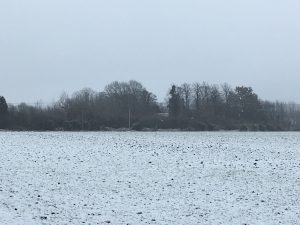 As Britain recovers from the chaos that a few inches of snow wrought yesterday, today is brought to you from Creeting St Peter, my small but perfectly formed Suffolk village. We’ve had an inch or so here, mostly yesterday morning, but whilst there’s broadband, there’s hope, I’m told.
 The count had taken place, the results were known. All that was left was to announce them, and that was the point where Congress went wrong for the Liberal Democrats.
 Liberal Democrat Voice comes to you this morning from Amsterdam, at the end of a weekend in which it became clear that Europe is preparing to move on with, or more probably without, the United Kingdom.
 Sometimes, opportunities come along unexpectedly, and when, two weeks ago, the opportunity to go to Timişoara came along, I grabbed at the chance, without really stopping to consider what I might find when I got there. And Eastern Europe does, beyond the classic cities such as Budapest and Prague, have a bit of an image problem given the effects of war and communism on the architectural heritage.
 There is a certain irony that, after a week which saw controversy over the question of UK eligibility for the award of the 2023 European Capital of Culture, that Liberal Democrat Voice is brought to you today from Timişoara, România’s third city. I’m here having taken part in a conference on Europe organised by a new political party here in Romania, the Uniunea Salvați România (Save România Union), and I’ll be offering my impressions of the event, and reporting on the speech given there by Ros Scott.
 A rather more sombre opening to this Monday, in deference to the day being marked today. To be honest, I’m not proposing to add much to that introduction, as I suspect that I wouldn’t have much of value to add.
 Two years ago, in Budapest, saw the election of six ALDE Party Vice Presidents and, after a tough nine-way contest, Baroness Ros Scott was safely elected. And, after a successful first term, she is seeking re-election.
Subscribe
-
 Follow @libdemvoice.org on Bluesky
-
 Like us on Facebook
-
 Subscribe to our feed
-
 Sign-up for our daily email digest
Most Read
Search
Op-eds
-
What can republican political thought teach the Liberal Democrats? (Daniel Duggan)
-
Mathew on Monday: Prime Minister, it’s time to restore our freedom to move across Europe (Mathew Hulbert)
-
London’s football pitch crisis is freezing out disabled children. We must stop treating inclusion as a charity luxury (Jean-François Burford)
-
Is kindness what we stand for? (Josh Matthews)
-
Don’t take Democracy for granted (Lord William Wallace)

-
 Myth and mystery on the Stiperstones ridge
-
 Perhaps the most pointless question PMs are asked (LDN#215)
-
 Wes Streeting is a twerp
-
David Chadwick set to become next leader of Welsh Lib Dems
-
David Hemmings film of David Bowie concert tour to be seen at last
-
How slowness at the Treasury cost taxpayers millions
-
Conservative councillor Paul Dick joins the Lib Dems
-
 Ianto's shrine to be saved
-
 Walkabout
-
Talbot Street and Church Street, Ellesmere
Recent Comments
 Alex Macfie
"…a small number of technology companies hold enormous power over markets and the people who depend on their platforms." and government policy, not properly o... Nonconformistradical
@Mark https://www.libdems.org.uk/conference#c351200 is stating that registration will be open in November... Mick Taylor
@Adam. How little you know about the holocaust. My grandfather was one of the many Jewish soldiers who fought in the First World War and he won the Iron Cross.... Richard Spate
During the run up to the dreaded Brexit vote Paddy Ashdown made an interesting predictive comment regarding us leaving the E.U. He said: 'If we leave the E.U... Mark
Mark
It would be great if next year Lib Dem Voice really promotes and informs members about early bird registration rates. Conference is expensive. We need to ensu...
