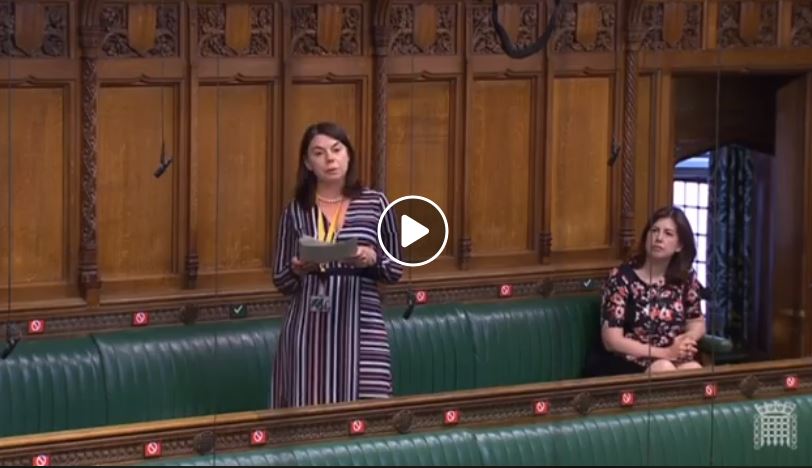
Paul Tyler writes: The Peers are Revolting or Who is Taking Back Control ?

A pause for thought: during the weekend of VE Day memorabilia were we celebrating 75 years of European peace, the retreat of fascism and the advance of parliamentary democracy ? Hopefully yes: realistically – in the case of the Brexiteers and their newspapers – NO !

And yet we have no cause for complacency. The UK is already looking as if we have reverted to being “the sick man of Europe” in terms of both our public health and the health of our democracy.

While in those 75 years the dictatorships of Western Europe have all collapsed, and effective representative democracy has taken their place, voters in Britain are increasingly marginalised and cheated. The Conservative manifesto in December 2019 aspired to make all votes of equal value: the actual result produced a ratio of inequality at the extremes of 33:1.

However, it is not just at elections that our representative democracy is under attack. Boris Johnson may choose to give a presidential-style address to the nation on a Sunday evening – to avoid questions and challenge from MPs – but we do not have a presidential constitution. He and his Government should be accountable to our Parliament, not the other way round.

No 10 obviously finds this inconvenient. Dominic Cummings is notorious for his disdain for Members of both Houses. MPs are already chaffing at the constraints that the combination of “virtual” exchanges and the business managers’ politicking are imposing.

The position in the Lords is far worse. Here, of course, there is no substantial Tory majority with plenty of lobby fodder to bully, and the response of Ministers to the Covid-19 emergency is under constant, sustained examination. And yet, there is no provision for effective scrutiny of legislation, let alone for votes on amendments, and the majority of Peers have been frozen out of debates or ludicrously squeezed by derisory time limits.

The response from Big Brother Cummings (the much more powerful BBC) has been to threaten that all Peers over 65 should be forcibly excluded.

That was too much for even the most tribal of Tories, and – led by former Cabinet Minister Michael Forsyth – a cross-party revolt resulted. Mr Cummings may think he can casually rip up the constitution, but that requires legislation.

Posted in Op-eds | Tagged , , , and | 29 Comments
Advert

Daily View 2×2: 11 May 2020

As it’s a Monday, I’m on editorial duty, as well as “opening batsman”. And we’ve got some interesting stuff coming up on the site, with the House of Lords, Northern (England) campaigning, Welsh devolution, business support for the hitherto overlooked and even some audience participation for those of you who have an interest in how democracy works. Naturally, we’ll have the latest thoughts from Mary too, for whom the announced changes make little difference. So, if like so many, you’re a bit cooped up at home, why not join us during the day?

Oh, and yes, I’m actually at work, albeit

Posted in Daily View | 1 Comment

Lib Dems react to PM speech

As soon as Boris Johnson started speaking, I was infuriated.

Nicola Sturgeon manages to get a signer there for every briefing. And she does hers live.

Boris’s was pre-recorded. Why not have a signer in the room with him so that, whatever channel you watch, you can understand what is being said?

It’s not the first time I’ve been infuriated by his government over the past week. The misjudged, mixed messaging. One minute people were doing great for obeying the guidance, the next they were getting too lazy at home. Then the briefing that lockdown was going to be lifted on Monday leading to a whole clutch of “we’re being set free” headlines. It’s not what you need in the middle of the greatest crisis we  have faced in generations. People need to understand exactly what they need to do.

That’s why the new slogan is so terrible.  Nobody knows what “stay alert” means in practical terms. Everyone will tell you something different. If you had something like stay 2m apart, wash your hands, wear a mask in confined spaces, you know exactly what to do. Not only that, but when the other UK governments hear about it on in the press, it’s clearly not been well discussed.

So how have senior Liberal Democrats reacted to the PM’s speech?  So far we have been asking careful questions about issues like care homes, PPE and testing. I sense a more critical tone now.

Ed said that the PM’s statement had more confusion that clarity:


This is the first time we’ve seen divergence between England and the other nation states of the UK.

As liberals, we should welcome this, given that we get what devolution means. We should respect the devolution settlements that give different parts of the UK the powers to do what is right for them.

But that means that all the governments have to clearly show that the decisions they make are governed by the science.

Willie Rennie said tonight:

Posted in News | Tagged , , and | 41 Comments

Isolation diary: Becoming a local hero

I have just learnt about an excellent initiative set to spread across the country, that was started by some people in my area. (Hat tip to my MP, Ed Davey).

It’s a simple idea – support local independent businesses by paying forward. Buy online vouchers now and redeem them when the businesses are functioning properly again post-lockdown. Vouchers also make great gifts – birthday presents are a bit of a challenge at the moment.

The BE A LOCAL HERO website brings together businesses and customers.  If you have a small business then register on the site and you will be visible to anyone searching in the area. If you want to buy vouchers then you can do a postcode search to see which companies near you are participating.

This project is still very new, and so far around 33 businesses have registered. They include pubs like Tribeca in Manchester, restaurants like Tradizione in Cambridge, cafes like Surbeanton in Surbiton, therapists like Therapy On Performance in Loughborough, attractions like Puzzlewood in the Forest of Dean, plus all kinds of shops and even a wedding venue – in other words, a wide range of offers.

Posted in Op-eds | Tagged | 2 Comments

The C Word – 10 years on: What were we thinking?

Ten years ago, in the wake of an election which delivered the first hung Parliament since 1974. the Liberal Democrats entered a coalition with the Conservatives. Nick Clegg became Deputy Prime Minister leading five Lib Dem Cabinet Ministers and 20 or so junior ministers.

That decision has undoubtedly affected our party’s fortunes badly. We won 57 MPs in 2010, and just 8 in the brutal and devastating election 5 years later. In the intervening years, we had lost most of our MSPs, all but 1 of our MEPs, 40% of the council seats we defended and control of 9 councils. Although we have gained signifiant ground in local elections since, we are still on less than a third of our 2010 vote share in the opinion polls, – although we did, briefly, get back up there last year.

There is no doubt that the Liberal Democrat ministers delivered some brilliant and progressive measures. During that period there were huge advances in the fight against climate change, most of which have now been rolled back by the Conservatives on their own. Our Pupil Premium gave a lot more money to support disadvantaged children in school and its benefits were already being seen in terms of attainment and will continue to do so. Improving mental health was given high priority on the political agenda with Paul Burstow and Norman Lamb making more services available. Better consumer protection, shared parental leave, same sex marriage, a transgender action plan and ending the export of execution drugs to the US are just a few examples of the good that we did.

There is no doubt that we stopped the Conservatives doing some really awful things. We know this because they did them the very minute that we were off the scene – things like even more swingeing cuts to social security which drove up inequality and poverty.

The point of this article is to look at the context in which the party made its decision to go in to coalition. There are no silent words like “on earth” in the title. Why did we do a deal with the Tories, with whom we were fundamentally incompatible in values and outlook? We were under many different kinds of pressure. Hindsight, of course, tells us that we could have done some things differently but it is important to understand what it was like at the time.

The first consideration was that we had not been dealt a very easy hand. The parliamentary arithmetic didn’t give us much choice. The only way of getting a majority coalition between two parties was with the Conservatives. Labour and us, even if Labour were remotely interested in talking to us, would only have managed 315 seats so would have needed the support of other parties in order to govern.  Nick Clegg had always said that he would talk to the largest party first, so it was with the Conservatives, on 306 seats, that Chris Huhne, Danny Alexander, David Laws and Andrew Stunell sat down on the Sunday after the election.

In a context of a very fragile economy – and as they talked in the Cabinet Office, the Greek economy was on the verge of collapse – there was a sense that they needed to get on with it so as not to spook the markets. There was a huge pressure to form a stable government. And we certainly managed that. It was actually more functional than most of the single party governments of my lifetime. However, the economies of European countries seem to remain relatively spook-free in the weeks it generally takes them to form governments, and this was a lesson we would do well to learn in the future. Coming to an agreement in haste, within five days of a gruelling election campaign is not a thing we should do in the future.

The Scottish experience will have weighed heavily, too. Liberal Democrats had enjoyed 8 years of successful coalition in Scotland and could point to transformational change – the abolition of university tuition fees, free personal care, Single Transferable Vote elections for local government, free eye and dental checks. All of these things remain in place to this day. An SNP minority government had taken over in 2007 and we had struggled to make any sort of impact. I wrote about the Scottish experience in an article at the time:

Posted in News | Tagged | 29 Comments
Advert

Wendy Chamberlain MP: Census must reflect diversity to make sure all people count

This week, Parliament debated the Census which will take place next year. Wendy Chamberlain highlighted the need to ask the right questions to make sure that all people are taken into consideration when planning future public services. She also talked about the need for everyone to be able to take part. As the census moves online, how will people who don’t have access to computers take part?

She also took the opportunity to challenge Liz Truss’s remarks on health care for transgender people, saying how important it is for members of the government to watch that their language does not exclude people.

Watch her speech here. The text is below.

Posted in News | Tagged , , and | 1 Comment

LibLink: Alistair Carmichael: It’s now time to consider a Universal Basic Income

Last week, Alistair Carmichael wrote an article for the Herald calling for a Universal Basic Income to be considered as a key part of the strategy for an economic recovery.

He cites practical examples of the people who are falling through the Government’s various support plans:

Thousands of families will face financial hardship in this crisis due to the current gaps in Government support.  The small building firm in Shetland that I have been trying to help in recent weeks illustrates the problem well. It is owned by the two men who started it and runs as a limited company.  The owners take most of their income though dividends. Their four employees have been furloughed and their position ought to be secure.  As things stand, however, there is no adequate help for the two owners of the business. The purpose of the furlough scheme is to protect jobs now for when productive work restarts.  Unless we find a way of helping these business owners, and thousands like them, there will be no business to which the employees can return.

While he is not yet totally convinced by UBI as a long term strategy, he thinks it needs to be properly considered as a way to remedy inequality – and says that the State Pension is essentially a form of UBI for older people:

Posted in News | Tagged and | 20 Comments

Lib Dem Councillor calls for gay and bi men to be allowed to participate in Covid-19 trials

“Discriminatory, arbitrary and regressive.” Those are the words used by Liberal Democrat Councillor Victor Chamberlain to describe the decision to exclude the plasma of gay and bi men being used in the trial to try to find a treatment for Covid-19.

Victor has written to the Health Secretary to ask him to reverse this ban. He cites a similar trial in the Netherlands which doesn’t mention sexuality at all.

It’s great to see a Liberal Democrat councillor taking a leading role in this.

Posted in News | Tagged , , , and | Leave a comment

Remaining a Remainer

Up for discussion at a recent meeting of my local pro-European group in Stratford-upon -Avon, was an item entitled “do we give up on Brexit?” It was prompted by the eclipse of Brexit in the public consciousness by the coronavirus, the collapse of hopes that we might still, somehow, remain in the EU, and the turnaround among some pro-European groups to support the idea of leaving the EU.

Given this situation, what should Remainers do? Should they lie low, at least for the time being, or should we “take up arms against a sea of troubles, and by opposing end them?” I argue here that the latter course is the right one.

Swimming with the tide – the comfortable option

So far as most of the public is concerned Brexit has now been “done”, in Boris Johnson’s phrase. Many former Remainers, insofar as they think of it at all, feel they must make the best of it. A few diehards may see it as it really is; a national folly and an act of self harm. But most shrug their shoulders and bow to the inevitable. They find it far more comfortable to swim with the tide.

Even pro-European groups such as Best for Britain have found their principles to be flexible. Their mission statement states “We advocate for a Brexit that secures our future”. They are not alone: other organisations like the Eurocafe are either aiming for “a better Brexit” or steering clear of the subject altogether: any praise of the EU is now taboo.

One cannot blame these groups for taking the easier option, no doubt persuading themselves that they are being “realistic”. But I think it was Tony Benn who said “only dead fish swim with the tide”. Possibly Labour supporters should remember that.

Rejoining the EU

Posted in Op-eds | Tagged and | 25 Comments

Isolation diary: Receiving a food box from the Government

This week we unexpectedly received an emergency food package from the Government.

My husband is on the extremely vulnerable list, which opens up a number of options for help with shopping. When he initially registered on the Government’s website he did not tick the box which asked whether he needed help with shopping. We were managing to access supplies and had friends and neighbours who had offered to help.

But getting a delivery from a supermarket was still a challenge, and I sometimes spent hours refreshing the screen in the hope of spotting a new delivery slot.  The supermarket sites were saying that they would be contacting people on the Government’s list to offer them priority for deliveries, but that never happened to us.

Then the penny dropped – maybe we needed to tick the box to say that we did need help with shopping. So we did that and very soon we got two different emails offering us priority delivery slots. Then a large box arrived – the Government’s supply – which to be honest, we really didn’t need. So we have donated it to the local food bank via a friend.

We are trying to work out how to continue to get supermarket priority delivery slots, but not the emergency food package, which will now be delivered every week, it seems. The best advice I have been given is to ask the driver to take it back next time and cross us off the local list.

I am not exactly sure who puts these packages together, but I believe that Councils are responsible for co-ordinating them through a local hub. Huge thanks go to everyone involved in providing this valuable service, which is, no doubt, really useful to some people, especially to those not online.

Posted in Op-eds | Tagged | 8 Comments

Ed Davey’s message for Europe Day

It’s Europe Day today and I find myself quite emotional. This country finds itself outside the European Union and with the prospect of no trade deal at the end of this year. Presumably Boris Johnson’s government thinks that we won’t notice that nasty little act of economic vandalism in the midst of the economic chaos wreaked by Coronavirus.

We know from the last few weeks how bloody difficult isolation is in our personal lives and so it is the same on the international scene.

Over on the Lib Dem website, Ed Davey has written this message for Europe Day:

Europe Day is a reminder of the value of international cooperation.

Only by working internationally can we effectively combat international challenges.

It is also an opportunity to recognise the contributions EU citizens living in the UK make to our society. These friends, colleagues, neighbours, and family members enrich our lives every day.

During this crisis the contribution of migrants, including those from the EU, has been immense.

Posted in Op-eds | Tagged and | 5 Comments

Principles of Liberal Democracy

Up to 2012 the Liberal Democrats’ citywide organisation for Leeds was responsible for the panelling of the party’s prospective city council candidates. It placed approved candidates on the panel of candidates for the city, from which the wards could select. There was a rigorous process with a candidate pack of information on the city council and on what it entailed being a Liberal Democrat councillor.

There was also a short statement of the party’s basic philosophy, expanding on the preamble to the party’s constitution. Unfortunately the City Council Liberal Democrat group ended its financing of the organisation out of the levy on councillors’ allowances and for the past eight years there has been no citywide party organisation and, more crucially, no panelling of prospective candidates.

Posted in Op-eds | Tagged | 12 Comments

The C Word 10 years on: Crossing the RubiCon

As we mark 10 years since the formulation of the coalition, I’m reposting my initial thoughts from 8 May 2010 about how we should approach the dangerous situation in which we found ourselves:

This is going to be a very quick post. If you want deeper, more robust analysis, go to the lovely Elephant or Daddy Alex. With 15 minutes to go to Doctor Who, you are not going to get any more than a few random thoughts from me.

Firstly, a few right wing commentators are getting their knickers in a twist and describing the current series of civilised negotiations between the parties as “chaos”. They have clearly led very sheltered lives. This is a perfectly normal part of the democratic process in most of the rest of Europe and beyond.

Secondly, I like Nick Clegg’s style. He takes the trouble to go and talk to the 1000 demonstrators outside where he was meeting the Parliamentary Party. Can you see either David Cameron or Gordon Brown doing that?

Thirdly, I grew up in the 80s. I hate the Tories with an absolute passion. Thatcher came to power when I was roughly the same age as my daughter is now and my education was punctuated with poor or no equipment, not enough teachers, strikes and my school was falling to bits. Do I want this for her? No way! However, the first 10 years of her life have seen an authoritarian Labour government which has been complicit in torture, has eroded our civil liberties, damaged our standing by taking part in illegal wars and has repeatedly crapped all over the poorest and most vulnerable. I really loathe and detest them too. Almost equally. Trying to choose between them is like being on some trashy game show and having to choose between eating a wichety grub and a kangaroo’s testicle. Either way, I’m going to throw up. Having said that, the stakes are high – the country needs a decent government and we have a responsibility to look at all possibilities of building one. That means, unfortunately, talking to parties we don’t like.

Fourthly, the 24 hour news cycle is a hungry beast and tends to over analyse every sigle word that people say for hidden meaning. This is not helpful and we probably shouldn’t do it either.

Fifthly, it is in the interests of both Labour and the Tories to derail this process. They want to maintain the current duopoly that the current electoral process creates. Of course they do. Turkeys don’t have a habit of voting for Christmas. They are trying to make out that it’s all down to Nick to do a deal with them on their terms. Actually, their leaders have to behave like mature adults.

It is in ours to make it work. That doesn’t necessarily mean forming a coalition with anybody, but it does mean that we need to be open, businesslike and willing to explore all the possibilities.

Posted in Op-eds | Tagged | 34 Comments

The C Word 10 years on: How it all began

In some ways, the days following the 2010 election seem so much more than a decade ago. I have definitely cried more than 10 years’ worth of tears in that time. The long term effect of the coalition on our party has been profound. The decisions we made within it were still being used as a stick to beat us with in the most recent General Election.

We’ll be looking in more detail at the formation of the Coalition in the days to come. It was a process that many of us viewed nervously but that the Party backed overwhelmingly in a special conference in Birmingham.

But on this day, 10 years ago, then co-editor of LDV and now Party President Mark Pack set out what we could expect as Liberal Democrat leaders entered into talks firstly with the Conservatives:

The Liberal Democrat Parliamentary Party and the Federal Executive are scheduled to meet again on Monday. If a firm proposal is coming out from the talks today, expect it to be put to them both tomorrow. The big question is what might be proposed…?

Right across the party, both from senior to grassroots levels and from social through to economic liberals, there is very strong feeling that significant movements on electoral reform are a must for any arrangement. Given the country’s current economic woes, there is widespread agreement that PR isn’t the only issue at stake, but – for example – I’ve not spoken to anyone in the party who thinks the budget deficit is such a dominating issue that PR can be put on the back-burner for a few years.

Posted in Op-eds | Tagged | 24 Comments

Pitching my idea: Reduce the legal drinking age

Embed from Getty Images

Having finally finished my undergraduate dissertation, I suddenly find myself with a lot of time on my hands, while also being limited for what I’m able to do with that time as a result of the unprecedented circumstances we all currently find ourselves in. We’re also in the middle of our party’s period of reflection, after a disappointing General Election result and before the election of a new leader to take us into a new chapter with new USPs. In other words, there is surely no better time than now to pitch a policy idea that can be included with many others in our new platform.

Like many, I’ve always appreciated the ability of members to formulate policy. In other words, I genuinely enjoy sitting in a conference hall in various seaside towns and voting on policies written by members who have far greater expertise on the issue at hand than I presumably ever will. I don’t claim to have any expertise on public health, other than my own lived experience and observations drawn from the existing research. However, going forward, we’re a party desperately in need of new, unique ideas and if my first Lib Dem voice entry at least gets people to consider the issue then that’ll be a success in my book.

So, my idea is simple: bring legal age limits on alcohol in line with those in Germany, which are as follows;

At Age 14 minors may consume fermented products such as beer and wine, provided they are in the presence of a legal guardian. At Age 16 minors are allowed to purchase and consume the same fermented products, without custodial supervision. At Age 18, Germans have reached adulthood and are able to purchase and consume any alcoholic product.

We’re a country that enjoys alcohol and for the most part, there’s absolutely nothing wrong with that. Our unique pub culture is a celebrated part of our national identity, with pubs being a focal point for many of our local communities and it is something that on a human level, I and many of my friends and family enjoy. I have no intention of giving that up, albeit in moderation, because it is both fun and sociable. I’m not alone in that, with a recent survey revealing that over half of UK adults choose to spend their free time in pubs.

Posted in Op-eds | Tagged , and | 18 Comments

Isolation diary: Marking VE Day

Embed from Getty Images

I was born a few weeks after VE Day, but before VJ Day which marked the end of global warfare in 1945. At the time my father was in India serving as an Army Chaplain with the Gold Coast regiment and he didn’t actually get home to see me until the following summer.

My parents rarely talked about the war, and it was years before I learnt anything at all about my father’s time in India and Ghana. In fact, their generation just wanted to get back to normal life and protect children from information about the atrocities. We weren’t taught anything about the two World Wars in school, either. It was a shock, many years later, to learn about the Holocaust and the Blitz in the Second War, and about the slaughter in the trenches in the First War.

We were to have happy childhoods, unlike the generation just before us. Things didn’t get back to normal straightaway, though. There were still food shortages and ration books.

I used to hate Remembrance Sunday in those days.  I started writing to a German penfriend in my teens (and we are still very much in touch), so I was uncomfortable with its latent anti-German sentiment.  It was left to my generation to build the bridges with our former enemies, and that included the European project.

Posted in Op-eds | Tagged | 21 Comments

The Lib Dem Leadership election: Can we please now just get on with it?

Embed from Getty Images

There may originally have been good reason not to proceed with the Lib Dem leadership election this spring at the height of the uncertainty as to how the Covid-19 pandemic was going to progress,but with hindsight it was quite wrong to announce a postponement of twelve months or more.

For the whole of this year so far, Ed Davey has been able to speak only as “interim co-leader”and as a result the impact of the Lib Dem contribution to reasoned critique of the government’s performance has been significantly diminished, as has the effectiveness of our input to proposals for radical policy change as our society and our economy recover from lockdown. In this time of national crisis we are missing the clear Liberal voice of an elected Party Leader able to speak and negotiate with authority on behalf of the whole party.

The Federal Board should please decide at its next meeting to hold the leadership election just as soon as it is possible to put in place the arrangements necessary for virtual hustings and for a robust voting system.

I am told that the Federal Conference committee is well on the way to finding a way to hold the Autumn Party Conference virtually, including software to enable votes on-line. If those conference logistics can be handled, it should also be quite feasible to arrange for a series of virtual Leadership hustings, for a robust combination of electronic and postal voting,and for the distribution of manifestos by post and email as usual. Why not give the candidates a say in the structure and detailed regulations of the campaign to allay any concerns that the novel format could favour any one candidate over another? And why not maintain a traditional feature of past leadership campaigns by giving some virtual events a regional or a specific policy focus ?

Posted in Op-eds | Tagged | 18 Comments

Ten years of living with the Black Dog

Embed from Getty Images

My first encounter with what I call the black dog was in the early months of 2010, not long after I went off work the previous autumn. I initially rebuffed my GP’s offer of antidepressants. That was partly because of a misplaced idea that it would be an admission of weakness to start taking drugs and a concern that being on them might adversely affect my ability to care for Daphne, who was seriously ill.

Eventually the pressures of caring and the feeling of isolation resulting from having had no contact from work colleagues led me to a point where I felt I needed medication. The first course of tablets the Doctor prescribed made me feel really ill (I can’t remember their name) so she switched me onto a different one. After a few weeks they started to help me cope better and in December of that year when my personal work situation was more or less resolved I felt well enough to stop taking them. Unfortunately I wasn’t told to taper the withdrawal, and going cold turkey was tough. That said, I managed fairly well eventually.

My next encounter with the medication came in January 2015. By then Daphne was in residential care, her condition deteriorating and my attempts to obtain some sort of part time role at my old work were going nowhere. Those were the triggers, this time it took longer for me to feel any real impact. In fact, I would say it was between 12 and 18 months. In addition on this occasion my sleep was badly disturbed and I was also given tablets to help with that. By the summer of 2017 I felt OK and again began the process of coming off the tablets this time in stages. Then my Daphne died which was hard and I started going through a bereavement process. I continued with the withdrawal.

Posted in Op-eds | Tagged , and | 5 Comments

Observations of an expat: Coronavirus exploitation

Embed from Getty Images

A pandemic is a perfect excuse for politicians to exploit public fear for their own political advantage—and many of them are doing just that.

Let’s start with Trumpland where the administration’s mishandling of the pandemic means that the country is fast heading for a world-beating 100,000-plus deaths. Trump is using coronavirus to stoke the fires of Sinophobia. China has been the US administration’s chief bogey since 2016 when advisers such as Steve Bannon were warning that a Sino-American war was inevitable. The anti-Chinese stand is also proving popular with the voters in an election year with 70 percent of the electorate critical of China.

China’s President Xi Ji-ping is just as bad. Between Beijing and Washington an increasing number of outrageous conspiracy theories have been launched by both sides. The Chinese have also used the pandemic to boost military operations in the South China Sea and is selectively dispatching its medical equipment to countries where it thinks it can establish a stronger foothold. It has also used Covid-19 to crackdown on Hong Kong dissidents and is claiming in capitals around the world that its relatively successful handling of the pandemic demonstrates the superiority of the country’s political system. The latter claim is a leaky bucket as increasing doubt is poured on Beijing’s death statistics.

One of the most blatant pandemic power grabs is in Hungary. President Viktor Orban has managed to persuade his parliament that the danger of the pandemic means he should rule by decree for an unlimited period. As a result, the already sycophantic press has been further muzzled and public protests have been banned and in some cases criminalised.

In Turkey, President Erdogan, released thousands of prisoners from jail—except the political prisoners. He has also blocked fundraising efforts by opposition city councils in Ankara, Istanbul and Izmir.

Posted in Op-eds | Tagged , , , , , , and | 5 Comments

Localism under threat

Liberal Democrats are running 53 local councils. Our response to the Covid pandemic has highlighted how important are the LibDem values of community empowerment and ensuring everyone can reach their potential.

At the beginning of the pandemic Robert Jenrick, Secretary of State for the Ministry of Housing, Communities and Local Government told council leaders to do what it takes to protect communities from Covid, gave us specific tasks and repeatedly said government would cover our costs.

In a matter of days my council has worked with communities and volunteers to set up brand new support networks to provide for vulnerable residents who are isolating, arranged shelter for all our rough sleepers and paid out £millons in grants to small businesses to help them survive. We were able to do this so quickly and effectively because we are already rooted in our communities, we understand their needs and work with local people.

But over the past few weeks government have u-turned on their promise to reimburse councils, for their lost income during Covid. So how will our cash strapped council keep afloat? How will we afford to deliver the services residents need like waste collection, planning and leisure facilities … surely, they don’t want district councils to go bankrupt, do they?

Posted in Op-eds | Tagged and | 7 Comments

On pandemics and health, we need to look to South Korea – Phil Hammond “MD” in Private Eye


Dr Phil Hammond
Dr Phil Hammond

Throughout the Coronavirus crisis, the “MD” column, written by Dr Phil Hammond, in Private Eye has provided a refreshingly astute and wise commentary on the crisis.

The latest issue of Private Eye is out now. I have recently subscribed to it, so I receive my copy without leaving home. Sheer luxury! (As an aside, someone once asked me to name the thing or service which I had bought or used for the longest period in my life. I came up with Lloyds Bank and Private Eye, of both of which I have been a customer since I was 17 years old. Some 43 years. Crikey – that makes me feel old.)

MD’s latest commentary covers two pages and is very interesting, as always.

Posted in News | Tagged and | 7 Comments

Universal Basic Income, why now?

Embed from Getty Images

We are currently in the midst of an unwanted sociological experiment.

Society is reliant on its citizens being responsive to the current restrictions in a way that cannot realistically be enforced by coercion.

The lessons to be drawn can offer us significant hope. A hope that, as a counsellor working in mental health, I have always had. It is a hope in the possibility of the majority to find a way to do the best for themselves and others.

An army of volunteers have been found. Neighbours are mostly, neighbourly. Politicians have asked that citizens be trusted to pay their part in the current challenges and we have not been found wanting. (Apart from my own glass recycling, I include myself in this). In the counselling room I see that the human spirit has both conscience and drive, often in the face of appalling experiences.  Daily I see people trying to find a way to become the person they want to be, across all social groups, often hampered by shame of circumstance.

The radical idea of Universal benefit has been floated by economists and idealists since Tudor England and the writings of Thomas Payne, but those holding the mindset of the poorhouse have never trusted that “handouts’  wouldn’t create a culture of workshy reliance.

The truest form of Universal Basic Income (UBI) provides a base to all via the income tax code. It could equalise the starting point of income for all at a basic minimum. Zero income means a negative tax rate (a credit)  but it is not about making all equal, although less inequality is inevitable.

UBI is and should be seen as the provision of stability.

Posted in Op-eds | Tagged | 38 Comments

Philip Alston and Transformational Change

Embed from Getty Images

Eighteen months ago Philip Alston, the UN Special Rapporteur on extreme poverty and human rights, visited Britain for a fortnight, and travelled round all four countries to meet officials and ordinary people and community organisations. After also studying all the documents that had been published on the state of poverty here, he issued a Statement. This document still makes very sad reading. It shows up serious societal problems which the political absorption on Brexit last year and on the health crisis this year have distracted from, and which a progressive party such as ours must surely address.

He wrote in his Introduction:

It seems patently unjust and contrary to British values that so many people are living in poverty. This is obvious to anyone who opens their eyes to see the immense growth in foodbanks… the people sleeping rough in the streets, the growth in homelessness, the sense of deep despair that leads even the Government to appoint a Minister for suicide prevention and civil society to report in depth an unheard of level of loneliness and isolation. And local authorities, especially in England, which perform vital roles in providing a real social safety net have been gutted by a series of government policies.

Describing people he had talked to dependent on foodbanks and charities, some homeless and sleeping on friends’ couches, young people who feel gangs are their only way out of destitution, and people with disabilities told to go back to work against their doctors’ orders, he also remarks on “tremendous resilience, strength and generosity” shown by neighbours, councils and charities in support.

Posted in Op-eds | Tagged , and | 36 Comments

Isolation diary: Missing the theatre

Theatre is one of my passions. Last week I wrote about the development of the Rose Theatre in Kingston, and I will return to that subject again, no doubt.

I am no longer on the Board of the theatre, but I am an Ambassador, and I do still get involved in several ways. As a volunteer I turn up at least once a week in my natty uniform for Front of House duties – ushering, looking after the cloakroom or selling programmes. For many years I have also attended one or other of the many drama groups that come under the Rose Participate umbrella, along with over 1000 other people. In fact, we have the biggest Youth Theatre in the country. And, of course, I get to see all our in-house productions, plus many of the visiting companies.

So I am rather missing all that.

My drama group has continued to meet each week via Zoom, mainly to talk about and recommend productions and box sets to view at home. We all make a point of watching the National Theatre at Home offering for the week and review it together. Our tutors have also set us some simple tasks – last week we each selected and read a poem that we loved.

The Rose, like many other theatres, is trying to find ways of creating content, and giving work to actors and other creatives during lockdown – theatres expect to be shut for many months to come. Every day it posts a new contribution to Readings from the Rose, which have so far included poetry readings by Niamh Cusack, Anton Lesser, Arthur Darvill, Christopher Eccleston and others, including my favourite by Paterson Joseph.

Posted in Op-eds | Tagged | 2 Comments

How to stop deforestation

Embed from Getty Images

A recent webinar discussed policy, a market intervention and monitoring technology to help stop deforestation

The Liberal International British Group together with the Paddy Ashdown Forum organised a webinar on 27 April 2020 hosted by BrightTALK on how to stop deforestation. 428 people registered for the event from around the world. The aim of the discussion was to learn how to stop deforestation in a socially just manner, given that the largest rainforests exist in parts of the world that are economically lagging developed nations that have already denuded their natural environments of tree cover.

Jon Shepard, a director at Global Development Incubator, explained why we should care about deforestation: forests absorb a third of global carbon dioxide emissions. A quarter of CO2 emissions are absorbed by oceans. The rest goes into the atmosphere, acting as a greenhouse gas, causing global warming and the climate crisis.

The destruction of forests has also been associated with a rise in zoonotic pandemics. Olivero et al (2017) showed in Nature Scientific Reports that destroyed forests with closed canopies in Africa resulted in outbreaks of Ebola, with a lag of two years. The Ebola virus has been associated with increased interaction between bats and humans when bats lose their natural habitats. The COVID-19 virus has also been associated with bats.

Duncan Brack, an advisor to the UK government’s Global Resource Initiative Task Force, explained that agriculture is the main driver of forest loss in the tropics. Consumer-country demand for commodities such as tropical timber, beef, soy, palm oil, rubber, cocoa and coffee, wood pulp all drive deforestation; for most of these, the Asia-Pacific region accounts for the bulk of consumption, but Europe and the US are both important sources of demand.

Posted in Op-eds | Tagged | 4 Comments

Housing, Liberalism, and Mutualism

Embed from Getty Images

Liberals have long believed that wide property ownership, serving as a bulwark against state tyranny, is essential to the preservation of liberty.  However, our pluralism has ensured that we have historically been committed to a diversity of housing models, including social housing. With the need for our party to engage with, and empower, communities who often feel forgotten, and deprived of real power over their lives, Liberal Democrats must offer a clear, distinctive, and liberal approach to social housing. What should this look like?

In recent years, various local authorities have brought their housing stock under their direct control,  replacing arms-length management organisations, and other local authorities, including my own, Gateshead Council, are planning to do likewise.

However, both of these models – the ‘partial privatisation’ offered by arms-length management organisations and the (local) statism of in-house control –  suffer from the same weakness: they deny tenants meaningful control over the management of their homes. Just as ‘Tenant panels’ and ‘Focus groups’ are not a substitute for participatory democracy, the opportunity to lobby local Councillors, in the hope that they will come to aid of a tenant, ignores the need to decentralise and devolve power to the level at which it should be exercised: with the tenant. Both of the above models exemplify the stale and dull bureaucratic managerialism of much of local government and are premised on a paternalistic ethic that has little, if any, concern with empowering local residents to take ownership of their communities.

Posted in Op-eds | Tagged and | 2 Comments

This time next year, London will be different.  We must be too. 

This morning, Lib Dems should have been out delivering good morning leaflets, ready for the long slog through to 10pm when polls close. Instead, like all Londoners, we are staying home to save lives and the elections for our next Mayor and Assembly have been pushed back by a year.

Nobody knows what the landscape will look like in May 2021, but it’s clear that nothing will be the same.  And that includes politics itself. The postponement gives us a chance to re-evaluate the London campaign.  One thing is very clear – our capital is resilient and dynamic but it will be significantly different post lockdown.  We must be too.

Rory Stewart has announced that he is withdrawing from the race. There’s no hiding from the fact that his presence was challenging.  As our members and activists recovered from an exhausting General Election, Stewart’s energy was attractive to voters looking for an alternative.

But let’s also be clear, from drugs reform and tackling the root causes of knife crime to radical green measures like road pricing and introducing a wellbeing budget for City Hall, we had – we have – the most progressive policies.  Our task, as we help London to thrive post-Covid19, is to ensure that every voter in the capital knows it.

Here are two ideas to help kickstart our revamp.

Posted in Op-eds | Tagged and | 14 Comments

Is our party hierarchical?

Despite the rhetoric, evidence might give us cause for thought. MPs and MSPs/Welsh Assembly Members seem to take precedence over the councillors who build up the party’s base again and again. I would argue that we should be an integrated whole – with much more mutual respect and understanding. And of course, never forgetting the parish councillors and Lords who serve us so well.

Councillors delivered excellent results last year, arguably giving the credibility which benefitted the party in the European elections. The party then extrapolated predicted General Election success from the latter; neglecting wisdom which cautions against using only quantitative information. Had other smaller parties built up that local government base, would the European results have been different?

When the Scottish Parliament came into being, our MSPs seemed to give less priority to proportional representation for local government than some serving councillors hoped for. In fact, that proportional representation took a number of years, and contributed in a small way to my decision not to seek re-election after 13 years (1990-2003). It can become disheartening to be always in opposition; I had a satisfying career as a research librarian, and wanted time to index books. The seat remained Liberal Democrat at the next election.

Posted in Op-eds | Tagged | 9 Comments

Covid-19 five tests: By sleight of hand, the government seems to be trying to remove the spotlight from testing and PPE issues


Embed from Getty Images

You would have thought that the government’s five tests for moderating the lockdown have stayed the same, wouldn’t you?

Well, think again.

Comparing Dominic Raab’s reading of the five tests on Tuesday with his original announcement of them on April 16th, there is at least one significant difference:

Posted in Op-eds | Tagged | 12 Comments

Daily View 2×2: 7 May 2020

2 big stories

Who’d have thought it? The achievement of the testing target on 30 April is already looking deeply shady, with the inclusion of posted tests included in that figure, plus allegations that even those posted weren’t actually usable. And now, subsequent data shows that the numbers are going backwards, not upwards. The solution, a new target. The distraction from failure – some relaxations in terms of going out and about.

Meanwhile, the European Union is predicting that its economy will shrink by 7.4% this year, the worst performance since World War II, with the economies of Southern Europe worst …

Posted in Daily View | Tagged , , , and | 1 Comment
Advert

Recent Comments

  • Nigel Jones
    Yes we need to think through and articulate our Lib dem approach to economics and the way we order society. I see the occasional attempt at this on LDV but out ...
  • Peter Davies
    The broken part is not the provision of water (a commodity and natural monopoly supplied to households) but the disposal of sewage and rain water run-off (a ser...
  • Cassie
    'Knee jerk adoption.. (be it mutuals instead of corporates) does not address the fundamental strategic problems'. Indeed. Dŵr Cymru Welsh Water is not-for-pro...
  • Peter Chambers
    I would like to agree that the "It" is the Royal Navy. But I cannot. The necessary "It" is Social Democracy. The National Preparedness Commission said in the...
  • Rif Winfield
    Whatever the multiple roles which the Navy must undertake (and here I fully agree with you, Edward), what is essential is the quantity of vessels. However effec...