Category Archives: Op-eds

Helen Morgan tables bill on improving rural bus services

Buses are the cinderella of transport. We hear a lot about trains, the inconvenience of delays, strikes and buckled rails. But we don’t hear much about buses. Yet there were more than four billion local bus passenger journeys in England in the year ending March 2020 before the pandemic. Numbers inevitably declined during the pandemic and have not yet recovered to pre-pandemic levels, especially among concessionary pass passengers.

Many rural areas do not have a local train service. Rural buses are literally a lifeline. But unlike services in some cities, rural buses have been in steep decline.

On Wednesday, Helen Morgan MP for North Shropshire, presented a bill to parliament with the aim of ensuring people living in market towns can access hospitals, GPs and other services by public transport every day of the week.


Tagged and | 15 Comments

Tom Arms’ World Review

Europe is burning sounds like the title of an apocalyptic Hollywood blockbuster. Unfortunately it is an accurate newspaper headline as the continent this week sweltered in record temperatures.

In normally temperate Britain the thermometer topped 104 fahrenheit. In Spain it reached 109. Spontaneous fires were widespread. The London fire brigade reported its busiest day since the Blitz. Grass and forest fires broke out in France, Spain, Portugal, Greece and Italy. In Greece alone there were 390 forest fires in one week.

The high pressure system responsible for the heatwave is now over Poland and is expected to continue eastwards reaching China in August before eventually being cooled down by the Pacific waters. This follows record temperatures in the Middle East and South Asia and forest fires in California, the Pacific Northwest, Canada and Australia.

Climate change scientists say:  “Get used to it. This is a taste of things to come.”


Joe Biden – America’s 79-year-old president – has covid. It is not surprising. In fact it would be more surprising if he didn’t. Covid has dropped out of the US headlines but not off the health charts. As of Friday nearly a third of the American population – 91,767,460 – have had a confirmed case of coronavirus. 1,050,702 of them have died, including 592 of them this Wednesday alone.

America decided months ago to stop the mandatory wearing of face masks and social distancing and reduced pressure for vaccinations. They were going to learn to live with covid to save the economy. Since then the number of cases has risen dramatically.

The increase in coronavirus cases has not been confined to American shores. Other countries governments are also treating the pandemic as more or less done and dusted. But there have been significant increases in confirmed cases and deaths in Britain, France, Belgium, Germany, India, Greece, Japan, New Zealand, Singapore…. Someone obviously forgot to tell the virus that it was time to pack up.


There is no love lost between Japan and South Korea. In fact, there has been pretty much a hate-hate relationship ever since the Japanese warlord Toyatomi Hideyoshi raped and pillaged his way across the Korean peninsula in the 16th century.

Tagged , , , , , , , , and | 12 Comments

Did Liz Truss jump parties to advance in politics?

Here on LDV, we have been reviewing the past of a politician who might our next prime minister. Once an ardent Lib Dem with a passion for getting rid of the monarchy, she appeared on national TV with Mark Pack and Paddy Ashdown. In today’s Times, we learn more about the young Liz Truss from Neil Fawcett, a Liberal Democrat councillor who is part of Layla Moran’s team in Oxfordshire.

She was bloody difficult to work with… I wasn’t massively surprised when she turned up as a Tory. I would not be surprised if she made a choice that she wanted to get on in politics and jumped horses to do it.

What has surprised me is that she has got to the level she has, because I never felt that she was particularly talented.


Tagged and | 20 Comments

Observations of an expat: Tropical Trump

They call him “The Trump of the Tropics.” The parallels between Brazil’s President Jair Bolsonaro and Donald Trump are legion, with one big difference – Bolsonaro is better placed to overturn his country’s democracy.

Presidential elections are scheduled for 2 October and far-right Bolsonaro is trailing well behind his socialist rival Luis Inacio Lula da Silva. So what does he do? He pulls a Trump. The elections will be a fraud, Bolsonaro claims months before the polls open. The electronic voting machines, he says, have been hacked.

Rubbish, counters the electoral authority, who maintain that there have been no incidences of widespread fraud in any elections since the system was introduced in 1996, including the election which put Bolsonaro in office in 2018.

But Bolsonaro persists. This week, the Brazilian leader summoned diplomats to the presidential place to listen to an hour-long televised harangue in which he claimed – without evidence – that a military investigation into a voting system which the country has successfully used for 25 years was fraudulent. The investigators, by the way, were appointed by Bolsonaro.

The US embassy in Brazil immediately issued a statement describing Brazil’s election machinery “as a model for the world.” Last month, Joe Biden dispatched CIA Director William Burns to tell Bolsonaro to change his story. The US president is clearly worried that a successful Bolsonaro coup in October will give encouragement to the supporters of Trump’s “Big Lie.” Bolsonaro has gone on record to say that Biden’s election was “suspicious.”

Trump said: “Brazil is lucky to have a man such as Jair Bolsonaro working for them. He is a great president and will never let the people of his great country down.”

Tagged and | 3 Comments

Mark Pack’s July report: Getting ready to remove the Conservatives from power

When will the next general election be?

Sorry, I don’t know. But I do know that the range of plausible dates is wide open – from only a couple of months away through to January 2025. And that whenever the date is, we also have a massive round of local elections in May.

Which is why we need to step up our campaigning, capacity building and planning through the second half of this year. Even if this Parliament goes its full term, the benefits of extra canvassing, member recruitment and training this summer will still be considerable.

We certainly need to be out campaigning, looking at the horror show that is the Conservative Party leadership contest so far – full of candidates who aren’t headlining big issues like fixing the NHS and tackling climate change, but are rushing to the media to talk about restricting the rights of trans people.

Both our elections committee (FCEC) and the Board have recently reviewed our general election preparations, and the team at HQ is revising our contingency plans for a snap election. A pre-manifesto overview of our policy approach is also coming to the autumn’s federal party conference.

It was great to see the huge bump in canvassing as a result of our ‘Big Build’ weekend in early July – and the bump in new leaflet deliverers that came in as a result. Our party membership also not only got a bump from the win in Tiverton & Honiton, but the growth has continued since too rather than fading away as happened with previous by-election bumps.

So I’d encourage everyone in local parties to think about how to up your campaigning plans over the summer, and where we don’t yet have a Prospective Parliamentary Candidate (PPC) in place to think about talking to your state or regional party about when to timetable your selection for.

Wonderful people

We’ve had a brilliant run of council by-elections already since the May local elections, with a net seven gains (compared to net four gains for Labour). That makes us the best performing party in those contests, and it was particularly good to see Linda Chung win the Hampstead Town by-election – winning the seat from third place and taking it from Labour.

Also deserving particular praise is the first person to top our ‘Golden Mallets’ scheme for people who got the most posters put up in the May elections. Cliff Woodcraft from Sheffield topped the list with an awesome 466 (!) posters. Badges are on their way to all the winners.

Leave a comment

Your memories of a former Liberal Democrat

You will all have learnt by now that Liz Truss was a member of the Lib Dems when she was a student. So we would like to invite our readers to share their memories of her time as a party member.

To kick us off, here is a piece from Liberator Magazine 411 – February 2022 (download it here):

TRUSSED UP

Could the new darling of the Tory right Liz Truss be the first former Liberal Democrat into 10 Downing Street?

Truss understandably draws little attention to her Lib Dem past and several readers who still come across her noted a marked disinclination on her part to reminisce about old times.

A photograph exists of Truss with other members of what was then called Liberal Democrat Youth & Students on a protest against the M3 extension in1994 – one of presumably few occasions on which the foreign secretary and ‘Swampy’ have been on the same side.

LDYS was also opposing then Conservative home secretary Michael Howard’s Criminal Justice Bill which sought to curb protests, though which looks positively moderate compared to the Policing Bill that the Government of which Truss is part is seeking to push through Parliament.

She spoke against the monarchy in the Lib Dem conference debate in 1994, which called for a referendum on its abolition after the Queen’s
death. Truss has since dismissed this as a youthful indiscretion but it might leave Her Majesty unamused were she ever invited to kiss hands. Truss is thought to have joined the Tories in 1996.

One LDYS veteran recalls: “She was always older than her age even at 17 when we first met. Always very ambitious and confident and displays the same mannerisms as she did all those years ago. I don’t think her characteristics are dissimilar to Boris (or are they just typical Tories?”

Another thinks Truss’s politics never changed much being liberal (at least then) on social issues and an economic liberal who was always an admirer of Margaret Thatcher. “I think she has always liked being controversial and is intelligent but says daft things either from lack of thought or to get attention,” he recalls.

And would you like to see that photo? Well, of course you would. Caron Lindsay published it in this post in 2016: Liz Truss as you have never seen her before.

Update: The BBC has found this for us.

Tagged | 26 Comments

Hasta la vista, baby or auf wiedersehen pet?

There are several parallel realities in politics. But Boris Johnson lives in a bubble of his own making. Having taken a few days off for goodbyes, a flight on a Typhoon and a visit to Farnborough Airshow, along with missing things of no consequence to his future like a Cobra meeting on the heatwave, he trounced out of PMQs today in true theatrical style. “Hasta la vista, baby”. Johnson is ever the performance artist. Ever the man who triumphs style over substance. I am sure he wants to be a movie star.

Boris Johnson has done more to develop the role of prime minister as a cult of personality than his predecessors. He has been gloriously Trumpian, a stranger to truth and to the gritty reality that he has been wrong, wrong and wrong again. And seemingly unaware about being on the wrong side of the law.

As ebullient as he now is irrelevant, Boris Johnson will certainly go down in history. He has become so toxic to the Tories and the country he is unlikely to come back to front line politics. But far from “hasta la vista, baby”, surely this is a case of “auf wiedersehen pet”. Perhaps I say that hopefully. Goodbye pet. Good riddance pet. We can only hope so.

Tagged and | 3 Comments

We still aren’t doing enough to tackle privilege in the party

As a group, Liberal Democrats pride themselves on their commitment to equal rights and opportunity. Indeed, the very first line of the preamble to the Constitution talks about a free and fair society and, as a member, I am proud of the work we do to advance these goals in government and beyond.

That being said, privilege is something that pervades the governance structures of the Liberal Democrats. From the Young Liberals to Federal Board, it is still far too often about who you know rather than what you can give to the party that decides how far you advance within the party and what you can get done if you do happen to get to a position of responsibility. Our often-opaque system of accountability means that those who have the right connections can make huge advances and are lauded as changemakers while people of similar levels of skill who haven’t been a party member since the age of 10 or don’t have the financial resources to network can struggle to even get projects off the ground to begin with.

This isn’t to say any of this is out of malice. As human beings, we tend to flock to people we already know and are likely to give the benefit of the doubt to our friends if they have ideas that they can’t fully articulate. I am trusting in the belief that most Liberal Democrats don’t actively go out of their way to marginalise people’s point of view, but the concept of unconscious bias has to go further than acknowledging our prejudices to actively questioning whether we give unconscious advantage to our friends.

We are making huge strides towards to improving the diversity of our local parties, but this is moot if these new members are unfairly disadvantaged in their ability to take part in party governance. My main request to those already in positions of authority (even if you just chair a small local party to sitting on Federal Board) is to question whether you too often turn to a small clique to get a project going, make decisions or offer an opportunity to and excuse it by some measure of efficiency or ease. We have a great opportunity to grow as a party over the next few years but it simply isn’t worth it if not everyone can make their own fair contribution.

7 Comments

Can you cut taxes and level up at the same time?

The Conservative leadership campaign has been a competition to demonstrate the best small-state tax-cutting credentials, with little concern for what that means for public services or investment.  Even Rishi Sunak seems to have forgotten the generous promises of the 2019 manifesto, which helped to win those ‘Red Wall’ seats.  ‘A Conservative Government’, it declared, ‘will give the public services the resources they need, supporting our hospitals, our schools and our police.’  There would be ‘millions more invested every week in science, schools, apprenticeships and infrastructure… to underpin this national renewal, we will invest £100 billion in additional infrastructure spending – on roads, rail and other responsible, productive investment which will repair and refurbish the fabric of our country and generate greater growth in the long run.’

The sense of betrayal in Yorkshire, the North-East, North-West and beyond at the failure to follow these promises through is already strong.  Abandoning the new Leeds-Manchester line, the key to Northern Powerhouse Rail, has been a particular source of disgust. Last Saturday’s Yorkshire Post carried a strong op-ed by Justine Greening and an interview with Ben Houchen, Boris Johnson’s favourite elected mayor, both warning their party about the absence of concern for poorer regions in the leadership campaign and the likely consequences at the next election of having let these regions down.  But Conservative party members are concentrated in the prosperous home counties, and there’s little mileage in telling them to pay more tax to level up the rest of the country.

This failure, however, also presents a dilemma for us.  The seats we hope to win from the Conservatives are also mostly concentrated in the prosperous home counties, where we are seeking to attract wavering voters who will look for taxes to be spent on improving investment and services in their own areas.  Richard Foord and Helen Morgan have spoken up about the distribution of Levelling Up funds to their constituencies, and Tim Farron has active interests in rebalancing the country, but this is not a priority that’s so easy to sell on the doorsteps of Wimbledon or Guildford.

Nevertheless, we are a national party, and as Liberals we should worry that our deeply unequal society – our economic inequality easily the widest in Europe – is incompatible with a healthy democracy.  What’s more, we control some Councils in the north of England, have active Council groups on many others and hopes of winning some parliamentary seats in the next election and more thereafter.

Tagged , and | 20 Comments

Badenoch out – are we heading for Sunak vs Truss?

Tory leadership candidates have been whittled down to three in the penultimate round of voting.  Today’s result was:

Rishi Sunak 118

Penny Mordaunt 92

Liz Truss 86

Kemi Badenoch 59

You would have expected Rishi Sunak to pick up more than 3 of the 31 votes up for grabs from yesterday’s eliminated candidate Tom Tugendhat. Instead, it was Liz Truss who gained most, 15 votes, followed by Penny Mordaunt up 10. Kemi Badenoch only gained one vote and was therefore eliminated.

There could, of course be a fair bit of churn. Perhaps some of Sunak’s vote moving to Mordaunt as a result of the YouGov polls which continue to show him losing to everyone amongst Conservative members.


It’ll be interesting to see who gains most from Badenoch’s votes. Will Mordaunt be able to persuade Sunak supporters to switch to her as the best chance of beating Truss? Or will Badenoch’s votes simply transfer en masse to Truss, eliminating Mordaunt.

Tim Farron has some advice for Sunak and Mordaunt though:

Tagged | 9 Comments

Hot, hot, hot….Willie Rennie calls for maximum workplace temperatures

How are you all coping with the heat?

We are sweltering up here and I am very conscious that we are 10 degrees cooler than most of you in England and Wales. That must be incredibly uncomfortable

We had to stop the dogs going upstairs because it was so warm they were panting all the time. They are basically being kept most of the time in the living room with an air conditioning thing going.

I had a much better night than I expected. All humans and dogs seemed to sleep reasonably. You could tell it was it was hot though. No matter what the temperature, you will normally find me tucked in with the duvet up to my neck. Last night I lay on top of it – until 4 am when I got into bed properly cos my toes were cold.

Sadly I had to go out this morning to my local health centre. It was like an oven. The person who deprived me of my blood had two fans going and was still uncomfortably hot. I felt a bit guilty that I was able to escape to the air-conditioned supermarket while they were stuck in there all day.

So I was pleased to see that Willie Rennie has called for a maximum workplace temperature of 30 degrees and 27 degrees if strenuous work is involved.

At present UK government guidance suggests a minimum of 16ºC or 13ºC if employees are doing physical work but there’s no guidance for a maximum temperature limit. Instead employers just have to commit to “keeping the temperature at a comfortable level”.

However a report from the TUC suggests that short of someone actually being injured or killed it’s unlikely to actually be enforced, despite excessive temperatures being associated with a loss of concentration, increased accidents, falling productivity and risks to health.

Willie’s call would give employers a statutory duty to introduce effective control measures, such as installing ventilation or moving staff away from windows and sources of heat, in line with WHO recommendations for maximum temperatures for working in comfort. Willie has also filed a parliamentary motion which urges Scottish ministers to raise the issue with their UK counterparts.

Willie said:

Tagged , and | 10 Comments

“Liberal lion” Ron Waddell has died

We are losing so many brilliant liberals at the moment.  Ron Waddell,  who was Chief Executive of the Scottish Liberal Democrats back in the 90s, died suddenly on Sunday.

Somewhere in the middle of Saturday night , I was scrolling through Facebook. A photo posted by Ron on Saturday afternoon, of a cloudy saltire in the blue sky above his Derbyshire home, made me smile. Not least because Ron hardly ever posted on Facebook and it was lovely to see.

It was about 12 hours later that his wife Sandra posted the awful news.

In every single conversation I have had with people about Ron in the past two days, the words kind and gentle have featured very highly. He was a lovely man, always wise and one of those people who could instantly calm a frazzled situation or, dare I say, bruised egos.

He was one of the best humans, gone way too soon.

After working for the party, Ron was a Geography teacher, then deputy head and finished his career in Scotland working for the City of Edinburgh Council, firstly as an adviser on education to the LIb Dems and then as a senior manager in the Education Department. There, he often worked with my husband who was involved in health and safety for schools. Bob always found him helpful and supportive.

Tagged | 3 Comments

Mathew Hulbert describes his mum’s 11 hour ambulance wait

Many of us will have seen on social media that Barwell Lib Dem Councillor Mathew Hulbert lost his mum, Jackie, last week. We were all shocked that she had to wait 11 hours for an ambulance after a fall at her home. The picture, taken by Mathew’s sister,  shows  a happy Mathew and Jackie enjoying a drink earlier this year.

Mathew went on LBC last night to talk to Iain Dale about their ordeal.

A week ago yesterday my mum fell in the early hours. She pressed her buzzer. I got to the house. She said her ribs hurt so we didn’t move her.  We phoned an ambulance and they said that they were telling people it would be 10 hours before one came but not to worry, it would be sooner.

Unfortunately, the hours passed by. Mathew kept kept ringing up and was being told that the ambulance would be there as soon as possible.

It was the indignity of it for my mum, 78, frail, scared wondering when help would come and it didn’t for 11 hours.

It was incredibly difficult. This is someone you love and who brought you up and cared for you.

Eventually, after 11 hours, the paramedics arrived. Mathew said;

They couldn’t have been more caring and compassionate but it was still 11 hours too late.

Jackie was conscious and chatting as they took her off to hospital and at that point, there was no indication that she was in any danger.

Tagged , and | 4 Comments

If the Tories hate each other so much, how can they be good for our country?

Anyone listening to the criticism of the outgoing administration during the weekend’s leadership debates might get the impression that the Conservatives have been in opposition for the last decade. In some ways they have. In opposition to themselves. The show of unity as ministers flanked the prime minister during PMQs has proved to be nothing other than a flimsy façade.

Of course, it was always thus. Unity is not a feature of modern day Conservative politics, or Labour politics for that matter. But can an administration govern effectively when it is not only so bitterly divided but makes a public show of disunity?

These past few days have been a bit like watching Titus Andronicus, blood and gore galore while onlookers struggle with the plot.

This would be a black comedy and no more than entertainment if it were not an election for the highest office in the land. I fear that the undignified spectacle of so-called leading politicians tearing themselves apart

Tagged | 7 Comments

Farron: Ministers must now wake up and smell the sewage

While all eyes were on the leadership election last Thursday, the Environment Agency published its annual report on the environmental performance of water and sewerage companies. The agency has suffered from severe cuts to staff and that has limited its operational effectiveness. But it has too often pulled its punches, preferring diplomatic niceties to forceful language.

No longer. Outgoing chair Emma Howard Boyd didn’t mince her words in her last report on water and sewage. She called for prison sentences for the chief executives and board members of the companies responsible for the most serious pollution incidents. Company directors should be struck off. “Water companies exist to serve the public. Their environmental performance is a breach of trust. The polluter must pay.”

Reacting to the report Tim Farron said:

For months we have been calling for these water companies to pay for dirtying our precious rivers and beaches.  Time and time again, Ministers defended them whilst otters were poisoned and we swam in sewage infested waters.

Ministers must now wake up and smell the sewage. They can’t ignore the Environment Agency like they ignored the public.

We need a Sewage Tax on water companies making outrageous multi-billion pound profits. Why should they profit off destroying our environment? The whole thing stinks.

Tagged and | 2 Comments

Ruth Coleman-Taylor: The future of the state

Yesterday  we reported  that much loved liberal activist Ruth Coleman-Taylor had died. She will be very much missed. Back in 2014, she wrote this piece for us on the future of the state which is as relevant now as it was then, probably more so. 

The Liberal Democrat pre-manifesto sets out our ambitions to take power from ‘the stifling hand of Whitehall’ and return it to citizens and communities: but does the state have the power it once did? Can we rely on having a strong state to implement our plans?

After the Second World War, the new architecture of the international order was based on bodies like the United Nations, the World Bank and the European Union. These have all developed upon states agreeing to share sovereignty, to trade individual power for the achievement of shared objectives. In more recent decades, states have devolved, out-sourced or sold off functions to other agencies or spheres of governance. Some 80% of business transactions now take place in the unregulated space of the transnational domain. How much state is there and how much power does it have?

Tagged | 3 Comments

Wimbledon, strawberries and immigration

I really love sports! I remember that as a child, I could easily spend hours playing football, basketball, or badminton. Winning or losing a game, belonging to a team, communication & learning; sport gives us so many important lessons which can shape our adult life. When I moved to Croatia and then Italy, football was such a powerful way to meet new people. At the beginning, I didn’t speak Croatian or Italian so sport was a fantastic way to build new friendships and learn basic words in both languages. All of these experiences helped me a lot to feel less isolated and more valued. They helped me to break down barriers & feel more confident. Sport also creates ‘Community Champions’ and enables people to integrate better in their communities.

I like tennis and Wimbledon is one of my favourite tournaments in the annual calendar. There is drama, a bit of shouting and some fantastic matches. Strangely, strawberries and Pimms are often associated with this most famous grass competition in the world. Most people would argue that there is very little correlation between strawberries and tennis. However this year, while watching Wimbledon, I wondered what the impact of Brexit in the agriculture sector is.  

Although the Government increased the number of seasonal workers visas from 30,000 to 40,000, according to the Home Office, this offer was taken up by only 28,000 people. Am I surprised? Not at the slightest. If I had a chance to choose, why would I want to come to Britain? Paying for the visa, which as far as I understand is not transferable, demonstrating that I am self-sufficient, by providing my online banking balance, or not being able to extend my stay proves that the policy won’t work. There are far too many obstacles to even vaguely contemplate coming over. It is so much simpler to travel to any other member state or country countries such as Norway, which belong to the Schengen area.

Tagged and | 12 Comments

Tom Arms’ World Review

A diplomatic truism is that some conflicts are insoluble. They are, however, manageable. Although the consequences of doing nothing or mismanagement can spell disaster. The Arab-Israeli conflict falls neatly into the above category.

President Joe Biden obviously came to this conclusion before stepping on the plane for his tour of the Middle East this week. A succession of American administrations – except Trump’s – has paid homage to the two-state solution. Biden reiterated the pre-Trump position, but not as forcefully as his predecessors. Part of the reason is that there was little point as his Israeli counterpart, Yasir Lapid, is merely a caretaker prime minister while the Jewish state struggles through another political crisis. As for the Palestinians, they are hopelessly divided between Hamas in Gaza who are a designated terrorist organisation and the PLO’s Mahmoud Abbas who, at 86, makes Biden look like the proverbial spring chicken. The result is that the two-state solution has been moved from the backburner to refrigerator.

Instead the US administration is focusing on maintaining relations with Israel and trying to draw other allies – mainly Saudi Arabia but also the United Arab Emirates and Qatar – into closer relations with Israel. To help with the first point, Biden has toughened his stand on Iran and the threat of nuclear weapons. One thing that all Israeli parties agree on is that Iran represents an existential threat. Biden has agreed that he will do whatever is necessary to prevent Tehran from acquiring nuclear weapons. The second issue is more, problematic, especially as regards Saudi Arabia. There is no love lost between Saudi Crown Prince Mohammed bin Salman (MBS) and Biden and the wider Democratic Party. Clearly a problem that needs managing.


Ukrainian military commanders are cock-a-hoop. The military equipment and training provided by the West are starting to work, especially the shoot and scoot American High Mobility Rocket Systems (HIMARS). The GPS-guided precision artillery have to date knocked out 19 forward-based Russian ammunition dumps.

The Ukrainians are now talking about a major counter-offensive involving hundreds of thousands of ground troops to retake territories lost in the Donbas Region. There are, however, problems. HIMARS rockets are accurate and effective, but they are also expensive and have to be used sparingly. So far the US has supplied eight launchers. Another four are on the way. The other problem is that their range is limited to 50 miles. As the Ukrainians advance, the Russians could simply stage a tactical retreat and still control a significant slice of Eastern Ukraine. Washington could supply Ukraine with precision weaponry with a range of 500 miles. These would be a war-winner but would mean that Ukraine could strike targets inside Russia which means escalation with disastrous consequences.


Meanwhile there appears to be the possibility of some movement on the movement of grain out of Ukraine. Between them, Russia and Ukraine account for 21-28 percent of the world’s grain supplies and 40 percent of this vital food for the inherently unstable North Africa and Middle East. A big chunk of that grain is – more than 20 million tonnes – trapped in Ukrainian siloes, unable to reach hungry world markets because of a Russian naval blockade. This week saw talks in Istanbul involving Ukrainian, UN, Russian and Turkish negotiators. They ended with Turkish Defense Minister Hulusi Akar promising a signed deal next week. Moscow and Kyiv have said nothing.

There are several sticking points. For a start the Ukrainians have mined the approaches to their ports to prevent a Russian amphibious landing and the Russians have imposed a naval blockade to stop the import of weapons. Going into this week’s talks Moscow demanded the right to inspect incoming ships for weapons. The Ukrainians said no. The Ukrainians, for their part insisted on grain carriers being escorted by convoys of friendly ships. That is a possibility and Turkey may play a role here.

A further complication, however, is that the exports would include Russian grain which Ukrainians assert has been stolen from land occupied by the Russians since their 24 February invasion.  Not surprisingly, UN Secretary-General Antonio Guterres has said: “There is still a way to go.”

Tagged , , , and | 5 Comments

Liberal legend Ruth Coleman-Taylor has died

Ruth Coleman-Taylor has been a friend to many generations of Liberals and Liberal Democrats – and to many generations of members of liberal parties across the world.

Many readers of this site will be very sad to hear that Ruth died on Wednesday in hospital in Greece, where she was moving with her husband Mick.

Ruth was one of the kindest, wisest people and I feel very lucky to have known her. I first met her back in 1992 at a Women Liberal Democrats (as it then was) AGM in Bath. Her daughter, Rachel was telling us about her experience at an international young person’s space school.

I loved spending time with her and Mick at every Conference. She gave excellent advice and was incredibly good at disagreeing well. She was a radical liberal and committed internationalist. She was as livid as many of us were about Brexit and its false promises.

She and Mick had the spirit, fearlessness and the drive to head off for a year’s travelling around the world in their 70s. While we missed them when they were away we couldn’t wait to hear about their adventures when they came back.

Ruth was Mayor of Todmorden when it was featured in the Sunday Times list of Best Places to live last year. Her comments to the Halifax Courier summed up the sorts of things she thought were important in a community:

Tagged and | 14 Comments

Observations of an expat: cold winter cometh

Enjoy the summer sun while you can. It is going to be a c-c-cold winter – literally and metaphorically.

Just about every corner of the globe will be affected. The US perhaps less than many. Europe more than most. But Inflation fuelled by energy shortages will affect almost every one. The rare exceptions will be those living in mud huts heated by gathered wood and financed by a barter economy.

The major cause is the Ukraine war, European reliance on Russian energy and Vladimir Putin’s willingness to use it as a weapon. But there are other factors: Grain and general food shortages caused by the war, slow recovery from a lingering pandemic, supply chain bottlenecks, inflation and rising interest rates to control it and political instability which is both the cause and effect of the above.

On 26 July the EU will hold a European energy summit to thrash out a coordinated response to the crisis. Failure to do so will damage the unity of the world’s biggest trading bloc with knock-on effects everywhere else.

On the agenda are increased development of green energy and boosted production of European oil and dirty coal to fill the gap. Also to be discussed will be coordinated purchases of Liquefied Natural Gas and the building of more gas storage facilities, the strength of the Euro, more help for Ukraine, holding the line against Russia, food inflation and, dare I say it, rationing. All of the above are inextricably linked.

The threat of a Russian gas blackmail has been hanging over Europe since before Putin’s tanks rolled into Ukraine on 24 February. The Reagan Administration issued warnings about it 40 years ago. Moscow supplies 25 percent of Europe’s gas. This week the main supplier – Gazprom – shut down Nordstream 1, the main gas pipeline from Russia to Europe. They claimed that the halt was for “maintenance purposes” but everyone knows that the shutdown is a thinly veiled threat.

Europeans have been actively hoarding gas supplies in storage facilities in preparation for the winter to come. German economists reckon that if they increase stocks to 80 percent of capacity by November then there will be enough for winter. Before the heatwave struck supplies were at 60 percent capacity. Now they are dropping as sweltering consumers switch on their air conditioning.

Germany has other energy problems. Consumer gas prices have been subsidised for years with an unrealistic price cap that at the moment reduces the household price by more than a third of the market price. This is unsustainable but politically difficult to change so the government of Chancellor Olaf Scholz is tiptoeing around the subject of gas rationing.

Tagged | 14 Comments

Forced adoption: mothers demand Government apology

A report published today from the Parliamentary Joint Committee on Human Rights highlights the cruelty of forced adoptions in the 50s, 60s and 70s. Many women who were went through this, both as mothers or as the adopted children, are now calling for an apology from the Government.

You can download the latest report here: The Violation of Family Life: Adoption of Children of Unmarried Women 1949–1976

As Lib Dem Voice’s resident oldie, I can remember those days. I find it difficult to explain in these more liberal times that negative attitudes towards unmarried mothers ran right across society back then. As it happens, the Chair of the Committee is Harriet Harman, who was a near contemporary of mine at University, so she will also have recollections of life at the time.

The post-war years up until the mid 60s was a period of austerity, as the country recovered both economically and emotionally. Dramas set in that time often project today’s liberal values onto the period setting, assuming that people really were as sexually liberated as they are today but just hid it. I can assure you that was not the case. Not only was there a huge fear of getting pregnant without reliable contraception, but the opportunities for sex were limited for many young people, many of whom lived at home until they married. Couples simply didn’t live together, and girls were expected to be virgins at their weddings. There was huge shame associated with a pregnancy outside marriage.

If a young woman became pregnant she had three options – an illegal abortion, a so-called “shotgun” marriage or birth followed by adoption. Keeping the baby simply was not an option. I knew several girls who chose to have an abortion, got married straight away or whose babies were adopted, but I cannot remember anyone who kept their baby. It would have been impossible to live independently with a baby or young child as there were no benefits available, no jobs and no childcare.

As the report says

The experiences of the mothers and their children are at the centre of this inquiry. They did not, as is often said, give their children away. Unmarried women who found themselves pregnant during this period faced secrecy and shame from the earliest stages. Those who would have seized the chance to keep their sons and daughters with them and brought them up themselves did not have the opportunity to do so. Societal and familial pressures, and the absence of support contributed to thousands of children being taken from loving mothers and placed for adoption.

Tagged and | 5 Comments

It’s a woke leadership election. That is damaging

It’s one of the most contentious topics of our times but hardly the stuff of debate on the top of the Clapham Omnibus and in the snug of your neighbourhood pub. Many people have never heard of “woke” and a third don’t know what it means.

Yet it features strongly in the Tory leadership campaign, mainly in respect of transgender issues. Why?

The anti-woke momentum in the leadership contest is partly driven by the rise of populism on the Tory right. The right wing media have been gunning against woke, especially transgender issues, for months. Searches for “woke” on Google have accelerated since the leadership contest got underway. Candidates have felt obliged to give a statement of their position on woke. Second runner Penny Mordant had been quite relaxed on transgender but toughened her stance yesterday quoting Margaret Thatcher:

“It was Margaret Thatcher who said that ‘every Prime Minister needs a Willie’. A woman like me doesn’t have one.”

This posturing by the Tory candidates in order to get approval from the right wing press is damaging. Discussions on matters such as colonialism and slavery and the transgender debate need space and time to move towards a consensus. Efforts to achieve a degree of understanding, even if a consensus is impossible, should not be wrecked by the ambitions of wannabe prime ministers.

Tagged , and | 14 Comments

And then there were five… Sunak leads but Mordant closes

The results are in and the list of wannabe prime ministers has been whittled down to five MPs:

  • Rishi Sunak: 101 (+13; +14.8%)
  • Penny Mordaunt: 83 (+16; +24%)
  • Liz Truss: 64 (+14; +28%)
  • Kemi Badenoch: 49 (+9; +23%)
  • Tom Tugendhat: 32 (-5;  -14%).

Suella Braverman has been eliminated from the contest with 27 votes (-5; -16%). Earlier she refused to stand aside for Liz Truss or Kemi Badenoch to concentrate support for the right wing of the party.

Penny Mordant has made the biggest gains and looks in reach of matching or overtaking Rishi Sunak. Liz Truss still lags and Tom Tugendhat looks close to elimination in the next round of voting on Monday.

Tagged and | 1 Comment

Tory Leadership ballot – battles recommence

So we are down to six:

  • Kemi Badenoch
  • Suella Braverman
  • Penny Mordaunt
  • Rishi Sunak
  • Liz Truss
  • Tom Tugendhat

Jeremy Hunt and Nadhim Zahawi did not make the cut.

What does this mean for Liberal Democrats? We are conflicted here – which contender would be best for the country and which would be better for our party’s electoral prospects?  Boris Johnson was a disaster for the country but a huge asset to us in recent by-elections, but that is, of course, is no reason to want him to stay in post.  I would certainly put integrity and decency in a Prime Minister at the top of my requirements, even though it would probably produce an upswing in Tory support.

Sadly, those on the more centrist or liberal wings of the Conservatives, that is, those we have most in common with, simply won’t find enough support these days in either the Parliamentary or wider party membership. Tom Tugendhat, a liberal Conservative, is likely to reach peak support in the next day or two.

Instead cultural warriors like Kemi Badenoch, Suella Braverman and Liz Truss represent the beating heart of the Conservative party – who will the MPs coalesce behind?

But what of Penny Mordaunt? – described as the dark horse of this contest. She is seen by some as a social liberal, but economic conservative, who seems to stand outside the normal rhetoric.

And then there’s Rishi Sunak, in a class of his own. Too many right wing connections, too much reckless spending during the pandemic (though matched by beneficial furlough schemes and, close to my heart, the Cultural Recovery Fund), too little understanding of the impact of his actions on the poorest members of our society, and too much money of his own – no wonder he appeals to the Tory faithful.

What’s your take on the race?

Tagged , , , , and | 49 Comments

PM blocks Vote of No Confidence

Politics Home is one of the many media platforms covering Boris Johnson’s reaction to the Vote of No Confidence motion proposed by Labour, and supported by the Lib Dems.

It quotes Erskine May:

By established convention, the Government always accedes to the demand from the Leader of the Opposition to allot a day for the discussion of a motion tabled by the official Opposition which, in the Government’s view, would have the effect of testing the confidence of the House.

Instead, the Prime Minister has refused to allow the debate.

Although it was unlikely that the motion would have been passed, it was seen as a marker of the concern felt by many over Boris Johnson’s continued presence in No 10 over the summer.

It seems the refusal to allow the motion is based on a rather legalistic interpretation of the rules. The actual wording of the motion is this:

That this House has no confidence in Her Majesty’s Government while the Rt Hon Member for Uxbridge and South Ruislip remains Prime Minister.

A Government spokesperson claims that it isn’t valid “because the Prime Minister has already resigned”. Well, we all know that, but clearly the motion is referring to the interim arrangements – the two whole months between his resignation and the installation of a new Prime Minister. This transition period can work smoothly in the hands of a person of integrity, and I include many former Prime Ministers in that, but is a dangerous period for democracy in the hands of someone shown to lack any moral compass. No wonder he has been compared with Trump – which is exactly what Ed Davey said in response:

This sounds more like Donald Trump than a serious British Government.

Tagged , and | 3 Comments

Seeing ourselves as others see us

I’ve been a big fan of the Crooked Media organisation’s stable of podcasts for a few years now.

Crooked was set up in 2017 by former Obama staffers Jon Favreau, Dan Pfeiffer and Tommy Vietor in the wake of Trump’s victory to provide a progressive media outlet that encouraged activism to restore the Democrats’ fortunes. Its growing team and stable of podcasts informs and entertains about all aspects of US politics. Its Hysteria podcast, hosted by journalist Erin Ryan and former White House Head of Scheduling and Advance Alyssa Mastromonaco aired the day Justice Anthony Kennedy retired from the Supreme Court, paving the way for last month’s overturning of abortion rights and had to be re-recorded.

If you haven’t already, you might like to listen to their perspective on the events leading up to Boris Johnson’s long overdue resignation in the Boris Johnson Brexits edition of their Pod Save the World podcast presented by former national security spokesman Tommy Vietor and foreign policy adviser Ben Rhodes. They have an interview with David Lammy who is their go-to Labour person. They could do with a go-to Lib Dem as well but Lammy pretty much covers all the bases on this one.

Tagged , and | Leave a comment

Tom Arms’ World Review

Shinzo Abe – Japan’s longest-serving prime minister who was assassinated on Friday – was best known for three things: His tough anti-Chinese stance; his efforts to beef up Japan’s military and Abenomics.

The first secured him the ire of Beijing which he wore as a badge of honour. Of course, as soon as the news of the shooting crossed the East China Sea, the official Chinese line was shock, horror and dismay. But on social media Chinese nationalists were busy expressing their glee. One of the reasons for the Chinese dislike of Abe was his skewed view of history and pro-defense policies. On the former, Abe – in common with many other Japanese politicians – denied, ignored or underplayed his country’s atrocities during World War II. The Chinese retain bitter memories of the Japanese occupation of most of their country in the 1930s and during World War Two. They welcomed the constitutional post-war curbs on the Japanese defense forces which banned the Japanese from using war “as a means of settling disputes.”

Abe, a staunch nationalist, wanted to re-write the constitution and increase defense spending from one to two percent of the GDP.  This policy has the support of Western governments who regard the restrictions on the world’s third largest economy as a post-war anomaly. Defense spending is a major issue in the current election.

Shinzo Abe was one of the many world leaders who lent their name to an economic theory. Abenomics combined monetary easing by the central bank with increased government spending and structural reform. Its purpose was to end decades of economic stagnation. Abenomics had some success but not as much as Abe and the Liberal Democratic Party hoped. Like all politicians, Shinzo Abe enjoyed successes and suffered failures. But his greatest achievement was to be the tough man of Japanese politics at a time when the Japanese required a stiff political backbone.

Vladimir Putin was blunt: We have just begun to fight, he told Russian parliamentary leaders this week. He then went on to blame the “collaborative West” for starting the war in Ukraine. It was the result, he claimed of a 2014 Western-supported military coup which ousted a pro-Russian government and launched a “genocide” in the Donbas Region.

9 Comments

Time to re-connect with politics!

On the day of the Prime Minister’s announcement, I was working from home. As some of us did, I received endless messages from friends and colleagues, who were commenting on a sequence of unfolding political events, which have never (?) been seen in British politics. When it was clear that Mr Johnson would eventually resign, I was actually looking forward to his speech. It has been the most extraordinary few years for the nation, democracy and the political process in Britain.

In recent weeks, we were all reflecting on the quality of politics, here at home, but also across the globe. Most of us would question the lack of integrity, decently and honesty of some of our politicians who, with decisions they make, have such a huge impact on our lives. I was so disappointed that the Prime Minister didn’t say sorry and that he didn’t apologise. Tons of articles and press releases have been issued to cover some of the horror stories of his government. The more I thought about it, the angrier I was with the rest of his Cabinet. In my view, there was absolutely no decency in what they did. They did know, all along, the character of the Leader of the Conservative Party and our Prime Minister. They knew that he was not trustworthy, they knew that he is a charlatan, someone who is not at the service of others but someone, who is self-centred, indefensible with, apparently, great character and charisma.

On Thursday evening, as I was getting ready for my last work meeting, I received a text message from a friend of mine. I said to him that the government, lack of leadership, incompetence across all governmental departments meant that I started to doubt whether there is any point in enhancing my passion and interest in the civic process.

8 Comments

Observations of an expat: Boris

The rules, the law, other people… they were of little or no concern to Boris Johnson. At least not until this week when his contempt for parliamentary convention, constitutional law and common decency resulted in his being dragged kicking and screaming to the exit door of 10 Downing Street.

Boris Johnson’s lack of moral fibre has wreaked havoc on Britain’s unwritten constitution; the social contract between rulers and ruled; Britain’s position in the world and the country’s finances. The Conservative Party has been mortally wounded by the decision to elect him Party leader and to stand by him for three scandal-riven years.

He won them votes with his unruly mop of hair, boyish charm and extraordinary skill with the spoken and written word. But winning votes is only part of the job. A Prime Minister needs to be able to govern. Boris Johnson’s incompetence, laziness and skewed moral compass made him unfit for the tenancy of Downing Street.

The success of the British parliamentary system relies heavily on the “Good Chap” theory of Government. Politicians are expected to act with honesty and integrity. If they are caught in a lie – especially a lie to parliament – they have to be relied upon to do the honourable thing and resign.

This is not the law. It is a parliamentary convention which has been observed for centuries. But Boris is not a good chap. He is a bad chap. He cares not one jot for parliamentary convention. Parliament – as far as Boris was concerned – was an obstacle to be overcome rather than a political tool to be used.

For the past 50 years successive British prime ministers have tried to shift their role from that of  “First Among Equals” in a cabinet of high-achieving individuals to a more presidential type of government. This meant circumventing parliament as much and as often as possible. Boris embraced this trend with vigour and disastrous consequences.

It started with British membership of the EU. His lies narrowly swung the British behind Brexit. But then when parliament balked at the terms he negotiated with Brussels he illegally attempted to prorogue the legislature. That was followed by effectively booting 21 rebel conservative MPs out parliament, thus ensuring that his post 2019-election majority would be comprised mostly of fawning acolytes.

The cabinet he appointed has – with a few exceptions – been chosen not on the basis of competence but on personal loyalty to Boris Johnson. It is generally regarded as one of the most – if not the most – mediocre cabinet in British history.

Tagged | 14 Comments

Bristol supports trans rights

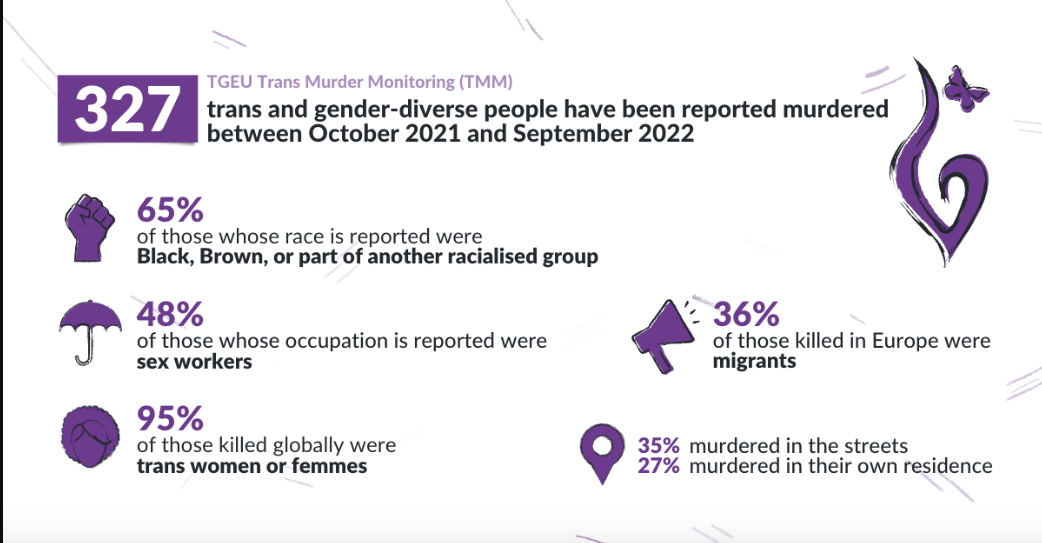
On Tuesday evening, I proposed a motion to Bristol City Council entitled “Trans Rights are Human Rights”.

This had been put together locally by Councillors and activists from Lib Dems, Labour, and the Green Party as well as non-party people – and was seconded by a Green Party member of council. I am indebted to them for their hard work, and to the Councillors who supported it on the night: bar some abstentions, and Tory votes against, the motion was overwhelmingly passed.

The motion can be found here, and my speech was as follows:

This is the week of Bristol’s Pride march, and I couldn’t be prouder to bring this motion to Full Council. Why?

First, it has been put together by a cross- and non- party group of Councillors and Activists, including those with lived experience of being trans and non-binary in our society.

Second, allowing people to live their lives with freedom from conformity is one of the core principles enshrined in the Lib Dem constitution – and support for trans people is fundamental to living out that value.

Third, as a gay man, I know what it is like to not conform to society’s expectations – and for the state to make life difficult for people like. That spurs me on to work to make lives easier for others.

Finally, attacks on trans people are, when traced to source, orchestrated and encouraged by those who would seek to turn the clock back on the human rights of others – LGB people, women, ethnic minorities.

So, turning to the motion, what is being proposed? Well, it is fundamentally about three things: Solidarity, Support, and Advocacy.

Solidarity – this is about us, as a Council, standing with some of the most marginalised people in our city and communities. Trans people are amongst our residents and deserve to know that their elected representatives have their backs.

Affirming that we recognise that they are part of our community, flying the trans pride flag on appropriate days, and training our staff all have a part to play in reassuring our trans residents that the Council values them and their contribution to the city as much as any other group.

Support – there are a number of ways in which the Council can make life easier for trans people through the way it delivers services, the choices it makes about who to contracts with, and the way issues of sexuality and gender identity are approached in schools.

This last is of particular importance. One of the lessons of Section 28 is that the suppression of age-appropriate education on sexuality damaged the lives of a generation of gay people, we should be avoiding doing the same for the those who are trans.

Advocacy – to use our influence and position to lobby national government and parliament to implement measures that make accessing trans health services easier, tackle LGBT+ hate crimes, and enact a full ban on conversion therapies, as originally promised.

It is often said that Pride is a Protest not a Party – true equality has not yet been achieved for people like me, far less so for trans people. So, this Pride week, don’t just enjoy the party or pay lip service to LGBT+ rights: vote for this motion, stand with trans people, and commit to making their lives easier.

Tagged , and | 1 Comment
Advert

Recent Comments

  • Peter Martin
    @ Mick, Are you proposing that NI contributions be increased now to increase the level of the State pension currently? One objection will be that this inc...
  • Roland
    >” What’s wrong with a fifteen year old car” A good point Nonconformistradical, we need to remember EV’s to deliver the supposed energy efficiency b...
  • Roland
    Shame it takes 14 + years to build a nuclear reactor, so until post 2040 our electricity will mostly be generated from (carbon-based) fossil fuels… We also...
  • Tristan Ward
    Geoffrey is right which is of course the reason at the last general election so many of those who actually did vote labour dis so with so little enthusiasm and ...
  • Nonconformistradical
    "Many people driving around in fifteen year old cars is an economic reality. " What's wrong with a fifteen year old car if it has been maintained properly. I...