Ramadan Mubarak

This is a special time of the year in our spiritual calendar. For Christians, it was the celebration of Easter.  Jews it was Passover.  For Sikh it was Vaisakhi. For Muslims it’s the start of the holy month of Ramadan.

For all those observing these important moments I extend my wishes. These are times for families and communities opening up and getting together and being with loved ones. Unfortunately, the reality is families are divided, empty streets, locked shops, uncertain future and empty places of worship.

Internet communities/initiatives are springing up, help from community hubs, people are going out of their way to help each other where they can.  That indomitable human spirit is coming to the fore.

As a Muslim and in this coming month of Ramadan I take inspiration from the essence of all these holy occasions as moments for reflection, remembrance and renewal.

On reflection: I thank the selfless health workers fighting this awful virus – and all those working to keep our communities going. Let’s remember our elderly, sick, vulnerable and our families. For me, in Ramadan, it’s time to renew my faith in God by drawing strength from my family, the good being displayed in these times as communities with our different faiths/beliefs and ethnicity that is the blend which is uniting our care for one another.  This is our common humanity and it will help us to defeat this virus.

Ramadan Mubarak

Posted in Op-eds | Tagged | 2 Comments
Advert

Do we really think that a Public Enquiry is the answer?

For obvious reasons there are repeated calls for either a Public Enquiry or a Royal Commission to examine what has happened in terms of the Government’s response to Coronavirus, starting from 2016 when they chose to make little of a pandemic planning exercise right up to when we might consider at least the first part of the coronavirus pandemic under control.

I have absolutely no doubt that there needs to be a speedy and effective review of what has happened. Mistakes have been made. Some of them have been political ones and some of them in terms of the advice given by professional staff such as behavioural scientists, public health and health service officials. Beyond that there are questions to be asked about how the Government has responded in terms of transport, business, the voluntary and community sectors as well as others. Those need to be left aside to begin with. Mistakes there will largely have been made because of problems within the health activities which must be the prime focus of enquiry.

I think that a formal enquiry would be a bad idea. Let’s just look at the outputs and outcomes of the relatively recently Levenson enquiry into the press excesses. This was not a great success. The first enquiry took about two years. It cost a fortune. It was adversarial with a range of people and organisations hiring barristers and seeking to defend their actions rather than get at the truth of what happened. There was supposed to be a second enquiry which never happened.

Above all there were little real world outputs from the enquiry that did take place. The only reason that there have been minimal improvements in the honesty of the press, and there were only modest improvements, was the worries that the media had over compensation payments. A toothless industry controlled watch dog was put in place which hasn’t barked but purred when there have been transgression reported.

Posted in Op-eds | Tagged and | 13 Comments

Daily View 2×2: 23 April 2020

On this day in 1516, the Reinheitsgebot was enforced across all of Bavaria, stating that beer must be brewed from three ingredients only – water, malt and hops. And yes, Wilhelm IV, Duke of Bavaria was a bit of a stickler for purity, but that wasn’t a bad hill to die upon, was it?

2 big stories

Whilst the Job Retention Scheme appears to be operating smoothly thus far – noting that payments aren’t due to reach employers until next week – for the self-employed, there’s no news as to when their scheme will start. And the decision to have a ceiling …

Posted in Daily View | Tagged , , and | 3 Comments

Why Starmer’s arrival can benefit the Liberal Democrats

From speaking to many Lib Dem activists since the election of Keir Starmer as leader of the Labour Party, one would have assumed this was the end of the Liberal Democrats. Starmer is expected to shift Labour closer to the centre, thus closer to the Lib Dems, rendering us sitting ducks, our voters to automatically assimilate into their ranks. However, I would argue this is not the case.

Firstly, it is wrong to assume that the Labour party under Starmer will drastically swing closer to the centre of the British political spectrum. Starmer himself is named after ardent socialist Keir Hardie and has a long-standing involvement in socialist groups, namely the East Surrey Young Socialists and the youth wing of the labour party, inherently democratic-socialist organisations. Indeed, Starmer has not booted all aspects of Corbynism from his shadow cabinet. Rebecca Long-Bailey, Tony Lloyd and Nick Brown all maintained influential posts, albeit alongside figures who would not have stepped near a Corbyn cabinet, namely David Lammy, Ed Miliband and Jim McMahon.

Posted in News and Op-eds | Tagged | 48 Comments

Isolation diary: Proceeding digitally

Social distancing in the House of Commons

Yesterday the House of Commons reconvened after the Easter recess. It agreed an unprecedented motion (Hybrid scrutiny proceedings) so it could carry on meeting through the pandemic, offering MPs the option of joining the debates remotely. Today they have been discussing options for remote voting.

In fact, select committees have been holding virtual meetings all month, without any security problems reported.

During the debate yesterday Jacob Rees Mogg said:

In 1349, when the black death affected this country, Parliament could not and did not sit; the Session was cancelled. Thanks to modern technology, even I have moved on from 1349, and I am glad to say that we can sit to carry out these fundamental constitutional functions.

Which reminds me that MPs in the chamber will observe social distancing rules using the length of one reclining Rees Mogg as a handy measure.

The term ‘hybrid’ refers to the fact that some MPs – around 50 at a time – will still be present in the House, while others will join it remotely using Zoom or similar.

Really? Zoom? The motion does not specify the conferencing system that will be used but there is a widespread assumption that it will be Zoom. In parallel, Microsoft Teams is being trialled by the House of Lords.

Posted in Op-eds | Tagged | 4 Comments
Advert

Stephen Lawrence Day

Isabelle Parasram interviewing someone affected by knife crime Isabelle Parasram interviewing someone affected by knife crime

On 22nd April 2020, we commemorate the life of Stephen Lawrence – a black British teenager who, in 1993, was killed in an unprovoked racist attack by a gang of white men.

Stephen had been waiting for a bus with his friend, Duwayne Brooks (who later went on to become a Lib Dem Councillor). Duwayne escaped unhurt, but Stephen died of his injuries.

Five suspects were initially arrested, but the charges were dropped, and a private prosecution by The Lawrence family of three of the suspects failed. At Stephen’s inquest, a verdict of unlawful killing ‘…in a completely unprovoked racist attack by five youths’ was delivered by Sir Montague Levine.

The day after this, The Daily Mail newspaper used its front page to name the five men it says killed Stephen Lawrence. It invited them to sue if they were wrong.

Posted in Interviews and Op-eds | Tagged and | 4 Comments

Lloyd George and Spanish Flu: In Sickness and in Health

The most treasured possessions inherited from my grandfather are undoubtedly two blue volumes that have been with me for most of my life, The War Memoirs of David Lloyd George. Lloyd George was my grandfather’s political hero, and so he became mine too. As a teenager, I read the Memoirs avidly, and they were probably the reason that I became a historian. They were, of course, very much a personal view and not necessarily to be relied upon as an accurate account of all events. But they were the words of Lloyd George.

One of the remarkable things about the Memoirs is that, while dealing with grave matters and costly military campaigns, they are largely silent on Lloyd George’s brush with death. The recent illness of Boris Johnson has inevitably drawn comparisons with Lloyd George’s contraction of ‘Spanish flu’ in September 1918. Lloyd George was the same age as our current Prime Minister and, like Johnson, had taken over the premiership at a time of a national crisis. Lloyd George’s illness was particularly poignant. Just as the Liberal premier was on the verge of a great victory at the end of a brutal war, his own life was in serious danger. At the time, few knew how grave matters had become.

Posted in Books and Op-eds | Tagged , and | 15 Comments

Three reasons for Lockdown

There are three main reasons for the lockdown. Firstly, to control and eventually reduce the spread of COVID-19, secondly, to build up stocks of PPE and thirdly, to get testing in place so the lockdown could be eased in a controlled manner. The government has partial succeed on the first objective but have failed miserably on the other two. The economic cost of this will be measured against: a £300 billion+ rescue plan, a likely (but hopefully short) world recession and later in the year whatever the outcome of Brexit trade negotiations. As they say in politics we are living in interesting times!

Statistics have started to show that the lockdown has had an impact and we are being told that the peak was reached around 8th April. The Office for National Statistics (ONS) has said that Care homes now report outbreaks, and have indicated that these outbreaks are difficult to control because of the lack of testing and protective equipment. ONS are capturing numbers from death certificates; they feel that since the start of the pandemic, more than 1,000 have died in care homes. The government figures are significantly understating the number of total deaths.

Posted in Op-eds | Tagged and | 14 Comments

Daily View 2×2: 22 April 2020

2 big stories

Was it a political choice by the Government not to take part in the EU joint procurement scheme, as Sir Simon McDonald originally suggested, or not, as his subsequent “clarification” indicated? To be honest, it probably doesn’t matter, as you can get different answers from different members of the Cabinet anyway. And, even if you got a consistent answer, can you believe very much that comes out of this Government in any event?

Matt Hancock’s further clarification, that they did join the EU scheme, was almost immediately, and inevitably, denied by a European Union spokesperson, as reported by

Posted in Daily View | 22 Comments

Isolation diary: Missing the hairdresser

When we are all finally released back into the big world the waiting lists for hairdressing appointments will be longer than those for delivery slots at Waitrose.

Yes, before anyone reminds me, I know this is a first world problem. But nevertheless regular attention to our hair is a great comfort. My own hairdresser has installed therapy chairs so I get a massage as my hair is being washed – it’s bliss, and a pure moment of me-time.

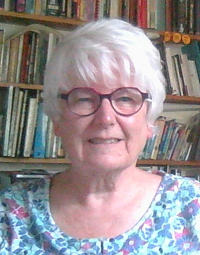
As you can see from my profile photo I don’t dye my hair. I have no problem at all with those who do, but I decided years ago that I would see if I could produce pure white hair like my grandmother’s – hers was gorgeous and silky – and I am very happy that mine is now like hers. But many of you who do colour your hair are now in a predicament. Do you risk trying it at home, or letting your partner do it? And can you even get hold of hair dye?

A friend has said that she now looks like a skunk. I think maybe a badger would be a better analogy, and at least they don’t stink.

Posted in Op-eds | Tagged | 9 Comments

Jane Dodds writes: No going back to business as usual

Covid-19 has caused the biggest economic shock of modern times. The Government has announced a range of measures to support businesses and the self-employed, in particular through putting in place strong incentives to keep staff on the payroll. Nearly a million people applied for Universal Credit in March – and the Welsh Liberal Democrats have called for the Government to scrap the five-week wait.  We need to get money into people’s pockets now. 

But we need to think beyond the emergency. Economic recovery could be slow and painful, and the most difficult time for families and businesses – especially the small businesses in the economic front line – may be when the lockdown is over and the short-term, time-limited measures announced by the Treasury fall away. Our family businesses are at the heart of our communities, and we need to ensure they bounce back stronger and more resilient than before. These shops and businesses will only recover if their customers have money to spend once the lockdown ends.

Posted in Op-eds | Tagged , , and | 32 Comments

Public scrutiny of lockdown exit strategy

The Government must publish its “exit strategy” for easing the “lock down” for public scrutiny to avoid repeating past mistakes and ensure that when the time comes it is ready and it does not overlook anything or anyone.

Posted in Op-eds | Tagged , and | 10 Comments

Clap For Carers Must Be Followed Up With Action

We have all witnessed or better still participated in the clap for carers initiative which has grown out of the current crisis. I am sure that the carers themselves are lifted by our support. However what they really need is practical help, something that the government has been slow in coming up with. 

Posted in Op-eds | Tagged and | 12 Comments

Daily View 2×2: 21 April 2020

It was a hectic day yesterday, given what I do as a day job, and today probably won’t be any easier. But there are plenty worse off than I am…

2 big stories

The more aging amongst us will remember oil shocks, as OPEC squeezed consumers by controlling the flow of oil, and thus the price. Today, the shock is that the price of US crude oil is negative. Yes, they’ll pay you to take it away because it’s cheaper to do that than to build new storage facilities that probably won’t be needed for long whilst consumption is so much lower …

Posted in Daily View | Tagged , , , and | 1 Comment

Isolation diary: Exploring Orkney in my imagination

I love Orkney. I’ve only visited it three times and would love to go more often but it is a bit of a trek to get there from London. But these days I get a lot of pleasure from exploring it again online and in my imagination.

The first time we went to Orkney we drove the full distance from London to Scrabster on the northern coast of mainland Scotland, near John O’Groats. We took several days to get there, stopping off for a break in Inverness. The ferry trip from Scrabster to Stromness was beautiful, as we passed the Old Man of Hoy surrounded by arctic terns. We stayed in an ancient cottage tucked away in the steep lanes of Stromness.

Returning a week later was a different story.  The ferry was very late leaving and then took a long detour through the protected Scapa Flow before attempting to cross the notorious Pentland Firth in a heavy storm. That was the worst sea journey of my life. I was terrified. I now understand why the Firth is such an important sea defence.

I said I would never again try the sea crossing, so on the last two occasions we have flown from one of the Scottish airports. I don’t know how Alistair Carmichael manages his weekly commute in happier times, as it can’t be done in one hop from London. On one of our visits we popped in to his constituency office which is behind St Magnus Cathedral in Kirkwall.

So why do I love the place? It is totally different from the rest of Scotland, geographically and culturally – indeed, its heritage is more Viking than Scottish. There are no forests – in fact, no trees at all on the main island (simply known as Mainland) or on most of the outlying islands. There are no mountains, no heather, no steep sided lochs. But there are huge horizons, gentle hills, amazing birds and the wind, always the wind.

Posted in Op-eds | Tagged | 4 Comments

How liberals can tackle the monsters and revelations of Coronavirus

The past two months have been flavoured with fear, insecurity, and a collective sense of grief over the death and suffering of our neighbours and fellow humans. US President, John F Kennedy, inaccurately reflected in 1959, “When written in Chinese, the word ‘crisis’ is composed of two characters — one represents danger and one represents opportunity.” The danger certainly feels apparent today, but the systemic problems that crises like the Coronavirus Pandemic reveal and create are a useful starting point to building a brighter Britain. If we are going to do so, we will need to more than give …

Posted in Op-eds | Tagged | 9 Comments

Preaching to confine Hong Kong to the Basic Law is wishful thinking

Thus we left Hong Kong to her fate and hope that Martin Lee, the Leader of the Democrats, would not be arrested

wrote HRH Prince Charles in his diaries as Britannia left Hong Kong on 1 July 1997. Prince Charles’s scepticism harks back to years of brain drain as young professionals lined up to migrate in the 1990s. The Hong Kong people will never give up in fulfilling their destiny to protect their way of life. For those who remained in Hong Kong, they tread carefully. Their only firewall now between Red China and the Island was the Sino-British Joint Declaration and the Basic Law. Sadly, but perhaps unsurprisingly, the 18 April Hong Kong’s Night of the Long Knives is evident that solely entrusting Hong Kong’s future and rule of law to the Basic Law is futile.

Martin Lee is amongst the handful (literally) of liberal politicians invited to draft the Basic Law. Following the TianAnMen Massacre and years of neglect, he found his position in the Drafting Committee untenable. Indeed, in her book Underground Front, Christine Loh noted that Peking have always only wanted legal advisors who are patriotic to the Communist regime. Hong Kong was never given the opportunity of a referendum on the constitution. Crucially, a constitution should be the guiding legal principles to bind the Administration(s) to the rule of law, and based on the framework citizens can bring the Executive to justice. On the contrary, Peking and its interference on subsequent HK Chief Executives, demonstrates its view that it is the citizen’s responsibility to respect and obey the Basic Law’s power wholeheartedly based on interpretations Peking sees fit.

More importantly, the Basic Law is flawed because Peking, holding on to Reserved Powers, is a regime with no respect to the rules-based international order. FCO archives writes “NPC Standing Committee thus retains a power of interpretation of provisions of the BL which are within the SAR’s autonomy, and such interpretations will be binding on the SAR courts … would compromise the autonomy of the SAR judicial system.” Furthermore, Deng XiaoPing has been referenced to say ‘HK affairs should not all be handled by HK people.’ It is conspicuous Peking was never ready to give Hong Kong a high degree of autonomy. Verily, the Chinese Communist Party works on the utilitarianism of Party survival no matter the sacrifices of its image, social culture and people. In a power stability, Mao was ready to inflict the Cultural Revolution; Deng to roll the tanks; and Xi to cover-up on Covid-19. Besides, this is further multiplied by the ingrained Chinese belief of 山高皇帝遠 ‘the lands are vast, but the emperor is far away’. Hunger and fear and without representations are not the recipe to engage all reserved powers at the slightest dissent.

Posted in Europe / International and Op-eds | Tagged | 5 Comments

We need a leader!

At the risk of upsetting the readership, the Liberal Democrat party is at a crossroads. Since the merging of the SDP and the Liberal party in the 1988, never has our party been under so much threat and at so much risk of being irrelevant. Having attended the party conference for the first time last September in Bournemouth, I was actually amazed. The positivity surrounding the conference was palpable, and yet, as an organisation we looked tired and jaded. We talked about a new beginning, but, outside of stating that we were going to reverse Article 50, we didn’t have …

Posted in Op-eds | Tagged | 33 Comments

Dr Phillip Lee slams government for failing to act on pandemic exercise report

Embed from Getty Images

The Guardian reports:

The government is under pressure to reveal how it responded to four key recommendations made three years ago after a major simulation exercise found the NHS would not cope in the face of a flu pandemic.

The recommendations are revealed in the June 2017 minutes of the New and Emerging Respiratory Virus Threats Advisory Group – Nervtag – which advises the government on pandemics.

They were made after Exercise Cygnus, a three-day simulation involving national, regional and local government bodies, conducted in October 2016. Little is known about the exercise – or the confidential recommendations that followed from it – other than it confirmed alarming gaps in the country’s preparedness.

Posted in News | Tagged and | 9 Comments

As liberals, we should support different types of working

Prior to the lockdown kicking in, UK employment was remarkable. The decline in unemployment is something that should be applauded and something that begun when we were in Coalition. The benefits of employment are well known such as having more money to spend and improved mental health.

One of the reasons for this strong growth is people taking up roles within the gig economy, such as Uber, Deliveroo or Just Eat. The negative attitude towards the gig economy needs to go and I will present multiple reasons why.

Firstly, the academic evidence on the gig economy highlights the benefits that it can …

Posted in Op-eds | Tagged | 17 Comments

Daily View 2×2: 20 April 2020

It’s a new week, just like the last one…

2 big stories

Today sees the official launch of what must be one of the biggest spending projects in recent government history, as the Job Retention Scheme goes live. Guaranteeing up to 80% of the salaries of furloughed employees, up to a limit of £2,500 per month for up to four months, I don’t even want to guess how much this will cost. But with possibly as many as nine million employees without work, it’s at least a brave stab as salvaging something from the wreckage. If you’re an employer, the link will take you to the guidance.

Competence appears to be a highly underrated quality sometimes, but without it, a government flounders. As, it seems, the Johnson administration appears to have done, failing to take the pandemic seriously when the opportunity permitted and running to catch up ever since. Whilst the Sunday Times has, somewhat unexpectedly, led the charge, the Guardian has kindly summed up the various failings of a Conservative administration.

Posted in Daily View | Tagged , , and | 2 Comments

Isolation diary: Saving shoe-leather

I’ve hardly worn shoes now for 5 weeks. I normally go around in bare feet or socks indoors, and I have only needed to put shoes on to go in the garden.

Like most people I’m also wearing my most comfortable clothes at home so some of my smarter things haven’t come out of my wardrobe at all. I’ve not bought a single item of clothing, I haven’t worn any makeup, and I have avoided all those impulse buys that attract me when I am out shopping.

On top of that we haven’t been out to the cinema, theatre or to a concert, we haven’t eaten out and we haven’t visited anywhere that charges an admission.

So I guess that when we eventually come out of this (and as vulnerable people that means in at least three month’s time) we will have made some significant savings. I feel a bit guilty about that, to be honest, because I know that many people are finding things really tough financially under lockdown.

Posted in Op-eds | Tagged | Leave a comment

Now is the time for Community Politics to shine

I was reminded recently of the Liberal ideal from the 70’s and 80’s of Community Politics and how it is part and parcel of our Liberal Democrat genetic makeup to want to disseminate/distribute power. I valued this principle before Covid-19 became all consuming, but during this lockdown I am drawn back towards the concepts and ideology of community politics, specifically as set out by Greaves and Lishman in the ALC booklet in 1980, and a growing realisation now is the time to really take these ideas to the next stage.

Firstly, a couple of lines about what Community Politics is and isn’t.

Community Politics is always about people. It is about their control of the exercise of power – it is about the distribution of power, the use of power and the dissemination of power. It is an all embracing approach to the way in which multiple decisions are made. It is not limited to the making of ‘political’ decisions within the structures of ‘government’. Nor is it just about winning local government elections.

Community Politics starts with the belief that each individual can be enabled to fulfil their potential, not reduced to the status of ‘being led’ or ‘directed’. Individuals make up a community – it may be geographical, mutual interest, religion or many other factors – and we all belong to many different communities. It is interesting that in our massively centralized society, too often these communities are only recognised when they become useful or necessary.

Posted in Op-eds | Tagged | 17 Comments

#LibDemIftar – a first for us! 

Embed from Getty Images

Would you like a date with a LibDem? Not in the romantic sense. This is the fruit you can eat as Muslims do when they end their fast for the day, the Iftar.

Next week, Muslims will be observing the beginning of the Islamic month of Ramadan and this year, the Liberal Democrats will be joining them! Acting leader Sir Ed Davey, MP Layla Moran, Siobhan Benita and other high profile Lib Dems, will join Muslim communities this Ramadan by fasting alongside them on Saturday the 25th of April. They will be taking this opportunity to raise money for a charity of their choosing – many that tackle hunger in the UK, an issue which has become more prevalent in the recent weeks, as our foodbanks come under greater pressure during the coronavirus outbreak.

During Ramadan, Muslims seek to focus on their faith and compassion for others, through abstaining from food and drink from dawn until dusk. They don’t even lie. This is also a time of great community spirit, as people gather together in mosques and each other’s homes, to take part in communal meals and prayers. This year of course, that won’t happen. Mosques in this country closed their doors just as churches, synagogues and temples did. Nonetheless, after weeks of minimal social contact, the curtailment of Ramadan festivities will come as a further blow for many who feel isolated from their communities. This is something that many faith groups relate to.

Our party deciding to fast with our Muslim neighbours, is therefore a significant display of solidarity during a difficult time for all of us. Muslims, and indeed many others, will be feeling a loss of community spirit. By taking part in this fast, and sharing our experiences over social media, we can help re-create the Ramadan spirit online.

Posted in News and Op-eds | Tagged and | 17 Comments

Thank you David Becket: the pleasure was ours…

It is with great sadness that news arrives of the passing for a long-standing former councillor. Staffordshire activist David Becket, has died at his home in Betley, Newcastle under Lyme; it was multiple medical problems, but not including the virus.

David was well known for outstanding hard work in the old Halmerend ward that he represented and also for very significant work he did as Liberal Democrat on the Newcastle Borough Council. He was on many committees (he loved and hated them) and for 5 years was on the cabinet 2006-2011. Elected in 2002, David was elected Mayor of the Borough of Newcastle for 2012/13 with his wife Dr Anne Becket as mayoress.

David’s passion, well he was passionate about many things, was the environment and recycling.  He was very proud of his role in taking the recycling service at Newcastle from a failing service to winning three national awards. To his credit – and it was a sign of the man – he decided to step back from having a Cabinet role at this time.  “Always leave when you are winning”, he would boom at anyone willing to listen. He stood down from the Council in 2015 and was made an Honorary Alderman of the Borough – “its fluff” he said, “but its nice fluff” and he was deeply proud of the elevation.

Posted in Obituaries | Tagged | 8 Comments

Isolation diary: Planning a holiday

Memories of our last holiday

So the Government is getting worried that people are making plans for a summer holiday this year. I have long ago given up any hope of having one.

We had planned a rather special holiday in July this year which would have included a visit to the Passion Play at Oberammergau. As I mentioned in an earlier diary the play has been postponed for two years. The deep irony is that the play is performed every ten years as a thanksgiving for being spared the plague nearly 400 years ago.

We are also hoping to go to Canada later in the year to visit my brother who lives near another Kingston, in Ontario. Then we heard the delightful news that his eldest daughter is getting married in the Autumn so the idea is to share that occasion with all our Canadian relatives. My niece is still hoping to go ahead with the wedding, but at the moment we really don’t know whether we will be able to fly again or not.

We have also had to put on hold any trips to Northern Ireland to see my older son and his wife who live in Coleraine. They had booked to stay with us this week and we would probably have all met up again later in the summer. Instead, we have been Skyping with them on a daily basis, especially when my son developed coronavirus – fortunately he was over the main symptoms in a week, although it left him exhausted.

Posted in Op-eds | Tagged | 7 Comments

Celebrating Ramadan during the pandemic

Embed from Getty Images

The COVID-19 pandemic has brought with it many challenges, including the question about how Muslims can still join together, observe Ramadan, and break the fast (Iftar) whilst still exercising social distancing. Being apart at this time – especially from family and loved ones – seems alien to our values, but it gives us the opportunity to celebrate together in a different way.

Ramadan is the ninth month of the Islamic calendar, during which Muslims do not eat or drink during the hours of daylight. It is a time for spiritual reflection, prayer, undertaking good deeds and spending time with family and friends. This year Ramadan will begin on the evening of Thursday 23rd April.

Just like other churches, mosques will no longer be holding gatherings. A month ago, the Muslim Council of Britain called for the suspension of all congregational activities at UK mosques and Islamic centres. In a press release, Secretary GeneralHarun Khan said: “We all have a public duty to protect one another from harm, and it is evident the most effective way to do this now is to avoid social contact as much as possible. This includes all walks of life, whether social, work or the mosque.”

April is one of the holiest months of the year on many religious calendars, including the Passover, Easter and Vaishaki. This year, however, traditional gatherings have been pushed online with observers participating in services and celebrations remotely. One of my challenges as a councillor and community leader is making sure that residents can break their fast together whilst being apart. For the younger generation and those who are fortunate enough to have access to mobile phones and the internet, they can communicate with friends and family via FaceTime or WhatsApp video. For those who are not digitally inclusive, I have been teaching them how to use Zoom, ensuring that they are not left out. It is also essential to make sure that people are safe when they fast during COVID-19 and to direct them to appropriate health professionals for advice and assistance.

Posted in Op-eds | Tagged | 1 Comment

Winning in the North: Your chance to help make it happen

It was around 3am at the English Institute of Sport in Sheffield when our worst fears were confirmed. Nick had lost. He was the better candidate and had served his constituency, our Party and our country with distinction. It was a crushing feeling for all of us who were there and had worked so hard over the previous weeks to re-elect our former leader as the MP for Sheffield Hallam.

Two and a half years later it was me up there on the stage at the Harrogate Convention Centre having stood as the candidate for Harrogate & Knaresborough. It remains a seat with a strong liberal tradition, not least thanks to the incredible hard work of Lord Willis who was our Lib Dem MP between 1997 and 2010. Phil Willis was the epitome of a great constituency MP, having successfully led the local Council before being elected to Parliament. He linked our proud traditions of community politics and campaigning at the national level for our liberal values.

I was up against a beatable Conservative candidate in an area that, unusually for our region, had voted to remain in the EU. On that same night in December last year, my friend Laura Gordon was the candidate facing a beatable Labour candidate in Sheffield Hallam. It was a similar story for other strong candidates in our region like Lisa Smart in Hazel Grove and Tom Morrison in Cheadle.

Why was our movement not able to win these seats despite strong local campaigns and investment of resources from across the country?

We didn’t always struggle to do this.  From Withington to Westmorland and Burnley to Berwick, in 2010 we elected Lib Dem MPs all over the north of England, but now we only have Tim Farron representing our cause at Westminster.

Posted in Op-eds | Tagged | 25 Comments

A Modest Proposal

Swift’s famous essay (A Modest Proposal, published in 1729) is, of course, entirely satirical. Its humour merely makes it an even more devastating indictment of a capitalism deracinated from any morality.

We now live in a world where Swift’s capitalism is the norm, now economically transformed through a pandemic. Perhaps it is time for another ‘modest proposal’.

On March 11 the Chancellor delivered his budget. It envisaged 1.1% economic growth this year and allowed £30 billion towards coronavirus. At the time no one seemed to think this unreasonable. It is now just over one month on and the latest economic predictions from the OBR are for a 35% economic decline in the second quarter. Yet the information on the threat of coronavirus, the speed of its spread and the measures necessary to stop it were as known then as they are now. Although it was ‘known’ it wasn’t ‘accepted’.

I thus take all of these forecasts and predictions with a very large pinch of salt. In my own business and those of my colleagues I see far more lasting damage and the necessity of a far longer recovery. It is a dangerous delusion to assume the world will be the same again, nor should we want it to be.

So what can we economically do? The UK budget deficit is already predicted to substantially exceed that of the worst year of the 2008 recession. Our debt levels will balloon well beyond the magical 100% of GDP figure. And we will have all the further unwelcome distortions of quantitative easing, the crowding of credit markets with the governments insatiable demand for money along with all the other consequences of emergency action.

So what is to be done? The British economy in 2018 had a GDP of roughly £2.3 trillion so the scale of this crisis goes way beyond the simple use of tax and spend to both hold the line and rectify the damage. It challenges to other routes such as monetary easing.

Posted in Op-eds | Tagged | 17 Comments

A market-driven approach to Universal Basic Income

Embed from Getty Images

By now most Liberals are convinced of the moral impetus to eradicate poverty, and many are now realizing that the easiest way to resolve this is to “give people money”. Slowly, we are detaching ourselves from the idea that people should be forced to work in exchange for their rights – and waking up to the need to meet Socialist means for providing Social Security (large, state-driven delivery models) with a Liberal alternative.

A Universal Basic Income is not a panacea, but it’s a surprisingly useful tool for delivering both Liberal outcomes and meeting our Human Rights obligations. And with a market-driven approach, we can embed it in society, free of the partisan nature of British Politics.

Step 1: Create a National Basic Income Fund. This is important – it’s tempting to break up the fund, but you’ll see later why that will create problems. Model it on the Norwegian sovereign wealth funds, or base it on the UK National Insurance Fund. I don’t mind; this sounds like something other people would enjoy arguing about. Just create it.

Posted in Op-eds | Tagged | 55 Comments
Advert

Recent Comments

  • Suzanne Fletcher
    This article has taken the final nail off the coffin lid. It started at Michael Meadowcroft's funeral last week, hearing his words repeated, his values restate...
  • Chloe
    I wonder how tempting it might be for Labour to call an early GE. Support for the cost of living crisis are only incremental , the early prison release scheme c...
  • Pawel Urbanski
    Having grown up in Communist Poland, I never take freedom for granted, which is why this piece strongly resonates. What drew me to the Lib Dems was not tactics ...
  • Jana
    Yes, two good second place performances for us to feel good about. Unfortunately, however, a very good night for Reform with 3 wins and 2 second places across t...
  • Nigel Jones
    Yes we need to think through and articulate our Lib dem approach to economics and the way we order society. I see the occasional attempt at this on LDV but out ...